
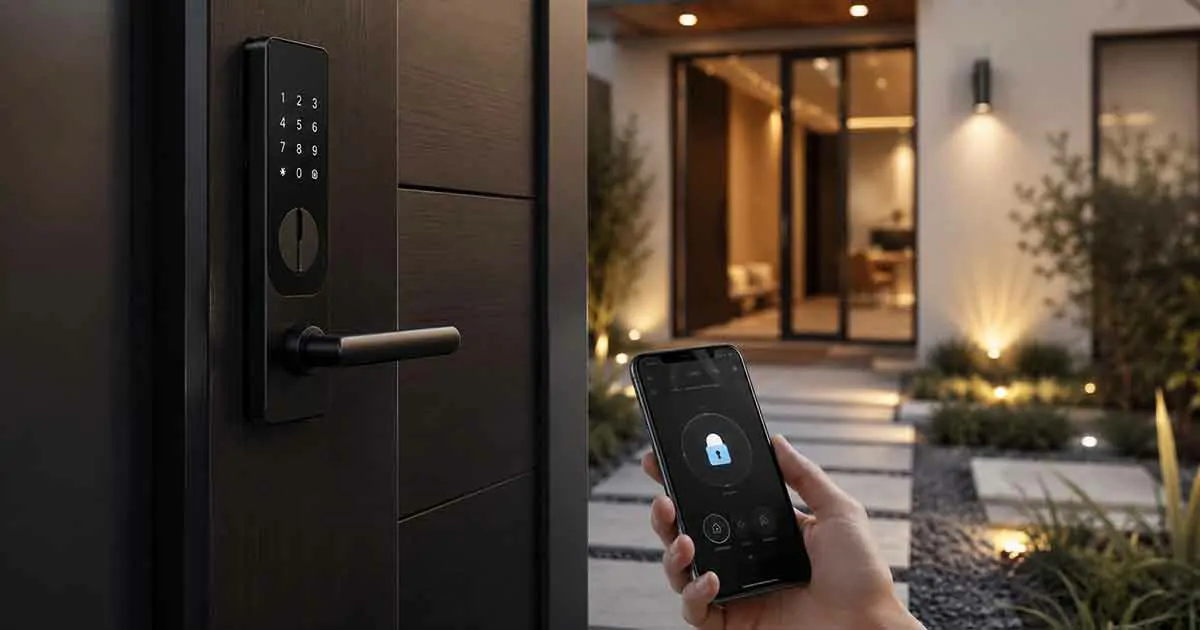
A smart access control system gives homeowners a more flexible way to manage who can enter their property, when they can enter, and how access is granted. Instead of relying only on traditional keys, modern access control can combine electronic locks, mobile apps, access codes, connected devices, sensors, and other technologies to manage entry more intelligently.
Smart access control is becoming an important part of connected homes because it can provide greater control over doors and entry points while making everyday access more convenient.
Whether you want to manage your front door from your smartphone, provide temporary access to guests, or create a more integrated home security setup, understanding how smart access control works can help you choose the right solution.
What Is a Smart Access Control System?
A smart access control system is a connected technology that allows homeowners to control and manage access to a home electronically.
Traditional access usually depends on a physical key. Smart access control can replace or supplement that process with methods such as:
- Smartphone access
- PIN codes
- Keypads
- Digital credentials
- Biometric identification
- Remote access
- Temporary guest permissions
- Automated locking and unlocking
The main difference is that access is managed electronically rather than relying exclusively on a physical key.
A smart access control system can also connect with other smart home technologies, allowing entry management to become part of a larger home automation ecosystem.
How Smart Access Control Works
A typical system has several components that work together to authenticate a person and determine whether access should be granted.
The exact configuration depends on the type of system, but the basic process is generally similar.
First, a person presents an approved credential. This could be a smartphone, PIN code, fingerprint, or another authorized method.
The access control device verifies the credential. If the credentials are valid, the system activates the locking mechanism and allows the person to enter.
Many systems can also record access events, allowing homeowners to review when a particular credential was used.
For example, a homeowner could create a temporary access code for a house guest and remove that code after the visit.
Key Components of a Home Access Control System
A residential access control setup can include several different components.
Smart Entry Devices
The entry device is the point where the person interacts with the system.
Depending on the system, this could be:
- A keypad
- A smart lock
- A touchscreen
- A card or credential reader
- A smartphone
- A biometric reader
The entry device communicates with the access control system and determines whether the presented credential is authorized.
Access Controller
The controller is responsible for managing access permissions and communicating with connected devices.
In a more advanced installation, the controller can coordinate multiple doors, users, schedules, and access rules.
This is one area where access control differs from simply installing a connected lock on one door.
Electronic Locking Hardware
The physical locking mechanism secures the entry point.
Depending on the door and installation, this may include an electronic deadbolt, electric strike, magnetic lock, or another compatible locking mechanism.
The hardware must be compatible with the door and the access control system.
Smartphone App
Many modern systems use a smartphone application for administration.
The homeowner may be able to:
- Lock or unlock doors
- Create access credentials
- Remove users
- Manage temporary permissions
- Review access activity
- Receive notifications
This makes remote management one of the major advantages of connected access control.
Smart Access Control vs. Smart Locks
Smart access control and smart locks are related, but they are not necessarily the same thing.
A smart lock generally focuses on electronically controlling one door. It may provide smartphone access, PIN codes, automatic locking, or remote control.
A broader access control system focuses on managing access rather than simply controlling a lock.
For example, a homeowner with multiple entry points may want different permissions for family members, service providers, guests, or other users.
If your primary goal is simply replacing a traditional lock with a connected alternative, a smart lock may be sufficient. You can learn more about the technology in our guide to smart locks.
For a more detailed look at the features and considerations involved in choosing electronic door access, see our guide to smart door locks.
Common Ways to Unlock a Smart Access Control System
Different systems support different authentication methods.
Smartphone Access
Smartphone-based access allows an authorized user to unlock an entry point through a mobile application or compatible digital credential.
This can reduce dependence on physical keys and can be especially useful for homeowners who frequently need remote access.
PIN Codes
Keypad access allows users to enter a numerical code.
Different codes can sometimes be assigned to different people, making it easier to manage permissions.
For example, a homeowner could create one code for family members and another temporary code for a service provider.
Biometric Access
Some advanced systems use biometric authentication such as fingerprints.
Biometric access can provide convenient entry without requiring a physical key or remembering a PIN.
However, biometric systems can be more expensive and may not be necessary for every residential application.
Digital Credentials
Some access control platforms support digital credentials that can be assigned to specific users.
These credentials can potentially be added, modified, or revoked without physically changing a lock.
Temporary and Scheduled Access
One of the most useful features of a smart access control system is the ability to manage access according to time or user.
Instead of giving someone a permanent key, homeowners may be able to create temporary credentials.
For example, temporary access could be provided to:
- House cleaners
- Contractors
- Dog walkers
- Family members
- Guests
- Property managers
A scheduled credential can be configured to work only during specific periods.
This can provide more control than handing someone a traditional key that may remain usable indefinitely.
Remote Access Management
Connected access control can allow homeowners to manage entry remotely.
For example, if a family member arrives home while nobody is there, the homeowner may be able to provide access through a smartphone.
Remote management can also be useful when a homeowner needs to check whether an entry point is locked.
However, remote access depends on the system’s connectivity, software, and network infrastructure. Homeowners should therefore consider reliability and security when selecting a system.
For a broader understanding of the network infrastructure behind connected homes, see our guide to smart home networking.
Smart Access Control and Video Doorbells
Access control becomes even more useful when combined with technologies that help homeowners identify visitors.
A video doorbell can show who is at the door before access is granted.
For example, a homeowner could receive a visitor notification, view the person through a connected camera, and then decide whether to provide access.
Our guide to video doorbells explains how these devices can be used as part of a connected entry setup.
Combining visitor identification with access management can create a more comprehensive approach to controlling entry.
Smart Access Control and Home Intercoms
A smart intercom can add another layer of communication to residential access control.
Instead of immediately granting access, a homeowner can communicate with a visitor before deciding whether the person should enter.
This can be particularly useful for homes with gates, multiple entry points, or situations where visitors need to be verified before entry.
For more information, see our guide to smart home intercom systems.
Integrating Access Control With a Smart Home
A major advantage of connected access control is the possibility of integrating it with other smart home devices.
For example, an entry event could trigger an automation that turns on selected lights or changes the state of other connected devices.
A homeowner could potentially create routines such as:
- Unlocking the door and turning on entry lights
- Locking doors automatically at night
- Sending an entry notification to a smartphone
- Changing home modes when someone arrives
- Combining access events with security alerts
This type of automation becomes easier when the access control system works with the home’s broader smart home ecosystem.
For a deeper explanation of how connected devices can work together, see our guide to smart home integration.
Smart Access Control and Home Security
Access control is an important part of residential security, but it should not be treated as a complete security system by itself.
A comprehensive approach can combine controlled entry with cameras, alarms, sensors, lighting, and monitoring.
For example, a homeowner might use access control to manage who can enter while using cameras to monitor entry points and alarms to detect security events.
Our complete home security guide provides a broader overview of the different technologies that can contribute to a residential security strategy.
Benefits of Smart Access Control
A well-designed access control system can provide several practical benefits.
Better Access Management
Homeowners can manage permissions without distributing physical keys to every person who needs temporary access.
Remote Control
Connected systems can allow access to be managed from a smartphone when remote functionality is supported.
Temporary Permissions
Temporary credentials can be useful when someone needs access for a limited period.
Access History
Some systems record access events, allowing homeowners to see when credentials were used.
Convenience
Smartphone access, PIN codes, and automated locking can make everyday entry easier.
Integration
Access control can potentially work alongside other connected home technologies to create automated routines.
Potential Limitations
Smart access control also has limitations that homeowners should consider.
Internet and Network Dependence
Some systems rely heavily on an internet connection or home network for remote functions.
If connectivity is interrupted, certain features may become unavailable.
Battery Dependence
Battery-powered devices require regular monitoring and replacement or charging.
A system should have a reliable backup method for situations where the battery is depleted.
Compatibility
Not every access control product works with every smart home platform.
Compatibility should be checked before purchasing equipment.
Installation Requirements
Some systems are simple replacements for existing locks, while others may require professional installation and electrical work.
Cybersecurity
Because connected access systems can communicate over networks, cybersecurity should be treated as an important part of the purchasing decision.
Smart Access Control Security Considerations
A connected entry system should be protected against both physical and digital threats.
Homeowners should look for products from established manufacturers that provide ongoing software and security updates.
Strong account passwords and multi-factor authentication can also help protect administrative accounts.
It is important to keep firmware and mobile applications updated and to avoid sharing permanent credentials unnecessarily.
Access permissions should also be reviewed periodically. When someone no longer needs access, their credentials should be removed.
Privacy is another consideration, particularly for systems that record access activity or integrate with cameras and other monitoring technologies.
Our guide to smart home privacy and security covers broader privacy and cybersecurity considerations for connected homes.
What to Consider Before Buying
Before choosing a smart access control system, consider the following factors.
Number of Entry Points
Determine how many doors, gates, or other access points need to be controlled.
Authentication Methods
Decide whether you need smartphone access, PIN codes, biometric authentication, digital credentials, or a combination.
Remote Management
If remote control is important, verify how the system handles internet connectivity and mobile access.
Compatibility
Check whether the system works with the smart home platform and other devices you already use.
Power and Backup Options
Understand whether the system uses batteries, wired power, or both, and determine what happens during a power failure.
User Management
If several people will use the system, look for flexible user and permission management.
Activity Logs
If monitoring access history is important, make sure the system provides appropriate event records.
Installation
Check whether the system can be installed with your existing doors and hardware or whether professional installation is required.
Smart Access Control for Different Types of Homes
The ideal configuration depends on the property.
Single-Family Homes
A simple system may focus on the main entrance while optionally extending access control to garages or secondary doors.
Larger Homes
Larger properties may benefit from managing multiple entry points through a centralized system.
Rental Properties
Temporary and scheduled credentials can be useful for managing access without distributing physical keys to tenants, cleaners, or maintenance personnel.
Vacation Properties
Remote access management can be particularly useful for properties that are occupied by different guests at different times.
Is Smart Access Control Worth It?
For homeowners who want more control over who can enter their property, a smart access control system can provide meaningful advantages over traditional keys.
The technology is particularly useful when multiple people need different levels of access or when remote management and temporary credentials are important.
However, homeowners should avoid choosing a system based solely on the number of smart features it offers. Compatibility, reliability, security, installation requirements, backup access, and long-term support are equally important.
The best system is one that fits the home’s physical doors, smart home platform, security requirements, and daily access needs.
Final Thoughts
A smart access control system turns residential entry from a simple lock-and-key process into a managed digital system.
With features such as smartphone access, PIN codes, temporary permissions, remote management, activity records, and smart home integration, these systems can improve both convenience and control.
Smart access control should not replace other layers of home protection, but it can become an important component of a broader connected home strategy.
When selecting a system, focus on compatibility, reliability, authentication options, backup access, cybersecurity, and the specific entry points you need to manage. A carefully selected system can provide a practical foundation for smarter and more controlled home access.