
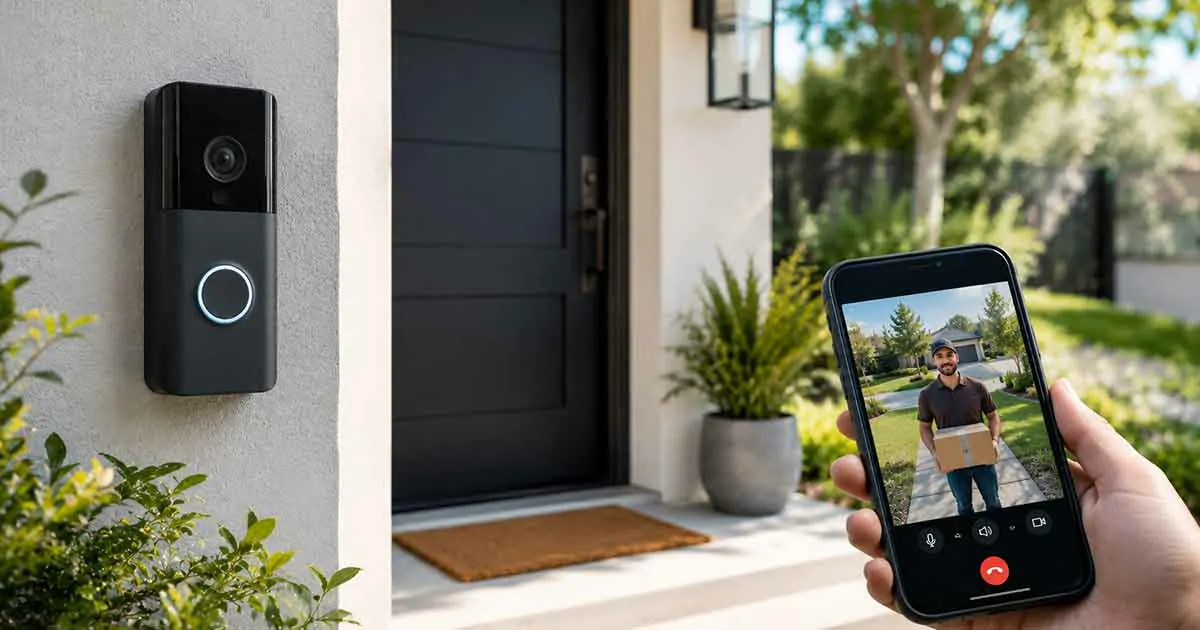
Video doorbells have become one of the most popular smart home security devices. They combine a traditional doorbell with a built-in camera, motion detection, and remote communication features that help homeowners monitor activity at their front door.
Whether you want to see who is visiting, monitor package deliveries, or improve overall home security, a video doorbell can provide convenience and peace of mind.
This guide explains how video doorbells work, their benefits, important features, installation considerations, and how to choose the best option for your home.
What Is a Video Doorbell?
A video doorbell is a smart security device that combines a doorbell, camera, microphone, speaker, and internet connectivity.
When someone approaches or rings the doorbell, the device can:
- Record video
- Send alerts to your smartphone
- Allow two-way communication
- Store footage for later review
Many models also provide motion detection even when visitors do not ring the bell.
Benefits of Video Doorbells
Front Door Security
The front door is one of the most important entry points to monitor.
Video doorbells help homeowners:
- Identify visitors
- Monitor activity
- Record events
- Improve awareness
Package Protection
Package theft has become a concern for many homeowners.
Video doorbells can:
- Monitor deliveries
- Record activity near packages
- Provide alerts when movement is detected
Remote Communication
Many video doorbells include two-way audio.
This allows homeowners to speak with:
- Visitors
- Delivery drivers
- Service providers
Even when away from home.
Real-Time Alerts
Video doorbells can instantly notify homeowners when activity occurs near the entrance.
Notifications help improve response times and awareness.
How Video Doorbells Work
Most video doorbells connect to a home’s Wi-Fi network.
When motion is detected or the doorbell is pressed:
- The camera activates.
- Video is recorded.
- A notification is sent.
- Homeowners can view live footage.
- Two-way communication becomes available.
The entire process can occur within seconds.
Important Features to Consider
Video Resolution
Higher resolution generally provides clearer footage.
Common options include:
- 1080p HD
- 2K Video
- 4K Video
Night Vision
Night vision allows cameras to capture footage after dark.
Look for:
- Infrared night vision
- Color night vision
- Low-light performance
Motion Detection
Advanced motion detection can identify:
- People
- Vehicles
- Animals
- Packages
Smart detection helps reduce unnecessary notifications.
Two-Way Audio
Two-way audio allows direct communication through the device.
This feature is useful for both security and convenience.
Storage Options
Many video doorbells offer:
- Cloud storage
- Local storage
- Hybrid storage
Storage requirements depend on recording preferences and usage.
Wired vs Wireless Video Doorbells
Wired Video Doorbells
Advantages:
- Continuous power
- Reliable operation
- Reduced battery concerns
Wireless Video Doorbells
Advantages:
- Easier installation
- Flexible placement
- No existing wiring required
The best option depends on your home’s setup and preferences.
Best Locations for Video Doorbells
For optimal performance:
- Install near the main entrance
- Position at the correct height
- Avoid obstructions
- Ensure clear visibility of visitors
Proper placement improves both coverage and image quality.
Video Doorbells and Smart Home Integration
Many video doorbells integrate with:
- Smart locks
- Security cameras
- Smart lighting
- Voice assistants
Integration creates a more connected and automated security system.
Common Video Doorbell Mistakes
Poor Installation Height
Incorrect positioning may reduce camera effectiveness.
Ignoring Wi-Fi Coverage
Weak signals can affect performance and notifications.
Choosing Low-Quality Video
Poor video quality may limit identification capabilities.
Not Reviewing Storage Options
Storage limitations can impact recording availability.
Frequently Asked Questions
Are video doorbells worth it?
Yes. Video doorbells provide security, convenience, and real-time monitoring of your entrance.
Do video doorbells record all the time?
Some models offer continuous recording, while others record only when motion is detected.
Can video doorbells work without Wi-Fi?
Most smart features require Wi-Fi connectivity.
Are wireless video doorbells reliable?
Yes, provided they have adequate battery power and network connectivity.
Do video doorbells improve home security?
They can significantly improve awareness, visitor monitoring, and package protection.
Final Thoughts
Video doorbells are a practical addition to modern home security systems. By combining video monitoring, motion detection, alerts, and communication features, they help homeowners better manage and protect their property.
Choosing the right video doorbell depends on your security goals, budget, and desired features. When integrated with other security devices, a video doorbell can become an important part of a comprehensive home security strategy.