
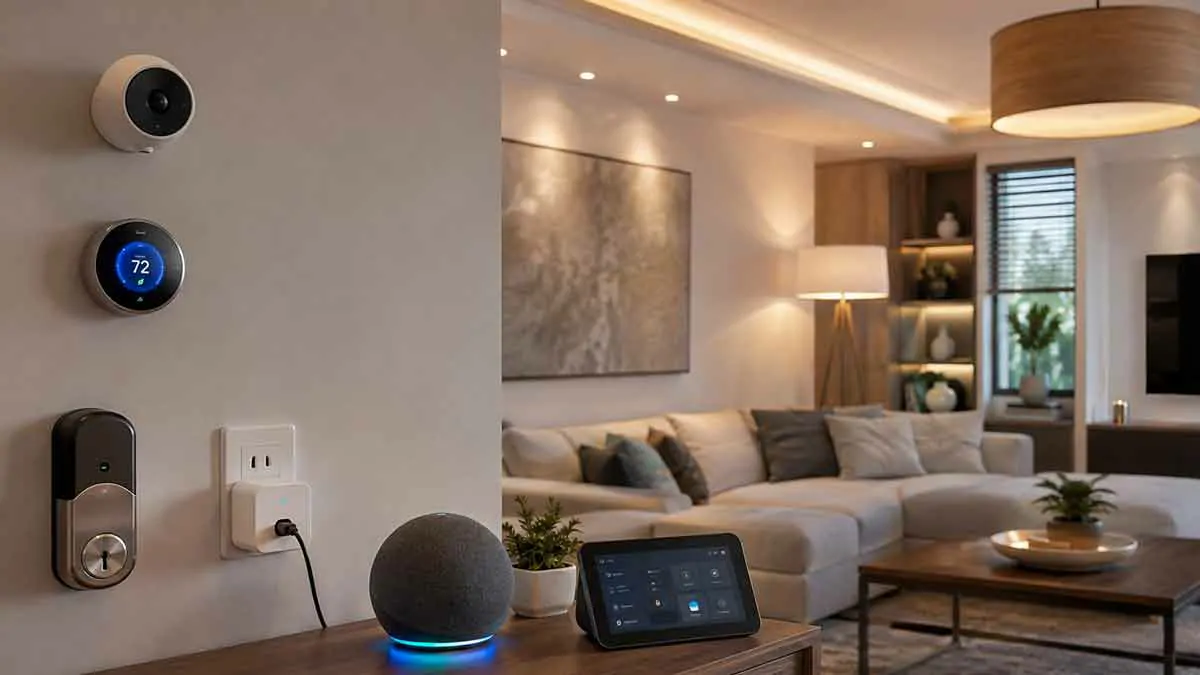
Alexa-compatible devices can make a smart home easier to control, automate, and manage. From Echo speakers and smart displays to lights, plugs, thermostats, cameras, and Matter-compatible products, Amazon’s Alexa ecosystem supports a wide range of connected devices.
The best Alexa devices are not necessarily the most expensive products. A good smart home setup starts with devices that solve practical problems and work reliably together.
Whether you are building your first smart home or expanding an existing setup, choosing compatible devices carefully can help you avoid unnecessary complexity.
This guide explores the best types of Alexa devices for smart homes, what each category does, what to consider before buying, and how to build a practical Alexa-based system.
What Are Alexa Devices?
Alexa devices are smart home products that can connect with Amazon Alexa and be controlled through the Alexa app, voice commands, routines, or other supported controls.
Amazon’s ecosystem includes its own hardware, such as:
- Echo speakers
- Echo Show smart displays
- Ring devices
- Fire TV products
- Other Amazon smart home products
Alexa also works with a large range of third-party smart home products, including:
- Smart lights
- Smart plugs
- Thermostats
- Cameras
- Smart locks
- Sensors
- Appliances
- Entertainment devices
Compatibility can vary between products, so it is important to check which Alexa features a device actually supports before buying it.
Best Alexa Devices at a Glance
The right device depends on what you want to accomplish.
| Device Type | Best For | Main Benefit |
|---|---|---|
| Echo Speaker | Voice control | Hands-free smart home management |
| Echo Show | Central control | Voice commands plus touchscreen |
| Smart Lights | Lighting automation | Schedules and routines |
| Smart Plugs | Existing appliances | Simple remote control |
| Smart Thermostat | Climate control | Scheduling and temperature management |
| Ring Doorbell | Front-door monitoring | Connected alerts and video |
| Security Cameras | Home monitoring | Remote visibility |
| Smart Locks | Entry control | Keyless and remote access |
| Matter Devices | Flexible setups | Improved interoperability |
| Fire TV | Entertainment | Connected streaming and Alexa control |
1. Amazon Echo Smart Speakers
Echo speakers are one of the most natural starting points for an Alexa smart home.
An Echo device can provide:
- Voice control
- Smart home commands
- Music playback
- Timers and reminders
- Alexa routines
- Communication features
- Access to other Alexa-enabled services
With compatible smart home devices connected to Alexa, a simple voice request can control several parts of your home.
For example:
“Alexa, turn off the living room lights.”
You can also create routines that trigger multiple actions.
An Echo speaker can be placed in the living room, bedroom, kitchen, office, or another frequently used area.
For a larger home, multiple speakers can make Alexa voice control more accessible across different rooms.
2. Amazon Echo Show
Echo Show devices combine Alexa with a touchscreen display.
This gives you visual access to information and controls that are not available through a speaker alone.
Depending on the model and supported features, an Echo Show can be useful for:
- Controlling smart home devices
- Viewing compatible cameras
- Following recipes
- Watching entertainment
- Making video calls
- Checking information
- Managing household routines
A kitchen is one of the most practical locations for an Echo Show because the screen can display recipes and other information while Alexa handles hands-free commands.
A living room can also benefit from a larger model that combines smart home control with entertainment.
3. Alexa-Compatible Smart Lights
Smart lighting is one of the easiest ways to make an Alexa home feel automated.
Compatible bulbs, switches, and lighting systems can be controlled with Alexa and included in routines.
Useful examples include:
Morning
Selected bedroom lights turn on at a scheduled time.
Evening
Outdoor and living room lights turn on around sunset.
Movie Night
Selected lights dim when entertainment starts.
Bedtime
Lights turn off throughout the home.
Alexa routines can coordinate several compatible devices, allowing lighting to become part of a larger automation system.
When buying smart lights, check whether the product connects directly to Alexa or requires another hub or bridge.
4. Alexa-Compatible Smart Plugs
Smart plugs are inexpensive and versatile.
They allow suitable electrical devices to become part of an Alexa-controlled system without replacing the entire appliance.
Common uses include:
- Lamps
- Fans
- Decorative lighting
- Certain small appliances
- Seasonal lighting
For example, a lamp connected to an Alexa-compatible smart plug could turn on automatically in the evening.
Smart plugs are also useful for devices that you frequently forget to switch off.
However, always check whether the appliance is suitable for use with a smart plug and how it behaves when electrical power is restored.
For more information, see our guide to best smart plugs.
5. Alexa-Compatible Smart Thermostats
A compatible smart thermostat can connect climate control to Alexa.
Depending on the thermostat, Alexa may allow you to:
- Adjust the temperature
- Check the current temperature
- Change heating or cooling settings
- Include the thermostat in routines
- Control the system through voice commands
A smart thermostat can become more useful when combined with schedules and other smart home devices.
For example, a routine could reduce the temperature when everyone leaves and return it to a comfortable setting when someone comes home.
Compatibility is essential because thermostat requirements vary by heating and cooling system.
Our guide to best smart thermostats covers the category in more detail.
6. Ring Video Doorbells
Ring is one of the most recognizable smart home brands within Amazon’s broader ecosystem.
Ring video doorbells can provide connected monitoring around the front entrance, with features that may include:
- Video monitoring
- Motion alerts
- Two-way communication
- Smartphone notifications
- Integration with Alexa devices
An Echo Show can also provide a convenient screen for viewing compatible doorbell or camera feeds.
When choosing a smart doorbell, consider wired versus battery power, Wi-Fi coverage, storage options, subscription requirements, and privacy.
7. Alexa-Compatible Security Cameras
Security cameras can extend Alexa beyond simple device control into home monitoring.
Depending on the product, cameras may provide:
- Live video
- Motion detection
- Person detection
- Night vision
- Two-way audio
- Notifications
- Alexa integration
A camera can be particularly useful for entrances, garages, driveways, and other areas where remote visibility matters.
The best camera for your home depends on placement.
Indoor and outdoor cameras have different requirements, and outdoor installations need products designed for weather exposure.
8. Alexa-Compatible Smart Locks
Smart locks can make access to your home more flexible.
Depending on the model, an Alexa-compatible smart lock may support:
- Voice-assisted control
- Keypad entry
- Remote access
- Temporary codes
- Automatic locking
- Activity monitoring
- Routines
A smart lock can be particularly useful for managing access for family members and trusted visitors.
Before buying one, verify compatibility with your door hardware and understand what happens during a power outage, battery failure, or network problem.
9. Smart Sensors
Smart sensors are small devices that can provide information to Alexa routines and other smart home systems.
Examples include:
- Motion sensors
- Door and window sensors
- Temperature sensors
- Humidity sensors
- Water leak sensors
- Occupancy sensors
Sensors can make automations more responsive.
For example:
Motion detected → Turn on hallway light
or:
Water detected → Send an alert
A sensor can therefore be more valuable than another device that simply adds manual control.
10. Alexa-Compatible Robot Vacuums
Robot vacuums are one of the most practical smart home products.
Many connected models can work with Alexa, allowing you to start cleaning through voice commands or include cleaning in routines.
Depending on the model, features can include:
- Room mapping
- Scheduled cleaning
- Automatic navigation
- No-go zones
- Multi-floor maps
- Self-emptying docks
- Mopping
Voice control is useful, but the biggest value comes from automation.
A robot vacuum can clean according to a schedule or while household members are away.
When comparing models, pay attention to navigation, obstacle avoidance, maintenance, replacement parts, and dock features rather than focusing only on suction specifications.
11. Alexa-Compatible Smart Blinds
Motorized smart blinds and shades can add both comfort and convenience.
Depending on the system, you may be able to:
- Open blinds in the morning
- Close them at night
- Adjust them for privacy
- Reduce direct sunlight
- Include them in Alexa routines
For example, an evening routine could close the living room blinds while dimming the lights.
Smart blinds can be more expensive than smart bulbs or plugs, so they are usually best suited to areas where automated control provides a meaningful benefit.
12. Alexa-Compatible Smart Home Hubs
A smart home hub can help coordinate connected devices and provide additional connectivity options.
Some Alexa-compatible products can act as part of the central control system, while other devices may require a manufacturer’s bridge or hub.
Hubs can be useful for:
- Connecting certain wireless devices
- Managing multiple device types
- Supporting advanced automations
- Reducing dependence on individual apps
Whether you need a dedicated hub depends on which devices you choose.
Our guide to best smart home hubs explains the wider hub category.
13. Matter-Compatible Devices
Matter is an important consideration when purchasing new smart home products.
The standard is designed to improve interoperability between compatible smart home platforms and devices.
Matter-compatible products can be used with supported ecosystems, including Alexa, depending on the device and setup.
This can make Matter particularly attractive for homeowners who want more flexibility when choosing products from different manufacturers.
However, Matter compatibility does not guarantee that every feature of a device will be available through every platform.
Check the product documentation before buying.
14. Fire TV Devices
Alexa and entertainment work naturally together through Amazon’s Fire TV ecosystem.
Compatible Fire TV devices can provide:
- Streaming entertainment
- Voice control
- Integration with Alexa
- Smart home interactions
- Control of supported televisions and devices
A living room can therefore become both an entertainment area and a smart home control center.
For example, you could use Alexa to start a supported entertainment activity while also adjusting compatible lighting.
15. Smart TVs With Alexa
Many modern smart televisions offer Alexa compatibility directly or through an additional device.
Depending on the television and integration, Alexa may allow you to:
- Turn the TV on or off
- Change volume
- Launch supported apps
- Change inputs
- Control playback
The available commands vary considerably between manufacturers.
Check the exact Alexa functionality before buying a television if smart home control is an important requirement.
16. Alexa-Compatible Appliances
Connected appliances can extend Alexa into the kitchen and laundry room.
Examples include:
- Smart ovens
- Washing machines
- Dryers
- Refrigerators
- Coffee makers
- Dishwashers
The value of these products depends on what their connected functions actually provide.
Useful features can include:
- Notifications
- Remote monitoring
- Scheduling
- Maintenance alerts
- Selected voice commands
An appliance should not be purchased solely because it has an Alexa skill or mobile app.
Look at whether the connected features solve a real problem in your daily routine.
17. Smart Air Quality Devices
Alexa can also work with compatible air purifiers and air-quality monitors.
Depending on the product, you may be able to:
- Check air quality
- Start or stop an air purifier
- Change settings
- Create schedules
- Include air-quality information in supported routines
This can be useful in homes where indoor air quality is a priority.
As with other environmental devices, sensor quality and replacement filter costs are important considerations.
18. Smart Leak Sensors
Water leak sensors may not be the most exciting devices visually, but they can provide valuable protection.
A sensor placed near a washing machine, water heater, sink, or dishwasher can detect moisture and send an alert.
Some systems can also connect with broader smart home automations.
The best locations are areas where a small leak could go unnoticed and eventually cause significant damage.
19. Alexa-Compatible Smart Garage Controllers
A smart garage controller can connect your existing garage door to Alexa.
Depending on the system, you may be able to:
- Check whether the garage is open
- Open or close the door
- Receive notifications
- Include the garage in routines
- Monitor access
This is particularly useful for homeowners who regularly need to check whether they left the garage door open.
Compatibility with your existing opener should be verified before purchase.
20. Alexa-Compatible Outdoor Devices
Alexa can also control various outdoor smart devices.
These may include:
- Outdoor lighting
- Security cameras
- Irrigation controllers
- Pool equipment
- Garage devices
- Outdoor plugs
Outdoor products need to be selected with weather resistance and connectivity in mind.
A device that works perfectly indoors may not be suitable for an exterior installation.
How to Build an Alexa Smart Home
You do not need to purchase every type of device.
A simple Alexa setup can start with:
- One Echo speaker
- Several smart lights
- A smart plug
- One or two useful routines
From there, you can add other categories according to your needs.
A larger system might include:
- Multiple Echo devices
- Echo Show displays
- Smart lighting
- Smart locks
- Thermostats
- Cameras
- Doorbells
- Sensors
- Entertainment devices
- Matter-compatible products
Building gradually helps you test compatibility before investing heavily in additional devices.
Best Alexa Devices by Room
Different rooms benefit from different devices.
Living Room
A strong combination can include:
- Echo speaker
- Smart TV or Fire TV
- Smart lighting
- Smart plugs
- Security camera viewing through a compatible display
Kitchen
Consider:
- Echo Show
- Smart lighting
- Smart plugs
- Compatible appliances
Bedroom
Useful choices include:
- Echo speaker
- Smart lights
- Smart thermostat or temperature control
- Smart blinds
Entryway
Consider:
- Ring doorbell
- Smart lock
- Exterior lighting
- Motion sensor
Home Office
Useful devices can include:
- Echo speaker
- Smart lighting
- Smart plugs
- Smart thermostat integration
- Smart blinds
Alexa Routines for Smart Homes
Routines are one of the most valuable Alexa features because they allow several supported actions to work together.
Examples include:
Good Morning
Alexa can activate selected lights and perform other supported morning actions.
Welcome Home
Selected lights can turn on when a household member arrives.
Movie Night
Lights can dim and supported entertainment devices can be activated.
Bedtime
Lights can turn off, selected devices can change settings, and other supported actions can run.
Leaving Home
Unnecessary devices can be turned off when everyone leaves.
The best routines are simple and solve repetitive tasks.
What to Look for Before Buying Alexa Devices
Alexa Compatibility
Check that the product supports Alexa and verify which functions are actually available.
Matter Support
For new purchases, Matter compatibility can provide additional flexibility where supported.
Hub Requirements
Some devices connect directly while others need a bridge or hub.
Wi-Fi Coverage
Check that the installation location has reliable connectivity.
Subscription Costs
Cameras and other devices may require ongoing subscriptions for certain features.
Power
Consider whether the device is wired, battery-powered, or rechargeable.
Privacy
Microphones, cameras, and other connected devices should be evaluated carefully for privacy and data handling.
Manual Control
Important household functions should remain usable when the smart home system or network is unavailable.
Common Alexa Smart Home Mistakes
Buying Devices Without Checking Compatibility
A product may look like a great deal but support only a limited selection of Alexa functions.
Using Too Many Different Ecosystems
Mixing platforms can create unnecessary complexity.
Creating Too Many Routines
An excessive number of automations can make the system difficult to understand.
Ignoring Wi-Fi Coverage
A connected device in a weak-signal area can become unreliable.
Buying Devices Without a Purpose
A smart feature is not automatically a useful feature.
Choose products that solve a real problem.
Are Alexa Devices Worth Buying?
Alexa devices can be a strong choice for households that want voice control, routines, connected entertainment, and a wide selection of compatible third-party products.
The strongest advantage is the ability to combine different categories of devices into a single ecosystem.
However, the best Alexa smart home is not necessarily the one with the most devices.
A few reliable products that work well together are often more useful than a large collection of gadgets that each require different apps and services.
Final Thoughts
The best Alexa devices for smart homes depend on how you use your home and what you want to automate.
Echo speakers provide a simple foundation for voice control, while Echo Show adds a visual interface. Smart lights and plugs are easy ways to introduce automation, while thermostats, locks, cameras, doorbells, and sensors can expand Alexa into comfort, security, and home management.
Matter-compatible products can also provide more flexibility as the smart home ecosystem continues to evolve.
Start with a few useful devices, build practical Alexa routines, and expand gradually.
A well-planned Alexa setup should make everyday tasks easier without turning your home into a complicated collection of connected gadgets.