
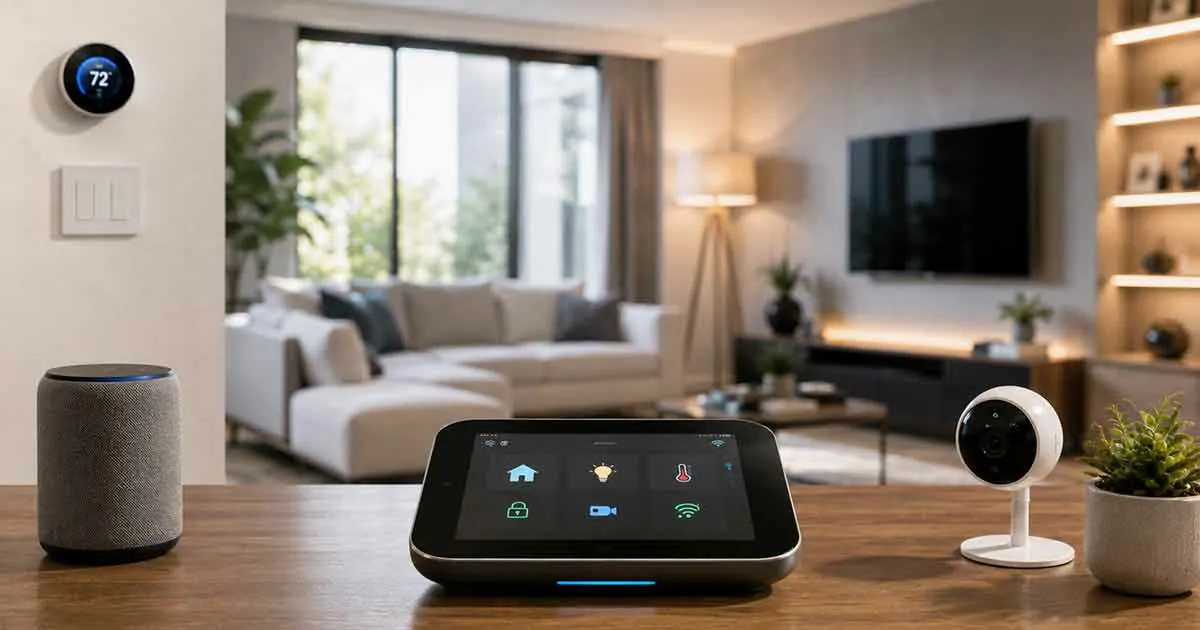
Smart home technology continues to grow as more homeowners connect devices such as smart lights, thermostats, speakers, security cameras, and smart plugs. While many devices can operate independently, managing multiple products from different brands can become complicated.
Smart home hubs help solve this problem by providing a central platform that connects and manages compatible devices throughout the home.
This guide explains what smart home hubs are, their benefits, important features to consider, and how to choose the best smart home hub for your needs.
What Is a Smart Home Hub?
A smart home hub is a device or platform that acts as a central control point for connected smart home products.
Instead of managing multiple apps for different devices, a hub allows homeowners to control compatible products through a single system.
A smart home hub can connect products such as:
- Smart lights
- Smart thermostats
- Smart speakers
- Smart plugs
- Smart security devices
- Smart sensors
The goal is to simplify smart home management and improve automation.
Benefits of Smart Home Hubs
Centralized Device Management
One of the biggest advantages of a smart home hub is centralized control.
Instead of switching between different applications, users can manage multiple devices from one platform.
Better Home Automation
Smart home hubs make advanced automation easier.
Examples include:
- Turning lights on when motion is detected
- Adjusting temperature when nobody is home
- Activating security routines at night
Automation improves convenience and efficiency.
Improved Device Compatibility
Many smart home devices use different communication methods.
A smart home hub can help connect products that might not otherwise work together effectively.
Simplified User Experience
Managing a connected home becomes easier when all devices are accessible from one interface.
This reduces complexity and improves everyday usability.
Enhanced Smart Home Expansion
As homeowners add more devices over time, a smart home hub helps maintain organization and control.
It provides a scalable foundation for future upgrades.
Important Smart Home Hub Features
Device Compatibility
Compatibility is one of the most important factors when choosing a hub.
Before purchasing, verify support for:
- Existing devices
- Planned future devices
- Preferred smart home platforms
Automation Capabilities
A quality hub should support advanced automation features.
Useful options include:
- Custom routines
- Scheduling
- Device grouping
- Trigger-based actions
Voice Assistant Integration
Many homeowners use voice control as part of their smart home experience.
A good hub should work well with supported voice assistants.
Mobile App Support
The companion app should provide:
- Easy setup
- Device management
- Automation controls
- Notifications
Security Features
Smart home hubs should offer strong security protections.
Important features include:
- Secure account management
- Software updates
- Device access controls
Connectivity Options
Common connectivity technologies include:
- Wi-Fi
- Bluetooth
- Zigbee
- Z-Wave
- Matter support
Broader compatibility often provides greater flexibility.
Types of Smart Home Hubs
Standalone Smart Home Hubs
These dedicated devices are designed specifically for managing smart home products.
They typically offer extensive automation capabilities and broad device compatibility.
Smart Speaker Hubs
Some smart speakers can also function as smart home hubs.
They combine:
- Voice control
- Smart home management
- Entertainment features
This option is popular among beginners.
Integrated Smart Home Platforms
Some ecosystems use software-based platforms rather than dedicated hub hardware.
These solutions allow compatible devices to communicate through a central application.
How to Choose the Best Smart Home Hub
Evaluate Your Existing Devices
Start by identifying the smart devices already installed in your home.
Compatibility should always be a top priority.
Consider Future Expansion
Choose a hub that supports future growth.
Adding new devices should be simple and straightforward.
Compare Automation Features
Automation capabilities vary significantly between platforms.
Look for systems that support:
- Custom routines
- Multiple device triggers
- Flexible scheduling
Review User Experience
An intuitive interface can make a major difference in daily use.
A simple and reliable app improves overall satisfaction.
Smart Home Hubs and Home Automation
Smart home hubs play a major role in home automation.
They can coordinate multiple devices and create intelligent routines.
Examples include:
- Turning off lights when everyone leaves home
- Locking doors automatically at night
- Adjusting thermostats based on occupancy
- Activating security devices during vacations
These automations help create a more convenient and efficient living environment.
Common Smart Home Hub Buying Mistakes
Ignoring Compatibility
A hub that does not support important devices can create unnecessary limitations.
Focusing Only on Price
The lowest-cost option may not provide sufficient compatibility or automation features.
Buying Without a Growth Plan
Homeowners should consider how their smart home may expand over time.
Overlooking Security
Connected devices and automation systems should always be protected through proper security settings and updates.
Frequently Asked Questions
Do I need a smart home hub?
Not always. Some smart devices work independently, but a hub can simplify management and improve automation.
Can a smart speaker replace a smart home hub?
Some smart speakers include hub functionality, depending on the platform and supported devices.
Are smart home hubs difficult to install?
Most modern hubs are designed for simple setup through a mobile application.
What devices can connect to a smart home hub?
Compatibility depends on the hub, but many support lights, thermostats, speakers, plugs, cameras, locks, and sensors.
Are smart home hubs worth buying?
For homeowners with multiple connected devices, a smart home hub can improve convenience, organization, and automation.
Final Thoughts
Smart home hubs provide a central foundation for managing connected devices and creating powerful automation routines.
By choosing a hub with strong compatibility, useful automation features, and reliable security, homeowners can build a more organized and efficient smart home.
For anyone planning to expand their smart home ecosystem, a quality smart home hub can be a valuable long-term investment.