
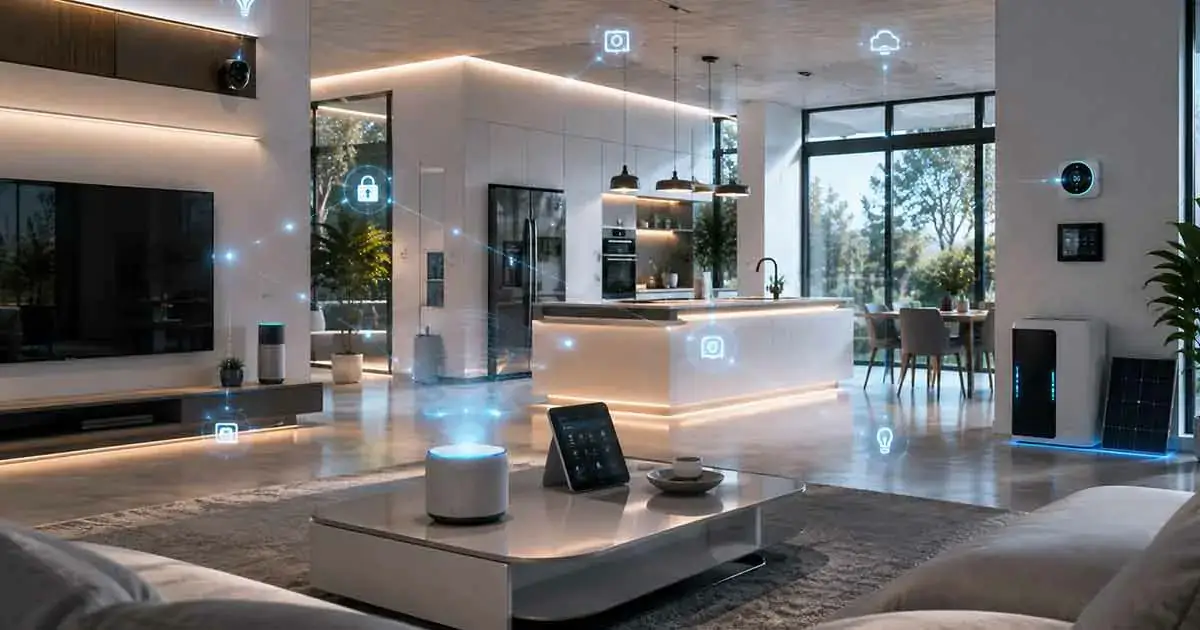
Smart home technology is changing the way people interact with their homes. From intelligent automation and energy management to advanced security systems, connected living continues to evolve rapidly.
As technology becomes more accessible, smart homes are moving beyond simple gadgets and becoming complete ecosystems designed to improve comfort, efficiency, safety, and everyday convenience.
This guide explores the biggest smart home trends shaping the future of connected living and what homeowners should know before investing in new technology.
The Growth of Smart Home Technology
Smart homes have evolved from basic remote-controlled devices into advanced systems that can automatically respond to homeowner needs.
Modern smart homes now include:
- Connected appliances
- Intelligent security systems
- Automated lighting
- Energy management solutions
- Voice-controlled devices
The focus is shifting from individual products to complete connected experiences.
Artificial Intelligence in Smart Homes
Artificial intelligence is becoming one of the most important smart home trends.
AI-powered systems can learn from user behavior and improve automation over time.
Examples include:
- Personalized temperature control
- Smart recommendations
- Predictive home routines
- Improved energy management
AI helps smart homes become more adaptive and efficient.
Matter and Improved Device Compatibility
One of the biggest challenges in smart homes has been device compatibility.
Matter is helping solve this problem by creating a common standard that allows different brands and platforms to work together more easily.
Benefits include:
- More device choices
- Easier setup
- Better ecosystem flexibility
- Improved user experience
Energy-Efficient Smart Homes
Energy management is becoming a major focus for homeowners.
Smart technology helps reduce energy waste through:
- Smart thermostats
- Energy monitoring systems
- Automated lighting
- Smart appliances
Future smart homes will increasingly focus on efficiency and sustainability.
Advanced Smart Home Security
Security remains one of the strongest drivers of smart home adoption.
Future security solutions include:
- AI-powered cameras
- Smart locks
- Advanced sensors
- Real-time alerts
Connected security systems provide homeowners with better awareness and control.
Voice Control and Natural Interaction
Voice assistants continue to improve how people interact with smart homes.
Future systems will become better at understanding:
- Natural language
- User preferences
- Daily routines
Voice control will become more seamless and integrated into everyday life.
Smart Home Health and Wellness Technology
A growing trend is the use of smart technology to improve indoor health.
Examples include:
- Air quality monitoring
- Smart lighting for better sleep routines
- Temperature optimization
- Humidity control
Smart homes are becoming focused not only on convenience but also on healthier living environments.
Robotics in Smart Homes
Robotics is becoming more common in connected homes.
Examples include:
- Robot vacuum cleaners
- Automated lawn equipment
- Smart home assistants
Future robots will likely become more intelligent and capable of handling more household tasks.
Smart Appliances Becoming More Connected
Traditional appliances are becoming smarter.
Connected appliances can provide:
- Remote control
- Usage insights
- Maintenance notifications
- Energy optimization
This trend is transforming kitchens and everyday household tasks.
Personalized Smart Home Automation
Future smart homes will rely more on personalized automation.
Instead of manually controlling devices, systems will automatically adapt based on:
- User habits
- Time schedules
- Home conditions
- Personal preferences
The goal is a home that works intelligently in the background.
Better Smart Home Privacy and Security
As more devices collect data, privacy will become increasingly important.
Future smart homes will focus on:
- Stronger security features
- Better data controls
- More transparent privacy options
Homeowners will expect convenience without sacrificing protection.
Smart Home Technology for Aging in Place
Smart technology is also supporting independent living for older adults.
Useful solutions include:
- Emergency alerts
- Smart monitoring systems
- Automated lighting
- Safety sensors
These technologies can help create safer and more comfortable homes.
Sustainable Smart Homes
Sustainability is becoming a key part of future home design.
Smart systems can help homeowners:
- Reduce energy consumption
- Monitor resource usage
- Improve efficiency
Connected technology will play an important role in creating more sustainable homes.
Common Smart Home Trends to Watch
The future of smart homes will likely include:
- More AI integration
- Better device compatibility
- Increased automation
- Stronger security
- Greater energy efficiency
- More personalized experiences
How Homeowners Can Prepare for Future Smart Homes
Homeowners can prepare by:
Choosing Flexible Platforms
Select systems that support multiple devices and future expansion.
Building Strong Network Infrastructure
A reliable network is essential for future connected devices.
Investing in Compatible Devices
Choosing products with modern standards helps avoid compatibility problems.
Prioritizing Security
Security should be considered from the beginning of any smart home project.
Frequently Asked Questions
What are the biggest smart home trends?
Major trends include AI automation, better compatibility, energy efficiency, advanced security, and personalized experiences.
Will smart homes become fully automated?
Many homes will become more automated, but users will still have control over important settings.
Is Matter important for future smart homes?
Matter is expected to play an important role by improving compatibility between smart devices.
Are smart homes becoming more secure?
Security technology is improving, but homeowners still need strong passwords, updates, and good privacy practices.
What should I invest in first for a future smart home?
Start with reliable infrastructure, smart hubs, networking, and devices that solve real needs.
Final Thoughts
Smart home trends show that connected living is moving toward greater intelligence, efficiency, and personalization.
The future smart home will not simply contain more devices. It will become a connected environment that understands homeowner needs and responds automatically.
By following emerging trends and choosing flexible technology, homeowners can build smarter, safer, and more efficient living spaces.