
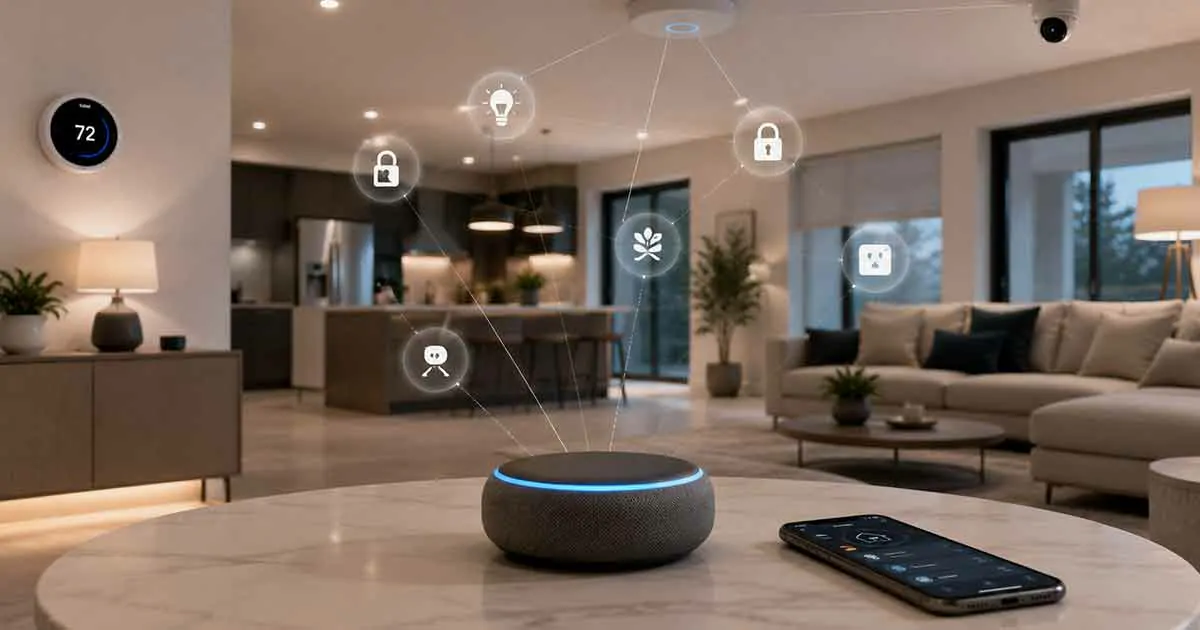
Smart home technology is evolving quickly, and one of the biggest changes in recent years is the introduction of Matter, a new connectivity standard designed to make smart devices work together more easily.
For years, homeowners have faced compatibility issues between different smart home brands and platforms. Matter aims to simplify this experience by creating a common communication standard that allows compatible devices to connect more reliably.
This guide explains what Matter is, how it works, its benefits, and how it may change the future of smart homes.
What Is Matter in Smart Homes?
Matter is a smart home connectivity standard designed to improve compatibility between connected devices from different manufacturers.
Instead of requiring homeowners to choose devices from a single ecosystem, Matter allows compatible products to communicate through a shared standard.
Matter supports devices such as:
- Smart lights
- Smart locks
- Smart thermostats
- Smart speakers
- Smart sensors
- Smart home controllers
The goal is to create a more unified smart home experience.
Why Was Matter Created?
Before Matter, smart home devices often depended on different communication systems and platforms.
Common challenges included:
- Limited device compatibility
- Multiple apps for different products
- Complex setup processes
- Difficulty expanding smart homes
Matter was created to reduce these problems and make smart homes easier to build and manage.
Benefits of Matter Smart Homes
Better Device Compatibility
One of the biggest advantages of Matter is improved compatibility.
Homeowners can choose from more products without being restricted to one brand ecosystem.
Easier Smart Home Setup
Matter aims to simplify installation and connection between devices.
This helps beginners create smart homes with fewer technical challenges.
More Flexible Device Choices
With broader compatibility, users can select products based on features and quality rather than ecosystem limitations.
Improved Reliability
Matter is designed to provide more consistent communication between supported smart home devices.
Future-Proof Smart Homes
Choosing Matter-compatible products can help homeowners prepare their smart homes for future technology developments.
How Does Matter Work?
Matter works as a common language that allows compatible smart devices to communicate.
It operates over existing networking technologies, including:
- Wi-Fi
- Ethernet
- Thread
Matter does not replace all existing technologies but helps devices communicate more effectively across different platforms.
Matter and Smart Home Platforms
Matter is supported by major smart home platforms.
This allows users to control compatible devices through their preferred systems.
Supported platforms include:
- Apple Home
- Google Home
- Amazon Alexa
- Samsung SmartThings
This flexibility gives homeowners more control over their smart home choices.
Matter vs Traditional Smart Home Systems
Traditional smart home setups often require products from the same ecosystem.
For example:
- One brand for lights
- Another platform for speakers
- Separate applications for different devices
Matter changes this approach by allowing compatible products to work together more easily.
Matter-Compatible Smart Home Devices
Many categories of smart home products are adopting Matter support.
Examples include:
Smart Lighting
Matter-compatible smart lights can work with multiple smart home platforms.
Smart Locks
Connected locks can become easier to integrate with different smart home systems.
Smart Thermostats
Matter helps thermostats communicate more effectively with other devices.
Smart Sensors
Sensors can provide information to multiple compatible platforms.
Smart Home Hubs
Smart home controllers can use Matter to manage more connected devices.
How Matter Changes Smart Home Automation
Matter can improve automation by making device communication easier.
Examples include:
- Turning lights on when a smart lock is unlocked
- Adjusting thermostats based on home activity
- Creating routines across different brands
This creates a more flexible and powerful smart home environment.
Is Matter Important for New Smart Homes?
For homeowners building a new smart home, Matter can be an important consideration.
Benefits include:
- More device options
- Easier expansion
- Better long-term compatibility
However, users should still check whether specific devices support the features they need.
Common Matter Smart Home Mistakes
Assuming Every Smart Device Supports Matter
Not all smart devices are automatically compatible with Matter.
Always check product specifications.
Replacing Existing Devices Too Quickly
Many current smart devices can continue working without Matter.
Upgrading should depend on actual needs.
Ignoring Network Requirements
A reliable home network remains important for connected devices.
Focusing Only on Compatibility
Device quality, security, and features are still important factors.
Frequently Asked Questions
What is Matter in smart homes?
Matter is a connectivity standard that helps smart home devices from different brands work together more easily.
Does Matter replace Wi-Fi?
No. Matter works with existing networking technologies such as Wi-Fi, Ethernet, and Thread.
Do I need Matter devices?
Not necessarily, but Matter-compatible devices can provide better flexibility for future smart home expansion.
Can Matter devices work with multiple platforms?
Yes. Matter is designed to improve compatibility between supported smart home platforms.
Will Matter make smart homes easier?
Matter aims to simplify setup, improve compatibility, and make connected homes easier to manage.
Final Thoughts
Matter represents an important step toward a more connected and flexible smart home future.
By improving compatibility between devices and platforms, Matter can make it easier for homeowners to build, expand, and manage smart homes.
As more manufacturers adopt Matter, it is expected to become an important foundation for modern connected living.