
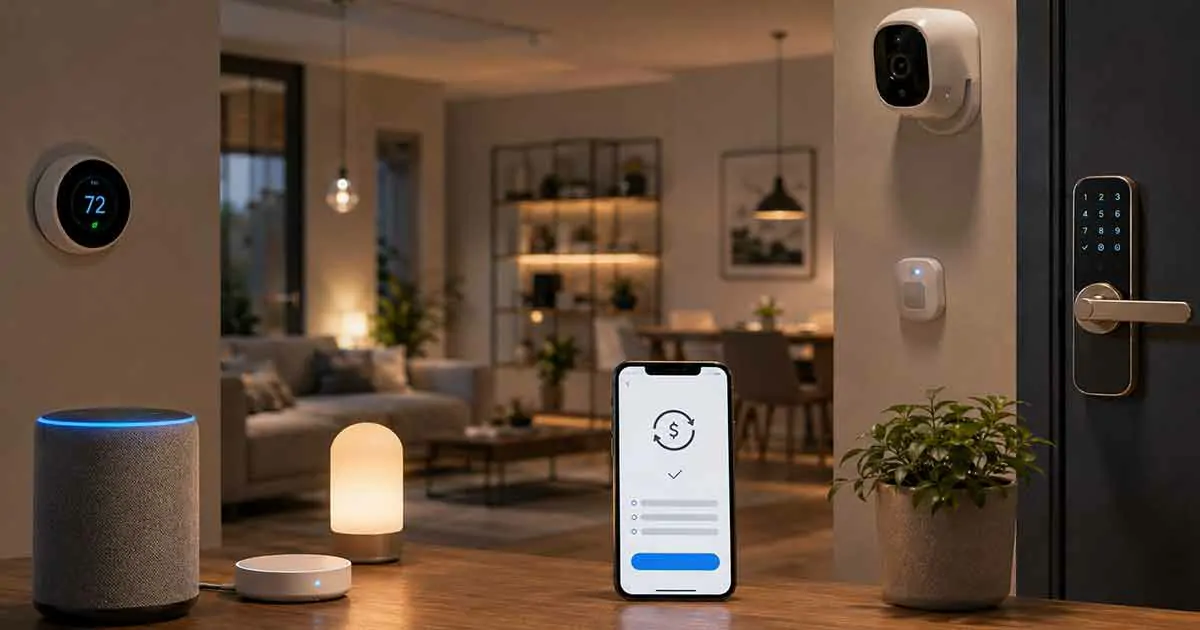
Smart home devices are often advertised with attractive prices, but the purchase price is only part of the total cost.
Some smart home products work without recurring fees, while others require a monthly or annual subscription for important features. Cloud storage, advanced camera detection, AI tools, professional monitoring, extended video history, and premium automation can all increase the long-term cost of owning a smart home.
This makes the question more important than simply asking:
“How much does the smart device cost?”
A better question is:
“How much will this smart home device cost me over several years?”
Understanding smart home subscription costs before buying can help homeowners avoid unexpected recurring expenses and choose devices that provide better long-term value.
Table of Contents
What Is a Smart Home Subscription?
A smart home subscription is a recurring payment that provides access to additional services or features for a connected device.
Depending on the product, a subscription may provide:
- Cloud video storage
- Extended video history
- Advanced AI detection
- Professional security monitoring
- Advanced automation
- Energy reports
- Premium app features
- Cloud backup
- Smart home integrations
- Additional user features
Not every smart device requires a subscription.
Many products offer basic functionality without recurring fees, while charging for optional advanced features.
Why Do Smart Home Companies Charge Subscriptions?
Smart home subscriptions usually pay for ongoing services rather than the physical hardware.
For example, a security camera may cost money to manufacture once, but its cloud service may require continuous expenses for:
- Server storage
- Video processing
- AI analysis
- Data transfer
- Software development
- Security updates
- Customer support
A subscription allows the manufacturer to continue funding these services.
This is why two cameras with similar hardware prices can have very different long-term ownership costs.
Which Smart Home Devices Commonly Require Subscriptions?
Subscriptions are most common in certain categories.
Security Cameras
Cloud storage and advanced AI detection are common subscription features.
Video Doorbells
Extended video history, intelligent detection, and additional storage may require a paid plan.
Home Security Systems
Professional monitoring often requires recurring payments.
Smart Locks
Some models offer optional subscriptions for advanced cloud features or integrations.
Smart Thermostats
Basic control is often available without a subscription, but some advanced services may have recurring fees.
AI Smart Home Assistants
Some advanced AI capabilities may be included only with premium services.
Energy Management Systems
Certain advanced analytics platforms may charge for additional reporting or cloud services.
Smart Home Costs: Hardware vs Subscription
The total cost of ownership can be divided into several categories.
Initial Hardware Cost
This is the amount paid for the device.
Hub Cost
Some systems require a central hub or bridge.
Subscription Cost
This is the recurring monthly or annual payment.
Installation Cost
Professional installation may be necessary for some security systems or larger projects.
Replacement Cost
Battery-powered devices may require replacement batteries, while some hardware eventually needs replacement.
Electricity Cost
Connected devices consume electricity, although most small smart home devices use relatively little power.
Considering all of these costs provides a more realistic picture of smart home ownership.
How Much Can Smart Home Subscriptions Cost?
Subscription prices vary considerably by company and service.
A basic plan may cost only a few dollars per month.
Advanced security or monitoring plans can cost significantly more.
For example, consider a hypothetical subscription of:
$5 per month
That equals:
- $60 per year
- $180 over three years
- $300 over five years
Now consider:
$15 per month
That becomes:
- $180 per year
- $540 over three years
- $900 over five years
And:
$30 per month
becomes:
- $360 per year
- $1,080 over three years
- $1,800 over five years
The important point is that a small monthly fee can become a significant long-term expense.
The Five-Year Cost Matters Most
Many homeowners compare products based on their purchase price.
Suppose two security cameras cost:
Camera A: $100 with no subscription
Camera B: $60 with a $5 monthly subscription
At first, Camera B looks cheaper.
But over five years:
Camera A: $100
Camera B: $60 + $300 in subscriptions = $360
The cheaper device at checkout becomes the more expensive option over time.
This does not automatically make the subscription product a bad purchase.
The paid service may provide better AI detection, storage, monitoring, or other features.
The point is to compare the complete cost.
Smart Home Subscription Cost Formula
A simple calculation can help compare products.
Total Cost = Hardware + Hub + Installation + Subscription Fees + Other Recurring Costs
For subscription products:
Five-Year Subscription Cost = Monthly Fee × 60
For annual subscriptions:
Five-Year Subscription Cost = Annual Fee × 5
Then add the hardware and other required costs.
This gives you a much clearer comparison.
Free vs Paid Smart Home Features
Many smart home products use a freemium model.
Basic features may be available without payment.
Premium features require a subscription.
For example, a security camera might provide:
Without subscription:
- Live video
- Basic notifications
- Local control
With subscription:
- Extended video history
- Advanced AI detection
- Cloud storage
- Smart event summaries
This can be a reasonable model if the free features are sufficient for your needs.
The problem occurs when important functionality is locked behind recurring payments.
Smart Home Devices Without Subscriptions
There are many ways to reduce recurring costs.
Look for products that offer:
- Local control
- Local storage
- No monthly fee
- One-time purchase
- Local automation
- Standard protocols
- Optional cloud services
Devices using technologies such as Zigbee, Z-Wave, or Thread can sometimes be part of a locally controlled system.
However, the communication protocol alone does not guarantee that a product is completely subscription-free.
Always check the manufacturer’s feature list.
Security Cameras Without Monthly Fees
Security cameras are one of the easiest categories in which to accumulate subscription costs.
Before purchasing a camera, determine whether it supports:
- Local microSD storage
- Network video recording
- Local recording
- Free basic event history
- Optional cloud storage
A local-storage camera can potentially eliminate recurring cloud storage fees.
However, local storage also introduces responsibilities such as:
- Protecting the storage device
- Managing recordings
- Maintaining backups
- Securing local network access
Video Doorbell Subscription Costs
Video doorbells can also involve recurring costs.
Basic functions may include:
- Live video
- Doorbell notifications
- Two-way audio
Premium features may include:
- Longer video history
- Person detection
- Package detection
- Advanced AI analysis
- Cloud storage
If you are comparing doorbells, calculate the five-year cost rather than comparing only the hardware prices.
Professional Home Security Monitoring
Professional monitoring is different from a basic device subscription.
With professional monitoring, a security company may monitor alarms and respond according to the service plan.
This can provide additional value for homeowners who want professional assistance.
However, it creates an ongoing cost.
Before signing up, check:
- Monthly monitoring fee
- Contract length
- Equipment cost
- Installation fee
- Cancellation terms
- Emergency response services
- Cellular backup
- Battery backup
- Included devices
Professional monitoring can be worthwhile, but it should be evaluated separately from optional cloud features.
Smart Lock Subscription Costs
Many smart locks do not require subscriptions for basic operation.
Depending on the product, you may be able to use:
- Physical keys
- Keypads
- Bluetooth
- Local smart home control
Some cloud services may add:
- Remote access
- Activity history
- Temporary access management
- Advanced integrations
Before buying a smart lock, determine which features are available without recurring payments.
For a front-door device, basic access should remain reliable even if the internet or subscription service becomes unavailable.
Smart Thermostat Subscription Costs
Smart thermostats often provide basic functionality without a subscription.
You can typically expect features such as:
- Temperature control
- Scheduling
- Basic app access
Advanced services may include:
- Energy reports
- Utility programs
- Advanced optimization
- Premium analytics
If the main goal is temperature control, a subscription may not be necessary.
If advanced energy management is important, a paid service may provide additional value.
Smart Home AI Subscription Costs
AI is becoming another potential source of recurring costs.
Advanced AI services may offer:
- Natural-language control
- Smart home assistance
- Camera event summaries
- Personalized recommendations
- Automated routine creation
- Advanced analysis
Cloud AI requires ongoing computing resources, so some manufacturers may package these capabilities into paid plans.
When evaluating AI features, ask whether they are essential or simply convenient extras.
Smart Home Energy Management Costs
Energy-monitoring systems can vary significantly in pricing.
A basic energy-monitoring device may provide consumption information without a recurring fee.
Advanced systems may charge for:
- Historical analytics
- Detailed reports
- AI recommendations
- Cloud storage
- Multiple property support
If your goal is simply to understand electricity consumption, a one-time purchase may be enough.
If you want advanced optimization, a subscription may provide additional value.
Hidden Smart Home Costs
Subscription fees are not the only hidden costs.
Hub or Bridge
Some devices require a hub.
Cloud Storage
Camera recordings can consume significant storage.
Replacement Batteries
Sensors and locks may use batteries.
Installation
Security systems may require professional installation.
Upgraded Internet
A large smart home may require better Wi-Fi coverage or networking hardware.
Additional Accessories
Some devices need:
- Bridges
- Sensors
- Mounting hardware
- Hubs
- Replacement parts
These costs should be included in the total budget.
Smart Home Hub Costs
A hub can be an additional upfront expense.
However, a hub can sometimes reduce long-term subscription dependence.
For example, a local controller can coordinate:
- Zigbee devices
- Z-Wave devices
- Thread devices
- Local automations
Instead of paying several manufacturers for cloud services, homeowners may prefer a local system with a one-time hardware investment.
The trade-off is greater setup and maintenance responsibility.
Does Local Control Save Money?
It can.
A locally controlled smart home may reduce recurring cloud costs.
For example, instead of paying monthly for cloud automation and storage, you may use:
Local hub + local devices + local storage
This can reduce ongoing expenses.
However, local systems are not automatically free.
You may need to purchase:
- A hub
- Storage
- Networking equipment
- Backup hardware
The correct comparison is the total long-term cost.
How Subscriptions Affect Affiliate Purchases
When comparing smart home products, the subscription model can significantly influence purchasing decisions.
A product with a higher upfront price but no recurring fee may be more attractive to a homeowner who plans to keep it for many years.
Another product may be worth paying for if its subscription provides services that would otherwise be expensive or difficult to reproduce.
For buyers, the key is matching the recurring service to the actual value received.
How to Compare Smart Home Products
Use a simple comparison framework.
Hardware Price
How much does the device cost?
Required Hub
Does it need additional hardware?
Subscription
Is a subscription required?
Optional Subscription
Are premium features available without paying?
Local Control
Can the device work locally?
Local Storage
Can data be stored at home?
Five-Year Cost
What will the complete system cost over five years?
Feature Value
Are the paid features actually useful?
This makes product comparisons much more meaningful.
A Simple Five-Year Comparison
Consider three hypothetical smart home products.
| Product | Hardware | Monthly Fee | 5-Year Subscription | Five-Year Total |
|---|---|---|---|---|
| Device A | $100 | $0 | $0 | $100 |
| Device B | $80 | $5 | $300 | $380 |
| Device C | $150 | $10 | $600 | $750 |
Device A has the lowest long-term cost.
Device B has a moderate upfront price but becomes considerably more expensive over five years.
Device C costs the most overall but may offer significantly more advanced services.
The cheapest option is not automatically the best.
The goal is to identify the best value.
When Is a Subscription Worth Paying For?
A subscription can be worthwhile when it provides a service that is difficult to replace.
Examples include:
Professional Security Monitoring
Professional monitoring can provide a service beyond what a standalone device offers.
Advanced AI Detection
Sophisticated camera analysis can save time and reduce unnecessary alerts.
Cloud Backup
Cloud storage can protect important recordings from local hardware failure.
Advanced Energy Analysis
Detailed energy analytics may help identify savings opportunities.
Extended Device History
Long-term event history can be useful for security and troubleshooting.
The key question is:
Would you pay for this service if it were not bundled with the device?
If the answer is no, reconsider whether the subscription is necessary.
When Is a Subscription Not Worth It?
A subscription may not be worthwhile when:
- You only need basic device control.
- Local storage is available.
- Local automation is supported.
- The premium features are rarely used.
- You can achieve the same result with another device.
- The recurring fee is high compared with the device’s value.
For example, paying a monthly fee simply to access a basic smart plug may provide little value.
How to Avoid Smart Home Subscription Costs
Choose Local Devices
Prioritize products with local control.
Use Local Storage
For cameras, local recording can reduce cloud-storage fees.
Use Standard Protocols
Zigbee, Z-Wave, Thread, and Matter-compatible devices can provide more flexibility depending on the ecosystem.
Build Gradually
Buy only the devices that solve real problems.
Calculate Five-Year Costs
Do this before purchasing expensive systems.
Avoid Unnecessary Premium Features
Do not pay for features you will never use.
Are Subscription-Free Smart Homes Better?
Not necessarily.
A subscription-free system can reduce long-term expenses and cloud dependence.
But subscription services can provide valuable features.
The better question is:
Which model provides the best value for your household?
A homeowner who wants professional security monitoring may gladly pay a monthly fee.
Another homeowner may prefer a local camera with local storage and no recurring cost.
Both approaches can be reasonable.
Smart Home Subscription Costs and Privacy
Subscriptions can also affect privacy.
Cloud-based services may require the manufacturer to process information remotely.
Depending on the product, this can include:
- Video recordings
- Voice commands
- Device activity
- Household routines
- Energy information
Local processing and storage can reduce cloud exposure.
Before subscribing, review the provider’s privacy policy and understand what data the service requires.
Smart Home Subscription Costs and Reliability
Cloud services introduce another dependency.
If a company experiences an outage, your device’s cloud features may temporarily stop working.
If a subscription service is discontinued, certain features may disappear entirely.
This is why local functionality is valuable.
A smart device should ideally retain useful basic functions even if the cloud service becomes unavailable.
What Happens If You Cancel a Smart Home Subscription?
This varies by product.
Some devices continue working normally but lose premium features.
Others may lose access to important cloud services.
Before subscribing, check what happens after cancellation.
Ask:
- Does the device continue working?
- Is local control retained?
- Are recordings deleted?
- Does video history disappear?
- Are advanced detections disabled?
- Can the subscription be restarted later?
This information can significantly affect the product’s long-term value.
Smart Home Subscription Checklist
Before buying a subscription-based smart home product, check:
- Hardware price
- Required hub
- Monthly cost
- Annual cost
- Five-year cost
- Required subscription
- Optional subscription
- Features locked behind payment
- Local control
- Local storage
- Internet requirements
- Cancellation terms
- Privacy policy
- Long-term support
This simple checklist can prevent expensive surprises.
The Best Smart Home Strategy for Long-Term Value
A balanced smart home usually combines subscription-free devices with carefully selected premium services.
For example:
Local sensors + local switches + local automation
can provide the foundation.
Then you can selectively add subscriptions where they provide real value.
For example:
Professional security monitoring
or:
Advanced cloud video analysis
This approach prevents recurring fees from spreading across every device in the home.
Final Thoughts
Smart home subscription costs can significantly change the true price of connected-home technology.
A device that costs $50 or $100 upfront may become much more expensive if it requires a recurring payment for essential features.
Before purchasing, calculate the total cost of ownership, not just the initial price.
Look at the hardware, hub, installation, subscription, storage, and other recurring expenses.
For many homeowners, local control and subscription-free devices can provide excellent long-term value.
For others, premium services such as professional monitoring, cloud backup, or advanced AI can justify the additional cost.
The smartest approach is not to avoid every subscription.
It is to pay only for services that provide meaningful value while keeping essential home functions reliable without unnecessary recurring costs.