
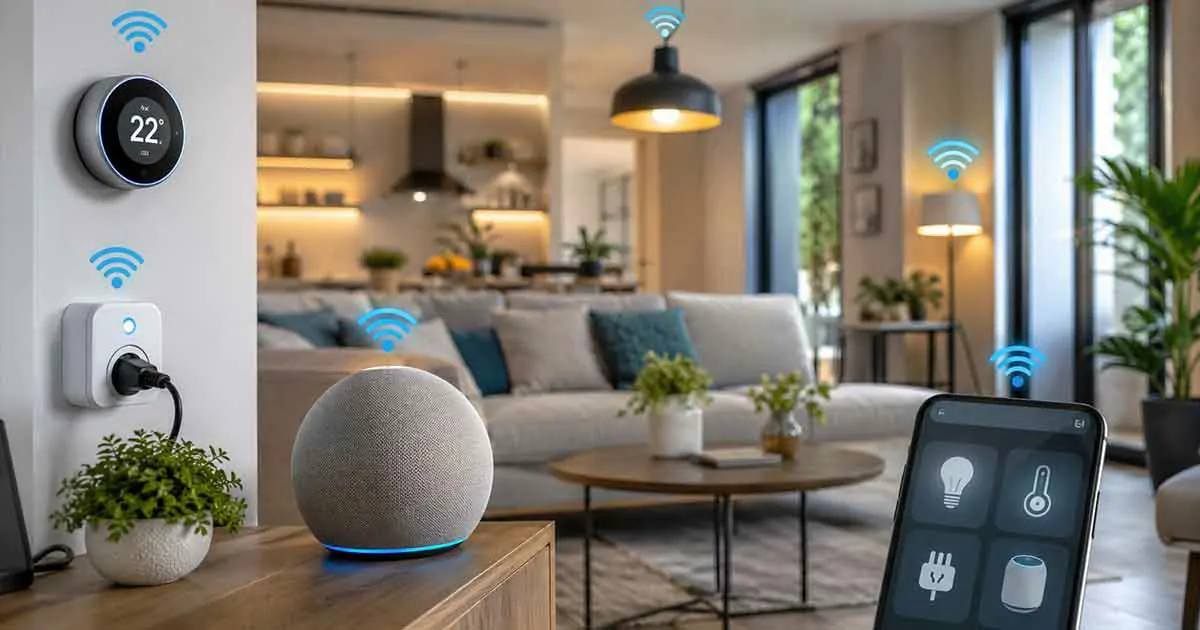
Smart home devices have made it easier than ever to improve comfort, security, and efficiency at home. From controlling lights with your voice to managing your home’s temperature automatically, connected devices can simplify everyday tasks and create a more convenient living environment.
For beginners, choosing the right smart home devices can be challenging because there are thousands of products available with different features, platforms, and prices.
The best approach is to start with practical devices that solve real problems and can easily expand into a complete smart home system.
This guide covers the best smart home devices for beginners, their benefits, key features, and how to choose the right options for your home.
What Are Smart Home Devices?
Smart home devices are connected products that can communicate through the internet or wireless networks and be controlled automatically or remotely.
They allow homeowners to:
- Control devices from smartphones
- Use voice commands
- Create automated routines
- Monitor home activity
- Improve energy efficiency
Smart devices can work individually or together as part of a complete smart home ecosystem.
Benefits of Smart Home Devices
Increased Convenience
Smart devices reduce the need for manual tasks.
Examples include:
- Turning lights on automatically
- Adjusting temperature remotely
- Controlling appliances with voice commands
Automation helps make daily routines easier.
Improved Energy Efficiency
Many smart devices help homeowners reduce unnecessary energy usage.
Benefits include:
- Better temperature control
- Automated lighting schedules
- Energy monitoring
Enhanced Home Security
Smart security devices provide better awareness and control.
Examples include:
- Smart cameras
- Smart locks
- Video doorbells
- Motion sensors
These devices allow homeowners to monitor their homes remotely.
Better Comfort
Smart devices can personalize the home environment.
Examples:
- Customized lighting scenes
- Automatic temperature adjustments
- Scheduled routines
Best Smart Home Devices for Beginners
1. Smart Speakers
Smart speakers are often considered one of the best starting points for a smart home.
They provide:
- Voice control
- Device management
- Entertainment features
- Smart assistant functions
A smart speaker can act as a central control point for connected devices.
2. Smart Light Bulbs
Smart bulbs are simple, affordable, and easy to install.
Features include:
- Remote control
- Scheduling
- Brightness adjustment
- Color options
They are a great first step for beginners who want to experience smart home automation.
3. Smart Plugs
Smart plugs can make traditional electronics smarter.
They allow users to:
- Turn devices on and off remotely
- Create schedules
- Control appliances automatically
Smart plugs are useful for lamps, coffee makers, fans, and other household devices.
4. Smart Thermostats
Smart thermostats help homeowners manage heating and cooling more efficiently.
Common features include:
- Remote temperature control
- Automatic schedules
- Energy reports
- Learning capabilities
They can improve comfort while reducing energy waste.
5. Smart Security Cameras
Smart cameras provide remote monitoring and increased awareness.
Important features include:
- HD video
- Motion detection
- Night vision
- Mobile notifications
They are especially useful for homeowners who want improved security.
6. Smart Door Locks
Smart locks provide convenient and secure access control.
Benefits include:
- Keyless entry
- Remote locking
- Temporary access codes
- Activity tracking
They are a popular upgrade for modern homes.
7. Video Doorbells
Video doorbells combine security monitoring with communication.
They allow homeowners to:
- See visitors
- Receive alerts
- Communicate remotely
- Monitor deliveries
8. Smart Sensors
Sensors can automate different parts of the home.
Common types include:
- Motion sensors
- Door sensors
- Temperature sensors
- Water leak sensors
They provide useful information and trigger automated actions.
9. Smart Displays
Smart displays combine voice assistants with visual controls.
Features may include:
- Video calls
- Security camera viewing
- Recipes
- Calendar management
10. Smart Appliances
Smart appliances bring connectivity to everyday household products.
Examples include:
- Smart refrigerators
- Smart ovens
- Smart washing machines
They can improve convenience and efficiency.
How to Choose Smart Home Devices
Check Compatibility
Before buying, make sure devices work with your preferred smart home platform.
Popular platforms include:
- Google Home
- Amazon Alexa
- Apple HomeKit
Start With Your Goals
Choose devices based on what you want to improve.
Common goals include:
- Security
- Energy savings
- Comfort
- Convenience
Avoid Buying Too Many Devices
A simple, organized system is easier to manage.
Start with essential devices and expand gradually.
Consider Privacy and Security
Connected devices should be protected with:
- Strong passwords
- Updated software
- Secure networks
Beginner Smart Home Setup Ideas
Basic Setup
A simple beginner setup may include:
- Smart speaker
- Smart bulbs
- Smart plugs
Security-Focused Setup
For improved protection:
- Smart camera
- Video doorbell
- Smart lock
- Motion sensors
Energy-Saving Setup
For efficiency:
- Smart thermostat
- Smart lighting
- Energy monitoring devices
Common Smart Home Device Mistakes
Choosing Incompatible Devices
Always check platform compatibility before purchasing.
Focusing Only on Price
The cheapest device may not provide the best long-term value.
Ignoring Security Settings
Smart devices need proper account protection.
Creating Too Much Complexity
A smart home should make life easier, not more complicated.
Frequently Asked Questions
What is the best smart home device for beginners?
Smart speakers, smart bulbs, and smart plugs are popular starting points because they are affordable and easy to use.
Are smart home devices expensive?
Costs vary. Beginners can create a useful setup with affordable devices.
Do smart home devices need Wi-Fi?
Many devices require Wi-Fi, although some use other wireless technologies.
Can smart home devices work together?
Yes. Compatible devices can connect through smart home platforms and automation systems.
Are smart home devices secure?
With strong passwords, updates, and secure networks, smart devices can provide reliable functionality.
Final Thoughts
Smart home devices allow homeowners to improve convenience, security, comfort, and energy efficiency. Beginners do not need to automate everything at once.
Starting with practical devices and building gradually is the best way to create a reliable smart home system. By choosing compatible products and focusing on real needs, anyone can enjoy the benefits of connected living.