
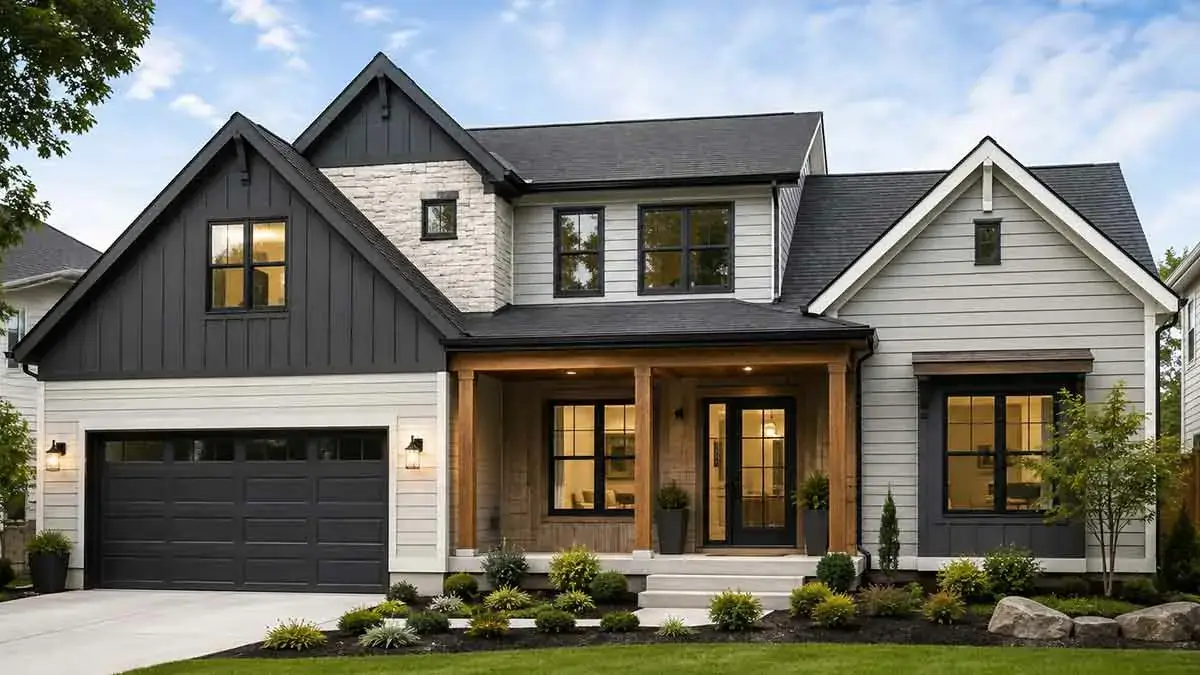
Choosing the right siding is an important decision when building a new home, replacing aging exterior materials, or planning an exterior renovation. Siding does more than determine how a house looks. It forms an important part of the home’s exterior envelope and helps protect walls from rain, wind, sunlight, temperature changes, and everyday wear.
Homeowners can choose from many siding options, including vinyl, fiber cement, wood, engineered wood, metal, brick, stone veneer, stucco, and composite materials. Each option has different advantages, maintenance requirements, installation considerations, appearance, and long-term costs.
The best siding for a home depends on more than the purchase price. Climate, wall construction, moisture management, durability, maintenance, architectural style, and installation quality should all be considered before making a decision.
This guide explains the most common siding options for homes and provides practical information to help you compare materials and choose the right exterior for your property.
Table of Contents
What Is Home Siding?
Home siding is the exterior cladding installed over a home’s exterior walls. It creates a protective outer layer between the wall assembly and the outdoor environment.
Depending on the material and wall design, siding can contribute to:
- Weather protection
- Curb appeal
- Moisture management
- Exterior durability
- Thermal performance
- Property value
- Overall exterior appearance
Siding is only one component of a home’s wall system. Proper flashing, drainage, weather-resistant barriers, insulation, air sealing, and installation details can be equally important to long-term performance.
This is why choosing a good siding material is important, but installing it correctly is just as important.
What to Consider When Choosing Siding
Before comparing specific materials, consider how the siding will perform on your particular home.
Climate and Weather
The local climate can significantly influence siding performance.
Consider whether your home experiences:
- Heavy rain
- High humidity
- Snow and ice
- Strong winds
- Intense sunlight
- Large temperature changes
- Coastal exposure
- Frequent freeze-thaw cycles
A material that performs well in one environment may require different maintenance or installation details in another.
Maintenance Requirements
Some siding materials require periodic painting, staining, sealing, or caulking. Others can provide a relatively low-maintenance exterior with occasional cleaning and inspection.
Consider how much maintenance you are willing to perform over the life of the siding.
Durability
Evaluate the material’s ability to withstand:
- Moisture
- Impact
- Wind
- Sun exposure
- Temperature changes
- Insects
- Everyday wear
Durability depends not only on the material but also on product quality and installation.
Installation Requirements
Some siding materials are relatively straightforward to install, while others require specialized tools, experience, or detailed moisture-management techniques.
Installation requirements can have a major effect on the total project cost.
Appearance
Siding should complement the architecture of the home.
Consider:
- Color
- Texture
- Profile
- Board width
- Trim
- Accent materials
- Roof color
- Window and door styles
A siding material can look very different depending on its profile, finish, color, and installation pattern.
Total Cost
Do not compare siding materials using material price alone.
The total project cost may include:
- Siding materials
- Labor
- Existing siding removal
- Wall preparation
- Flashing
- Housewrap or weather-resistant barriers
- Trim
- Insulation
- Disposal
- Repairs to damaged sheathing
- Painting or finishing
A material with a higher initial cost may make sense if it provides the appearance, durability, or maintenance characteristics you want.
Siding Options at a Glance
There is no universal best siding material. Each option has a different balance of cost, appearance, durability, and maintenance.
| Siding Type | Maintenance | Durability | Appearance | Typical Strength |
|---|---|---|---|---|
| Vinyl | Low | Good | Versatile | Affordability |
| Fiber Cement | Moderate | High | Wood-like | Durability |
| Wood | High | Good with maintenance | Natural | Authentic appearance |
| Engineered Wood | Moderate | Good | Wood-like | Style and performance |
| Metal | Low | High | Modern/industrial | Durability |
| Brick | Low | Very high | Traditional | Longevity |
| Stone Veneer | Low to moderate | Good | Natural/masonry | Accent design |
| Stucco | Moderate | Good when properly installed | Smooth/textured | Architectural style |
| Composite | Low to moderate | Varies | Versatile | Material flexibility |
The exact performance of any product depends on the manufacturer, installation system, climate, and maintenance.
Vinyl Siding
Vinyl siding is one of the most common siding choices for residential homes. It is manufactured primarily from PVC and is available in numerous colors, textures, profiles, and styles.
Modern vinyl siding can be designed to resemble traditional wood siding while requiring less routine maintenance.
Advantages of Vinyl Siding
- Generally affordable
- Relatively low maintenance
- Available in many colors and profiles
- Resistant to moisture
- Does not normally require routine painting
- Lightweight compared with many masonry products
- Available in insulated versions
Vinyl can be a practical choice for homeowners who want a relatively affordable exterior with limited maintenance.
Disadvantages of Vinyl Siding
- Can crack or break from significant impact
- Some products can fade with prolonged exposure
- May have a less natural appearance than real wood
- Poor installation can affect its appearance and performance
- Individual panels may need replacement after severe damage
Vinyl siding should be installed according to the manufacturer’s requirements, particularly where expansion and contraction need to be accommodated.
Fiber Cement Siding
Fiber cement siding is manufactured using a cement-based mixture that commonly includes cellulose fibers and other materials. It is available in lap siding, shingles, panels, and other profiles.
One of its main advantages is its ability to provide a wood-like appearance while offering strong resistance to many common exterior problems.
Advantages of Fiber Cement Siding
- Durable
- Available in many styles
- Can resemble painted wood
- Can be painted
- Resistant to many insects
- Suitable for traditional and contemporary homes
- Provides a substantial exterior appearance
Disadvantages of Fiber Cement Siding
- Heavier than vinyl
- Can require specialized tools and installation techniques
- Installation can cost more than basic vinyl siding
- Painted finishes may eventually require maintenance
- Cutting and handling require appropriate precautions
Proper installation is particularly important because fiber cement siding has specific requirements for cutting, fastening, clearances, joints, and moisture management.
Wood Siding
Wood siding remains popular because of its natural appearance and architectural character.
Common wood siding styles include:
- Clapboard
- Lap siding
- Shingles
- Shakes
- Board and batten
- Vertical boards
Advantages of Wood Siding
- Natural appearance
- Wide variety of styles
- Can be painted or stained
- Can complement traditional and modern homes
- Damaged sections can often be repaired individually
- Provides authentic architectural character
Disadvantages of Wood Siding
- Requires more maintenance than many alternatives
- Can be vulnerable to moisture
- Can rot when exposed to persistent moisture
- May be vulnerable to insects
- Requires appropriate painting, staining, or sealing
- Poor maintenance can significantly shorten its service life
Wood siding can perform well for many years when it is properly installed, protected from excessive moisture, and regularly maintained.
Engineered Wood Siding
Engineered wood siding is manufactured from wood fibers and other materials to create a consistent exterior siding product.
It is designed to provide the appearance of traditional wood while offering different performance and maintenance characteristics.
Advantages of Engineered Wood Siding
- Wood-like appearance
- Available in several profiles and styles
- Can require less maintenance than some traditional wood products
- Consistent appearance
- Suitable for many architectural styles
Disadvantages
- Still requires appropriate maintenance
- Moisture problems can cause damage if installation is poor
- Product quality varies
- Installation must follow manufacturer requirements
- Finishes may require maintenance over time
Engineered wood can be a useful middle ground for homeowners who want a wood appearance but prefer a manufactured siding system.
Metal Siding
Metal siding is commonly manufactured from steel or aluminum. It can create a clean, contemporary appearance and is available in several profiles and finishes.
Advantages of Metal Siding
- Durable
- Low maintenance
- Resistant to insects
- Available in modern profiles
- Can withstand many weather conditions
- Suitable for contemporary and industrial designs
Disadvantages of Metal Siding
- Can dent from strong impacts
- Coatings can scratch or become damaged
- Some products can fade over time
- Metal conducts heat differently from many other siding materials
- Some systems can cost more than basic vinyl
Metal siding can work particularly well when the architectural design calls for a simple, modern exterior.
Brick and Brick Veneer
Brick is a long-established exterior material known for its durability and traditional appearance.
It is important to distinguish between structural masonry and brick veneer. Brick veneer is generally a non-structural exterior facing installed as part of a wall system.
Advantages of Brick
- Very durable
- Low routine maintenance
- Strong resistance to many weather conditions
- Classic appearance
- Can provide substantial curb appeal
- Can remain attractive for a long time when properly maintained
Disadvantages of Brick
- Higher installation costs than some siding products
- Repairs can be more involved
- Changing the exterior design later can be difficult
- Mortar joints can deteriorate over time
- Proper drainage and moisture management are important
Brick can be an excellent option when long-term durability and a traditional exterior are priorities.
Stone Veneer
Stone veneer provides the appearance of natural or manufactured stone using a veneer system rather than full-depth traditional stone construction.
It is often used as an accent instead of covering the entire house.
Common applications include:
- Entryways
- Columns
- Lower wall sections
- Chimneys
- Garage surrounds
- Exterior feature walls
Stone veneer can add texture and visual weight to a home’s exterior, particularly when combined with another siding material.
However, proper installation and moisture management are essential.
Stucco
Stucco is a cement-based exterior finish commonly associated with Mediterranean, Southwestern, and other architectural styles. Its suitability depends on the specific wall system, climate, and installation details.
Stucco can create either a smooth or textured exterior surface.
Advantages of Stucco
- Distinctive appearance
- Can be smooth or textured
- Works with several architectural styles
- Can create a visually seamless exterior
- Can be durable when properly designed and installed
Disadvantages of Stucco
- Cracking can occur
- Moisture management is critical
- Repairs can be difficult to blend
- Poor detailing can contribute to water intrusion
- Installation requires appropriate expertise
Special attention should be given to transitions around windows, doors, roof lines, corners, and other areas where water can enter the wall assembly.
Composite Siding
Composite siding is a broad category that includes manufactured products designed to combine durability, appearance, and reduced maintenance.
Depending on the product, composite siding can resemble wood, masonry, or other traditional exterior materials.
Advantages
- Wide range of designs
- Durable products are available
- Can require less maintenance than traditional wood
- Available in various textures and profiles
- Can work with modern and traditional homes
Disadvantages
- Performance varies significantly by product
- Initial cost can be higher than basic siding options
- Installation requirements vary
- Repair and replacement procedures depend on the product
Always review the manufacturer’s specifications, warranty, installation instructions, and maintenance requirements before purchasing composite siding.
How Much Does Home Siding Cost?
The cost of siding varies substantially from one home to another, so there is no single price that applies to every project.
The most important cost factors include:
Home Size
A larger exterior requires more material and labor.
Number of Stories
Multi-story homes can require additional labor, scaffolding, equipment, and safety measures.
Existing Siding
Removing and disposing of old siding can add significantly to the project.
Wall Condition
Replacing siding can reveal:
- Damaged sheathing
- Rot
- Moisture intrusion
- Inadequate flashing
- Pest damage
- Other structural problems
These issues may need to be repaired before new siding is installed.
Material Selection
Vinyl, fiber cement, wood, metal, masonry, and specialty composite products have different material and labor costs.
Trim and Accessories
Corners, window trim, soffits, fascia, flashing, vents, and other accessories can affect the final cost.
Insulation
Some homeowners choose to add exterior insulation or insulated siding during a siding replacement project. This can increase the initial investment but may improve the overall wall assembly.
Location and Labor
Labor rates and building requirements vary by region.
For this reason, homeowners should compare complete project estimates rather than focusing only on the advertised price of the siding material.
Siding and Energy Efficiency
Siding contributes to the exterior wall assembly, but it should not be viewed as the only factor controlling a home’s energy efficiency.
Overall thermal performance can depend on:
- Wall insulation
- Air sealing
- Windows
- Exterior doors
- Roof insulation
- Thermal bridging
- Exterior insulation
- Installation quality
Some siding systems are available with insulated backing or can be installed as part of a wall assembly that includes continuous exterior insulation.
If improving energy efficiency is a major goal, evaluate the entire wall assembly instead of selecting siding based only on its insulation claims.
Siding Maintenance Comparison
Maintenance requirements vary by material, product, climate, and installation quality.
Vinyl Siding
Usually requires relatively little routine maintenance. Periodic cleaning and inspections can help identify damage.
Fiber Cement
May require periodic painting or refinishing depending on the product and factory finish.
Wood Siding
Generally requires more frequent inspection and maintenance, including painting, staining, sealing, and moisture management.
Engineered Wood
Maintenance varies by manufacturer, finish, climate, and installation.
Metal Siding
Usually requires limited maintenance, but dents, scratches, corrosion, and damaged coatings should be addressed.
Brick
Generally requires relatively little routine maintenance, although mortar joints, cracks, and moisture-related problems should be inspected.
Stone Veneer
Maintenance varies by product and installation system. Damaged areas and joints should be inspected periodically.
Stucco
Should be inspected for cracks, staining, damaged areas, and signs of moisture intrusion.
How Long Does Siding Last?
There is no single lifespan that applies to every siding material or product.
Actual service life depends on:
- Material quality
- Installation quality
- Climate
- Moisture exposure
- Sun exposure
- Maintenance
- Physical impact
- Product design
- Wall construction
Instead of relying only on a generic lifespan estimate, inspect the exterior regularly and follow the manufacturer’s maintenance recommendations.
A properly maintained siding system can remain functional for many years, while poor installation or unresolved moisture problems can cause premature deterioration regardless of the material selected.
Signs Your Siding Needs Repair or Replacement
Not every siding problem requires complete replacement.
You may need repair when you notice:
- A small number of damaged panels
- Isolated cracks
- Loose sections
- Minor finish damage
- Localized trim problems
Replacement may be more appropriate when deterioration is widespread.
Warning signs include:
- Extensive cracking
- Significant warping
- Widespread rot
- Persistent moisture damage
- Large areas of loose siding
- Repeated repairs
- Severe deterioration
- Damage to the wall structure beneath the siding
- Persistent mold or staining associated with moisture problems
Before replacing the entire exterior, determine whether the underlying problem is the siding itself or a moisture-management issue.
Should You Replace Siding or Paint It?
If existing siding is structurally sound, painting may be a practical way to refresh the exterior without replacing the entire cladding system.
Painting may make sense when the siding:
- Is structurally sound
- Has a usable surface
- Has mainly cosmetic fading
- Does not have widespread rot or warping
- Can accept the selected coating
Replacement may make more sense when siding is:
- Rotting
- Severely warped
- Structurally damaged
- Repeatedly failing
- No longer providing adequate protection
- Affected by widespread moisture damage
The decision should consider both the current condition of the siding and the long-term goals of the renovation.
DIY vs. Professional Siding Installation
Some siding projects can be completed by experienced homeowners, but installation is more complex than attaching boards or panels to an exterior wall.
Proper installation may involve:
- Weather-resistant barriers
- Flashing
- Window and door detailing
- Fasteners
- Expansion allowances
- Ventilation
- Drainage
- Trim
- Manufacturer-specific installation requirements
DIY installation may be reasonable for an experienced homeowner working with a suitable material and a relatively simple structure.
Professional installation is generally preferable when:
- The house has multiple stories
- Existing siding must be removed
- Moisture damage is suspected
- The exterior has complex architectural details
- Specialized tools are required
- Masonry or stucco systems are involved
- Manufacturer warranty requirements apply
- Local building requirements are complex
Poor installation can reduce the performance and service life of even a high-quality siding product.
Common Siding Installation Mistakes
Avoiding installation mistakes is just as important as selecting the right material.
Installing Over Unresolved Moisture Problems
New siding should not simply cover active water intrusion, rot, or damaged wall components.
The underlying problem should be identified and repaired first.
Choosing Siding Only by Appearance
A siding material should fit the home’s climate, maintenance expectations, wall system, budget, and architectural style.
Poor Flashing Around Openings
Windows, doors, roof intersections, and other penetrations require appropriate flashing and water-management details.
Incorrect Fastening
Different siding materials have different fastening requirements. Overdriving or incorrectly positioning fasteners can affect performance.
Ignoring Expansion and Contraction
Materials can move as temperatures change. Installation should allow for movement according to the manufacturer’s specifications.
Skipping Wall Preparation
Uneven walls, damaged sheathing, inadequate moisture protection, or missing flashing can create problems after new siding is installed.
Comparing Material Prices Instead of Total Project Costs
A siding quote should account for removal, preparation, labor, trim, accessories, disposal, and potential repairs.
Can You Combine Different Siding Materials?
Yes. Combining siding materials can create a more interesting and visually balanced exterior.
Common combinations include:
- Fiber cement with stone veneer
- Wood siding with masonry accents
- Vinyl with stone accents
- Metal panels with wood-style siding
- Board-and-batten with horizontal lap siding
The key is to establish a clear visual hierarchy.
Instead of using many unrelated materials, choose complementary colors, textures, and proportions.
For example, a primary siding material can cover most of the exterior while a second material is reserved for the entryway, gable, porch, or lower portion of the walls.
Best Siding for Different Home Styles
The best siding choice often depends on the architectural character of the house.
Traditional Homes
Wood, fiber cement, brick, and classic vinyl profiles can complement traditional designs.
Modern Homes
Metal panels, smooth fiber cement, composite panels, and simple horizontal or vertical profiles can create a contemporary appearance.
Farmhouse-Style Homes
Board-and-batten, engineered wood, fiber cement, and traditional lap siding are common choices.
Craftsman Homes
Wood-style siding combined with stone or masonry accents can complement Craftsman architecture.
Coastal Homes
Moisture resistance, wind performance, corrosion resistance, and maintenance requirements should be carefully considered.
Mediterranean and Southwestern Homes
Stucco, masonry accents, tile details, and complementary exterior materials can work well with these architectural styles.
The goal should be to select siding that reinforces the home’s architecture rather than simply following a current design trend.
How to Choose Siding for Your Climate
Climate should be one of the main factors in your siding decision.
Wet or Humid Climates
Prioritize moisture management, proper flashing, drainage, and materials that can perform well under repeated moisture exposure.
Cold Climates
Consider temperature changes, freeze-thaw conditions, moisture management, and proper installation details.
Hot and Sunny Climates
Consider resistance to prolonged UV exposure, color stability, thermal performance, and ventilation.
Windy Areas
Look for products with appropriate wind-performance ratings and make sure installation follows the manufacturer’s fastening requirements.
Coastal Areas
Salt exposure and high humidity can influence material selection and maintenance, particularly for metal components and exterior finishes.
The material alone does not determine performance. The complete wall system and installation details matter significantly.
Questions to Ask Before Buying Siding
Before choosing a siding material, ask:
- Is this material suitable for my local climate?
- How much routine maintenance does it require?
- What installation system does it require?
- How does it handle moisture?
- How resistant is it to impact?
- What warranty does the manufacturer provide?
- Can damaged sections be repaired individually?
- What preparation is required?
- Does installation require specialized labor?
- Does the product have specific ventilation or flashing requirements?
- What is the expected maintenance over time?
- What is the total installed cost?
- Will the material complement the architecture of the house?
- Are there local building requirements that affect installation?
Getting clear answers before purchasing can help prevent unexpected costs and installation problems.
Final Thoughts
The best siding option for a home depends on the property, climate, architectural style, maintenance expectations, budget, and long-term goals.
Vinyl can be an affordable and low-maintenance choice. Fiber cement offers a durable alternative with a wood-like appearance. Wood provides natural character but requires more maintenance. Engineered wood and composite products offer additional design and performance options, while metal, brick, stone veneer, and stucco can provide distinctive architectural finishes.
The most important decision is not simply choosing the most expensive or most durable material. It is choosing a siding system that fits the home’s environment and construction while being installed correctly.
Before starting a siding project, inspect the existing exterior, identify moisture or structural problems, compare complete installed costs, review manufacturer requirements, and consider long-term maintenance. A well-chosen and properly installed siding system can improve a home’s appearance while providing reliable exterior protection for years to come.