
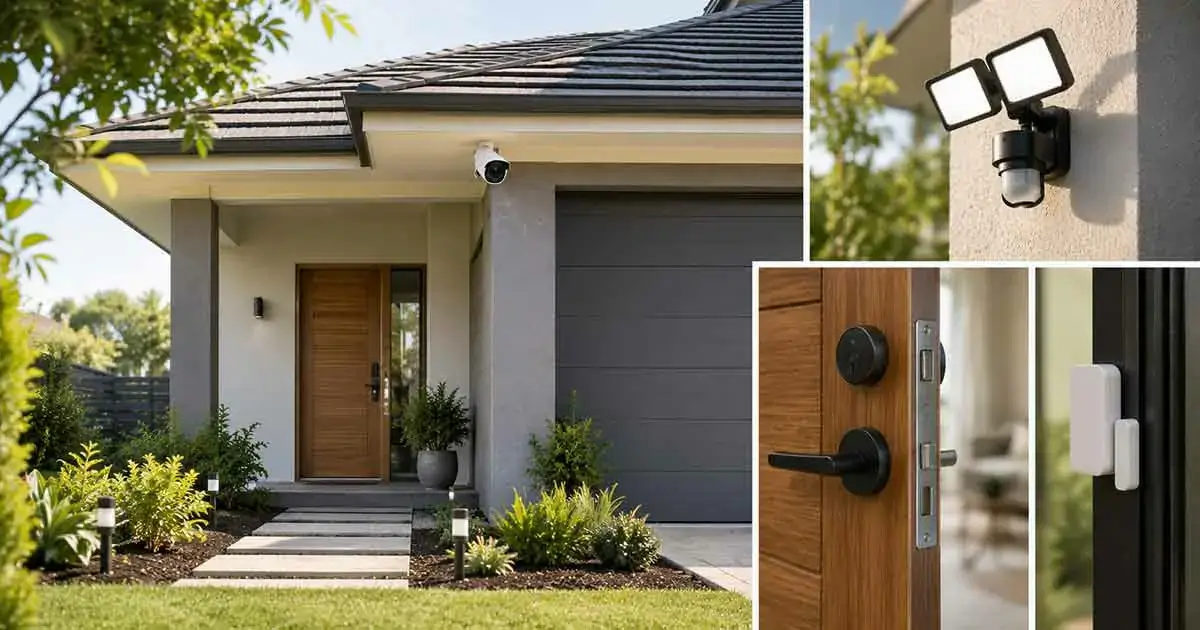
Effective home security does not have to mean buying an expensive security system or paying for professional monitoring. Many of the most useful improvements start with simple steps: securing entry points, improving visibility, building good habits, and adding affordable technology where it provides a clear benefit.
The key is not to spend as much as possible. It is to spend strategically on the areas that create the greatest security benefit for your home and budget. This guide explains practical, cost-effective ways to improve home security, including free measures, low-cost upgrades, and smart devices you can add gradually.
For a broader overview of home protection, see our complete home security guide.
Table of Contents
Why Budget Home Security Matters
Home security should not depend entirely on how much money you can spend. A well-planned approach can combine free security habits with relatively inexpensive improvements to reduce common vulnerabilities.
Budget-friendly security measures can help you:
- Deter unwanted activity around the property
- Improve visibility around doors, windows, and pathways
- Strengthen vulnerable entry points
- Increase awareness of activity around the home
- Create a more consistent security routine
- Add technology gradually instead of purchasing everything at once
The goal is to prioritize the improvements that address your home’s most important vulnerabilities rather than buying security products simply because they are available.
Start With a Home Security Assessment
Before spending money, walk around your property and look at it from a security perspective. The easiest way to control costs is to identify the biggest weaknesses first.
Check for:
- Doors with weak locks or hardware
- Windows that are easy to access from outside
- Dark areas around entrances and pathways
- Hidden areas near doors or windows
- Garage access points
- Overgrown shrubs or landscaping that blocks visibility
- Signs that the home may be unoccupied for long periods
This simple assessment helps you spend your budget where it is most useful instead of starting with expensive equipment.
What Should You Secure First?
If your budget is limited, prioritize the fundamentals before adding advanced technology. A sensible order is:
- Secure primary doors and entry points.
- Improve accessible window security.
- Improve exterior lighting and visibility.
- Eliminate obvious hiding places.
- Add detection and alerts where they provide value.
- Expand with cameras and smart security devices as your budget allows.
This approach prevents a common mistake: spending heavily on cameras or smart devices while basic entry points remain poorly secured.
Free and Low-Cost Home Security Improvements
Some useful security improvements cost little or nothing. These are often the best starting point when money is tight.
- Lock doors and windows consistently.
- Remove unnecessary hiding places around entrances.
- Keep pathways and entrances visible.
- Keep valuable items out of direct view from windows.
- Check that exterior lights are working.
- Maintain clear sight lines around accessible windows and doors.
- Make the property appear occupied when you are away.
- Ask a trusted neighbor to keep an eye on the property during extended trips.
These measures are not substitutes for every type of security system, but they can form a useful foundation before you spend money on additional equipment.
Upgrade Door Security
Exterior doors deserve particular attention because they are important access points. Before buying advanced equipment, make sure the basic door hardware is in good condition and appropriate for the door.
Depending on the door and existing hardware, affordable improvements may include:
- Replacing weak or damaged locks
- Reinforcing the strike area where appropriate
- Using longer screws where the existing installation and hardware permit it
- Adding suitable door reinforcement hardware
- Considering a smart lock when its features provide a genuine benefit
Do not assume that adding a smart lock automatically makes a weak door secure. The door, frame, lock, and surrounding hardware should be considered as one system.
Improve Window Security
Accessible windows can be overlooked when homeowners focus mainly on front-door security. Start by checking whether each accessible window closes and locks properly.
Depending on the window type, relatively affordable options can include:
- Improved window locks or latches
- Appropriate security film
- Additional window sensors
- Reinforced hardware where suitable
For more detailed guidance, see our window security tips.
Improve Outdoor Security Lighting
Good exterior lighting can improve visibility around entrances, pathways, garages, and other areas that are difficult to see after dark.
Useful benefits include:
- Better visibility around entry points
- Fewer poorly visible areas around the property
- Improved visibility for residents and visitors
- Better conditions for security cameras that depend on visible scenes
Motion sensor lights can be particularly useful because they activate when movement is detected instead of remaining on continuously.
For a deeper look at this topic, see our complete guide to outdoor security lighting.
Install Affordable Security Cameras Strategically
Security cameras can add useful visibility and alerts, but a limited budget does not necessarily require cameras throughout the entire property.
Depending on the system, budget-friendly cameras may offer features such as:
- Motion detection
- Mobile notifications
- Video recording
- Remote viewing
If funds are limited, think about coverage before quantity. A strategically positioned camera covering an important approach or entrance may be more useful than purchasing several devices without a clear coverage plan.
Also consider ongoing requirements such as storage, subscriptions, power, connectivity, and privacy before choosing a camera system.
Secure Your Garage
Garages are sometimes overlooked even though they can provide access to vehicles, tools, stored belongings, and in some homes the interior living area.
Simple measures include:
- Keeping the garage door closed when it is not in use
- Securing the interior access door
- Improving lighting around the garage
- Using suitable security sensors where useful
- Keeping valuable items organized and less visible from outside
A secure garage should be considered part of the home’s overall security plan rather than a separate area.
Improve Landscaping and Visibility
Landscaping can affect how visible doors, windows, and pathways are from the surrounding area. The objective is not to remove attractive landscaping, but to avoid unnecessary areas where visibility is restricted.
- Trim overgrown shrubs near accessible windows.
- Keep important pathways visible.
- Avoid unnecessary obstructions around entrances.
- Maintain clear sight lines where practical.
Better visibility can complement lighting, cameras, and other security measures.
Use Smart Home Security Devices Selectively
Smart devices can make home security more convenient, but they should be selected according to a specific need rather than added simply because they are connected devices.
Options may include:
- Smart door locks
- Door and window sensors
- Smart lighting
- Video doorbells
- Security cameras
If your budget is limited, add devices gradually. Start with the security problem that needs the most attention and expand the system over time.
Create the Appearance of Occupancy
A home that clearly appears empty can attract unwanted attention. You can reduce that appearance without purchasing an expensive security system.
- Use timed lighting schedules.
- Use smart plugs for suitable lamps or devices.
- Arrange for mail and packages to be handled while traveling.
- Ask a trusted neighbor to check on the property during extended absences.
- Avoid publicly announcing that your home will be empty for an extended period.
These measures work best as part of a broader security routine rather than as a replacement for physical security.
How to Spend a Small Home Security Budget
There is no single amount that every homeowner should spend. Homes differ in layout, entry points, location, existing hardware, and security needs. Instead of following a fixed shopping list, use your available budget to address the most important weaknesses first.
With Almost No Budget
Focus on security habits, locking doors and windows, improving visibility, removing unnecessary hiding places, and making the home appear occupied when you are away.
With a Small Upgrade Budget
Prioritize weak entry points, appropriate door or window hardware, and exterior lighting before adding multiple smart devices.
With a Larger but Still Limited Budget
After basic vulnerabilities are addressed, consider adding detection, cameras, smart locks, or other connected security devices that solve a specific problem.
Build Your Security System Gradually
You do not need to complete every security upgrade at once. A gradual approach can make it easier to control costs and evaluate which improvements actually provide value.
- Assess the property. Identify the most vulnerable entry points and poorly visible areas.
- Fix basic weaknesses. Address doors, windows, lighting, and access points first.
- Add detection. Consider sensors or other alerts where they solve a specific need.
- Add monitoring. Use cameras or video doorbells where visibility is particularly valuable.
- Expand selectively. Add smart devices only when they provide a meaningful improvement in convenience or security.
- Review the setup. Reassess the property periodically as your household, technology, and security needs change.
Common Budget Home Security Mistakes
Spending on Technology Before Fixing Basic Weaknesses
A collection of smart devices cannot compensate for basic problems such as unsecured doors, accessible windows, or poor visibility.
Buying More Devices Than You Can Maintain
More devices do not automatically mean better security. Consider whether you can keep devices powered, connected, updated, and properly configured.
Ignoring Ongoing Costs
A low purchase price does not always mean low long-term cost. Before choosing a security device, consider storage, subscriptions, replacement batteries, connectivity, and other recurring requirements.
Focusing on One Entry Point
Improving the front door while ignoring accessible windows, garages, side entrances, or other vulnerable areas can leave important gaps in your security plan.
Delaying Simple Improvements
Waiting until you can afford an expensive system can leave basic vulnerabilities unaddressed. Start with practical improvements and expand your setup over time.
Best Budget Security Improvements
For homeowners trying to maximize the value of a limited budget, the following priorities provide a practical starting point:
- Secure primary doors and entry points.
- Improve accessible window security.
- Improve exterior lighting and visibility.
- Remove unnecessary hiding places.
- Secure the garage and interior access points.
- Add sensors or alerts where they solve a clear problem.
- Add cameras or smart security devices gradually.
- Review and maintain the entire setup regularly.
Frequently Asked Questions
What is the cheapest way to improve home security?
Start with basic security habits, properly secured doors and windows, improved visibility, and the removal of unnecessary hiding places. These measures can improve security without requiring an expensive system.
How can I secure my home on a small budget?
Assess the property first, then prioritize the weakest entry points, exterior lighting, and accessible windows. Add sensors, cameras, or smart devices gradually as your budget allows.
What are the most cost-effective home security measures?
Securing doors and windows, improving exterior visibility, maintaining clear sight lines, and developing consistent security habits are practical starting points. Technology can then be added where it addresses a specific need.
Are budget security cameras worth it?
They can be useful when they provide meaningful visibility, motion alerts, or recording for an important area. Compare the device’s features and any ongoing costs before buying.
Should I buy a complete security system immediately?
Not necessarily. Many homeowners can start by addressing basic vulnerabilities and then add detection, cameras, smart locks, or other devices as their needs and budget allow.
Conclusion
Effective home security does not require the largest possible budget. The best approach is to identify your home’s vulnerabilities, secure the most important entry points, improve visibility, build consistent security habits, and add technology only where it provides a clear benefit.
By prioritizing practical, cost-effective security measures and improving the home gradually, you can create a stronger security strategy without trying to purchase everything at once. For a broader look at protecting your property, continue with the complete home security guide and explore the related CozyRoomHQ home security resources.