
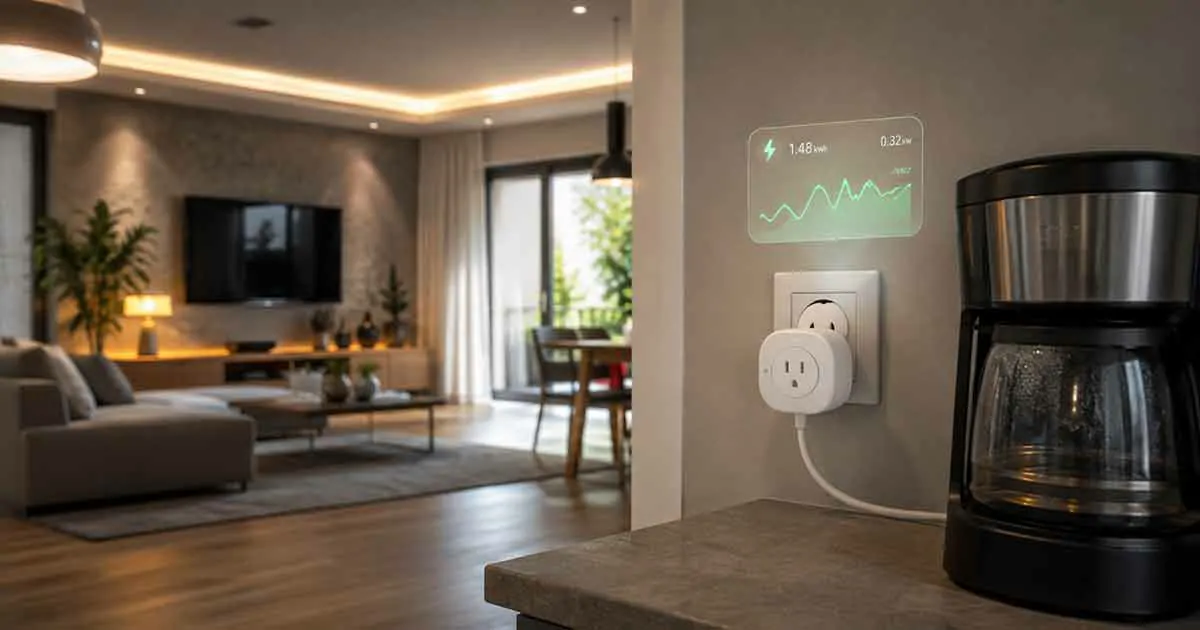
Smart plugs are among the easiest ways to add automation to a home without replacing appliances or making permanent electrical changes. When a smart plug also includes energy monitoring, it provides an additional benefit: you can see how much electricity a connected device is using.
This makes energy-monitoring smart plugs useful for homeowners and renters who want better control over appliances, understand household energy consumption, and automate everyday devices.
A standard smart plug can turn an appliance on or off remotely. An energy-monitoring smart plug can go further by measuring electricity consumption and displaying information through a compatible app or smart home platform.
In this guide, we explain how smart plugs with energy monitoring work, what they can measure, where they are most useful, and what to consider before choosing one.
Table of Contents
What Is a Smart Plug With Energy Monitoring?
A smart plug with energy monitoring is a connected electrical outlet adapter that allows you to control a compatible appliance while also measuring its electricity consumption.
Instead of plugging an appliance directly into a wall outlet, you connect the smart plug between the outlet and the appliance.
Depending on the model, the device may provide information such as:
- Current power consumption
- Energy usage over time
- Daily electricity consumption
- Historical usage
- Estimated energy costs
- On/off status
- Usage trends
The exact measurements and features vary by product.
Some models focus on real-time power readings, while others provide detailed historical data through a smartphone app.
How Do Energy-Monitoring Smart Plugs Work?
The smart plug sits between the electrical outlet and the connected appliance.
When the appliance operates, electricity passes through the smart plug. Internal monitoring circuitry measures electrical characteristics and sends the collected information to the device’s software.
The smart plug can then display information through an app or compatible smart home platform.
At the same time, the smart plug’s connected switch allows you to control the appliance remotely.
This creates two functions in one device:
Energy monitoring + smart control
That combination makes these plugs useful for both automation and energy awareness.
Smart Plug vs. Energy Monitor
Although they are related, a smart plug with energy monitoring is different from a dedicated whole-home energy monitor.
Smart Plug With Energy Monitoring
A smart plug generally monitors the appliance connected directly to it.
This makes it useful for:
- Lamps
- Fans
- Televisions
- Computers
- Small kitchen appliances
- Entertainment equipment
- Other suitable plug-in devices
Whole-Home Energy Monitor
A whole-home energy monitor is designed to provide information about broader household electricity consumption.
Depending on the system, it may monitor electrical circuits or the home’s electrical panel.
These systems can provide a much wider view of energy use, but they may require more complicated installation.
For simple appliance-level monitoring, an energy-monitoring smart plug is usually much easier.
Why Use Smart Plugs With Energy Monitoring?
The biggest advantage is visibility.
Many appliances consume electricity without homeowners knowing exactly how much they use.
An energy-monitoring smart plug can help you identify which connected devices consume more power.
Understand Appliance Consumption
You can monitor an appliance over time and compare its usage with other devices.
This can help you understand where electricity is going.
Identify Energy-Intensive Devices
Some appliances consume significantly more electricity than others.
Monitoring individual devices can help identify equipment that deserves closer attention.
Track Usage Patterns
Energy data can reveal when an appliance is being used most frequently.
For example, you might discover that a device operates for several hours longer than expected.
Automate Operating Schedules
The smart plug can also schedule when a connected appliance operates.
This can help prevent unnecessary operation.
Control Devices Remotely
If the appliance and smart plug are compatible with remote control, you may be able to switch the connected device off from your smartphone.
Best Appliances to Use With Energy-Monitoring Smart Plugs
Not every electrical device is equally suitable for a smart plug.
The best candidates are generally appliances that use a standard plug and benefit from monitoring or scheduling.
Lamps
Lighting is an easy starting point.
You can schedule a lamp to turn on or off and monitor its electricity consumption.
Fans
Fans can be useful candidates because they may operate for several hours each day.
An energy-monitoring smart plug can help you understand how much electricity a particular fan uses.
Televisions
A smart plug can monitor the electricity consumed by a television and connected entertainment equipment.
However, make sure cutting power does not create unwanted behavior when the TV is switched back on.
Computers and Accessories
Desktop computers, monitors, and related equipment can be monitored individually.
Be careful with critical computers and workstations because automatically cutting power can cause data loss or system problems.
Coffee Makers
A smart plug can be useful for scheduling compatible coffee makers.
However, the appliance must be designed to safely resume operation when power is restored.
Always check the manufacturer’s instructions before using an automated power cycle.
Kitchen Appliances
Some small kitchen appliances may be suitable for monitoring, but their electrical requirements must be checked carefully.
High-power appliances should not be connected to a smart plug unless the plug is specifically rated for the required load.
Appliances You Should Not Automatically Control
Smart plugs should not be used indiscriminately.
Some appliances should not be remotely switched because unexpected power interruption or automatic startup could create a safety issue.
Use particular caution with:
- Space heaters
- High-power heating appliances
- Medical equipment
- Critical refrigeration equipment
- Appliances with motors that may restart unexpectedly
- Devices that must remain continuously powered
Always check the smart plug’s electrical rating and the appliance manufacturer’s instructions.
What Energy Information Can a Smart Plug Measure?
The exact information depends on the model.
Common measurements include:
Real-Time Power
Real-time power shows how much electricity the connected appliance is using at a particular moment.
This can help you see how consumption changes when the appliance changes operating modes.
Energy Consumption
Energy consumption measures electricity used over a period of time.
It may be presented by day, week, month, or another interval depending on the app.
Historical Usage
Historical information can help you compare consumption across different periods.
For example, you might compare a device’s usage during one week with the previous week.
Estimated Energy Cost
Some smart plug apps can estimate electricity costs based on your configured electricity rate.
These estimates are only as accurate as the energy measurements and rate information provided.
How Accurate Are Smart Plug Energy Readings?
Accuracy varies between products and operating conditions.
A smart plug designed for energy monitoring should provide measurements within the range specified by the manufacturer, but it should not automatically be treated as a laboratory-grade measuring instrument.
Accuracy can depend on:
- Appliance type
- Power level
- Electrical characteristics
- Measurement range
- Smart plug design
- Firmware
- Operating conditions
For everyday household comparisons, the data can still be useful.
If you need highly precise electrical measurements for professional or technical purposes, use appropriate electrical test equipment instead.
How to Choose the Best Smart Plug With Energy Monitoring
Several factors matter when choosing an energy-monitoring smart plug.
Energy Monitoring Features
Look for the measurements you actually need.
Some users only need real-time consumption, while others want historical data and estimated costs.
Electrical Rating
Check the maximum current and power rating before connecting an appliance.
The smart plug must be rated appropriately for the intended load.
Smart Home Compatibility
Check compatibility with your preferred smart home ecosystem.
If you already use a smart home platform, choosing a compatible plug can make automation easier.
Wi-Fi or Other Connectivity
Many smart plugs use Wi-Fi, while some systems use other connectivity technologies.
Consider how the plug fits into your existing smart home network.
App Quality
The companion app is important because energy data is usually accessed through it.
Look for clear charts, historical information, device status, and useful automation controls.
Scheduling
Scheduling allows you to control when the connected appliance operates.
This can be useful for lamps, fans, and other suitable devices.
Automation Support
Check whether the plug can participate in routines and automations with your other smart home devices.
Local Control
Some smart home systems provide local control even when cloud services are unavailable.
If reliability is important to you, check whether the smart plug supports local operation and what functions remain available without internet access.
Wi-Fi Smart Plugs With Energy Monitoring
Wi-Fi smart plugs are popular because they can connect directly to a home network without requiring a separate hub in many setups.
They can offer:
- Smartphone control
- Remote access
- Scheduling
- Energy monitoring
- Voice control
- Smart home automation
However, Wi-Fi reliability depends on your home network.
If the plug is installed far from the router, a weak signal can affect performance.
Matter-Compatible Smart Plugs With Energy Monitoring
Matter has increased interest in cross-platform smart home compatibility.
A Matter-compatible smart plug may offer more flexibility when used with supported smart home ecosystems.
However, Matter support does not guarantee that every energy-monitoring feature will be available in every platform.
Before buying a Matter-compatible smart plug, check:
- Supported platforms
- Energy-monitoring support
- Supported measurements
- Controller requirements
- Required border routers or hubs
- Automation capabilities
The product’s detailed compatibility information is more important than the Matter label alone.
Smart Plugs and Energy Savings
A smart plug does not automatically reduce electricity consumption.
The energy-saving benefit comes from understanding consumption and changing how devices are used.
For example, monitoring a device may reveal that it operates for several hours when nobody is using it.
You can then create a schedule or routine to reduce unnecessary operation.
Potential benefits include:
- Reducing standby operation
- Preventing unnecessary use
- Scheduling appliances
- Identifying high-consumption devices
- Comparing usage patterns
The amount of money saved depends on the appliance, usage pattern, electricity rate, and changes you make.
Can Smart Plugs Reduce Standby Power?
Some household electronics continue consuming a small amount of electricity while they appear to be turned off.
This is sometimes called standby power or vampire power.
A smart plug can completely disconnect a compatible device from the electrical supply during scheduled periods.
However, cutting power is not appropriate for every electronic device.
Some products need to remain connected for updates, timers, network functions, or safe operation.
Use smart plugs selectively rather than automatically switching off every device overnight.
Smart Plugs for Home Offices
An energy-monitoring smart plug can be useful in a home office.
You can monitor devices such as:
- Desk lamps
- Monitors
- Speakers
- Printers
- Other suitable accessories
Energy data can help you understand how much electricity your office equipment consumes.
However, avoid automatically cutting power to computers or other devices while they are operating.
Smart Plugs for Entertainment Systems
Entertainment centers often contain several devices that may remain connected when not actively being used.
A compatible smart plug can help monitor or control selected equipment.
For example, you could monitor a television or a group of non-critical accessories.
However, some electronics need continuous power or may not behave correctly after unexpected power interruption.
Check the manufacturer’s recommendations before automating them.
Smart Plugs for Energy-Conscious Homes
Energy-monitoring smart plugs work particularly well as part of a broader energy-management strategy.
You can combine appliance-level monitoring with:
- Energy-efficient lighting
- Smart thermostats
- Efficient appliances
- Better insulation
- Energy-saving habits
- Whole-home energy monitoring
This creates a more complete picture of household electricity consumption.
A smart plug is not a complete energy-management system, but it can provide useful data at the appliance level.
Smart Plugs Without a Subscription
Many smart plugs provide basic control and energy-monitoring features without requiring a monthly subscription.
However, this varies by manufacturer and model.
Before buying, check whether the following features require a paid plan:
- Historical energy data
- Cloud storage
- Advanced analytics
- Remote access
- Automation
- Additional users
If avoiding recurring costs is important, choose a model that provides the required features without a subscription.
Common Mistakes When Using Energy-Monitoring Smart Plugs
Ignoring Electrical Ratings
Never connect an appliance that exceeds the smart plug’s rated load.
Assuming Every Appliance Is Compatible
Some appliances should not be automatically switched off and on.
Focusing Only on Real-Time Consumption
A single power reading does not show the full energy picture.
Look at usage over longer periods when possible.
Buying Based Only on Price
A cheap smart plug may lack accurate energy monitoring, reliable software, useful automation, or strong ecosystem support.
Ignoring Wi-Fi Coverage
A smart plug with a weak connection can become unreliable.
Assuming Energy Monitoring Equals Energy Savings
Monitoring provides information. Savings require changes in behavior or automation.
Smart Plug Energy Monitoring vs. Whole-Home Monitoring
The two approaches serve different purposes.
| Feature | Energy-Monitoring Smart Plug | Whole-Home Energy Monitor |
|---|---|---|
| Monitoring scope | Individual appliance | Home or circuits |
| Installation | Simple plug-in | Usually more involved |
| Permanent electrical work | Usually no | May be required |
| Automation | Often available | Depends on system |
| Appliance-level data | Yes | Depends on system |
| Whole-home view | No | Yes |
| Best for | Specific devices | Overall energy analysis |
If you want to understand one appliance, a smart plug is usually the simpler solution.
If you want to understand the entire home’s electrical consumption, a whole-home energy monitoring system may be more appropriate.
Are Smart Plugs With Energy Monitoring Worth It?
For many households, they are worth considering because they combine two useful functions in one device.
You can control compatible appliances while also learning how much electricity they consume.
They are particularly useful when you want to monitor specific appliances without installing a whole-home monitoring system.
The most important consideration is how you use the information.
If energy data leads to better schedules, reduced unnecessary operation, or replacement of inefficient devices, the smart plug can become a useful part of an energy-saving strategy.
Final Thoughts
The best smart plugs with energy monitoring provide more than remote on/off control. They can help you understand appliance-level electricity consumption and integrate selected devices into a broader smart home system.
Before choosing one, check its electrical rating, energy-monitoring capabilities, smart home compatibility, connectivity, automation support, and subscription requirements.
Use energy-monitoring smart plugs for appropriate appliances, and never exceed the manufacturer’s electrical ratings.
For renters and homeowners alike, a few well-chosen smart plugs can provide useful energy data without requiring major electrical modifications.