
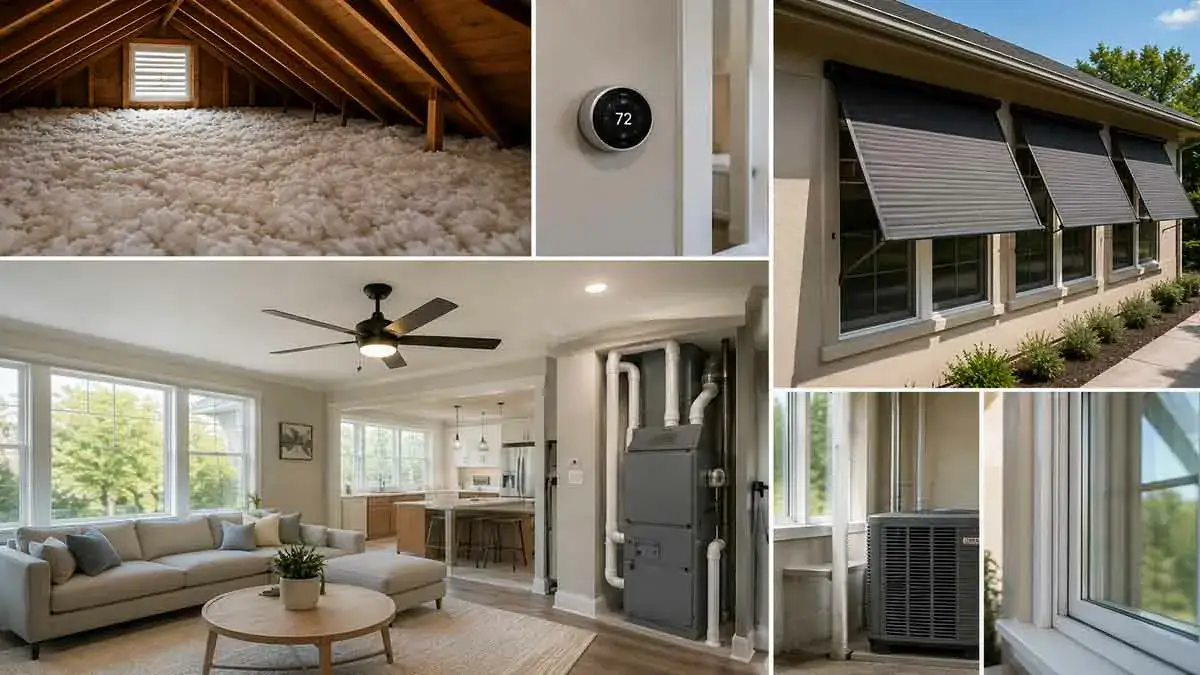
Heating and cooling can account for a large share of a home’s energy use, especially in climates with very hot summers or cold winters. The amount of energy an HVAC system consumes depends not only on the equipment itself, but also on insulation, air leakage, thermostat settings, ductwork, maintenance, indoor humidity, and everyday habits.
The most effective way to save energy is usually not to rely on one change. Instead, combine practical thermostat strategies with proper HVAC maintenance, air sealing, insulation, shading, and efficient equipment operation.
In many homes, these improvements can reduce unnecessary heating and cooling demand while also making indoor temperatures more consistent.
This guide explains practical heating and cooling energy-saving tips, how to reduce HVAC operating costs, and how to prioritize improvements without sacrificing comfort.
Table of Contents
How Heating and Cooling Energy Use Works
HVAC energy consumption is influenced by the difference between indoor and outdoor conditions and how efficiently the home maintains the desired indoor temperature.
A heating or cooling system may need to operate longer when:
- Outdoor temperatures are extreme
- The home has poor insulation
- Air leaks are significant
- Windows allow excessive heat transfer
- Ducts lose conditioned air
- The thermostat is set unnecessarily high or low
- HVAC equipment is poorly maintained
- Indoor humidity is difficult to control
This means that reducing HVAC energy use is partly an equipment issue and partly a building-performance issue.
A highly efficient HVAC system can still consume substantial energy if the home loses conditioned air through leaks or has inadequate insulation.
1. Set the Thermostat for Efficiency
Thermostat settings directly influence heating and cooling demand.
During cold weather, avoid setting the thermostat higher than necessary. During hot weather, avoid setting it lower than necessary.
The goal is to choose a temperature that provides reasonable comfort without requiring excessive system operation.
Consider:
- Occupancy
- Outdoor temperature
- Household comfort preferences
- Time of day
- Sleep schedules
- Energy costs
Even modest changes in thermostat settings can affect how frequently the HVAC system operates.
2. Use a Programmable or Smart Thermostat
A programmable or smart thermostat can help automate temperature schedules.
Useful features may include:
- Scheduled temperature changes
- Remote temperature control
- Occupancy-based adjustments
- Energy-use information
- Multiple daily settings
Set the schedule around your actual routine rather than relying on manual adjustments throughout the day.
Before installing a smart thermostat, confirm that it is compatible with the existing HVAC system. Some heating and cooling systems require specific wiring or control configurations.
3. Avoid Extreme Thermostat Settings
Setting the thermostat to an extreme temperature does not necessarily make the home reach the desired temperature faster.
For example, setting the thermostat much higher than your target during winter does not make most systems heat the home proportionally faster. The same principle applies to excessive cooling settings during summer.
Instead, use a reasonable target temperature and allow the HVAC system to operate as designed.
Avoid constant manual adjustments unless your routine actually requires them.
4. Improve Air Sealing
Uncontrolled air leakage can increase heating and cooling demand.
Common leakage points include:
- Attic penetrations
- Plumbing openings
- Electrical penetrations
- Window frames
- Door frames
- Rim joists
- Utility penetrations
- Gaps around ducts
Sealing significant leaks can help conditioned air remain inside the home and reduce outdoor air infiltration.
However, air sealing should be performed carefully. Do not block required ventilation openings, drainage paths, or combustion-air pathways.
5. Check Attic Insulation
The attic is one of the most important areas to inspect when trying to reduce HVAC energy use.
Inadequate insulation allows heat to move more easily between the living space and outdoors.
Before improving attic insulation, check for:
- Missing insulation
- Compressed insulation
- Uneven coverage
- Air leaks
- Roof leaks
- Moisture damage
Major air leaks between the conditioned space and attic should generally be addressed before adding insulation.
6. Improve Basement and Crawl Space Performance
Basements and crawl spaces can affect the thermal performance of the rooms above them.
Inspect these areas for:
- Air leakage
- Missing insulation
- Moisture
- Water intrusion
- Condensation
- Damaged materials
Correct water and moisture problems before installing insulation or sealing the space.
The appropriate strategy depends on whether the basement or crawl space is conditioned, unconditioned, or vented.
7. Keep HVAC Filters Clean
Dirty or clogged filters can restrict airflow and reduce HVAC performance.
Check the filter according to the manufacturer’s recommendations and replace or clean it when necessary.
The appropriate replacement interval depends on:
- Filter type
- System design
- Operating hours
- Household conditions
- Pets
- Indoor air quality requirements
Do not automatically install a filter with a higher resistance rating. The filter should be compatible with the HVAC system.
8. Maintain Heating and Cooling Equipment
Regular maintenance can help HVAC equipment operate reliably and identify problems before they become more serious.
Depending on the system, maintenance may include:
- Checking filters
- Inspecting electrical components
- Checking airflow
- Cleaning appropriate components
- Inspecting condensate drainage
- Checking system operation
- Inspecting refrigerant-related performance where applicable
Follow the equipment manufacturer’s maintenance requirements.
Tasks involving refrigerants, electrical components, gas equipment, or other specialized systems should be handled by appropriately qualified professionals.
9. Keep Vents and Returns Clear
Furniture, rugs, curtains, and other objects can obstruct supply vents or return-air grilles.
Keep airflow pathways clear so the HVAC system can distribute and recover air properly.
Avoid closing large numbers of supply vents as an energy-saving strategy. Restricting airflow can create pressure problems and may reduce system performance.
If one room is consistently too hot or too cold, investigate the underlying cause rather than simply closing or opening vents.
10. Inspect Ductwork
Leaky ducts can allow conditioned air to escape before reaching occupied rooms.
Accessible ductwork should be checked for:
- Disconnected sections
- Damaged insulation
- Loose joints
- Visible gaps
- Crushed or restricted sections
Duct problems can be particularly important when ducts run through:
- Attics
- Crawl spaces
- Garages
- Basements
- Other unconditioned areas
Proper duct sealing and insulation can improve the efficiency of an existing HVAC system without requiring immediate equipment replacement.
11. Use Ceiling Fans Correctly
Ceiling fans can improve perceived comfort by increasing air movement.
During warm weather, a fan may allow occupants to remain comfortable at a somewhat higher thermostat setting.
During cooler weather, some ceiling fans can be operated in an appropriate direction and speed to help distribute warm air.
Remember that fans cool people rather than lowering the actual room temperature significantly.
Turn fans off in unoccupied rooms to avoid using electricity unnecessarily.
12. Reduce Summer Solar Heat Gain
Direct sunlight through windows can increase indoor temperatures and increase air-conditioning demand.
To reduce unwanted solar heat gain, consider:
- Exterior awnings
- Shutters
- Exterior shades
- Interior blinds
- Curtains
- Appropriate landscaping
- Shade trees where suitable
Exterior shading can be particularly effective because it blocks part of the solar radiation before it reaches the window.
Prioritize windows that receive strong direct sunlight during the hottest parts of the day.
13. Use Winter Sunlight Strategically
Sunlight can sometimes provide useful passive heat during colder weather.
Where appropriate:
- Open suitable window coverings during sunny periods.
- Allow sunlight into rooms when it provides useful heat.
- Close coverings when the sun is no longer beneficial.
- Consider window orientation and outdoor conditions.
This strategy varies by climate and home design. In some situations, large windows can also create significant heat loss after sunset.
14. Improve Window and Door Performance
Drafty windows and doors can increase heating and cooling demand.
Inspect:
- Weatherstripping
- Door sweeps
- Window seals
- Frames
- Thresholds
- Exterior caulking
Repairing an existing window or door may be more practical than replacing it.
If replacement is necessary, compare products based on energy performance, climate suitability, installation quality, and total cost rather than focusing only on the purchase price.
15. Control Indoor Humidity
Humidity affects how comfortable a home feels and can influence cooling requirements.
High humidity during warm weather can make indoor conditions feel warmer and may increase the need for air conditioning or dehumidification.
Investigate sources such as:
- Plumbing leaks
- Foundation moisture
- Poor drainage
- Excessive indoor moisture
- Inadequate bathroom ventilation
Do not rely on a dehumidifier to compensate for a persistent building moisture problem without addressing the underlying cause.
16. Maintain Outdoor HVAC Equipment
Outdoor air-conditioning or heat-pump equipment needs adequate airflow.
Keep the area around the equipment free from:
- Leaves
- Grass
- Weeds
- Debris
- Stored objects
Follow the manufacturer’s recommended clearance requirements.
Restricted airflow can reduce performance and may increase operating stress.
17. Avoid Unnecessary Heating and Cooling
Not every space needs the same temperature conditions at all times.
However, avoid simply closing vents or shutting off parts of an HVAC system without understanding its design.
Instead, use appropriate controls and focus on:
- Occupancy schedules
- Proper zoning
- Building-envelope improvements
- Reasonable thermostat settings
- Door and window sealing
For unconditioned spaces such as garages, improving separation from the conditioned living space can also reduce unwanted heat transfer.
18. Use HVAC Zoning Carefully
Zoning can be useful in homes where different areas have significantly different heating and cooling requirements.
A properly designed zoning system can allow temperature control based on:
- Occupancy
- Floor
- Room use
- Solar exposure
- Household schedules
However, zoning must be compatible with the HVAC system.
Improperly designed zoning can restrict airflow or cause equipment to operate inefficiently. Professional design may be appropriate when adding substantial zoning modifications.
19. Reduce Heat Produced Inside the Home
During hot weather, appliances and lighting add heat to indoor spaces.
Consider reducing unnecessary internal heat by:
- Using LED lighting
- Avoiding unnecessary oven use
- Using smaller cooking appliances when appropriate
- Turning off unused electronics
- Moving suitable activities outdoors when practical
For example, using a large oven for a small meal can add more heat to the kitchen than a smaller appliance designed for the task.
Reducing indoor heat gain can lower the cooling load.
20. Maintain Proper Ventilation
Energy efficiency does not mean eliminating all outdoor air exchange.
Homes need appropriate ventilation to manage:
- Indoor air quality
- Moisture
- Odors
- Combustion-related concerns
When a home undergoes extensive air sealing, evaluate whether the existing ventilation strategy remains adequate.
Bathroom and kitchen exhaust systems should vent appropriately to the exterior rather than releasing moisture into attics or crawl spaces.
21. Seal the Attic Hatch and Rim Joists
Small building-envelope areas can create meaningful air leakage when they connect conditioned and unconditioned spaces.
Two areas worth checking are:
Attic Hatch
An attic hatch should fit properly and have suitable insulation and weatherstripping.
Rim Joists
Rim joists around the foundation can contain gaps that allow outdoor air infiltration.
Address moisture problems before sealing or insulating these areas.
22. Close Fireplace Dampers When Appropriate
An open fireplace damper can allow conditioned indoor air to escape when the fireplace is not being used.
When the fireplace is completely cool, close the damper if appropriate for the fireplace design.
Always follow fireplace manufacturer instructions and applicable safety requirements.
23. Monitor HVAC Energy Use
Energy monitoring can help identify how much electricity the home uses for heating and cooling.
Depending on the equipment, you may be able to use:
- Smart thermostat data
- Whole-home energy monitors
- Utility usage data
- HVAC operating-time information
- Circuit-level monitoring
Compare consumption over time while accounting for changes in outdoor temperature.
A higher electricity bill does not necessarily mean the HVAC equipment suddenly became inefficient. Weather, occupancy, thermostat settings, and other household loads can also affect total consumption.
24. Improve HVAC System Sizing
HVAC equipment should be appropriately sized for the home.
Oversized equipment can create problems such as:
- Short cycling
- Uneven temperatures
- Poor humidity control
- Frequent starts and stops
Undersized equipment may struggle to maintain comfortable conditions during extreme weather.
When replacing an HVAC system, equipment selection should consider the home’s:
- Size
- Insulation
- Air leakage
- Window characteristics
- Climate
- Occupancy
- Heating and cooling loads
A proper load calculation is preferable to simply replacing old equipment with a unit of the same nominal size.
25. Upgrade HVAC Equipment When Necessary
Replacing an HVAC system can make sense when the existing equipment is:
- Near the end of its useful life
- Frequently breaking down
- Unable to maintain comfort
- Significantly inefficient
- Expensive to operate or repair
However, equipment replacement should not automatically be the first step.
Before installing new equipment, evaluate insulation, air leakage, ductwork, and other building-performance issues.
A more efficient HVAC system installed in a poorly performing home may still consume substantial energy.
Best Order for Heating and Cooling Energy Improvements
A practical improvement sequence is:
Step 1: Fix Moisture and Building Problems
Address:
- Roof leaks
- Plumbing leaks
- Foundation moisture
- Drainage problems
- Major structural problems
Step 2: Reduce Major Air Leakage
Seal appropriate gaps around the building envelope.
Step 3: Improve Insulation
Focus on areas where insulation is clearly inadequate.
Step 4: Improve HVAC Distribution
Inspect vents, airflow, and accessible ductwork.
Step 5: Maintain Existing Equipment
Complete appropriate HVAC maintenance before assuming replacement is necessary.
Step 6: Improve Temperature Control
Use appropriate thermostat schedules, zoning, and occupancy strategies.
Step 7: Improve Windows, Shading, and Solar Control
Address significant sources of unwanted heat gain or heat loss.
Step 8: Replace HVAC Equipment When Justified
After reducing the home’s heating and cooling loads, evaluate whether equipment replacement is necessary.
This sequence helps prevent spending heavily on HVAC equipment while leaving major building-envelope problems unresolved.
Quick Heating and Cooling Energy-Saving Checklist
Thermostat
- Use reasonable temperature settings.
- Create a schedule around occupancy.
- Avoid extreme settings.
- Verify smart thermostat compatibility.
Building Envelope
- Seal major air leaks.
- Check attic insulation.
- Inspect basement or crawl space conditions.
- Seal appropriate rim-joist areas.
- Improve attic hatch sealing.
- Check windows and doors for drafts.
HVAC System
- Replace or clean filters as recommended.
- Maintain heating and cooling equipment.
- Keep vents and returns clear.
- Inspect accessible ductwork.
- Keep outdoor equipment clear.
- Check HVAC sizing before replacement.
Summer
- Reduce direct solar heat gain.
- Use exterior shading where appropriate.
- Use ceiling fans in occupied rooms.
- Reduce unnecessary indoor heat.
Winter
- Use useful sunlight when appropriate.
- Reduce drafts.
- Maintain heating equipment.
- Keep appropriate areas of the home properly insulated.
Humidity and Ventilation
- Address moisture sources.
- Maintain bathroom exhaust.
- Use kitchen ventilation appropriately.
- Preserve required ventilation after air sealing.
Common Mistakes That Increase HVAC Energy Use
Setting the Thermostat Too High or Too Low
Extreme settings can increase system operating time without providing proportional comfort benefits.
Replacing HVAC Equipment First
A new HVAC system may not solve excessive energy consumption caused by poor insulation or major air leakage.
Closing Many Vents
Restricting airflow can create system pressure and performance problems.
Ignoring Duct Leaks
Conditioned air can be lost before reaching occupied spaces.
Blocking Outdoor Equipment
Restricted airflow around outdoor units can reduce performance.
Ignoring Humidity
High indoor humidity can make warm conditions feel less comfortable and increase cooling demand.
Using Fans in Empty Rooms
Fans consume electricity even when they are not providing useful comfort.
Ignoring Ventilation
Aggressive air sealing without considering ventilation can create indoor-air-quality and moisture-management problems.
Replacing Windows Without Evaluating Other Problems
Window replacement can be expensive and may not address the largest source of heating and cooling energy loss.
When to Consider a Professional Energy Assessment
A professional assessment can be useful when:
- Energy consumption is unusually high.
- Some rooms are consistently too hot or too cold.
- Air leakage is difficult to locate.
- Insulation levels are unclear.
- HVAC equipment needs replacement.
- Duct problems are suspected.
- The home has persistent moisture issues.
- You are planning extensive air sealing or insulation work.
Depending on the service, an energy assessment may include blower-door testing, infrared imaging, insulation inspection, duct evaluation, and HVAC analysis.
The purpose is to identify the largest performance problems so improvements can be prioritized based on actual conditions.
Final Thoughts
The most effective heating and cooling energy-saving tips focus on reducing the amount of heating and cooling the home requires rather than relying only on more efficient equipment.
Start with the building envelope. Address major air leaks, inadequate insulation, moisture problems, and duct issues. Then optimize thermostat settings, HVAC maintenance, airflow, shading, and ventilation.
When equipment eventually needs replacement, choose a properly sized and efficient system based on the home’s actual heating and cooling requirements.
A combination of air sealing, insulation, proper HVAC maintenance, smart temperature control, solar management, and efficient equipment can reduce unnecessary energy use while helping maintain a more comfortable home throughout the year.