
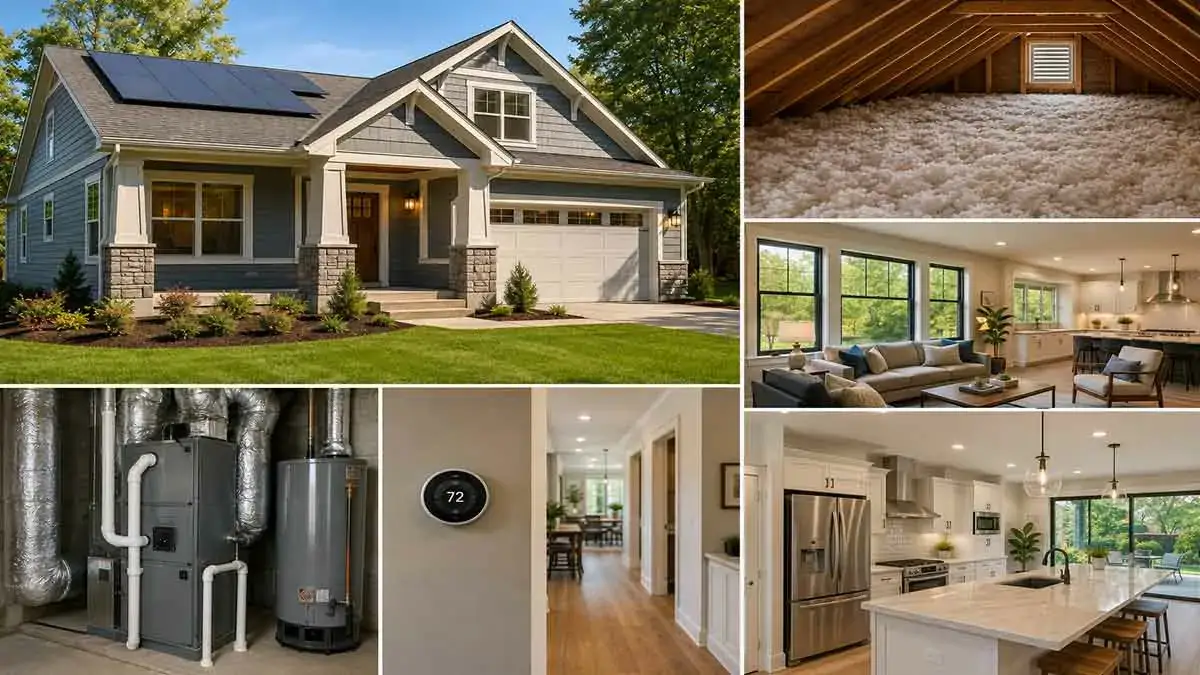
Energy-efficient home improvements can do more than reduce energy consumption. The right upgrades can improve comfort, lower operating costs, modernize aging systems, protect the building, and make a property more appealing to potential buyers.
However, not every energy-efficient improvement adds the same amount of value. A project that reduces utility bills does not automatically increase a home’s resale price by the same amount as its installation cost.
The strongest improvements usually solve an existing problem while providing additional benefits such as better comfort, improved reliability, lower maintenance, or stronger buyer appeal.
This guide explains which energy-efficient home improvements may add value, how to prioritize them, which projects deserve careful financial evaluation, and how to document upgrades for future buyers.
Table of Contents
What Makes an Energy-Efficient Improvement Valuable?
An energy-efficient improvement can create value in several different ways.
It may:
- Reduce heating and cooling demand
- Lower electricity or fuel consumption
- Improve indoor comfort
- Reduce drafts and temperature differences
- Improve equipment reliability
- Reduce maintenance requirements
- Protect the building from moisture damage
- Modernize outdated systems
- Improve functionality
- Increase buyer appeal
The strongest projects often provide several of these benefits at the same time.
For example, attic air sealing and insulation can reduce heat transfer while improving comfort and reducing the workload on heating and cooling equipment.
By contrast, an expensive upgrade that produces only a small reduction in energy use may have a weaker financial case.
The goal should therefore be to evaluate the overall value of the improvement, not just its energy-saving potential.
1. Improve Attic Insulation
Attic insulation is often one of the most practical improvements for an inefficient home.
If insulation is missing, thin, damaged, or poorly installed, heat can move more easily between the living space and the outdoors.
Improving attic insulation can help:
- Reduce heat transfer
- Improve indoor comfort
- Reduce heating demand
- Reduce cooling demand
- Improve temperature consistency
Before adding insulation, inspect the attic for:
- Roof leaks
- Moisture
- Air leakage
- Damaged materials
- Pest problems
- Improper ventilation
Major problems should be corrected before new insulation is installed.
Air sealing between the conditioned space and attic can also be important because insulation does not stop uncontrolled airflow through gaps and penetrations.
2. Seal Major Air Leaks
Air leakage can reduce comfort and increase heating and cooling demand.
Common leakage locations include:
- Attic hatches
- Plumbing penetrations
- Electrical penetrations
- Rim joists
- Window frames
- Door frames
- Utility openings
- Duct penetrations
Sealing major uncontrolled leaks can be relatively cost-effective when compared with large equipment replacements.
However, air sealing must be performed carefully.
Do not block required ventilation openings or combustion-air pathways.
The objective is to reduce uncontrolled air leakage while maintaining safe and appropriate ventilation.
3. Upgrade Heating and Cooling Equipment
Heating and cooling equipment can represent a substantial portion of household energy use.
Replacing an outdated or failing system may improve:
- Energy efficiency
- Comfort
- Reliability
- Temperature control
- Operating costs
Potential technologies include:
- Heat pumps
- High-efficiency furnaces
- Efficient air conditioners
- Variable-speed systems
- Modern HVAC controls
However, equipment should not be selected based only on its efficiency rating.
Proper sizing and installation are critical.
Before replacing HVAC equipment, evaluate the home’s insulation and air leakage. Improving the building envelope can reduce the heating and cooling load and may affect the appropriate equipment size.
An oversized system can create unnecessary cycling and comfort problems.
4. Improve Ductwork
Ductwork is frequently overlooked when homeowners plan energy upgrades.
Leaking, damaged, or poorly insulated ducts can reduce the amount of conditioned air that reaches living spaces.
Inspect accessible ductwork for:
- Loose connections
- Air leaks
- Damaged insulation
- Disconnected sections
- Crushed ducts
- Poorly sealed joints
Duct improvements can include:
- Sealing appropriate leaks
- Repairing damaged sections
- Improving insulation
- Correcting disconnected ducts
- Improving airflow
If ducts run through an attic, crawl space, garage, or other unconditioned area, their condition can have an especially important effect on system performance.
5. Replace Windows When Necessary
Efficient windows can improve comfort, air sealing, appearance, and thermal performance.
However, replacing all windows is not automatically one of the best energy investments.
Existing windows may be worth repairing when they are structurally sound.
Possible improvements include:
- Weatherstripping
- Caulking
- Frame repairs
- Hardware repairs
- Storm-window improvements where appropriate
Window replacement becomes more compelling when existing units are:
- Severely damaged
- Difficult to operate
- Failing
- Poorly sealed
- Beyond practical repair
When replacement is necessary, select windows based on the home’s climate, orientation, performance requirements, and installation quality.
6. Improve Exterior Doors
Exterior doors can contribute to drafts and air leakage.
Before replacing a door, inspect:
- Weatherstripping
- Door sweeps
- Thresholds
- Frames
- Alignment
- Visible gaps
A relatively simple weatherstripping or threshold repair may solve the problem.
Full replacement can make more sense when the existing door is damaged, poorly sealed, difficult to operate, or nearing the end of its useful life.
A new door can also improve appearance, security, and everyday functionality.
7. Upgrade Wall Insulation During Remodeling
Wall insulation can be expensive when finished walls must be opened solely for the upgrade.
For this reason, major remodeling projects can provide an excellent opportunity to improve wall performance.
When walls are already exposed, consider:
- Adding appropriate insulation
- Sealing hidden air leaks
- Correcting moisture problems
- Improving relevant building details
The correct approach depends on:
- Wall construction
- Climate
- Existing materials
- Moisture conditions
- Exterior finishes
Older homes require particular care because changing the insulation or air-control layers can alter how the wall assembly handles moisture.
8. Improve Basement and Crawl Space Performance
Basements and crawl spaces can affect comfort, moisture control, and the energy performance of the rooms above.
Potential improvements include:
- Foundation wall insulation
- Rim-joist air sealing
- Crawl space insulation
- Appropriate air sealing
- Moisture control
- Drainage improvements
Water problems should be corrected before insulation is installed.
Depending on the construction, insulating the foundation walls may be more appropriate than insulating the floor above a basement or crawl space.
The correct strategy depends on the home’s design and moisture conditions.
9. Upgrade Water Heating Equipment
Water heating can be a significant household energy load.
When an existing water heater is aging or approaching replacement, homeowners can evaluate more efficient technologies such as:
- High-efficiency storage water heaters
- Heat pump water heaters
- Tankless systems
The appropriate option depends on:
- Household hot-water demand
- Available installation space
- Energy source
- Climate
- Electrical capacity
- Upfront cost
- Local operating costs
Replacing an aging water heater with an efficient model can provide both lower operating costs and the benefit of having a newer major home system.
10. Improve Hot-Water Distribution
Energy can be lost while hot water travels through plumbing.
Potential improvements include:
- Insulating suitable accessible hot-water pipes
- Repairing hot-water leaks
- Improving pipe routing during remodeling
- Using appropriate controls
Reducing heat loss can improve efficiency and may also reduce the amount of time residents wait for hot water.
Hot-water improvements are particularly useful when combined with a planned plumbing renovation.
11. Install LED Lighting
LED lighting can be a simple way to reduce electricity use.
Benefits can include:
- Lower energy consumption
- Long rated life
- Reduced maintenance
- Lower replacement frequency
- Flexible lighting options
Focus first on fixtures that operate frequently.
Occupancy sensors, timers, and dimmers can further reduce unnecessary lighting use when they are appropriate for the space.
12. Replace Major Appliances Strategically
Modern appliances can use less energy than older models, but replacing a functioning appliance is not always financially justified.
Potential candidates include:
- Refrigerators
- Dishwashers
- Washing machines
- Clothes dryers
- Freezers
Consider replacement when an appliance is:
- Near the end of its useful life
- Frequently repaired
- Poorly performing
- Significantly less efficient than current alternatives
- Already due for replacement
When purchasing a replacement, compare estimated energy consumption, capacity, purchase price, maintenance, and expected lifespan.
13. Upgrade Thermostat Controls
Programmable and smart thermostats can improve control over heating and cooling schedules.
Potential features include:
- Temperature scheduling
- Remote control
- Occupancy-based adjustments
- Energy monitoring
- Automated temperature changes
However, thermostat compatibility is important.
Not every thermostat works with every HVAC system.
A smart thermostat can support energy savings when it changes operating behavior in a useful way. Simply adding connectivity does not automatically make a home more efficient.
14. Improve Home Ventilation
Energy efficiency should be balanced with indoor air quality and moisture control.
Major air-sealing improvements can reduce uncontrolled airflow, which makes intentional ventilation more important.
Depending on the home, improvements may include:
- Better bathroom exhaust
- Improved kitchen ventilation
- Properly routed exhaust ducts
- Balanced mechanical ventilation
- Improved ventilation controls
Avoid exhausting moisture into attics or crawl spaces.
Homes with combustion appliances require additional attention to ventilation and combustion safety.
15. Install Efficient Ceiling Fans
Ceiling fans can improve perceived comfort by increasing air movement.
They may allow occupants to adjust thermostat settings while maintaining acceptable comfort in suitable conditions.
When replacing a ceiling fan, consider:
- Motor efficiency
- Appropriate size
- Room dimensions
- Control options
- Directional operation
Fans should generally be used when rooms are occupied because they primarily affect perceived comfort rather than directly lowering the room’s temperature.
16. Add Exterior Shading
Solar heat gain can increase cooling demand.
Exterior shading can reduce the amount of solar radiation reaching windows.
Potential options include:
- Awnings
- Shutters
- Exterior shades
- Pergolas
- Shade structures
- Appropriate landscaping
Shading can also improve outdoor usability and contribute to the home’s appearance.
The best approach depends on window orientation, climate, seasonal sun exposure, and existing landscaping.
17. Improve Roof and Attic Performance
Roof improvements can provide both durability and energy benefits.
Consider:
- Repairing roof leaks
- Improving attic insulation
- Sealing appropriate air leaks
- Maintaining proper attic ventilation
- Improving flashing
- Replacing damaged roofing materials
A sound roof protects insulation and interior building materials from moisture damage.
If a roof is already approaching replacement, combining necessary roofing work with appropriate energy improvements may be more practical than completing separate projects later.
18. Improve Moisture Control and Drainage
Moisture problems can damage a home and reduce its long-term value.
Important improvements may include:
- Repairing plumbing leaks
- Maintaining gutters
- Extending downspouts
- Correcting grading
- Improving foundation drainage
- Repairing roof leaks
These projects are not always described as energy-efficiency upgrades, but they support the performance and durability of the building envelope.
Moisture problems should be addressed before major insulation or air-sealing work.
19. Consider Solar Energy Systems
Solar photovoltaic systems can generate electricity on site and reduce purchased electricity.
Depending on the market, a solar installation may also improve buyer appeal.
However, the financial case varies considerably.
Important factors include:
- Roof condition
- Roof orientation
- Shading
- System size
- Installation cost
- Electricity prices
- Incentives
- System ownership
- Local regulations
If the roof needs replacement soon, address that issue before installing solar when practical.
Homeowners should also distinguish between energy savings and resale value. A solar system can provide substantial operating benefits without necessarily increasing resale value by its full installation cost.
20. Upgrade Electrical Infrastructure When Needed
Electrical improvements can prepare a home for modern energy technologies.
Potential upgrades may support:
- Heat pumps
- Electric water heaters
- Electric vehicle charging
- Solar systems
- Battery storage
- Modern appliances
Electrical upgrades can also improve functionality when an older electrical system is no longer suitable for household needs.
However, electrical work should be performed according to applicable codes and by appropriately qualified professionals.
Which Energy-Efficient Improvements Add the Most Value?
There is no single ranking that applies to every home.
The strongest value potential usually comes from projects that solve existing problems and provide multiple benefits.
In many homes, these may include:
- Attic insulation and air sealing
- HVAC replacement when existing equipment is outdated
- Moisture and drainage repairs
- Duct improvements
- Water heater replacement when the existing unit is aging
- Efficient windows when existing windows need replacement
- LED lighting
- Strategic appliance replacement
- Roof and attic improvements
- Exterior shading and weatherproofing
The condition of the home should determine the priority.
For example, replacing windows may be less valuable than repairing a leaking roof, while replacing an old HVAC system may be highly worthwhile when the equipment is unreliable and inefficient.
How to Prioritize Energy-Efficient Home Improvements
A practical sequence can help homeowners avoid spending money on low-priority upgrades.
Priority 1: Fix Water and Safety Problems
Address:
- Roof leaks
- Plumbing leaks
- Foundation moisture
- Drainage problems
- Electrical hazards
- Combustion-safety concerns
Priority 2: Improve the Building Envelope
Focus on:
- Air sealing
- Attic insulation
- Basement or crawl space improvements
- Appropriate wall insulation
- Door weatherstripping
Priority 3: Improve Major Mechanical Systems
Evaluate:
- HVAC equipment
- Ductwork
- Water heating
- Ventilation
Priority 4: Address Windows and Doors
Repair existing components where practical and replace them when their condition or performance justifies the cost.
Priority 5: Upgrade Appliances and Lighting
Replace aging or inefficient equipment strategically.
Priority 6: Consider Advanced Technologies
Evaluate:
- Solar
- Battery storage
- Smart controls
- Electric vehicle charging
- Other energy technologies
This order is not universal, but it provides a useful framework for connecting energy efficiency with overall home performance.
Improvements That May Have a Lower Financial Return
Not every energy improvement will provide a strong financial return.
Potential examples include:
- Replacing relatively new efficient equipment
- High-end technology with limited practical benefits
- Expensive window replacement when existing windows are serviceable
- Oversized solar systems
- Specialized upgrades that are uncommon in the local market
A lower financial return does not necessarily mean an improvement is a bad decision.
Homeowners may still choose an upgrade for:
- Comfort
- Reliability
- Resilience
- Appearance
- Environmental goals
- Personal preferences
The important point is to understand the expected benefit before making the investment.
How to Document Energy-Efficient Improvements
Documentation can help future buyers understand what has been improved.
Keep records such as:
- Installation dates
- Equipment models
- Efficiency ratings
- Product specifications
- Warranties
- Contractor information
- Maintenance records
- Inspection reports
- Energy assessments
- Permits where applicable
For major upgrades, keep documentation together in an organized digital or physical file.
Clear records can make it easier to demonstrate the condition and history of important home systems.
Common Mistakes to Avoid
Upgrading Before Fixing Existing Problems
Do not install new insulation over active moisture problems or ignore major structural or drainage issues.
Replacing Windows Automatically
Windows can be expensive. Determine whether repair, weatherstripping, or air sealing can solve the actual problem first.
Replacing HVAC Equipment Before Evaluating the Home
The appropriate HVAC size can change after insulation and air leakage improvements.
Choosing the Most Expensive Upgrade
Higher installation cost does not automatically produce higher property value.
Ignoring Installation Quality
An efficient product can perform poorly if it is incorrectly sized or installed.
Ignoring Ventilation
A tighter building envelope still needs appropriate ventilation.
Assuming Energy Savings Equal Resale Value
Lower operating costs and higher resale value are related but are not the same thing.
Making Improvements Without Considering the Local Market
Buyer preferences and the financial value of energy improvements vary between markets.
Energy-Efficient Home Improvement Checklist
Building Envelope
- Inspect attic insulation
- Seal major air leaks
- Check wall insulation
- Inspect basement or crawl space
- Improve rim-joist performance
- Weatherstrip exterior doors
- Inspect window seals
- Repair exterior penetrations
Heating and Cooling
- Maintain HVAC equipment
- Inspect ductwork
- Seal accessible duct leaks
- Review thermostat controls
- Evaluate aging HVAC equipment
Water Heating
- Inspect the water heater
- Repair hot-water leaks
- Insulate suitable accessible pipes
- Compare efficient replacement options
Appliances and Lighting
- Review aging appliances
- Compare energy consumption before replacement
- Upgrade frequently used lighting to LEDs
- Add appropriate lighting controls
Exterior and Building Protection
- Inspect the roof
- Repair drainage problems
- Maintain gutters and downspouts
- Improve appropriate exterior shading
- Correct moisture problems
Advanced Improvements
- Evaluate solar potential
- Review electrical capacity
- Consider battery storage when appropriate
- Prepare for future electric vehicle charging
Documentation
- Keep equipment records
- Save warranties
- Keep maintenance records
- Document major improvements
- Retain relevant permits and inspection records
When to Consult a Professional
Professional advice is particularly useful when an improvement involves:
- Major insulation changes
- Extensive air sealing
- HVAC replacement
- Electrical upgrades
- Structural changes
- Foundation moisture
- Wall assembly modifications
- Solar installation
- Mechanical ventilation
A qualified professional can evaluate how improvements interact with one another and help identify potential problems involving moisture, ventilation, electrical capacity, or equipment sizing.
For major energy upgrades, a professional home energy assessment can also help identify which improvements should be completed first.
Final Thoughts
Energy-efficient home improvements can add value when they improve the overall ownership experience rather than simply reducing energy consumption.
The strongest projects often combine lower operating costs, better comfort, improved durability, modern equipment, and practical buyer appeal.
Start with necessary repairs and moisture control. Then address major air leaks and insulation deficiencies before evaluating HVAC and water-heating upgrades. Windows, appliances, lighting, solar, and other technologies can be considered according to the home’s condition and the expected financial benefit.
Most importantly, do not assume that the most expensive energy upgrade will create the most value.
A well-planned improvement that solves a real problem and improves the home’s performance can be more valuable than a costly technology upgrade with limited practical benefits.
By prioritizing improvements according to the home’s condition, local climate, operating costs, and future buyer expectations, homeowners can improve energy efficiency while also strengthening comfort, durability, functionality, and long-term property appeal.