
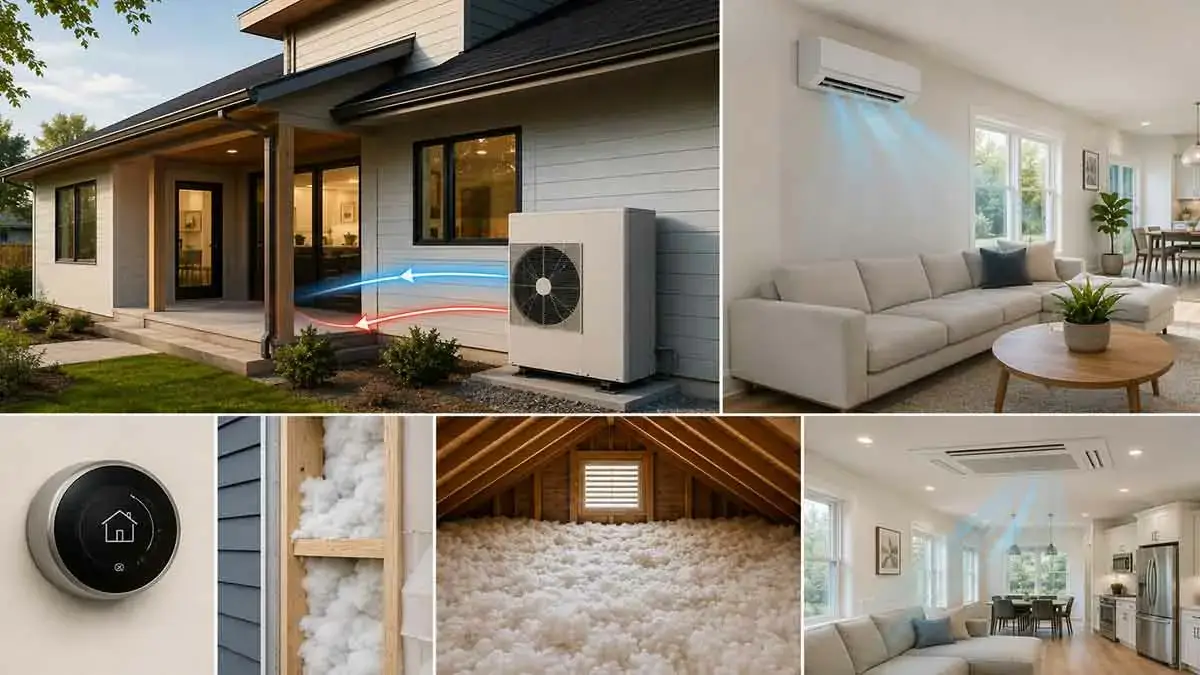
Heat pumps can provide efficient heating and cooling by moving heat rather than generating it directly. This allows one system to handle both heating and cooling in many homes, making heat pumps an increasingly important option for homeowners who want to reduce energy consumption and improve year-round comfort.
However, installing a heat pump does not automatically guarantee lower energy bills. Actual savings depend on several factors, including climate, electricity prices, equipment efficiency, system sizing, insulation, air leakage, ductwork, thermostat settings, maintenance, and the heating system being replaced.
The most effective approach is to treat the heat pump as part of the entire home energy system. Improving the building envelope, selecting properly sized equipment, maintaining the system, and operating it correctly can all contribute to better performance.
This guide explains how heat pumps save energy, what affects their operating costs, how to maximize potential savings, and what homeowners should consider before and after installation.
Table of Contents
How Heat Pumps Save Energy
A conventional electric resistance heater converts electricity directly into heat.
A heat pump operates differently. Instead of creating all of the heat directly, it uses electricity to move heat from one location to another.
During heating operation, an air-source heat pump extracts available heat from outdoor air and transfers it indoors. During cooling operation, the process reverses and the system removes heat from the home.
Because the system moves heat rather than relying entirely on electrical resistance heating, a heat pump can deliver substantial heating or cooling output for the electricity it consumes under appropriate operating conditions.
The actual efficiency of a heat pump varies with outdoor temperature, system design, equipment condition, and operating conditions.
What Determines Heat Pump Energy Savings?
Heat pump energy savings can vary considerably between homes.
Important factors include:
- Outdoor temperature
- Climate
- Heat pump efficiency
- Heating and cooling capacity
- System sizing
- Insulation
- Air leakage
- Window performance
- Ductwork
- Thermostat settings
- Maintenance
- Electricity prices
- Existing heating system
- Household operating habits
For example, a properly sized heat pump in a well-insulated home may operate very differently from the same model installed in a drafty home with inadequate insulation.
The heating system being replaced also matters. Savings can differ depending on whether the heat pump replaces electric resistance heating, a gas furnace, propane equipment, oil heating, or another system.
1. Improve Home Insulation
Improving insulation can reduce the amount of heating and cooling the heat pump needs to provide.
Before installing or replacing a major HVAC system, inspect:
- Attic insulation
- Exterior walls
- Basement walls
- Crawl spaces
- Rim joists
- Floors above unconditioned areas
Inadequate insulation increases heat transfer between the conditioned space and the outdoors.
Improving insulation can reduce the home’s heating and cooling load, which may allow the heat pump to operate for shorter periods or at lower output.
However, insulation should be installed correctly and moisture problems should be addressed first.
2. Seal Major Air Leaks
Uncontrolled air leakage can increase heating and cooling demand.
Common leakage locations include:
- Exterior doors
- Window frames
- Attic penetrations
- Plumbing openings
- Electrical penetrations
- Rim joists
- Utility penetrations
- Gaps around ducts
Air sealing can improve comfort and reduce the amount of conditioned air lost to the outdoors.
Do not seal required ventilation openings, combustion-air pathways, or building components that need drainage.
When extensive air sealing is planned, consider the home’s overall ventilation strategy.
3. Choose the Correct Heat Pump Size
Correct sizing is one of the most important factors in heat pump performance.
An oversized system may cycle more frequently than necessary, while an undersized system may struggle during periods of extreme outdoor temperatures.
The appropriate capacity depends on factors such as:
- Local climate
- Home size
- Insulation levels
- Air leakage
- Window characteristics
- Occupancy
- Solar exposure
- Existing building conditions
A professional heating and cooling load calculation is preferable to simply selecting a replacement system based on the capacity of an old furnace or air conditioner.
Older equipment may have been oversized for the home.
4. Compare Heat Pump Efficiency Ratings
When comparing heat pumps, look beyond general marketing claims.
Review the efficiency metrics applicable to the specific equipment and region.
Consider both:
- Heating efficiency
- Cooling efficiency
Also examine performance under temperatures that are common in your climate.
A system can have strong efficiency ratings under moderate conditions while experiencing different performance at very low or very high outdoor temperatures.
Compare similar systems using consistent rating methods and consider expected annual energy use rather than focusing on one efficiency number.
5. Consider Cold-Climate Performance
Homeowners in colder regions should pay particular attention to low-temperature performance.
Some heat pumps are designed to maintain useful heating capacity at lower outdoor temperatures.
When evaluating a system for cold weather, consider:
- Heating capacity at low temperatures
- Efficiency at low temperatures
- Defrost operation
- Backup heating requirements
- Minimum operating temperature
- Manufacturer performance data
The goal is not simply to choose a system advertised as suitable for cold climates, but to verify that its performance matches the home’s actual heating requirements.
6. Use the Heat Pump for Both Heating and Cooling
One advantage of many heat pumps is their ability to provide both heating and cooling.
Using the same system for both functions can simplify HVAC operation and reduce dependence on separate heating and cooling equipment.
This does not automatically guarantee lower total energy costs, but it can make the system more versatile.
Proper sizing is still important because the heating and cooling requirements of a home may differ significantly.
7. Use Appropriate Thermostat Settings
Heat pumps can operate differently from conventional furnaces and boilers.
Instead of making frequent, extreme thermostat adjustments, use temperature settings that match:
- Outdoor conditions
- Occupancy
- Comfort requirements
- Equipment characteristics
Moderate temperature changes can help avoid unnecessary operation.
The ideal strategy depends on the specific heat pump, climate, controls, and whether auxiliary heat is available.
Follow the equipment manufacturer’s recommendations when determining the appropriate operating strategy.
8. Choose a Compatible Thermostat
Not every thermostat is designed for every heat pump system.
Heat pumps may have specific requirements for:
- Compressor stages
- Auxiliary heat
- Emergency heat
- Defrost cycles
- Fan operation
- Heating and cooling changeover
Before installing a new thermostat, verify compatibility with the heat pump and its control system.
Incorrect thermostat configuration can reduce comfort and may cause unnecessary auxiliary heating or other inefficient operation.
9. Understand Auxiliary and Backup Heat
Some heat pump systems use auxiliary or backup heating when additional capacity is required.
Backup heat may come from:
- Electric resistance elements
- A furnace
- Another heating source
Electric resistance heating can consume considerably more electricity than efficient heat-pump operation under many conditions.
If auxiliary heat appears to operate frequently, investigate the cause rather than simply disabling it.
Possible causes include:
- Incorrect thermostat configuration
- Extremely cold outdoor conditions
- Poor system sizing
- Insufficient heating capacity
- Equipment problems
- Excessive heat loss from the home
Never disable a required safety or backup function without understanding the system’s design.
10. Maintain Air Filters
A dirty or clogged filter can restrict airflow and reduce HVAC performance.
Check the filter regularly and replace or clean it according to the equipment manufacturer’s recommendations.
The appropriate maintenance interval depends on:
- Filter type
- Household conditions
- System runtime
- Pets
- Dust levels
- Indoor air quality requirements
Use a filter that is compatible with the heat pump system. Installing an unsuitable high-resistance filter can also create airflow problems.
11. Keep the Outdoor Unit Clear
The outdoor unit needs adequate airflow to transfer heat effectively.
Keep the area around the unit free from:
- Leaves
- Grass clippings
- Snow
- Debris
- Dense vegetation
- Objects that restrict airflow
Follow the manufacturer’s recommended clearance requirements.
During winter, monitor the outdoor unit for excessive snow or ice accumulation. Do not manually interfere with normal defrost operation or use methods that could damage the equipment.
Persistent or unusual ice buildup should be evaluated by a qualified technician.
12. Maintain Indoor Components
Indoor components can accumulate dust and debris over time.
Restricted airflow or dirty heat-transfer surfaces can reduce system performance.
Follow the manufacturer’s maintenance schedule and arrange professional service when the system requires technical inspection or cleaning.
Maintenance may include inspection of:
- Indoor coils
- Blower components
- Electrical connections
- Drainage
- Refrigerant-related components
- Airflow
Regular maintenance can also identify developing problems before they become major failures.
13. Inspect and Seal Ductwork
Duct leakage can reduce the amount of conditioned air that reaches living spaces.
This is especially important when ducts run through:
- Attics
- Crawl spaces
- Garages
- Unconditioned basements
- Other unfinished areas
Inspect accessible ducts for:
- Disconnected sections
- Damaged insulation
- Visible gaps
- Loose connections
- Crushed or restricted sections
Properly sealing and insulating accessible ductwork can improve system performance without necessarily replacing the entire HVAC system.
14. Consider Ductless Mini-Split Heat Pumps
Ductless mini-split heat pumps can be useful in homes without suitable ductwork or in spaces where extending ducts would be difficult.
Potential advantages include:
- Zone-specific temperature control
- Reduced duct losses
- Flexible installation
- Independent control of selected spaces
- Efficient heating and cooling for appropriate applications
However, performance depends on proper sizing and indoor unit placement.
A multi-zone system should be designed around the home’s actual heating and cooling requirements rather than simply installing the largest available equipment.
15. Use Zoning Carefully
Zoning can allow different areas of a home to receive different levels of heating or cooling.
Potential benefits include:
- Improved temperature control
- Reduced conditioning of lightly used spaces
- Better comfort
- More targeted operation
However, zoning must be compatible with the heat pump and airflow system.
Poorly designed zoning can create airflow problems, excessive cycling, or equipment performance issues.
For ducted systems, zoning should be designed by someone familiar with the specific equipment.
16. Reduce Summer Cooling Demand
Heat pumps can also operate as air conditioners, so reducing cooling demand can lower electricity consumption.
Useful strategies include:
- Improving attic insulation
- Sealing air leaks
- Using exterior shading
- Closing blinds during intense sunlight
- Improving window performance
- Using ceiling fans
- Reducing unnecessary indoor heat
Cooking, lighting, electronics, and other activities can generate indoor heat.
Reducing these loads during hot weather can reduce the work required from the heat pump.
17. Use Ceiling Fans for Comfort
Ceiling fans can improve perceived comfort by increasing air movement.
They do not actually lower the room’s air temperature, but the cooling effect on occupants may allow a somewhat higher thermostat setting during warm weather.
Use ceiling fans primarily in occupied rooms and turn them off when nobody is present.
This avoids using electricity to move air when there is no comfort benefit.
18. Control Indoor Humidity
Humidity can significantly affect perceived comfort.
High indoor humidity can make warm conditions feel less comfortable and may increase the need for cooling or dehumidification.
Investigate potential moisture sources such as:
- Plumbing leaks
- Foundation moisture
- Poor drainage
- Excessive outdoor air infiltration
- Inadequate bathroom ventilation
If a separate dehumidifier operates continuously, investigate why the home has such a high moisture load.
Reducing the source of moisture can be more effective than simply running dehumidification equipment for longer periods.
19. Maintain Appropriate Ventilation
Energy efficiency should not mean eliminating necessary ventilation.
A well-sealed home still needs an appropriate strategy for managing:
- Indoor air quality
- Moisture
- Odors
- Combustion safety
- Fresh-air requirements
Major air-sealing improvements should therefore be considered together with ventilation.
This is particularly important in homes with combustion appliances or significant changes to the building envelope.
20. Monitor Heat Pump Energy Consumption
Monitoring energy use can help homeowners understand how the system performs under different conditions.
Depending on the equipment and monitoring system, useful information may include:
- Electricity consumption
- Operating runtime
- Indoor temperature
- Outdoor temperature
- Auxiliary heat operation
- Daily or monthly energy patterns
Compare energy consumption with outdoor weather rather than looking only at total monthly electricity use.
A colder or hotter month naturally requires more heating or cooling.
Monitoring can also help identify unusual increases in consumption that may justify further investigation.
21. Compare Operating Costs, Not Just Efficiency
A heat pump’s efficiency rating does not tell you the complete financial picture.
The cost of operating a heat pump depends partly on the local electricity price and the system being replaced.
When evaluating potential savings, compare:
- Electricity rates
- Existing fuel prices
- Heat pump efficiency
- Existing heating-system efficiency
- Annual heating demand
- Cooling requirements
- Expected maintenance costs
For example, replacing electric resistance heating can produce a very different energy-use outcome from replacing a high-efficiency fuel-burning system.
The most efficient equipment on paper is not necessarily the system with the lowest annual operating cost in every market.
22. Avoid Oversizing During Replacement
Replacing an old HVAC system provides an opportunity to reassess the home’s actual heating and cooling requirements.
Do not automatically match the capacity of the old equipment.
If the home has since received:
- New insulation
- Air sealing
- Better windows
- Duct improvements
- Other envelope upgrades
its heating and cooling load may be lower than before.
Proper sizing can improve comfort, efficiency, and system performance.
23. Consider Heat Pump Water Heaters
Heat pump technology can also be used for domestic water heating.
A heat pump water heater transfers heat into the water rather than relying entirely on conventional electric resistance heating.
Potential benefits include:
- Lower electricity consumption
- Efficient water heating
- Reduced dependence on resistance heating
However, installation requirements differ between models.
Consider:
- Available space
- Airflow
- Drainage
- Ambient temperature
- Noise
- Household hot-water demand
A heat pump water heater should be evaluated separately from a space-heating heat pump because the technologies serve different loads.
24. Improve the Building Envelope Before Major HVAC Upgrades
A heat pump works within the limits of the building envelope.
If a home has major heat loss through the roof, walls, windows, doors, or air leaks, the HVAC system must compensate for those losses.
Before a major heat pump replacement, consider:
- Attic insulation
- Wall insulation
- Basement insulation
- Crawl-space improvements
- Air sealing
- Window and door weatherproofing
- Duct improvements
Reducing the home’s heating and cooling load can improve the effectiveness of the entire system.
25. Use Professional Installation
Installation quality has a major influence on real-world heat pump performance.
Important factors include:
- Correct equipment sizing
- Proper placement
- Appropriate airflow
- Electrical requirements
- Drainage
- Refrigerant-related installation
- Thermostat configuration
- Ductwork
- Outdoor unit clearances
Choose a qualified installer who understands the specific heat pump technology being installed.
A highly efficient heat pump can underperform if it is incorrectly sized, poorly installed, or improperly configured.
26. Know Why a Heat Pump May Not Deliver Expected Savings
If energy bills remain unexpectedly high after installing a heat pump, do not assume that the equipment itself is defective.
Possible causes include:
- Poor insulation
- Excessive air leakage
- Incorrect sizing
- Poor installation
- Incorrect thermostat settings
- Frequent auxiliary heat use
- Duct leakage
- Restricted airflow
- Inadequate maintenance
- Extreme outdoor temperatures
- High electricity prices
Compare actual energy use with previous usage while accounting for changes in weather and household behavior.
A professional evaluation may be appropriate if performance remains significantly different from expectations.
Heat Pump Energy-Savings Checklist
Before Installation
- Assess the home’s energy performance
- Check attic and wall insulation
- Inspect basement or crawl-space conditions
- Seal major air leaks
- Inspect ductwork
- Determine heating and cooling loads
- Compare suitable heat pump systems
- Review local electricity costs
- Evaluate the existing heating system
- Consider backup heating requirements
During Installation
- Verify equipment sizing
- Confirm thermostat compatibility
- Follow manufacturer installation requirements
- Check airflow
- Confirm electrical requirements
- Provide appropriate outdoor clearances
- Verify drainage
- Check duct connections where applicable
After Installation
- Use appropriate thermostat settings
- Maintain air filters
- Keep the outdoor unit clear
- Monitor auxiliary heat operation
- Maintain adequate airflow
- Schedule recommended maintenance
- Monitor energy consumption
- Investigate unusual changes in performance
Common Heat Pump Energy-Saving Mistakes
Choosing Equipment Based Only on Purchase Price
A cheaper system may have higher operating costs or may not provide the features and performance required by the home.
Matching the New Heat Pump to the Old HVAC Capacity
Old equipment may have been oversized.
Always evaluate the home’s current heating and cooling loads.
Ignoring the Building Envelope
A heat pump cannot eliminate the energy losses caused by major air leaks and inadequate insulation.
Using an Incompatible Thermostat
Incorrect controls can interfere with heat-pump operation and auxiliary heat management.
Blocking the Outdoor Unit
Restricted airflow can reduce heat-transfer performance.
Ignoring Auxiliary Heat
Frequent auxiliary heating can significantly increase electricity consumption.
Investigate the reason for frequent operation rather than simply disabling the feature.
Making Extreme Thermostat Changes
Large temperature changes may not be appropriate for every heat pump system.
Use an operating strategy that matches the equipment and climate.
Skipping Maintenance
Dirty filters, restricted airflow, and neglected components can reduce performance.
Assuming a Heat Pump Always Costs Less
Potential savings depend on climate, electricity prices, equipment efficiency, operating conditions, and the system being replaced.
How to Estimate Potential Heat Pump Savings
A basic estimate can begin with the home’s annual heating demand.
For an electric heat pump, a simplified relationship is:
Electricity Used ≈ Required Heating Output ÷ Effective Heat Pump Performance
For example, if a home requires a certain amount of useful heat during the year, the electricity required depends on how efficiently the heat pump delivers that heat under actual operating conditions.
For fuel-based heating systems, the comparison should also account for:
- Fuel consumption
- Fuel price
- Existing system efficiency
- Heat pump electricity consumption
- Electricity price
A simple comparison based only on equipment nameplate efficiency can be misleading because heat pump performance changes with outdoor temperature.
A more accurate analysis should use expected annual heating demand, local energy prices, equipment performance data, and the operating conditions of the home.
When Is a Heat Pump a Good Energy-Saving Choice?
A heat pump may be an attractive option when:
- The home needs both heating and cooling.
- Existing HVAC equipment is approaching replacement.
- Electricity prices are reasonable.
- The home has good insulation.
- Major air leaks have been addressed.
- The selected system is appropriate for the climate.
- The equipment can meet the home’s heating and cooling loads.
- The homeowner wants one system capable of heating and cooling.
- The installation can be completed correctly.
Heat pumps can also be attractive when replacing less efficient heating technologies, but the financial outcome depends on local energy prices and the performance of the existing system.
The right decision should therefore be based on the home’s specific conditions rather than a general assumption that every heat pump will produce the same savings.
Final Thoughts
Heat pumps can provide efficient heating and cooling, but the equipment itself is only one part of the energy-saving equation.
The strongest results usually come from combining a properly sized and installed heat pump with a well-insulated, adequately sealed home, efficient ductwork, compatible controls, regular maintenance, and sensible operating practices.
Before purchasing a heat pump, evaluate the home’s heating and cooling loads, inspect the building envelope, compare equipment performance, and calculate potential operating costs based on local energy prices.
After installation, maintain the system, monitor energy use, keep airflow unrestricted, and pay attention to frequent auxiliary heat operation.
A heat pump is not automatically the lowest-cost heating or cooling solution for every home. But when the equipment is correctly selected, properly installed, well maintained, and matched to the home’s conditions, it can provide efficient year-round comfort while reducing unnecessary energy consumption.