
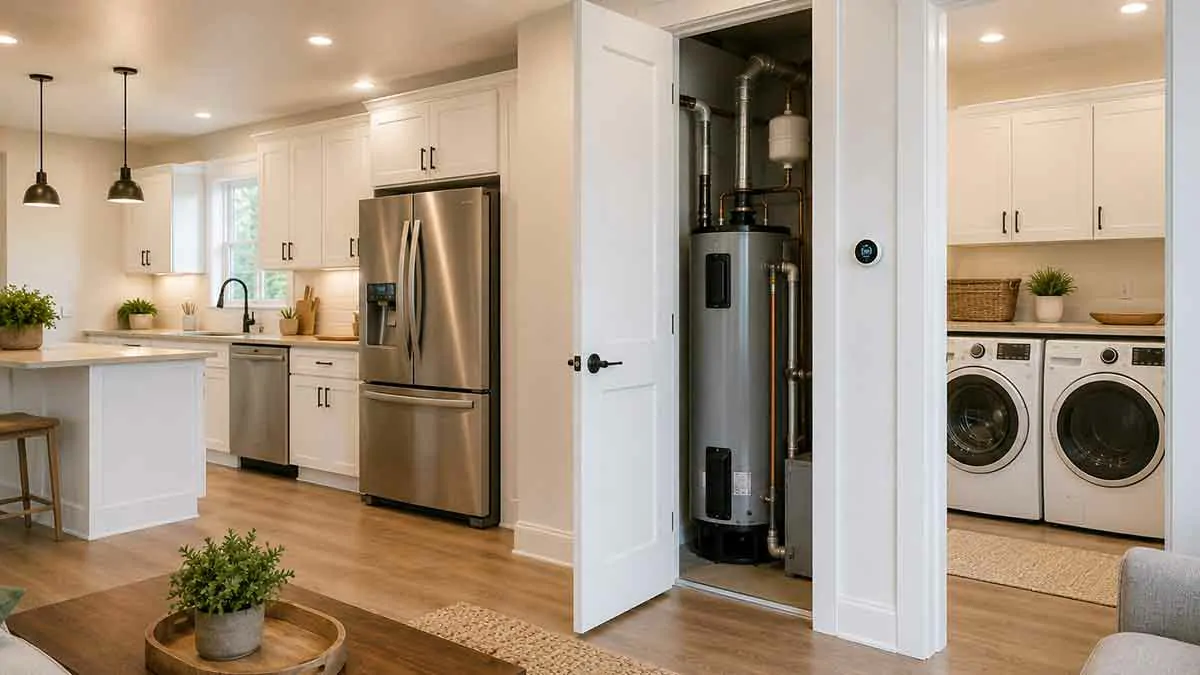
Energy-efficient appliances are designed to perform everyday household tasks while using less energy or water than comparable conventional models. They can help reduce operating costs, lower household energy consumption, and improve overall efficiency when selected and used correctly.
However, buying an energy-efficient appliance is not simply a matter of choosing the product with the highest efficiency rating. The appliance’s size, capacity, operating schedule, installation requirements, maintenance, purchase price, and expected lifespan all affect its real-world value.
A highly efficient appliance that is unnecessarily large may consume more energy than a smaller model that better matches the household’s needs. Likewise, an efficient appliance may deliver limited savings if it is rarely used.
This guide explains what makes an appliance energy efficient, how to compare models, which household appliances offer important efficiency opportunities, and how to get the most from efficient equipment after installation.
Table of Contents
What Makes an Appliance Energy Efficient?
An energy-efficient appliance provides a specific service while using less energy than a comparable product under similar operating conditions.
Efficiency can result from improvements such as:
- More efficient motors
- Better insulation
- Improved compressors
- Variable-speed operation
- Advanced sensors
- Improved heating systems
- Better temperature controls
- More efficient water management
- Automated operating cycles
For example, an efficient refrigerator may require less electricity to maintain internal temperatures, while an efficient washing machine may use less water and electricity per load.
However, the appliance’s rated efficiency does not determine its actual household energy consumption by itself. Usage frequency, settings, load size, maintenance, and installation can all affect real-world performance.
Benefits of Energy-Efficient Appliances
Replacing an inefficient appliance with an appropriate efficient model can provide several potential benefits.
Lower Operating Costs
Using less energy or water can reduce ongoing utility expenses.
The actual savings depend on the difference between the old and new equipment, local utility rates, and how frequently the appliance is used.
Reduced Energy Consumption
Efficient appliances can reduce the amount of electricity or fuel required for common household tasks.
Lower Water Use
Some efficient washing machines and dishwashers can significantly reduce water consumption compared with older models.
Improved Performance
Modern appliances may offer more precise temperature control, better sensors, improved cycle management, and other performance improvements.
Better Long-Term Value
An appliance with lower operating costs may provide better value over its useful life, particularly when the efficiency improvement is substantial and the appliance is used frequently.
Energy Efficiency vs. Energy Consumption
Energy efficiency and total energy consumption are related but not identical.
An appliance can be highly efficient but still consume a significant amount of energy if it performs an energy-intensive task or operates frequently.
For example, an efficient clothes dryer used every day may consume more total electricity than a less efficient appliance that is used only occasionally.
When comparing appliances, consider both:
- Energy used per cycle
- Estimated annual energy use
- Frequency of use
- Appliance capacity
- Household demand
This provides a more realistic picture than looking at an efficiency rating alone.
How to Compare Energy-Efficient Appliances
Compare similar appliances using information that reflects actual operating costs and household requirements.
Important factors include:
- Estimated annual energy consumption
- Energy efficiency rating
- Capacity
- Water consumption
- Operating modes
- Purchase price
- Installation cost
- Maintenance requirements
- Expected lifespan
- Warranty
- Required electrical or plumbing connections
Always compare appliances of similar size and capacity.
A smaller refrigerator, for example, may use less electricity than a larger efficient refrigerator simply because it has less capacity. That does not necessarily mean it is the more efficient product for a household that needs the larger capacity.
Understanding Energy Labels and Ratings
Energy labels and efficiency certifications can help consumers compare similar appliances.
Depending on the country or market, product information may show:
- Estimated annual energy consumption
- Energy efficiency ratings
- Water consumption
- Capacity
- Operating information
- Efficiency certification
- Other standardized performance information
Use these labels as comparison tools rather than treating a rating as a guarantee of a specific household savings amount.
Actual consumption depends on how the appliance is installed and operated.
Consider Total Cost of Ownership
The purchase price is only one part of an appliance’s cost.
A more complete comparison includes:
- Purchase price
- Installation
- Electricity or fuel
- Water consumption
- Maintenance
- Repairs
- Replacement parts
- Expected service life
A more efficient appliance may cost more initially but have lower operating costs over time.
However, higher efficiency does not automatically mean better financial value. If the efficiency improvement is small or the appliance is rarely used, the additional purchase cost may take a long time to recover.
1. Energy-Efficient Refrigerators
Refrigerators operate continuously, so their annual energy consumption can be important even though their instantaneous power demand is usually moderate.
Efficient refrigerator designs may use:
- Improved insulation
- More efficient compressors
- Better temperature controls
- Improved door seals
- Adaptive cooling systems
What to Look For
When comparing refrigerators, consider:
- Annual energy consumption
- Capacity
- Configuration
- Temperature controls
- Available features
- Physical dimensions
Avoid buying significantly more capacity than the household actually needs.
How to Reduce Refrigerator Energy Use
- Keep door seals in good condition.
- Avoid leaving the door open unnecessarily.
- Maintain appropriate temperatures.
- Allow adequate airflow around the appliance.
- Keep the interior reasonably organized.
- Follow manufacturer maintenance instructions.
2. Energy-Efficient Washing Machines
Modern efficient washing machines can reduce both water and electricity consumption.
Many high-efficiency models use improved washing systems, load sensing, and more precise water management.
Potential efficiency features include:
- Load sensors
- Efficient motors
- Reduced water levels
- High-speed spin cycles
- Optimized washing programs
Higher spin speeds can remove more water from clothing, potentially reducing the energy required during drying.
What to Look For
Compare:
- Energy consumption
- Water consumption
- Capacity
- Cycle options
- Cycle duration
- Installation requirements
How to Reduce Washing Machine Energy Use
- Wash appropriate full loads when practical.
- Use lower-temperature cycles when suitable.
- Select efficient cycles.
- Avoid unnecessary extra rinses.
- Use the correct detergent amount.
- Follow the manufacturer’s load recommendations.
3. Energy-Efficient Clothes Dryers
Clothes dryers can consume substantial energy because they remove moisture from clothing using heat and airflow.
Efficient technologies may include:
- Moisture sensors
- Improved airflow
- Automatic temperature control
- Heat pump drying systems
Heat pump dryers use a different method from many conventional electric dryers and can significantly reduce electricity consumption in suitable applications.
What to Look For
Consider:
- Annual energy consumption
- Dryer technology
- Capacity
- Drying performance
- Cycle duration
- Venting requirements
- Installation requirements
How to Reduce Dryer Energy Use
- Clean the lint filter regularly.
- Avoid overloading the dryer.
- Use sensor-based drying when available.
- Dry similar fabrics together.
- Keep the exhaust system clean and unobstructed.
- Use an appropriate washer spin speed.
4. Energy-Efficient Dishwashers
Dishwashers use energy for water heating, pumps, controls, and drying.
Efficient models may use:
- Soil sensors
- Improved spray systems
- Better water management
- Optimized cycles
- More efficient drying methods
What to Look For
Compare:
- Energy consumption
- Water consumption
- Capacity
- Cycle options
- Drying method
- Noise level
How to Reduce Dishwasher Energy Use
- Run full loads when practical.
- Select efficient cycles when appropriate.
- Avoid unnecessary pre-rinsing when the manufacturer’s instructions do not require it.
- Use lower-energy drying options when available.
- Clean filters and spray arms according to the manufacturer’s instructions.
5. Energy-Efficient Ovens and Cooktops
Cooking appliances can draw substantial power while heating, although their total energy use depends heavily on cooking habits and operating time.
Efficiency improvements may include:
- Better oven insulation
- Improved heating controls
- Convection cooking
- More precise temperature control
- Induction cooking technology
Induction cooktops transfer energy directly to compatible cookware through an electromagnetic field, which can provide efficient and responsive cooking.
What to Look For
Consider:
- Appliance type
- Cooking capacity
- Cooking habits
- Heating technology
- Available controls
- Installation requirements
How to Reduce Cooking Energy Use
- Avoid unnecessary preheating.
- Keep the oven door closed during cooking.
- Use appropriately sized cookware.
- Match cookware to the heating surface.
- Use smaller cooking appliances for suitable tasks.
- Cook multiple items during one oven cycle when practical.
6. Energy-Efficient Water Heaters
Water heating can be a major household energy expense.
Efficient water-heating technologies may include:
- Heat pump water heaters
- High-efficiency tankless systems
- Improved storage tank insulation
- Advanced temperature controls
The appropriate option depends on:
- Household hot-water demand
- Climate
- Available energy sources
- Installation space
- Upfront cost
- Operating cost
- Existing plumbing and electrical infrastructure
How to Reduce Water Heating Energy Use
- Repair leaking hot-water fixtures.
- Use an appropriate temperature setting.
- Insulate accessible hot-water pipes where appropriate.
- Reduce unnecessary hot-water consumption.
- Maintain the water heater according to manufacturer recommendations.
7. Energy-Efficient Air Conditioners
Air conditioning can be a major electricity user during hot weather.
Efficient systems may include:
- Variable-speed compressors
- Variable-capacity operation
- Improved heat exchangers
- Advanced controls
However, an efficient air conditioner still needs to be correctly sized and installed.
An oversized or poorly installed system may cycle improperly, provide inconsistent comfort, or consume more energy than expected.
What to Look For
Consider:
- Applicable efficiency ratings
- Cooling capacity
- Climate
- Home size
- Installation quality
- Maintenance requirements
- Available controls
Before replacing an air conditioner, also consider whether insulation and air leakage are increasing the home’s cooling load.
8. Energy-Efficient Heating Systems
Heating technology varies considerably by climate, fuel source, and home design.
Potentially efficient options include:
- Heat pumps
- High-efficiency furnaces
- High-efficiency boilers
- Variable-speed heating equipment
The best choice depends on:
- Climate
- Existing heating system
- Available energy sources
- Home insulation
- Air leakage
- Distribution system
- Installation requirements
Before replacing heating equipment, consider addressing major insulation and air-sealing deficiencies.
Reducing the home’s heating load may affect the size of equipment required.
9. Energy-Efficient Dehumidifiers
Dehumidifiers can consume significant electricity when they operate for long periods.
Efficient models may include:
- Humidity sensors
- Automatic controls
- Improved compressors
- Automatic shutoff
- More precise humidity management
If a dehumidifier runs continuously, investigate the source of excess moisture rather than relying only on the appliance.
Potential causes include:
- Foundation moisture
- Plumbing leaks
- Poor drainage
- High indoor humidity
- Inadequate ventilation
Correcting the underlying moisture problem can reduce the need for continuous dehumidification.
10. Energy-Efficient Pool Equipment
Pool equipment can become a significant household energy load.
Potential energy users include:
- Pool pumps
- Filtration systems
- Pool heaters
- Pool lighting
Variable-speed pool pumps can provide efficiency benefits because they can operate at lower speeds when full pumping capacity is not required.
How to Improve Pool Equipment Efficiency
- Use appropriate pump schedules.
- Maintain filters.
- Keep equipment properly maintained.
- Use efficient operating speeds when appropriate.
- Use a pool cover when suitable to reduce heat and water loss.
11. Energy-Efficient Lighting
LED lighting is one of the simplest efficiency improvements available for many homes.
LED bulbs generally use substantially less electricity than traditional incandescent bulbs for comparable light output and typically have longer rated lifetimes.
When selecting lighting, consider:
- Brightness
- Color temperature
- Fixture compatibility
- Dimming requirements
- Operating hours
- Controls
Lighting controls such as timers, occupancy sensors, and smart switches can further reduce unnecessary operating time.
12. Smart Appliances and Energy Efficiency
Smart appliances may provide features that help homeowners monitor and control energy use.
Potential features include:
- Energy monitoring
- Scheduling
- Remote control
- Usage reports
- Automatic operating modes
- Demand management
However, smart connectivity does not automatically make an appliance energy efficient.
A connected appliance may still consume substantial energy if it performs an energy-intensive task or operates unnecessarily.
Smart features are most useful when they help users reduce operating time, optimize cycles, or understand actual energy consumption.
How to Choose the Right Appliance Size
Appliance size has a direct effect on purchase price, operating requirements, and sometimes energy consumption.
Before selecting a model, consider:
- Household size
- Typical usage
- Required capacity
- Available installation space
- Peak demand
- Future needs
Avoid automatically choosing the largest model.
The ideal appliance is usually one that provides sufficient capacity without excessive unused capacity.
Should You Replace an Old Appliance?
Replacing an old appliance can make sense when it:
- Is near the end of its useful life
- Requires frequent repairs
- Performs poorly
- Has unusually high operating costs
- Is significantly less efficient than suitable modern alternatives
- No longer meets household needs
However, immediate replacement is not always the best financial decision.
Compare:
Expected energy savings + operating savings
against:
Purchase price + installation + disposal or related costs
A professional or utility-provided energy comparison may help when the difference is difficult to estimate.
Energy-Efficient Appliance Buying Checklist
Before purchasing an appliance, check:
- Energy consumption
- Efficiency rating or certification
- Capacity
- Water consumption where applicable
- Purchase price
- Installation cost
- Estimated operating cost
- Maintenance requirements
- Physical dimensions
- Electrical requirements
- Plumbing requirements
- Ventilation requirements
- Warranty
- Expected lifespan
- Household usage patterns
Compare several similar models rather than relying on a single marketing claim.
Common Mistakes When Buying Efficient Appliances
Buying the Largest Model
More capacity is not automatically more efficient or more economical.
Focusing Only on the Purchase Price
A low purchase price can be offset by higher operating costs over time.
Focusing Only on the Efficiency Rating
A highly rated appliance can still consume substantial energy when used frequently.
Ignoring Installation Requirements
Some efficient technologies require specific electrical, plumbing, ventilation, or space conditions.
Assuming Smart Features Guarantee Efficiency
Connectivity and automation only provide benefits when they change how the appliance is operated.
Ignoring Maintenance
Filters, seals, vents, coils, and other components can affect performance.
Replacing a Working Appliance Too Early
The potential operating savings may not always justify immediate replacement.
How to Get the Most From Energy-Efficient Appliances
Buying an efficient appliance is only the first step.
To maximize its performance:
Use the Appropriate Settings
Choose efficient cycles and temperature settings when they meet your needs.
Avoid Unnecessary Operation
Do not run appliances longer or more frequently than necessary.
Maintain the Appliance
Follow manufacturer recommendations for filters, seals, cleaning, and other maintenance tasks.
Use the Correct Load Size
Avoid running partially filled appliances when practical, while also avoiding overloading.
Keep Airflow Unrestricted
Dryers, refrigerators, HVAC equipment, and other appliances can perform poorly when airflow is restricted.
Address Problems Promptly
Damaged seals, unusual noises, poor performance, leaks, or other problems can increase operating costs.
Energy-Efficient Appliance Checklist by Category
Kitchen
- Refrigerator
- Freezer
- Dishwasher
- Oven
- Cooktop
- Range
Laundry
- Washing machine
- Clothes dryer
Heating and Cooling
- Air conditioner
- Heat pump
- Furnace
- Boiler
- Dehumidifier
Water Heating
- Heat pump water heater
- Tankless water heater
- Efficient storage water heater
Other Equipment
- Pool pump
- Pool heater
- Lighting
- Smart controls
Why Appliance Efficiency Is Only Part of Home Energy Efficiency
Efficient appliances cannot compensate for every building-performance problem.
For example:
- An efficient HVAC system may still consume excessive energy in a poorly insulated home.
- An efficient dehumidifier may run constantly when the home has unresolved moisture problems.
- An efficient water heater may still waste energy through leaking fixtures or poorly managed hot-water distribution.
- Efficient lighting will not significantly reduce a home’s heating or cooling demand.
For broader energy savings, combine efficient appliances with improvements such as:
- Proper insulation
- Air sealing
- HVAC maintenance
- Duct sealing
- Moisture control
- Appropriate ventilation
- Efficient operating habits
This whole-home approach can produce better results than replacing appliances without addressing the building envelope.
Final Thoughts
Energy-efficient appliances can reduce household energy use and operating costs, but choosing the right equipment requires more than looking for the highest efficiency rating.
Compare similar models based on energy consumption, capacity, operating costs, installation requirements, maintenance, and expected lifespan. Most importantly, choose equipment that matches your actual household needs.
Refrigerators, washing machines, dryers, dishwashers, cooking appliances, water heaters, heating and cooling systems, dehumidifiers, pool equipment, and lighting can all offer opportunities to improve efficiency.
Once an efficient appliance is installed, proper maintenance and sensible operating habits are equally important.
The most effective strategy is to combine efficient appliances with a well-insulated, properly sealed, and well-maintained home. This approach can reduce unnecessary energy use while improving comfort and long-term household efficiency.