
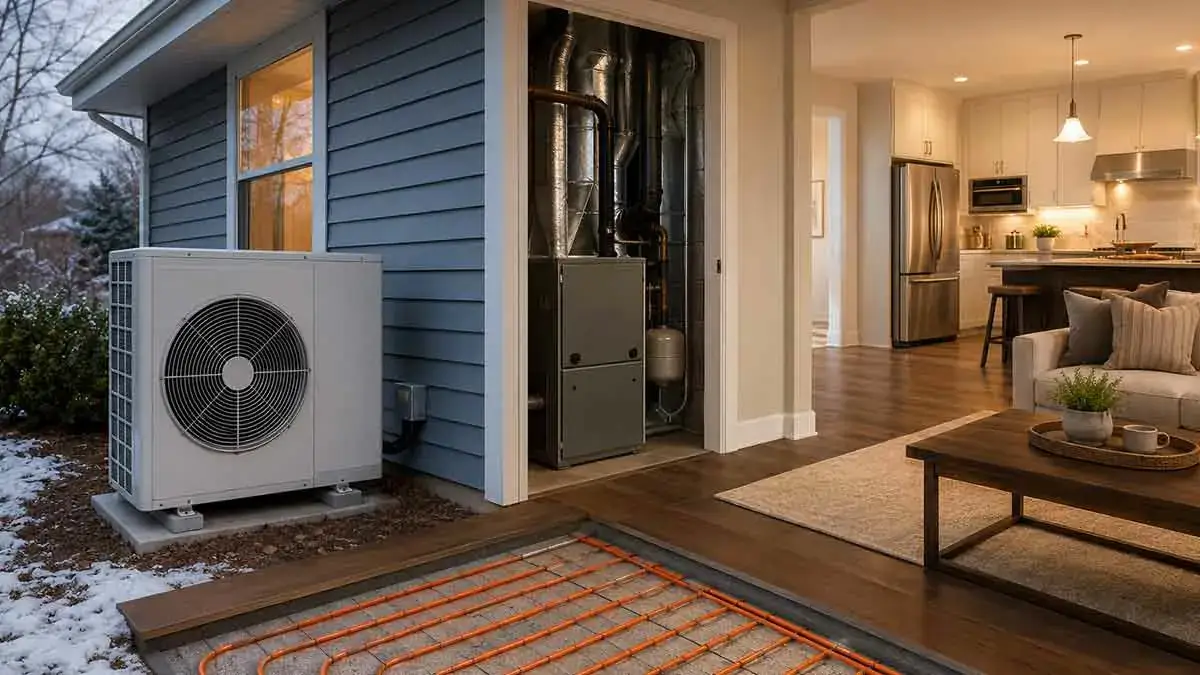
Choosing the right heating system is an important part of making a home comfortable, energy-efficient, and reliable during cold weather. The best heating option depends on several factors, including climate, home size, insulation, existing infrastructure, fuel availability, installation cost, operating costs, and maintenance requirements.
Home heating systems range from traditional furnaces and boilers to heat pumps, ductless mini-splits, electric heating, radiant systems, and renewable technologies. Each option has different strengths and limitations.
This complete guide explains the most common home heating options, how they work, their advantages and disadvantages, and the factors homeowners should consider before installing or replacing a heating system.
Table of Contents
What Are Home Heating Options?
Home heating options are the different technologies and systems used to maintain comfortable indoor temperatures during cold weather.
Common options include:
- Gas furnaces
- Electric furnaces
- Oil furnaces
- Heat pumps
- Ductless mini-splits
- Boilers
- Radiant floor heating
- Electric baseboards
- Wood stoves
- Pellet stoves
- Geothermal heat pumps
- Dual-fuel systems
- Portable electric heaters
The appropriate choice depends on the home’s construction, climate, available energy sources, and homeowner priorities.
How to Choose a Home Heating System
Before choosing a heating system, consider more than the purchase price.
Important factors include:
- Climate
- Home size
- Insulation
- Air sealing
- Existing ductwork
- Available fuel sources
- Electricity availability
- Installation requirements
- Operating costs
- Maintenance requirements
- Expected system life
- Indoor comfort
- Safety requirements
A heating system that works well in one home may not be the best choice for another.
Professional load calculations and system assessments can help determine the appropriate capacity for a specific home.
Furnace Heating
Furnaces are among the most common central heating systems.
A furnace heats air and distributes it through ductwork to different rooms.
Furnaces may use:
- Natural gas
- Electricity
- Oil
- Other approved fuels
Advantages can include:
- Fast heat delivery
- Compatibility with existing ductwork
- Centralized temperature control
- Wide availability
However, furnaces require appropriate maintenance, and combustion-based systems require additional safety considerations.
Gas Furnaces
Gas furnaces burn natural gas or another approved gaseous fuel to generate heat.
A blower then distributes heated air through the home’s ductwork.
Advantages may include:
- Strong heating capacity
- Rapid heat delivery
- Compatibility with central air conditioning
- Familiar technology
Potential disadvantages include:
- Dependence on fuel availability
- Combustion-related safety requirements
- Regular professional maintenance
- Potentially higher emissions than electric heating systems
Gas furnaces should be installed and serviced by qualified professionals.
Electric Furnaces
Electric furnaces use electrical resistance heating elements to warm air.
They can be useful where natural gas or other fuels are unavailable.
Advantages include:
- No onsite combustion
- Relatively simple operation
- Compatibility with ducted systems
- No fuel storage requirement
However, resistance heating can consume substantial electricity compared with heat pump systems under many operating conditions.
Oil Furnaces
Oil furnaces burn heating oil to produce heat.
They may be found in areas where natural gas infrastructure is limited.
Potential advantages include:
- High heating capacity
- Established technology
- Compatibility with existing forced-air systems
Potential disadvantages include:
- Fuel storage requirements
- Fuel delivery requirements
- Combustion maintenance
- Tank maintenance
- Higher environmental impact than some electric alternatives
Oil-burning systems require appropriate professional maintenance.
Heat Pumps
Heat pumps move heat rather than generating heat through combustion.
In heating mode, a heat pump extracts heat from outdoor air or another heat source and transfers it indoors.
Many heat pumps can also provide cooling during warmer weather.
Advantages may include:
- Heating and cooling from one system
- High efficiency under suitable conditions
- No onsite combustion
- Reduced dependence on fossil fuels
Performance varies with outdoor temperature, equipment type, home insulation, and system design.
Ductless Mini-Split Heat Pumps
Ductless mini-splits use indoor air-handling units connected to an outdoor heat pump.
They can provide heating and cooling without traditional ductwork.
They may be particularly useful for:
- Homes without ducts
- Room additions
- Converted spaces
- Individual zones
- Smaller homes
Potential benefits include:
- Zoned temperature control
- No major duct installation
- Efficient heat pump operation
- Flexible installation
The number and placement of indoor units should be carefully planned.
Boiler Heating Systems
Boilers heat water and distribute that heat through:
- Radiators
- Baseboards
- Radiant floors
- Other hydronic heating components
Boilers can provide comfortable and relatively even heat.
Potential disadvantages include:
- Higher installation complexity
- Plumbing components
- Water leaks
- More limited compatibility with conventional central air distribution
Boiler maintenance should follow manufacturer recommendations and local requirements.
Radiant Floor Heating
Radiant floor systems transfer heat through flooring surfaces.
They may use:
- Electric heating elements
- Heated water through tubing
Radiant systems can provide comfortable heat with relatively even temperature distribution.
However, installation can be more complicated and expensive, especially when retrofitting an existing home.
Electric Baseboard Heating
Electric baseboard heaters use electrical resistance elements to heat nearby air.
They are often installed along exterior walls beneath windows.
Advantages can include:
- Simple installation
- Individual room control
- No ductwork
- Low upfront complexity
Disadvantages may include:
- Higher operating costs in areas with expensive electricity
- Limited whole-home efficiency compared with some heat pumps
- Furniture placement restrictions
Electric Wall Heaters
Electric wall heaters can provide localized heating in individual rooms.
They may be useful for:
- Small rooms
- Bathrooms
- Additions
- Supplemental heating
They are generally better suited to targeted heating than replacing an efficient whole-home heating system.
Wood-Burning Heating
Wood stoves and other wood-burning systems can provide substantial heat.
Potential benefits include:
- Use of locally available firewood
- Heating independence in some situations
- Strong heat output
However, wood-burning systems require:
- Proper installation
- Safe venting
- Chimney maintenance
- Fuel storage
- Regular cleaning
- Careful operation
Burning wood also produces combustion pollutants, so appropriate equipment and ventilation are important.
Pellet Heating
Pellet stoves burn compressed biomass pellets.
They can provide efficient localized heating and may offer more automated operation than traditional wood stoves.
However, they still require:
- Fuel storage
- Regular cleaning
- Electricity for many systems
- Proper venting
- Periodic maintenance
Pellet availability and cost vary by location.
Geothermal Heating
Geothermal heat pumps use the relatively stable temperature of the ground as a heat source or heat sink.
They can provide heating and cooling with potentially high efficiency.
Advantages may include:
- High efficiency
- Heating and cooling capability
- Long system life for properly maintained components
- Reduced dependence on outdoor air temperature
The major limitation is installation complexity and cost, particularly for the ground-loop system.
Dual-Fuel Heating Systems
Dual-fuel systems combine a heat pump with a combustion-based heating system, often a gas furnace.
The system can switch between heating sources based on operating conditions and control settings.
Potential advantages include:
- Heat pump efficiency during suitable conditions
- Backup heating capacity
- Greater flexibility in colder climates
System controls must be properly configured for efficient operation.
Central Heating Systems
Central heating systems distribute heat throughout the home from one primary heating source.
Common central systems include:
- Furnaces
- Heat pumps
- Boilers
Central heating can provide consistent whole-home temperature control when the system is properly sized and the distribution system is balanced.
Zoned Heating
Zoned heating divides the home into separate temperature-control areas.
Zones can be created through:
- Multiple ducted systems
- Ductless mini-splits
- Hydronic controls
- Motorized dampers in appropriately designed duct systems
Zoning can improve comfort and reduce heating in unused areas, but it requires appropriate system design.
Portable Space Heaters
Portable electric heaters can provide supplemental heat in individual rooms.
They may be useful when:
- A room needs temporary additional heat
- A central system cannot adequately heat a particular space
- Short-term supplemental heating is needed
Portable heaters should be placed on stable surfaces, kept away from combustible materials, and operated according to manufacturer instructions.
They should not be used as a substitute for correcting serious heating-system problems.
Comparing Home Heating Options
Different heating systems have different characteristics.
| Heating Option | Main Advantage | Main Limitation |
|---|---|---|
| Gas Furnace | Fast, powerful heating | Combustion and fuel dependence |
| Electric Furnace | Simple and widely available | Higher electricity use |
| Oil Furnace | Strong heating capacity | Fuel storage and maintenance |
| Heat Pump | Efficient heating and cooling | Performance depends on climate and system |
| Mini-Split | Zoned heating and cooling | Indoor units are visible |
| Boiler | Comfortable hydronic heat | More complex installation |
| Radiant Floor | Even, comfortable heat | Retrofit installation can be difficult |
| Electric Baseboard | Simple room-by-room control | Can have higher operating costs |
| Wood Stove | Strong localized heat | Fuel handling and maintenance |
| Pellet Stove | Automated solid-fuel heating | Requires pellets and maintenance |
| Geothermal | High potential efficiency | Higher installation complexity |
| Dual-Fuel | Flexible heating sources | More complex equipment and controls |
Heating Efficiency
Heating efficiency describes how effectively a system converts energy into useful heat.
Efficiency varies significantly between technologies.
For example:
- Heat pumps move heat rather than creating it directly.
- Electric resistance systems convert electricity into heat at the point of use.
- Combustion systems lose some energy through exhaust.
- Geothermal systems can operate efficiently because ground temperatures are relatively stable.
When comparing equipment, use the efficiency metrics appropriate to the specific technology rather than comparing percentages blindly.
Heating System Installation Costs
Installation costs vary widely.
Factors include:
- System type
- Equipment capacity
- Existing infrastructure
- Ductwork requirements
- Electrical upgrades
- Fuel connections
- Venting requirements
- Labor
- Local building requirements
A system with a low equipment price may still have high installation costs if significant infrastructure changes are required.
Obtain detailed quotes that clearly separate equipment, labor, required modifications, and other project costs.
Heating Operating Costs
Operating costs depend on:
- Energy prices
- System efficiency
- Climate
- Home insulation
- Thermostat settings
- Home size
- System maintenance
- Heating demand
The cheapest system to install is not necessarily the cheapest system to operate.
A long-term comparison should consider both installation and expected operating costs.
Climate and Heating System Selection
Climate is one of the most important factors when selecting a heating system.
Homes in very cold climates may have different requirements from homes in areas with mild winters.
Consider:
- Typical winter temperatures
- Extreme cold events
- Heating degree days
- Humidity
- Snow and ice
- Electricity reliability
- Fuel availability
Equipment should be selected and sized for the actual local climate.
Home Insulation and Heating Performance
Heating efficiency depends heavily on the building envelope.
Poor insulation and air leakage can cause heat to escape quickly.
Before upgrading heating equipment, consider:
- Attic insulation
- Wall insulation
- Floor insulation
- Window performance
- Door seals
- Air leakage
Improving the home’s envelope can reduce heating demand and improve comfort regardless of the heating technology used.
Heating System Sizing
A heating system should be appropriately sized for the home.
An oversized system can:
- Cycle too frequently
- Reduce comfort
- Waste energy
- Increase equipment wear
An undersized system may:
- Struggle during cold weather
- Run continuously
- Fail to maintain the desired temperature
Professional load calculations are preferable to choosing equipment based solely on home square footage.
Indoor Comfort and Temperature Control
Heating performance is not determined only by thermostat temperature.
Comfort can also depend on:
- Air movement
- Humidity
- Floor temperature
- Drafts
- Room-to-room temperature differences
- Radiant heat
A properly designed heating system should provide consistent comfort without excessive temperature swings.
Heating System Maintenance
Regular maintenance helps preserve performance and identify problems early.
Depending on the system, maintenance may include:
- Filter replacement
- Burner inspection
- Heat exchanger inspection
- Coil cleaning
- Boiler inspection
- Radiator checks
- Condensate drainage inspection
- Electrical inspection
- Ductwork inspection
Follow the manufacturer’s maintenance requirements.
Combustion systems, refrigerant systems, electrical components, and complex mechanical equipment should be serviced by qualified professionals.
Home Heating Safety
Heating equipment can create serious safety risks when improperly installed or maintained.
Important safety practices include:
- Keep combustible materials away from heating equipment.
- Maintain required clearances.
- Keep vents and flues unobstructed.
- Test smoke alarms.
- Install and test carbon monoxide alarms where appropriate.
- Never use an oven or stove as a substitute for home heating.
- Follow manufacturer instructions.
- Have combustion equipment professionally inspected.
Never ignore unusual burning, fuel, or electrical odors.
How to Reduce Heating Costs
Several improvements can reduce unnecessary heating demand.
Consider:
- Improving insulation
- Sealing appropriate air leaks
- Maintaining heating equipment
- Using reasonable thermostat settings
- Keeping vents unobstructed
- Using curtains or shades appropriately
- Improving window performance
- Reducing drafts
- Heating occupied spaces efficiently
The most cost-effective improvements depend on the home’s existing condition.
When to Replace a Heating System
Replacement may be worth considering when:
- The system is approaching the end of its expected service life
- Repairs are becoming frequent
- Heating performance is declining
- Energy consumption has increased significantly
- Replacement parts are difficult to obtain
- The system no longer meets the home’s needs
- Major components have failed
Do not replace equipment based solely on age. Evaluate condition, efficiency, repair costs, and the home’s heating requirements.
DIY vs. Professional Heating Work
Some heating tasks are appropriate for homeowners.
DIY tasks may include:
- Replacing HVAC filters
- Keeping vents clear
- Monitoring thermostat operation
- Checking for obvious drafts
- Cleaning accessible surfaces
- Testing smoke and carbon monoxide alarms
Professional assistance is appropriate for:
- Gas connections
- Combustion systems
- Refrigerant work
- Electrical repairs
- Boiler repairs
- Major ductwork changes
- Heating-system installation
- System sizing
- Chimney and venting work
Do not attempt specialized heating repairs without the necessary qualifications.
Simple Home Heating Checklist
Use this checklist to review your home’s heating system:
- Identify the primary heating system
- Check the heating system before winter
- Replace filters when required
- Keep supply vents clear
- Keep return vents clear
- Check thermostat operation
- Inspect accessible ductwork
- Check for unusual noises
- Watch for unusual odors
- Inspect visible heating equipment
- Keep combustible materials away from equipment
- Check smoke alarms
- Check carbon monoxide alarms
- Inspect chimneys and venting when applicable
- Monitor indoor humidity
- Check for drafts
- Inspect attic insulation
- Check windows and exterior doors
- Maintain appropriate insulation
- Schedule professional maintenance
- Keep heating records
- Evaluate efficiency before major replacement decisions
Final Thoughts
The best home heating option depends on the home’s climate, construction, energy sources, existing infrastructure, budget, and long-term heating needs. There is no single system that is ideal for every property.
Furnaces remain practical for many homes, while heat pumps can provide efficient heating and cooling in suitable conditions. Ductless mini-splits are useful where conventional ductwork is unavailable, while boilers and radiant systems can provide comfortable hydronic heat. Electric resistance systems, wood and pellet heating, geothermal systems, and dual-fuel solutions may also be appropriate in specific situations.
Before choosing or replacing a heating system, evaluate the home’s insulation, air leakage, heating load, distribution system, and available energy sources. Proper sizing and professional installation are just as important as the equipment itself.
A well-selected and properly maintained heating system can improve comfort, control energy use, and provide reliable performance throughout the heating season.