
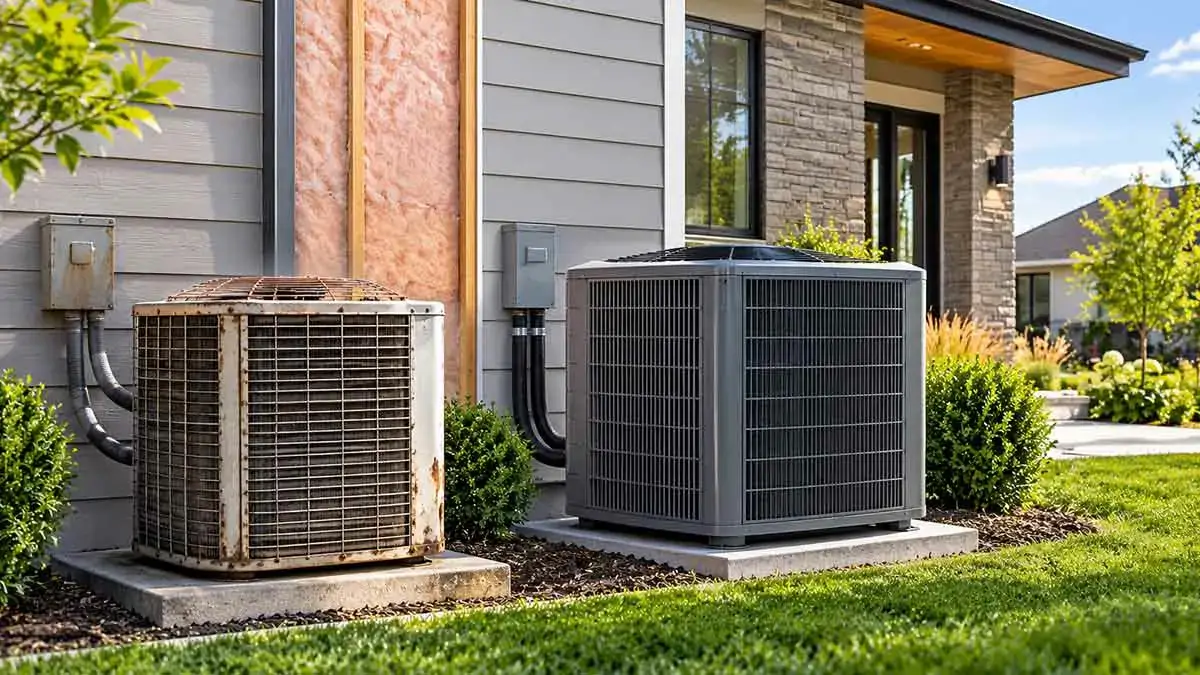
An HVAC system is a major part of a home’s comfort, energy performance, and indoor environment. While regular maintenance can extend equipment life, every heating and cooling system eventually reaches a point where continued repairs may no longer be the most practical option.
Knowing when to replace an HVAC system can help homeowners avoid repeated breakdowns, unexpected repair costs, poor temperature control, and inefficient operation. However, an older system does not automatically need to be replaced. The decision should consider equipment age, repair history, operating costs, comfort, efficiency, safety, and the condition of the overall system.
This guide explains the most common signs that an HVAC system may need replacement, when repair may still make sense, what to consider before choosing new equipment, and how to plan an HVAC replacement properly.
Table of Contents
When Should You Replace an HVAC System?
HVAC replacement is worth considering when the existing system becomes unreliable, expensive to operate, difficult to repair, or unable to maintain acceptable comfort.
Common reasons to evaluate replacement include:
- Frequent breakdowns
- Increasing repair expenses
- Poor temperature control
- Significant efficiency problems
- Persistent airflow issues
- Major component failure
- Safety concerns
- Difficulty obtaining replacement parts
- Equipment approaching the end of its expected service life
Replacement should be based on the overall condition and economics of the system rather than a single symptom.
Check the Age of the HVAC System
Equipment age is an important factor, but it is not the only consideration.
Different HVAC technologies have different expected service lives, and actual longevity depends on:
- Equipment quality
- Installation
- Maintenance
- Climate
- Operating hours
- Repair history
An older system that is reliable and properly maintained may continue operating satisfactorily.
However, when an aging system also develops frequent failures, declining performance, or high operating costs, replacement becomes more reasonable to evaluate.
Frequent HVAC Breakdowns
Repeated breakdowns are one of the clearest warning signs.
If the system requires service several times during a heating or cooling season, consider whether continued repairs are financially justified.
Frequent failures may indicate that multiple components are reaching the end of their useful service life.
Ask whether another repair is likely to restore reliable operation or simply postpone a larger replacement decision.
Increasing Repair Costs
Repair costs tend to become more difficult to justify as equipment ages.
Consider replacement when:
- Major components fail
- Repairs are becoming frequent
- Parts are expensive
- Labor costs are increasing
- Several components need attention simultaneously
A single expensive repair does not automatically mean replacement is the better choice. Compare the repair cost with the system’s age, condition, expected remaining service life, and operating costs.
Rising Energy Bills
A sudden or persistent increase in energy consumption can indicate an HVAC problem.
Possible causes include:
- Dirty components
- Restricted airflow
- Duct leakage
- Refrigerant problems
- Poor insulation
- Air leakage
- Equipment deterioration
- Incorrect system operation
Do not assume the HVAC system is responsible without investigating other causes.
If the system is old and operating costs remain unusually high after maintenance and building-envelope problems have been addressed, replacement may be worth considering.
Uneven Heating or Cooling
Rooms that are consistently too hot or too cold can indicate:
- Poor airflow
- Duct problems
- Insufficient insulation
- Air leakage
- Incorrect system sizing
- Thermostat problems
- Equipment deterioration
Uneven temperatures do not automatically mean the HVAC equipment must be replaced.
A professional assessment should determine whether the problem is caused by the equipment, ductwork, controls, or building envelope.
Poor Temperature Control
An HVAC system may need replacement evaluation if it repeatedly struggles to maintain the desired indoor temperature.
Watch for:
- Long operating periods
- Failure to reach the thermostat setting
- Frequent temperature fluctuations
- Poor heating during cold weather
- Poor cooling during hot weather
Before replacing the system, verify that the equipment is properly maintained and appropriately sized.
Weak or Restricted Airflow
Weak airflow can result from:
- Dirty filters
- Blocked vents
- Duct restrictions
- Blower problems
- Dirty coils
- Mechanical failures
If airflow remains poor after routine maintenance and appropriate repairs, the system may have a significant mechanical or ductwork problem.
Replacing the HVAC system should not be the first response until the source of the restriction has been identified.
Excessive Cycling
Short cycling occurs when an HVAC system starts and stops more frequently than intended.
Potential causes include:
- Incorrect system sizing
- Thermostat problems
- Restricted airflow
- Mechanical issues
- Poor heat transfer
- Other control problems
Frequent cycling can reduce comfort and increase equipment wear.
The cause should be diagnosed before deciding whether replacement is necessary.
Unusual HVAC Noises
New or increasingly loud noises can indicate equipment deterioration.
Warning signs include:
- Grinding
- Banging
- Rattling
- Squealing
- Buzzing
- Persistent clicking
Some noises may be caused by a repairable component.
However, repeated mechanical problems in aging equipment can strengthen the case for replacement.
Persistent HVAC Odors
Unusual odors can indicate a problem that requires investigation.
Examples include:
- Burning smells
- Electrical odors
- Persistent musty odors
- Fuel or combustion-related odors
Strong burning, electrical, or fuel-related odors should not be ignored.
Turn off the system when it is safe to do so and seek qualified professional assistance.
Frequent Refrigerant Problems
Air conditioners and heat pumps use refrigerant as part of their cooling and heat-transfer processes.
Repeated refrigerant-related problems can be expensive, particularly on older systems.
A refrigerant issue should be professionally diagnosed rather than treated simply by adding refrigerant.
If the equipment has a major leak, uses an outdated refrigerant, or requires repeated repairs, replacement may be worth evaluating.
Repeated Condensate Leaks
Cooling equipment produces condensate that should drain properly.
Recurring water around the indoor unit can result from:
- Blocked drains
- Damaged drain pans
- Improper drainage
- Coil problems
- Other equipment issues
A condensate leak does not necessarily mean the HVAC system needs replacement.
However, repeated water damage combined with aging equipment may justify a broader system assessment.
Poor Humidity Control
An HVAC system should contribute to appropriate indoor humidity control, particularly during cooling season.
Persistent humidity problems can result from:
- Oversized cooling equipment
- Poor ventilation
- Building-envelope problems
- Insufficient dehumidification
- Equipment problems
Replacing the HVAC system may help in some cases, but the underlying moisture source should be identified first.
Outdated HVAC Technology
Older HVAC equipment may lack features available in modern systems, such as:
- Improved efficiency
- Variable-speed operation
- Better controls
- Heat pump technology
- Advanced thermostat compatibility
- Improved zoning options
Newer technology can provide benefits, but replacement should be based on the home’s actual needs and expected operating costs rather than features alone.
Difficulty Finding Replacement Parts
As HVAC equipment ages, certain components may become harder to source.
This can increase:
- Repair delays
- Parts costs
- Downtime
- Dependence on limited service options
If an aging system requires a major repair and replacement parts are difficult to obtain, replacement may be a more practical long-term solution.
Visible Equipment Deterioration
Visible rust, corrosion, damaged components, or deteriorated insulation can indicate aging or moisture-related problems.
Do not assume visible deterioration means the entire system must be replaced.
Have significant damage professionally evaluated, particularly when it affects safety, heat exchangers, electrical components, or structural integrity.
Furnace Safety Concerns
Combustion-based furnaces require particular attention to safety.
Potential warning signs include:
- Cracked or damaged components
- Combustion problems
- Repeated safety shutdowns
- Significant corrosion
- Carbon monoxide concerns
- Persistent abnormal odors
Never bypass safety controls or continue operating equipment that a qualified professional has identified as unsafe.
If a furnace presents a significant safety risk, replacement may be necessary.
Boiler Replacement Warning Signs
Boilers can last for many years when properly maintained, but replacement may become appropriate when there are:
- Repeated leaks
- Severe corrosion
- Frequent breakdowns
- Major component failures
- Poor heating performance
- Difficulty obtaining parts
A qualified heating professional should evaluate the boiler before a replacement decision is made.
Heat Pump Replacement Warning Signs
Heat pumps may need replacement consideration when they experience:
- Frequent repairs
- Declining heating or cooling performance
- Repeated refrigerant problems
- Persistent airflow issues
- High operating costs
- Major component failure
Because heat pumps provide both heating and cooling, a failure can affect year-round comfort.
Air Conditioner Replacement Warning Signs
An aging air conditioner may warrant replacement evaluation when it has:
- Frequent breakdowns
- Poor cooling performance
- Repeated refrigerant problems
- Increasing repair costs
- Excessive energy consumption
- Major compressor or other component problems
A professional diagnosis can help determine whether repair or replacement makes more financial sense.
Ductwork Problems and HVAC Replacement
Not every HVAC performance problem originates in the equipment.
Leaking, poorly insulated, restricted, or incorrectly designed ductwork can significantly affect comfort and energy use.
Before replacing an HVAC system, determine whether ductwork problems are contributing to:
- Uneven temperatures
- Weak airflow
- High energy consumption
- Long system runtimes
Replacing equipment without addressing major duct problems may not solve the underlying issue.
Repair vs. Replace: How to Decide
A repair may make sense when:
- The system is relatively young
- The repair is straightforward
- Maintenance history is good
- Operating costs remain reasonable
- The equipment performs reliably after repair
Replacement may make more sense when:
- The system is aging
- Repairs are frequent
- Major components are failing
- Energy costs are consistently high
- Comfort remains poor
- Parts are difficult to obtain
- Safety concerns exist
There is no universal age or repair-cost rule that applies to every home.
Calculate the Cost of Continued Repairs
Keep records of HVAC repair expenses.
Look at:
- Repair frequency
- Annual repair spending
- Parts costs
- Labor costs
- Emergency service costs
- Expected future repairs
A single repair should be evaluated in the context of the system’s overall condition.
If repair spending continues to increase, compare those costs with the expected cost and operating benefits of a properly selected replacement.
Consider HVAC Operating Costs
Energy consumption should be considered when evaluating replacement.
Compare the existing system’s performance with available replacement options while accounting for:
- Local energy prices
- Climate
- Equipment efficiency
- Heating and cooling demand
- Installation quality
- Maintenance requirements
Avoid assuming that the most efficient equipment will always provide the fastest financial payback.
Do Not Replace an HVAC System Based on Age Alone
Age is an important consideration, but it should not be the sole reason for replacement.
A well-maintained older system may still provide acceptable performance.
Conversely, a relatively newer system may require replacement if it has serious installation problems, major damage, repeated failures, or safety concerns.
Evaluate the complete system.
Get a Professional HVAC Assessment
Before investing in replacement, have a qualified HVAC professional evaluate the system.
The assessment may include:
- Equipment condition
- Airflow
- Ductwork
- Controls
- Electrical components
- Refrigerant-related issues
- Combustion safety where applicable
- System sizing
- Overall performance
Ask the professional to identify the actual cause of the problem rather than simply recommending replacement.
Choose the Right Replacement System
If replacement is justified, select equipment based on the home’s needs.
Consider:
- Climate
- Home size
- Insulation
- Air leakage
- Existing ductwork
- Heating requirements
- Cooling requirements
- Energy prices
- Equipment compatibility
- Available incentives
The replacement should be designed as part of the entire home’s heating and cooling system.
Size the New HVAC System Correctly
A larger HVAC system is not automatically better.
Oversized equipment can:
- Cycle frequently
- Reduce humidity control
- Create temperature fluctuations
Undersized equipment may:
- Run excessively
- Struggle during extreme weather
- Fail to maintain the desired temperature
A qualified professional should determine appropriate system capacity based on the home’s characteristics rather than simply matching the old equipment’s size.
Compare Efficiency Ratings
When comparing replacement equipment, review the applicable efficiency ratings for the specific technology.
Consider both:
- Equipment efficiency
- Expected operating cost
Also consider installation quality, maintenance, system sizing, and local energy prices.
A highly efficient system that is poorly installed or incorrectly sized may not perform as expected.
Consider Heat Pump Options
A heat pump can provide both heating and cooling.
It may be worth considering when:
- Electricity is reasonably priced
- The climate is suitable
- The home has appropriate insulation
- The system can be correctly sized
- The homeowner wants one system for heating and cooling
Evaluate the complete system and operating costs rather than choosing based on equipment type alone.
Consider Zoning
If different areas of the home have substantially different heating and cooling requirements, zoning may improve comfort and control.
Zoning can be particularly useful in:
- Multi-story homes
- Homes with distinct occupancy patterns
- Homes with significant temperature differences between areas
A zoning system should be properly designed. Closing vents manually is not a substitute for engineered zoning.
Improve the Building Envelope Before Replacement
An HVAC replacement may not solve excessive heating or cooling demand caused by the home itself.
Before or during replacement, evaluate:
- Attic insulation
- Air leakage
- Window performance
- Door seals
- Duct insulation
- Solar heat gain
Reducing unnecessary heat transfer can allow the new HVAC system to operate more efficiently.
Prepare for HVAC Replacement
Before installation:
- Review the existing system’s problems.
- Obtain a professional assessment.
- Confirm appropriate system sizing.
- Compare equipment options.
- Review installation requirements.
- Check ductwork condition.
- Address major building-envelope problems.
- Confirm warranty details.
- Plan for removal of the old equipment.
- Schedule installation before the existing system fails completely when possible.
Planning ahead can reduce the risk of an emergency replacement.
Common HVAC Replacement Mistakes
Replacing the System Based Only on Age
Age alone does not determine whether replacement is necessary.
Choosing the Largest System
Oversized equipment can create comfort and efficiency problems.
Choosing Equipment Based Only on Efficiency
Efficiency is important, but installation quality, sizing, climate, and operating costs also matter.
Ignoring Ductwork
Poor ducts can undermine the performance of a new HVAC system.
Ignoring Insulation and Air Leaks
A new system may still operate excessively if the building envelope performs poorly.
Choosing the Cheapest Installation
Installation quality can significantly affect system performance and reliability.
Skipping Professional Sizing
Replacing an old unit with the same capacity without evaluating the home may reproduce existing sizing problems.
Waiting for Complete Failure
Emergency replacement can limit equipment choices and scheduling flexibility.
How Long Does HVAC Replacement Take?
The installation time depends on:
- System type
- Equipment location
- Ductwork condition
- Electrical requirements
- Plumbing requirements
- Access to the equipment
- Whether multiple components are being replaced
A straightforward replacement may be completed relatively quickly, while a more complex installation can take longer.
Ask the installer for a specific project timeline before work begins.
HVAC Replacement Cost Considerations
The total cost of replacement can include more than the equipment itself.
Potential expenses include:
- New HVAC equipment
- Labor
- Duct modifications
- Electrical work
- Refrigerant-related work
- Drainage modifications
- Thermostat or control upgrades
- Removal of old equipment
- Permits where required
- Additional building-envelope improvements
Obtain detailed quotes that clearly identify what is included.
What to Do With the Old HVAC System
Old HVAC equipment should be removed and disposed of according to applicable local requirements.
Some components may contain refrigerants or other materials that require proper handling.
Ask the installer how the old equipment will be removed and disposed of.
HVAC Replacement Checklist
Before replacing an HVAC system, consider:
- Check the system’s age
- Review repair history
- Compare repair costs
- Monitor energy consumption
- Identify comfort problems
- Check airflow
- Investigate unusual noises
- Investigate unusual odors
- Check for refrigerant-related problems
- Inspect condensate drainage
- Evaluate ductwork
- Evaluate insulation
- Check air leaks
- Consider indoor humidity
- Obtain a professional assessment
- Confirm proper system sizing
- Compare efficiency ratings
- Compare installation quotes
- Review warranty coverage
- Consider heat pump options
- Consider zoning where appropriate
- Plan the installation before emergency failure
- Confirm old-equipment disposal arrangements
Final Thoughts
Knowing when to replace an HVAC system requires more than looking at its age. Frequent breakdowns, rising repair costs, poor comfort, declining performance, difficult-to-source parts, safety concerns, and unusually high operating costs can all indicate that replacement is worth evaluating.
However, many HVAC problems can be caused by filters, ductwork, insulation, air leaks, controls, or other components that may not require complete system replacement. A professional assessment can help identify the actual problem before a major investment is made.
If replacement is appropriate, choose equipment based on the home’s heating and cooling requirements, climate, building envelope, ductwork, energy costs, and long-term operating needs. Correct sizing and installation are just as important as the equipment’s efficiency rating.
The best HVAC replacement is not necessarily the largest or most expensive system. It is the properly sized, correctly installed system that matches the home’s actual needs and provides reliable comfort at a reasonable long-term operating cost.