
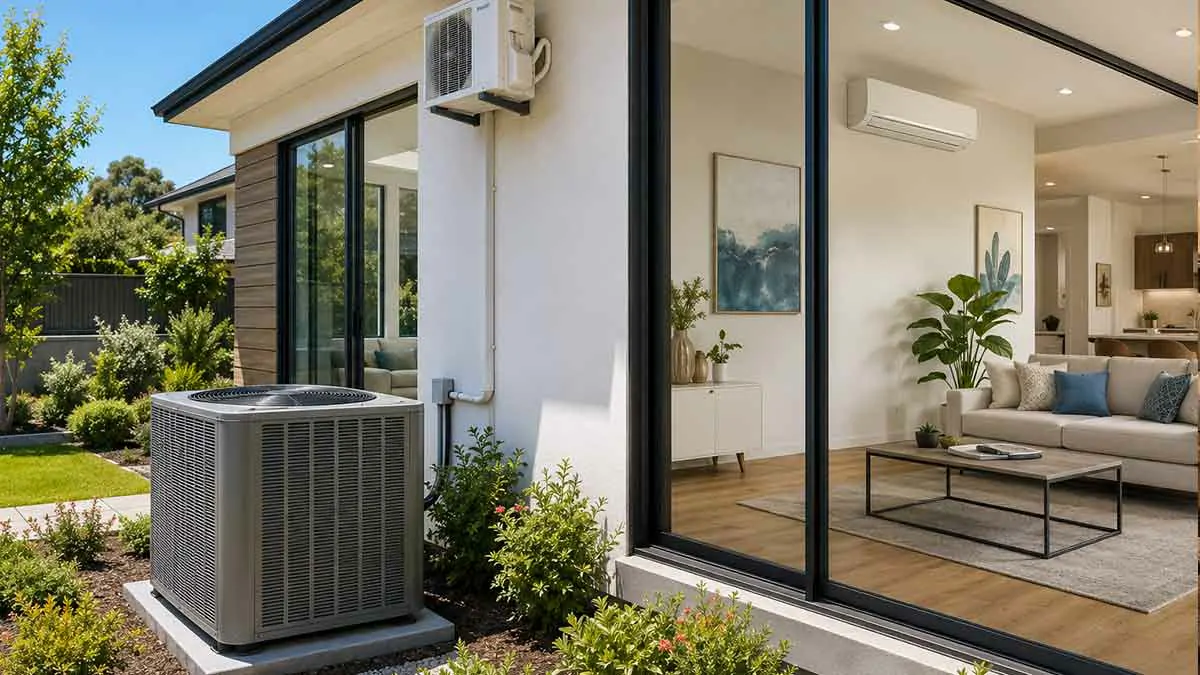
Choosing the right cooling system is an important part of keeping your home comfortable during hot weather. The best home cooling option depends on factors such as climate, home size, insulation, existing ductwork, electricity availability, installation costs, operating costs, and the level of temperature control you want.
Home cooling systems range from central air conditioning and ductless mini-splits to heat pumps, window air conditioners, portable units, evaporative coolers, and geothermal systems. Each option has different advantages, limitations, maintenance requirements, and installation considerations.
This complete guide explains the most common home cooling options, how they work, how to compare them, and what homeowners should consider before installing, upgrading, or replacing a cooling system.
Table of Contents
What Are Home Cooling Options?
Home cooling options are the systems and strategies used to reduce indoor temperatures and improve comfort during warm weather.
Common cooling solutions include:
- Central air conditioning
- Ductless mini-splits
- Heat pumps
- Window air conditioners
- Portable air conditioners
- Evaporative coolers
- Geothermal systems
- Whole-house fans
- Ceiling fans
- Passive cooling strategies
Some systems cool the entire home, while others are designed for individual rooms or specific zones.
How to Choose a Home Cooling System
The best cooling system depends on the characteristics of the home and the local climate.
Consider:
- Home size
- Climate
- Cooling demand
- Insulation
- Air leakage
- Existing ductwork
- Electrical capacity
- Indoor humidity
- Installation cost
- Energy prices
- Maintenance requirements
- Expected equipment life
- Desired temperature control
A cooling system should be selected based on the home’s actual cooling requirements rather than simply choosing the largest available unit.
Central Air Conditioning
Central air conditioning is one of the most common whole-home cooling solutions.
A central AC system typically includes an outdoor condenser, an indoor evaporator coil, a blower, a refrigerant circuit, and ductwork that distributes cooled air throughout the home.
Advantages of Central AC
Central air conditioning can provide:
- Whole-home cooling
- Consistent temperature control
- Integration with existing forced-air HVAC systems
- Centralized thermostat control
- Effective cooling in many climates
Limitations of Central AC
Potential disadvantages include:
- Higher installation cost than room-based systems
- Dependence on ductwork
- Duct losses when ducts are poorly sealed or insulated
- Professional maintenance requirements
- Outdoor-unit space requirements
Central AC can be a practical choice when a home already has suitable ductwork.
Ductless Mini-Split Systems
Ductless mini-splits use an outdoor heat pump or air-conditioning unit connected to one or more indoor air handlers.
They can cool individual rooms or multiple zones without requiring conventional ductwork.
Advantages
- No traditional ductwork required
- Zoned temperature control
- Flexible installation
- Useful for additions and converted spaces
- Efficient operation in many applications
Limitations
- Indoor units are visible
- Multiple zones can increase installation complexity
- Initial cost can vary significantly
- Filters and indoor units require maintenance
Ductless systems are particularly useful for homes without existing ductwork.
Heat Pump Cooling
Heat pumps can provide both heating and cooling.
During cooling mode, the system transfers heat from indoors to the outdoors.
Because the same equipment can provide heating and cooling, heat pumps can be an efficient option for homeowners who want one system for both seasons.
Consider:
- Climate
- System efficiency
- Heating requirements
- Electrical capacity
- Existing HVAC configuration
Heat pump installation and servicing should follow manufacturer requirements.
Window Air Conditioners
Window air conditioners are compact systems designed to cool individual rooms.
They are often suitable for:
- Apartments
- Small homes
- Bedrooms
- Home offices
- Spaces without central cooling
Advantages
- Lower initial cost
- Simple room-level cooling
- No ductwork required
- Relatively straightforward installation
Limitations
- Usually limited to one room
- Can obstruct part of a window
- May be noisy
- Requires suitable window installation
- Can be less practical for whole-home cooling
A window unit should be correctly sized for the room.
Portable Air Conditioners
Portable air conditioners can be moved between rooms and generally use a hose to exhaust warm air outdoors.
They may be useful when permanent cooling installation is impractical.
Advantages include:
- Mobility
- Easy storage
- No permanent central ductwork
- Useful for temporary cooling
However, portable units can be less efficient and noisier than some permanently installed systems.
The exhaust hose should be installed according to the manufacturer’s instructions.
Evaporative Coolers
Evaporative coolers use the evaporation of water to cool air.
They can work particularly well in hot, dry climates.
Advantages may include:
- Lower energy use than some conventional AC systems
- Outdoor-air-based cooling
- Simpler technology
However, their effectiveness decreases as outdoor humidity increases.
They may not be suitable for humid climates or homes where precise humidity control is important.
Geothermal Cooling
Geothermal heat pump systems use the relatively stable temperature of the ground to transfer heat from the home.
They can provide both heating and cooling.
Potential advantages include:
- High efficiency
- Heating and cooling capability
- Stable performance
- Reduced dependence on outdoor air temperature
The main limitation is installation complexity and the cost of the ground-loop system.
Whole-House Cooling
Whole-house cooling refers to systems designed to cool multiple rooms or the entire home.
These may include:
- Central AC
- Central heat pumps
- Multiple ductless zones
- Geothermal heat pumps
Whole-home cooling generally provides more consistent comfort than relying on individual room units.
Zoned Cooling
Zoned cooling allows different areas of a home to be controlled separately.
Zoning can be achieved through:
- Multiple ductless indoor units
- Appropriately designed duct systems
- Multiple HVAC systems
Benefits may include:
- Room-specific temperature control
- Reduced cooling in unused areas
- Improved comfort
- Better control of different heat loads
Zoning requires careful system design to avoid airflow and equipment problems.
Ceiling Fans
Ceiling fans do not actually lower the temperature of a room in the same way an air conditioner does.
Instead, they increase air movement across the skin, which can make occupants feel cooler.
They can be useful for reducing reliance on mechanical cooling when outdoor and indoor conditions allow.
Turn fans off in unoccupied rooms because they cool people rather than the building itself.
Whole-House Fans
Whole-house fans can move large quantities of outdoor air through a home when outdoor conditions are favorable.
They can be useful when:
- Outdoor temperatures are lower than indoor temperatures
- Outdoor air quality is acceptable
- The climate supports nighttime ventilation
They are not a direct replacement for air conditioning in every climate.
Radiant and Passive Cooling Strategies
Some homes can reduce cooling demand through passive design strategies.
These may include:
- Exterior shading
- Proper window orientation
- Reflective roofing
- Insulation
- Air sealing
- Thermal mass
- Cross ventilation
- Appropriate landscaping
Passive strategies generally work best when integrated into the home’s overall design.
Comparing Home Cooling Options
| Cooling Option | Best For | Main Advantage | Main Limitation |
|---|---|---|---|
| Central AC | Whole-home cooling | Consistent centralized cooling | Requires suitable ductwork |
| Ductless Mini-Split | Homes without ducts | Zoned cooling | Indoor units are visible |
| Heat Pump | Heating and cooling | One system for both functions | Performance depends on climate and design |
| Window AC | Individual rooms | Lower upfront cost | Limited coverage |
| Portable AC | Temporary or flexible cooling | Mobility | Often less efficient |
| Evaporative Cooler | Hot, dry climates | Lower energy use in suitable conditions | Poor performance in humid climates |
| Geothermal | Long-term high-efficiency systems | Stable performance | High installation complexity |
| Whole-House Fan | Cool, dry evenings | Rapid air exchange | Requires favorable outdoor conditions |
| Ceiling Fan | Supplemental comfort | Low energy use | Does not lower room temperature |
Cooling Efficiency
Cooling efficiency measures how effectively a system provides cooling relative to the energy it consumes.
Efficiency depends on:
- Equipment design
- System size
- Climate
- Maintenance
- Duct condition
- Thermostat settings
- Building envelope
When comparing equipment, use the efficiency ratings appropriate to the specific system and current regional standards.
Higher-rated equipment can reduce energy use, but the financial benefit depends on installation cost, operating hours, electricity prices, and system performance.
Cooling Capacity and System Sizing
Correct system sizing is critical.
An oversized air conditioner may cool the home quickly but can cycle too frequently and may not remove humidity effectively.
An undersized system may:
- Run continuously
- Struggle during extreme heat
- Fail to maintain the desired temperature
- Experience increased operating stress
Professional cooling-load calculations are preferable to sizing a system based only on floor area.
Installation Costs
Cooling installation costs vary considerably.
Factors include:
- System type
- Equipment capacity
- Existing ductwork
- Electrical requirements
- Refrigerant lines
- Drainage
- Structural modifications
- Labor
- Local requirements
Replacing an existing system can be less complicated than installing a completely new cooling system.
Request detailed estimates that identify equipment, labor, required modifications, and other project costs separately.
Operating Costs
The ongoing cost of cooling depends on:
- Electricity prices
- Equipment efficiency
- Climate
- Home insulation
- System size
- Thermostat settings
- Usage patterns
- Maintenance
A low-cost system to purchase may have higher operating costs over time.
Consider both initial and long-term costs when comparing cooling options.
Cooling and Indoor Humidity
Cooling systems can also remove moisture from indoor air.
Humidity management is particularly important in warm, humid climates.
Persistent high humidity may indicate:
- Insufficient cooling
- Oversized equipment
- Poor ventilation
- Air leakage
- Moisture intrusion
- Drainage problems
A dehumidifier may help in some situations, but it should not replace correcting a building or HVAC problem.
Cooling and Home Insulation
The performance of any cooling system depends partly on the building envelope.
Poor insulation and air leakage can increase cooling demand.
Important areas include:
- Attic insulation
- Wall insulation
- Windows
- Exterior doors
- Duct insulation
- Air sealing
Improving the building envelope can reduce heat gain and help a cooling system operate more efficiently.
Cooling and Airflow
Good airflow is essential for effective cooling.
Check that:
- Supply vents are not blocked
- Return vents are clear
- Filters are maintained
- Ductwork is not obviously damaged
- Outdoor units have adequate clearance
Persistent airflow problems should be professionally evaluated.
Smart Thermostats and Cooling Control
Programmable and smart thermostats can help manage cooling schedules.
Useful features may include:
- Temperature scheduling
- Remote control
- Occupancy-based adjustments
- Energy monitoring
- System alerts
A smart thermostat cannot compensate for an incorrectly sized or poorly maintained cooling system.
Cooling System Maintenance
Regular maintenance can help preserve performance.
Depending on the system, maintenance may include:
- Checking or replacing filters
- Cleaning accessible components
- Maintaining outdoor-unit clearance
- Inspecting condensate drainage
- Checking airflow
- Inspecting ductwork
- Professional equipment service
Follow the manufacturer’s maintenance recommendations.
Refrigerant, electrical, and other specialized work should be handled by qualified professionals.
Home Cooling Safety
Cooling equipment contains electrical and mechanical components that require appropriate precautions.
Important practices include:
- Keep outdoor units clear of obstructions.
- Do not modify electrical connections yourself.
- Keep portable and window units installed securely.
- Follow manufacturer instructions.
- Keep condensate drainage functioning.
- Do not overload electrical circuits.
- Have damaged equipment professionally inspected.
If an air conditioner produces a burning or electrical odor, shut it down when safe to do so and seek qualified assistance.
How to Reduce Cooling Costs
You can often reduce cooling demand with a combination of equipment maintenance and building improvements.
Consider:
- Maintaining HVAC filters
- Using reasonable thermostat settings
- Closing blinds or shades during strong solar exposure
- Improving attic insulation
- Sealing appropriate air leaks
- Maintaining ductwork
- Using ceiling fans for occupant comfort
- Keeping outdoor HVAC units clear
- Reducing unnecessary heat gain
- Scheduling professional maintenance
The most effective improvements depend on the home’s existing condition and climate.
When to Replace a Cooling System
Replacement may be worth considering when:
- The system requires frequent repairs
- Cooling performance has declined
- Operating costs have increased significantly
- Major components have failed
- Replacement parts are difficult to obtain
- The system is no longer appropriate for the home’s needs
- A major renovation creates an opportunity for a better system
Age alone should not determine replacement. Evaluate equipment condition, efficiency, repair costs, and future cooling requirements.
DIY vs. Professional Cooling Work
Some basic cooling maintenance tasks are appropriate for homeowners.
DIY tasks may include:
- Replacing filters
- Cleaning accessible grilles
- Removing debris around outdoor units
- Checking visible condensate drainage
- Keeping vents clear
- Monitoring thermostat operation
Professional assistance is appropriate for:
- Refrigerant service
- Electrical repairs
- Compressor problems
- Major ductwork modifications
- Cooling-system installation
- System sizing
- Complex condensate problems
- Geothermal installation and service
Avoid attempting specialized repairs without appropriate training.
Simple Home Cooling Checklist
Use this checklist to review your home’s cooling system:
- Identify the primary cooling system
- Check the cooling system before hot weather
- Replace filters when necessary
- Keep supply vents clear
- Keep return vents clear
- Check thermostat operation
- Monitor airflow
- Maintain outdoor-unit clearance
- Inspect condensate drainage
- Check for unusual noises
- Watch for unusual odors
- Monitor indoor humidity
- Inspect accessible ductwork
- Check duct insulation where applicable
- Maintain appropriate window shading
- Check attic insulation
- Seal suitable air leaks
- Use ceiling fans for supplemental comfort
- Monitor cooling performance
- Schedule professional maintenance when recommended
- Keep records of repairs and maintenance
- Evaluate efficiency before replacing major equipment
Final Thoughts
The best home cooling option depends on your climate, home design, cooling requirements, existing infrastructure, budget, and long-term priorities.
Central air conditioning can be an effective choice for homes with suitable ductwork, while ductless mini-splits offer flexible zoned cooling without traditional ducts. Heat pumps can provide both heating and cooling, while window and portable air conditioners can be practical for individual rooms or temporary needs. Evaporative coolers, geothermal systems, whole-house fans, and passive cooling strategies can also be valuable in the right conditions.
Before choosing a cooling system, consider the building envelope as well as the equipment. Improving insulation, reducing unnecessary air leakage, managing solar heat gain, and ensuring proper airflow can reduce cooling demand and improve comfort.
Most importantly, choose a properly sized system and have specialized installation work performed by qualified professionals. A well-designed and properly maintained cooling system can provide reliable comfort while helping control long-term energy and maintenance costs.