
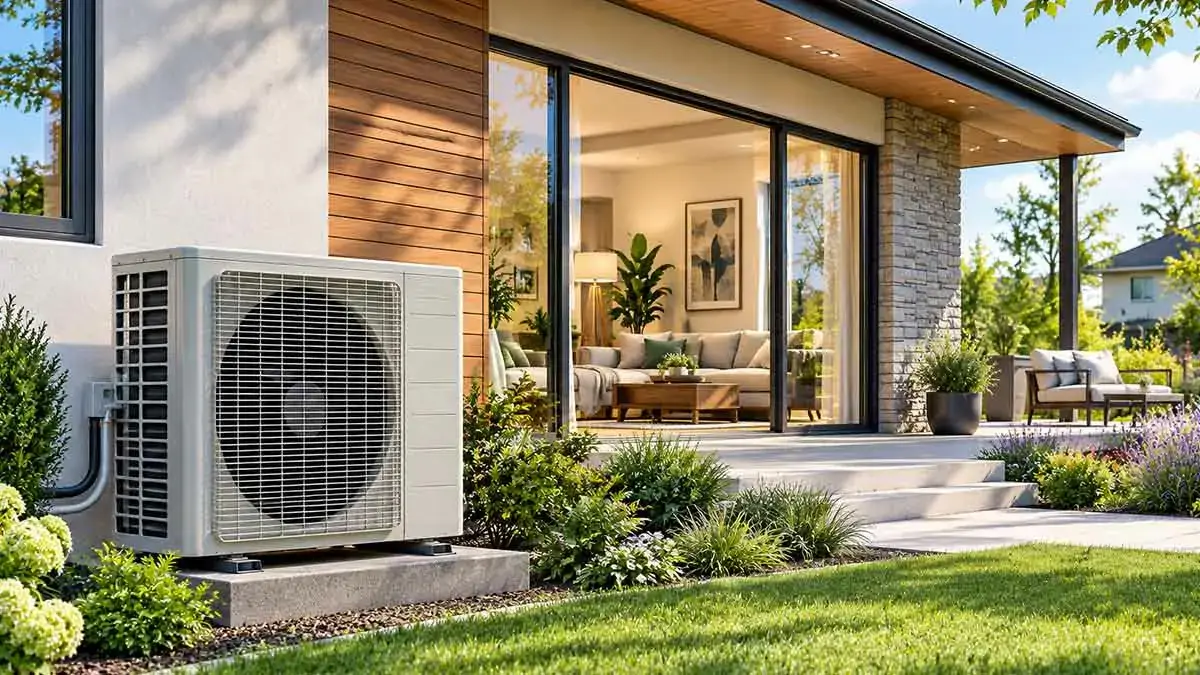
Heating and cooling can account for a significant portion of a home’s energy use, especially in regions with very hot summers or cold winters. An inefficient HVAC system, restricted airflow, poor insulation, air leaks, incorrect thermostat settings, or inadequate maintenance can all increase operating costs.
Reducing HVAC energy costs does not always require replacing the entire system. Many savings opportunities come from improving airflow, maintaining equipment, reducing unnecessary heat gain or heat loss, and using the HVAC system more efficiently.
This guide explains practical ways to reduce HVAC energy costs while maintaining indoor comfort, improving system performance, and avoiding unnecessary energy consumption.
Table of Contents
Why HVAC Energy Costs Increase
HVAC energy costs can rise for several reasons.
Common causes include:
- Poor insulation
- Air leaks
- Dirty filters
- Restricted airflow
- Leaking or poorly insulated ducts
- Dirty outdoor coils
- Incorrect thermostat settings
- Excessive indoor humidity
- Aging or inefficient equipment
- Poorly sealed windows and doors
- Excessive solar heat gain
- Improper system sizing
- Lack of maintenance
Before making expensive upgrades, identify which factors are actually affecting your home’s energy use.
Improve HVAC Maintenance
Regular maintenance can help an HVAC system operate reliably and efficiently.
Depending on the system, maintenance may include:
- Checking filters
- Inspecting airflow
- Cleaning appropriate components
- Checking condensate drainage
- Inspecting electrical and mechanical components
- Checking ductwork
- Testing system operation
Follow the manufacturer’s maintenance requirements and schedule professional service when appropriate.
Maintenance cannot make an inefficient system new, but it can help prevent avoidable performance problems.
Replace HVAC Filters When Needed
A dirty filter can restrict airflow and increase the workload on an HVAC system.
Check the filter regularly and replace or clean it according to:
- Manufacturer recommendations
- Filter type
- System design
- Indoor conditions
- Occupancy
- Pet exposure
Do not automatically choose the highest-rated filter available. A filter that creates excessive resistance can reduce airflow if the HVAC system was not designed for it.
Keep Supply and Return Vents Clear
Furniture, curtains, rugs, and storage items can obstruct HVAC vents.
Keep supply and return openings clear so air can circulate properly.
Do not permanently close vents in an attempt to save energy unless the system has been specifically designed for that configuration.
Restricted airflow can increase comfort problems and may reduce system performance.
Improve Airflow
Good airflow allows the HVAC system to distribute conditioned air more effectively.
If some rooms are consistently too hot or too cold, investigate:
- Blocked vents
- Dirty filters
- Duct restrictions
- Poor insulation
- Air leaks
- Incorrect system sizing
- Thermostat location
Persistent airflow problems should be professionally evaluated rather than solved by continuously adjusting the thermostat.
Use the Thermostat Efficiently
Thermostat settings have a direct effect on HVAC runtime.
Avoid setting heating or cooling substantially more than necessary.
When practical, use temperature settings that maintain reasonable comfort while reducing unnecessary system operation.
During periods when the home is unoccupied, a moderate temperature adjustment can reduce energy use without creating excessive recovery demands.
Consider a Programmable or Smart Thermostat
A programmable or smart thermostat can automatically adjust temperatures according to occupancy and schedules.
Useful features may include:
- Scheduling
- Remote control
- Occupancy-based adjustments
- Temperature monitoring
- Energy-use information
However, a smart thermostat does not automatically reduce energy consumption. The savings depend on how it is configured and used.
Make sure the thermostat is compatible with the HVAC system before installation.
Avoid Extreme Thermostat Settings
Setting the thermostat to an extreme temperature does not necessarily make the home heat or cool faster.
Instead, it may cause the system to run longer than necessary.
Use realistic temperature settings and allow the HVAC system to operate according to its normal design.
Reduce Air Leaks
Air leaks can increase heating and cooling demand by allowing conditioned air to escape or outdoor air to enter.
Common leakage locations include:
- Windows
- Exterior doors
- Attic access panels
- Utility penetrations
- Plumbing penetrations
- Electrical penetrations
- Gaps around building components
Appropriate caulking and weatherstripping can reduce some minor leaks.
Larger leakage problems may require professional air-sealing or an energy assessment.
Improve Home Insulation
Insulation helps slow heat transfer between the conditioned interior and the outdoors.
Areas worth evaluating include:
- Attics
- Exterior walls
- Floors above unconditioned spaces
- Basements
- Crawl spaces
Improving insulation can reduce the amount of heating and cooling required to maintain indoor temperatures.
The appropriate insulation strategy depends on climate, building design, moisture conditions, and local construction practices.
Seal Attic Air Leaks
The attic can contain significant air leakage paths.
Warm or cooled indoor air can escape through:
- Attic access openings
- Light fixtures
- Plumbing penetrations
- Electrical penetrations
- Duct penetrations
Appropriate air sealing can improve building-envelope performance.
Do not block intentional attic ventilation openings.
Improve Attic Insulation
Heat can move through an inadequately insulated attic.
Inspect accessible insulation for:
- Missing areas
- Compression
- Moisture damage
- Uneven coverage
If insulation is insufficient, consider a professional evaluation before adding more material.
Improving insulation is most effective when combined with appropriate air sealing and moisture management.
Manage Windows and Solar Heat Gain
Windows can influence HVAC energy use significantly.
During hot weather, direct sunlight can increase indoor heat gain.
Depending on the climate and window design, consider:
- Exterior shading
- Interior blinds
- Curtains
- Solar-control window treatments
- Appropriate window upgrades
During cold weather, allowing useful solar heat gain can sometimes reduce heating demand.
The best strategy depends on orientation, climate, window performance, and season.
Use Curtains and Blinds Strategically
Window coverings can help manage solar heat and heat transfer.
During hot periods, close appropriate coverings on sun-exposed windows when solar heat gain is undesirable.
During colder periods, opening sun-facing coverings during useful daylight hours may allow some passive solar heat gain.
Avoid treating every window identically because orientation and weather conditions matter.
Maintain the Outdoor HVAC Unit
Air conditioners and heat pumps require adequate airflow around their outdoor components.
Keep the area clear of:
- Leaves
- Grass
- Branches
- Trash
- Dense vegetation
Maintain the clearance specified by the equipment manufacturer.
Do not use the outdoor unit as a storage area.
Keep Condenser Coils Clean
Outdoor coils transfer heat between the HVAC system and the surrounding air.
Dirt and debris can interfere with heat transfer.
Keep the surrounding area clean and have detailed coil cleaning performed according to manufacturer recommendations.
Do not bend delicate coil fins or use aggressive cleaning methods that could damage the equipment.
Protect the Outdoor Unit From Obstructions
Vegetation can gradually restrict airflow around an outdoor unit.
Trim plants when necessary while maintaining the recommended clearance.
After storms, remove loose debris from around the unit once conditions are safe.
Maintain Condensate Drainage
Cooling systems commonly produce condensation that must drain properly.
Check for:
- Water around the indoor unit
- Overflowing drain pans
- Damp insulation
- Repeated leaks
A blocked condensate drain can cause water damage and may affect system operation.
Persistent drainage problems should be professionally inspected.
Check Ductwork
Ductwork distributes conditioned air throughout the home.
Accessible ducts should be checked for:
- Disconnections
- Damage
- Visible gaps
- Poor insulation
- Unusual condensation
Duct problems can cause conditioned air to be lost before it reaches the rooms where it is needed.
Insulate Ducts in Unconditioned Areas
Ducts located in attics, crawl spaces, garages, or other unconditioned areas may benefit from appropriate insulation.
Insulation helps reduce unwanted heat transfer between the duct and surrounding space.
The correct insulation approach depends on climate, duct material, location, and local requirements.
Seal Appropriate Duct Leaks
Leaking ducts can waste conditioned air.
Pay particular attention to accessible connections and joints.
Use appropriate duct-sealing methods recommended for the application. Do not rely on ordinary cloth-backed duct tape as a universal solution.
Extensive or inaccessible duct leakage may require professional testing and repair.
Reduce Unnecessary HVAC Runtime
HVAC systems consume energy while operating.
Reduce unnecessary runtime by addressing the causes of excessive heating or cooling demand.
These may include:
- Poor insulation
- Air leaks
- Excessive solar gain
- Open exterior doors
- Poor duct performance
- Incorrect thermostat schedules
Improving the home itself can be more effective than simply changing thermostat settings.
Use Ceiling Fans Correctly
Ceiling fans can improve perceived comfort by moving air across occupants.
They do not directly cool the air in the same way as an air conditioner.
Turn fans off in unoccupied rooms when they are not needed.
During cooling season, use the appropriate fan direction and speed for the fan’s design.
Control Indoor Humidity
Humidity affects how comfortable a home feels and can influence HVAC performance.
High humidity can make warm conditions feel hotter and may contribute to moisture problems.
Air conditioning can remove some moisture, but persistent humidity problems may require:
- Better ventilation
- Dehumidification
- Moisture-source control
- HVAC evaluation
Do not use lower thermostat settings as the only response to excessive humidity.
Improve Bathroom and Kitchen Ventilation
Bathrooms and kitchens generate moisture and heat.
Use appropriate exhaust ventilation to remove moisture and pollutants at the source.
Proper ventilation can help reduce the moisture load placed on cooling systems, particularly in humid conditions.
Do not exhaust moisture into attics, wall cavities, or other enclosed areas.
Reduce Heat From Appliances
Appliances and electronics can add heat to indoor spaces.
During hot weather, where practical:
- Use ovens during cooler parts of the day
- Use smaller appliances when suitable
- Avoid unnecessary operation of heat-producing equipment
- Keep refrigerators and other appliances properly maintained
Reducing internal heat gain can lower cooling demand.
Maintain the Water Heater and Other Heat Sources
Some household equipment generates heat that can affect indoor temperature.
Maintain appliances according to manufacturer recommendations and avoid placing unnecessary heat-producing equipment in conditioned spaces when a suitable alternative exists.
The impact varies by home and appliance, so focus on meaningful sources rather than minor heat gains.
Improve Summer HVAC Efficiency
Before and during hot weather:
- Check the HVAC filter.
- Clear the outdoor unit.
- Inspect airflow.
- Check thermostat operation.
- Manage window solar gain.
- Control indoor humidity.
- Reduce unnecessary indoor heat.
- Address duct or insulation problems.
Do not wait until the hottest day of the year to discover a cooling problem.
Improve Winter HVAC Efficiency
During cold weather:
- Check the heating system.
- Maintain the filter.
- Reduce unnecessary drafts.
- Inspect doors and windows.
- Check attic insulation.
- Use reasonable thermostat settings.
- Keep supply and return vents clear.
- Address heating-system problems promptly.
Heating efficiency depends on both the HVAC equipment and the building envelope.
Consider Zoning
HVAC zoning can allow different areas of a home to be controlled separately.
Zoning may be useful when:
- The home has multiple levels
- Rooms have substantially different heating or cooling demands
- Some areas are rarely occupied
- The existing HVAC system supports appropriate zoning
Zoning should be designed correctly. Simply closing vents or restricting airflow is not equivalent to a properly designed zoning system.
Consider a Heat Pump
Heat pumps can provide both heating and cooling and may offer efficient operation under appropriate conditions.
Whether a heat pump will reduce energy costs depends on:
- Local climate
- Electricity prices
- Existing heating fuel
- Equipment efficiency
- System sizing
- Installation quality
Do not choose equipment based on efficiency ratings alone. Evaluate the complete operating cost and compatibility with the home.
Know When HVAC Replacement Makes Sense
An aging HVAC system may become increasingly expensive to operate and maintain.
Replacement may be worth evaluating when:
- Repair costs are repeatedly increasing
- The system has frequent failures
- Comfort remains poor
- Energy consumption is unusually high
- Replacement parts are difficult to obtain
- The equipment is near the end of its expected service life
Compare the cost of continued repairs with the expected operating and maintenance costs of a properly sized replacement system.
Avoid Oversized or Undersized HVAC Systems
HVAC sizing affects both comfort and efficiency.
An oversized system may cycle too frequently and, in cooling mode, may not remove humidity effectively.
An undersized system may run for long periods and struggle to maintain the desired temperature.
When replacing equipment, have the system properly sized for the home rather than simply installing equipment with the same capacity as the old system.
Monitor Energy Use
Tracking energy consumption can help identify changes in HVAC performance.
Compare energy use across similar periods while considering:
- Outdoor temperature
- Occupancy
- Thermostat settings
- Seasonal conditions
- Changes to the home
- Equipment operation
A sudden increase in energy use without a clear explanation can justify an HVAC or building-envelope assessment.
Common HVAC Energy-Saving Mistakes
Setting the Thermostat Extremely High or Low
Extreme settings can increase HVAC runtime without providing proportional benefits.
Ignoring Air Leaks
Small leaks across many locations can increase heating and cooling demand.
Blocking Vents
Restricted airflow can reduce system performance.
Neglecting Filters
A dirty filter can increase airflow resistance.
Ignoring Duct Problems
Leaking or poorly insulated ducts can waste conditioned air.
Installing an Oversized HVAC System
Larger equipment is not automatically more efficient.
Choosing a Filter With Excessive Resistance
A high-efficiency filter is not necessarily appropriate for every HVAC system.
Closing Many Vents to Save Energy
This can alter system airflow and may create pressure problems.
Running Ceiling Fans in Empty Rooms
Fans consume electricity without providing useful comfort to unoccupied spaces.
Replacing Equipment Before Identifying the Problem
A new HVAC system will not solve a major building-envelope or duct problem by itself.
When to Call an HVAC Professional
Professional assistance may be appropriate when you experience:
- Persistent weak airflow
- Uneven temperatures
- Frequent cycling
- Refrigerant-related problems
- Electrical issues
- Gas or combustion problems
- Repeated condensate leaks
- Major duct leakage
- Unusual noises
- Unusual burning or electrical odors
- Significant increases in energy consumption
Professional assessment can determine whether the problem is related to the equipment, ductwork, controls, or building envelope.
HVAC Energy Cost Reduction Checklist
Use this checklist to reduce unnecessary HVAC energy consumption:
- Check HVAC filters regularly
- Replace or clean filters as appropriate
- Keep supply vents clear
- Keep return vents clear
- Monitor airflow
- Use reasonable thermostat settings
- Program the thermostat around occupancy
- Reduce appropriate air leaks
- Inspect attic insulation
- Seal suitable attic leakage points
- Manage window solar gain
- Use window coverings strategically
- Keep outdoor HVAC units clear
- Maintain condenser coils
- Check condensate drainage
- Inspect accessible ductwork
- Insulate ducts in unconditioned areas when appropriate
- Seal accessible duct leaks correctly
- Control indoor humidity
- Use kitchen and bathroom exhaust ventilation
- Reduce unnecessary indoor heat
- Use ceiling fans for comfort
- Prepare HVAC systems seasonally
- Monitor energy consumption
- Address unusual HVAC performance promptly
- Consider professional maintenance
- Evaluate HVAC replacement when operating costs and repairs become excessive
Final Thoughts
Reducing HVAC energy costs is usually most effective when you address both the HVAC equipment and the home itself. Maintaining filters, keeping vents clear, protecting outdoor units, and monitoring condensate drainage are simple steps that can support efficient operation.
Larger savings may come from reducing air leakage, improving insulation, addressing duct problems, managing solar heat gain, controlling humidity, and using appropriate thermostat schedules.
If an HVAC system is old, frequently failing, poorly sized, or consuming unusually high amounts of energy, compare the cost of continued operation with the potential benefits of a properly designed replacement.
The goal is not simply to make the HVAC system run less. The goal is to reduce unnecessary heating and cooling demand while maintaining reliable comfort and appropriate indoor conditions.