
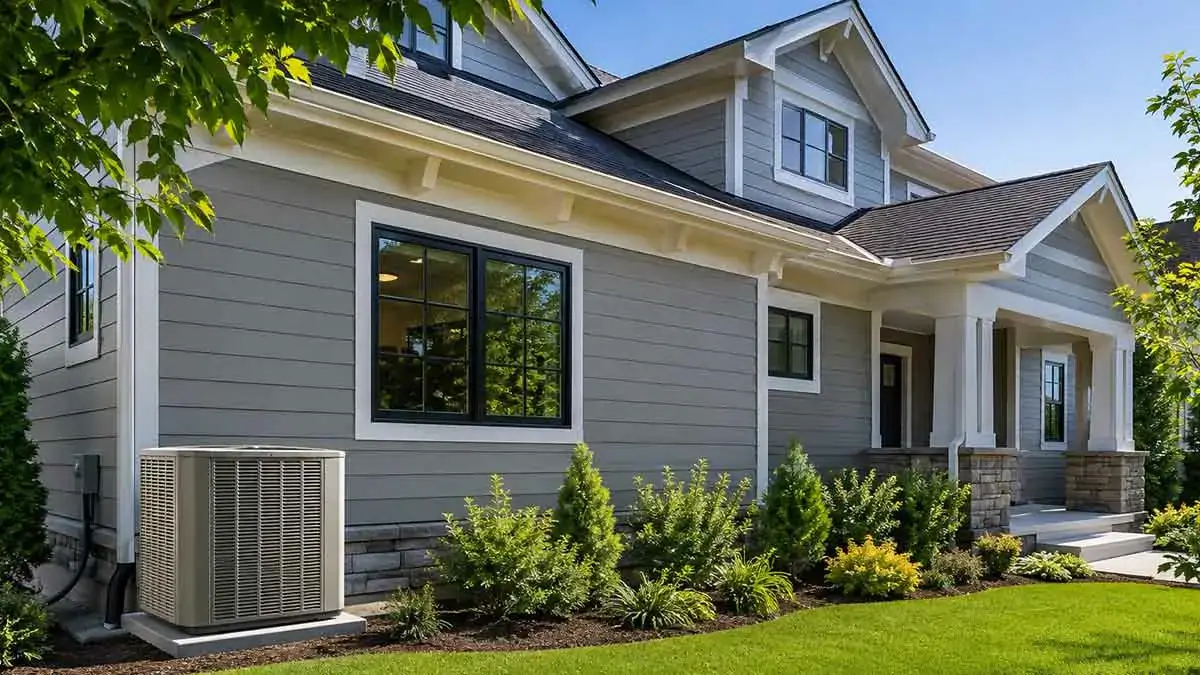
HVAC efficiency plays an important role in home comfort, energy use, and operating costs. A heating and cooling system that is properly maintained and correctly matched to the home can provide comfortable temperatures without using more energy than necessary.
However, HVAC efficiency is not determined by the equipment alone. Air leaks, insulation, ductwork, thermostat settings, dirty filters, blocked vents, poor maintenance, and excessive heat gain or heat loss can all affect how efficiently a system operates.
Improving HVAC efficiency therefore requires looking at the entire home as well as the heating and cooling equipment.
This HVAC efficiency guide explains how HVAC systems use energy, what affects their performance, practical ways to improve efficiency, common mistakes to avoid, and when professional evaluation may be worthwhile.
Table of Contents
What Is HVAC Efficiency?
HVAC efficiency describes how effectively a heating or cooling system converts energy into useful heating or cooling.
An efficient system can provide the required comfort while using less energy than a poorly maintained, improperly configured, or inefficient system under comparable conditions.
Efficiency depends on more than the equipment’s rated performance. The condition of the system and the home also matter.
For example, an efficient air conditioner may still use excessive energy if:
- Ducts leak conditioned air
- Filters are severely clogged
- Windows allow significant heat gain
- Insulation is inadequate
- The thermostat is poorly configured
- The outdoor unit has restricted airflow
Improving efficiency therefore requires a whole-home approach.
Why HVAC Efficiency Matters
Improving HVAC efficiency can provide several benefits.
It may help:
- Reduce unnecessary energy consumption
- Lower heating and cooling costs
- Improve indoor comfort
- Reduce temperature differences between rooms
- Reduce equipment workload
- Support longer equipment life
- Improve humidity control
- Reduce unexpected system problems
Efficiency improvements do not always require replacing the HVAC system. Many homes can benefit from relatively simple maintenance and building-envelope improvements first.
What Affects HVAC Efficiency?
Several factors influence HVAC performance.
Important factors include:
- Equipment age
- Equipment efficiency
- System sizing
- Filter condition
- Airflow
- Duct condition
- Insulation
- Air leakage
- Thermostat settings
- Outdoor temperature
- Indoor humidity
- Maintenance
- Window performance
- Home orientation and solar exposure
Because these factors interact, fixing one issue may not solve an efficiency problem if another major issue remains.
Check and Replace HVAC Filters
A dirty filter can restrict airflow and increase system workload.
Check the filter regularly and replace or clean it according to the manufacturer’s recommendations.
Use:
- The correct filter size
- A filter compatible with the HVAC system
- The manufacturer’s recommended specifications
Do not automatically choose the highest filtration rating available. A filter that creates excessive airflow resistance may not be appropriate for every system.
Improve Airflow
Proper airflow is essential for efficient HVAC operation.
Check whether air moves normally through:
- Supply registers
- Return vents
- Ducts
- Air handlers
Weak airflow may result from:
- A dirty filter
- Blocked vents
- Duct restrictions
- Leaks
- Mechanical problems
- Incorrect system configuration
Persistent airflow problems should be professionally evaluated.
Keep Supply Vents Clear
Furniture, rugs, curtains, and storage items can block supply vents.
Keep supply registers unobstructed so conditioned air can enter rooms effectively.
Avoid closing large numbers of vents as an efficiency strategy unless the HVAC system was specifically designed and balanced for that configuration.
Keep Return Vents Clear
Return vents allow indoor air to travel back to the HVAC equipment.
Keep them free from:
- Furniture
- Boxes
- Curtains
- Dust buildup
Restricted return airflow can reduce system performance and may increase operating strain.
Use the Thermostat Effectively
Thermostat settings have a direct effect on HVAC energy use.
Avoid unnecessarily extreme heating or cooling settings.
Instead:
- Use reasonable temperature settings
- Adjust temperatures when the home is unoccupied when practical
- Avoid constant manual adjustments that cause inefficient operation
- Follow the HVAC manufacturer’s recommendations
The most appropriate setting depends on the home’s climate, occupancy, comfort requirements, and HVAC system.
Consider a Programmable or Smart Thermostat
A programmable or smart thermostat can help automate temperature schedules.
It may allow you to:
- Reduce heating or cooling during periods of absence
- Adjust temperatures according to daily routines
- Monitor indoor conditions
- Create seasonal schedules
Before installing a new thermostat, verify that it is compatible with the HVAC system.
Seal Appropriate Air Leaks
Air leakage can increase heating and cooling demand.
Common leakage locations include:
- Windows
- Exterior doors
- Attic access points
- Utility penetrations
- Plumbing penetrations
- Electrical penetrations
Seal appropriate gaps using materials suited to the location.
Do not seal intentional ventilation openings, drainage paths, or other openings that are part of the building’s design.
Improve Home Insulation
Insulation helps slow heat transfer between conditioned and unconditioned spaces.
Pay particular attention to:
- Attics
- Exterior walls
- Floors above unconditioned areas
- Basements
- Crawl spaces
Before adding insulation, identify moisture problems and air leaks that may need to be addressed first.
The appropriate insulation strategy depends on the climate and building design.
Maintain Ductwork
Ducts transport conditioned air throughout the home.
Damaged or poorly sealed ducts can waste energy and create uneven temperatures.
Inspect accessible ductwork for:
- Loose connections
- Visible gaps
- Damage
- Disconnected sections
- Poor insulation
Professional duct testing may be useful when significant airflow or comfort problems exist.
Insulate Ducts in Unconditioned Areas
Ducts located in attics, crawl spaces, garages, or other unconditioned areas may require appropriate insulation.
Insulation can reduce unwanted heat transfer and help prevent condensation in suitable applications.
If duct insulation is damaged or ducts are sweating excessively, investigate the underlying cause.
Maintain the Outdoor HVAC Unit
Outdoor air-conditioning and heat-pump units need adequate airflow.
Keep the area around the equipment free from:
- Leaves
- Grass clippings
- Branches
- Debris
- Storage items
Maintain the clearance specified by the manufacturer.
Avoid using the area around the unit for storage.
Keep Outdoor Coils Clean
Outdoor coils transfer heat between the HVAC system and the surrounding air.
Heavy dirt and debris can interfere with heat transfer.
Keep the area clean and follow manufacturer recommendations for coil maintenance.
If coils are heavily contaminated or difficult to access safely, professional cleaning may be appropriate.
Maintain Indoor Coils
Indoor evaporator coils can become dirty and restrict heat transfer or airflow.
Because accessing an indoor coil may require equipment disassembly, detailed cleaning is generally better handled by a qualified HVAC professional unless the manufacturer provides a safe homeowner procedure.
Maintain Condensate Drainage
Cooling systems produce condensate that must drain properly.
A blocked drain can cause:
- Water leaks
- Equipment shutdowns
- Moisture damage
- Increased humidity
Inspect accessible condensate drainage for signs of blockage or leakage.
Persistent drainage problems should be professionally inspected.
Reduce Heat Gain in Summer
Reducing the amount of heat entering your home can reduce cooling demand.
Useful measures may include:
- Closing blinds during intense sunlight
- Using appropriate window coverings
- Improving insulation
- Sealing suitable air leaks
- Maintaining efficient windows
- Providing appropriate exterior shading
The most effective strategy depends on the home’s orientation, climate, and window exposure.
Reduce Heat Loss in Winter
During cold weather, reduce unnecessary heat loss by addressing:
- Air leaks
- Poor insulation
- Unsealed doors
- Damaged weatherstripping
- Poorly insulated ducts
- Drafty windows
Start with the largest sources of heat loss rather than making many small changes without measuring their impact.
Use Ceiling Fans Correctly
Ceiling fans do not directly cool the air in the same way as air conditioning.
They can improve comfort by increasing air movement around occupants.
Use them when people are present and turn them off when the room is unoccupied if there is no reason to keep them running.
In homes with reversible ceiling fans, follow the manufacturer’s recommendations for seasonal operation.
Control Indoor Humidity
Humidity affects comfort and can influence how hard HVAC equipment needs to work.
Excessive humidity can contribute to:
- Condensation
- Musty odors
- Moisture problems
- Mold-friendly conditions
Very low humidity can also reduce comfort.
Use appropriate ventilation, air conditioning, or dehumidification to maintain suitable indoor conditions.
Improve Bathroom Ventilation
Bathroom moisture can increase indoor humidity.
Use exhaust ventilation during showers and allow moisture to leave the home through the intended exhaust system.
Clean accessible fan grilles and investigate weak airflow or persistent condensation.
Improve Kitchen Ventilation
Cooking produces heat, steam, and moisture.
Use an appropriately vented range hood or exhaust system when cooking.
Reducing excess heat and moisture can improve indoor comfort and reduce the cooling system’s workload.
Maintain Windows and Doors
Windows and exterior doors can affect HVAC efficiency through heat transfer and air leakage.
Inspect:
- Weatherstripping
- Caulking
- Frames
- Glass
- Door thresholds
Repair deteriorated seals where appropriate.
Replacing windows is not always the first or most cost-effective efficiency improvement. Air sealing and insulation may provide better priorities depending on the home.
Use Window Coverings Strategically
Window coverings can help manage solar heat gain and heat loss.
During hot weather, appropriate shades or blinds can reduce direct solar exposure.
During cold weather, closing suitable coverings at night may reduce heat transfer.
Use window treatments according to the home’s climate and the specific window conditions.
Avoid Blocking HVAC Vents
Do not place furniture or large objects directly over supply or return vents.
Restricted airflow can reduce comfort and interfere with system operation.
Maintain the clearances appropriate for your HVAC system.
Schedule Professional HVAC Maintenance
Professional maintenance can help identify problems that homeowners cannot safely inspect.
Depending on the equipment, service may include:
- Coil inspection
- Electrical testing
- Refrigerant-related checks
- Mechanical inspection
- Safety-control testing
- Combustion testing
- Airflow evaluation
- Condensate system inspection
Follow the manufacturer’s recommended maintenance schedule.
Improve Heat Pump Efficiency
Heat pumps provide heating and cooling and can operate efficiently when properly sized, installed, and maintained.
To support performance:
- Keep filters clean
- Maintain outdoor-unit clearance
- Keep airflow unobstructed
- Monitor heating and cooling performance
- Maintain condensate drainage
- Schedule professional service when recommended
If a heat pump runs continuously without maintaining comfortable temperatures, investigate the cause rather than assuming continuous operation is normal.
Improve Furnace Efficiency
Furnace efficiency depends on equipment condition, airflow, fuel type, installation, and home heat loss.
Homeowners can generally:
- Maintain filters
- Keep vents clear
- Check the thermostat
- Keep the equipment area clear
- Monitor unusual sounds or odors
Combustion, gas, electrical, and safety components should be serviced by qualified professionals.
Improve Air Conditioner Efficiency
To support air-conditioner efficiency:
- Maintain the filter
- Keep supply and return vents clear
- Maintain outdoor-unit clearance
- Keep coils appropriately maintained
- Check condensate drainage
- Seal appropriate duct leaks
- Reduce unnecessary heat gain
If cooling performance suddenly declines, have the system inspected rather than continuously lowering the thermostat.
Improve Boiler Efficiency
Boiler efficiency depends on the equipment, controls, distribution system, water temperature, maintenance, and building heat loss.
Monitor for:
- Leaks
- Unusual noises
- Uneven heating
- Pressure problems
- Poor thermostat response
Technical boiler maintenance should be handled by qualified professionals.
Avoid Oversized or Undersized HVAC Systems
HVAC sizing affects efficiency and comfort.
An oversized system may:
- Cycle too frequently
- Provide less consistent humidity control
- Increase wear
- Produce uneven comfort
An undersized system may:
- Run for long periods
- Struggle during extreme temperatures
- Fail to maintain the desired indoor temperature
When replacing equipment, proper load calculation and system sizing are more important than simply choosing a larger unit.
Understand HVAC Efficiency Ratings
HVAC equipment can have different efficiency ratings depending on the equipment type.
Examples include ratings associated with:
- Air conditioners
- Heat pumps
- Furnaces
- Boilers
Do not compare ratings from different equipment categories as if they measure exactly the same thing.
When purchasing replacement equipment, compare the applicable efficiency rating, installation requirements, operating conditions, and expected usage.
Monitor Energy Use
Energy bills can provide useful clues about HVAC performance.
Watch for unexplained increases in heating or cooling energy use.
A sudden change may result from:
- Equipment problems
- Weather changes
- Increased occupancy
- Thermostat changes
- Poor airflow
- Duct leakage
- Building-envelope problems
Energy consumption should be evaluated in context rather than assuming every increase indicates HVAC failure.
Signs of Poor HVAC Efficiency
Potential warning signs include:
- Rising energy costs without a clear reason
- Uneven room temperatures
- Long heating or cooling cycles
- Weak airflow
- Frequent cycling
- Excessive indoor humidity
- Repeated equipment problems
- Unusual noises
- Poor temperature control
- Excessive condensation
These symptoms can have multiple causes, so diagnosis is often more useful than simply replacing the HVAC equipment.
Common HVAC Efficiency Mistakes
Choosing the Highest-Rated Filter Automatically
A high filtration rating is not necessarily appropriate if it restricts airflow beyond the system’s design.
Blocking Vents
Closing or obstructing vents can interfere with proper airflow.
Ignoring Duct Leaks
Conditioned air can be lost through poorly sealed ducts, particularly in unconditioned spaces.
Setting Extreme Thermostat Temperatures
Very aggressive settings can increase energy use without necessarily improving comfort proportionally.
Neglecting Outdoor Units
Restricted outdoor airflow can reduce heat-transfer performance.
Replacing Equipment Too Quickly
A new HVAC system may not solve problems caused by poor insulation, duct leakage, air leaks, or incorrect sizing.
Ignoring Maintenance
Even efficient equipment can perform poorly when filters, coils, drains, and other components are neglected.
How to Improve HVAC Efficiency on a Budget
If your budget is limited, prioritize improvements that are inexpensive and address obvious problems.
Start with:
- Check and replace the HVAC filter when necessary.
- Clear supply and return vents.
- Keep the outdoor unit unobstructed.
- Seal appropriate air leaks.
- Check door weatherstripping.
- Improve obvious insulation deficiencies where appropriate.
- Maintain reasonable thermostat settings.
- Clean accessible exhaust fan grilles.
- Address condensate drainage problems.
- Schedule professional service when performance problems persist.
Avoid spending heavily on equipment replacement before determining whether the existing efficiency problem can be corrected.
When to Consider a Professional Energy Assessment
A professional energy assessment may be useful when:
- Energy costs remain unusually high
- Rooms have persistent temperature differences
- The home has significant drafts
- Insulation performance is uncertain
- Ductwork may be leaking
- HVAC equipment repeatedly struggles
- You are planning major energy-efficiency upgrades
An assessment can help identify which improvements are likely to provide the greatest benefit.
HVAC Efficiency Checklist
Use this checklist as part of your home maintenance routine:
- Check HVAC filters
- Replace or clean filters as appropriate
- Keep supply vents clear
- Keep return vents clear
- Check thermostat settings
- Review programmable thermostat schedules
- Maintain outdoor-unit clearance
- Inspect accessible ductwork
- Check duct insulation
- Maintain condensate drainage
- Monitor indoor humidity
- Seal appropriate air leaks
- Check insulation
- Inspect windows and doors
- Maintain weatherstripping
- Use window coverings strategically
- Reduce unnecessary summer heat gain
- Reduce winter heat loss
- Maintain bathroom ventilation
- Maintain kitchen ventilation
- Monitor energy consumption
- Watch for unusual HVAC behavior
- Schedule professional maintenance
- Verify HVAC sizing when replacing equipment
Final Thoughts
Improving HVAC efficiency is not simply about buying a newer heating or cooling system. The performance of the equipment depends on airflow, maintenance, ductwork, insulation, air sealing, thermostat settings, indoor humidity, and the overall condition of the home.
Start with simple measures such as maintaining filters, keeping vents clear, maintaining outdoor-unit airflow, sealing appropriate air leaks, and addressing insulation problems. Then consider professional HVAC maintenance or an energy assessment when problems persist.
If replacement becomes necessary, focus on proper system sizing, applicable efficiency ratings, installation quality, and compatibility with the home’s heating and cooling needs.
A whole-home approach can help reduce unnecessary energy use while improving comfort and making the HVAC system more reliable throughout the year.