
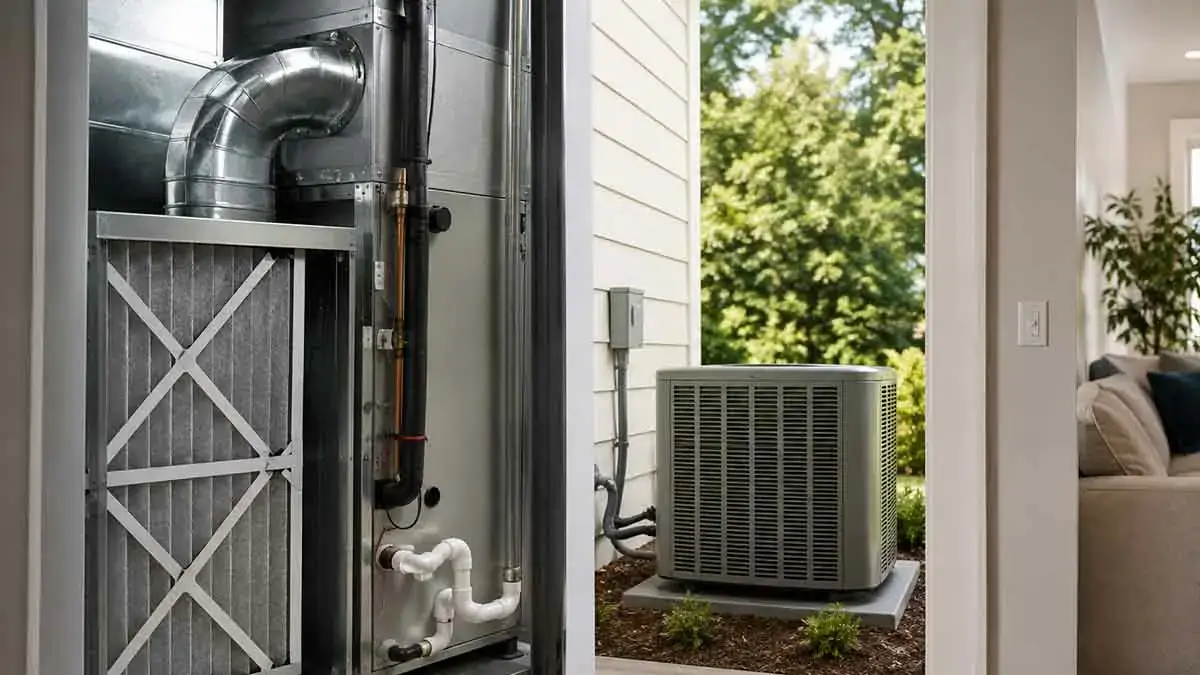
Your HVAC system plays a major role in keeping your home comfortable throughout the year. Heating and cooling equipment also affects indoor air quality, humidity, energy use, and overall home performance.
Regular HVAC maintenance can help maintain proper airflow, improve system reliability, identify developing problems early, and extend the useful life of equipment. Preventive maintenance can also reduce the risk of unexpected breakdowns during periods of extreme heat or cold.
You do not need to perform every HVAC maintenance task yourself. Homeowners can safely handle many basic checks, while electrical, refrigerant, combustion, and other specialized work should generally be left to qualified HVAC professionals.
This HVAC maintenance guide explains how to maintain common residential HVAC systems, how often maintenance should be performed, what homeowners can check safely, common warning signs, seasonal preparation, and when professional service is necessary.
Table of Contents
What Is HVAC Maintenance?
HVAC stands for heating, ventilation, and air conditioning.
A residential HVAC system may include several components, depending on the home’s heating and cooling design:
- Furnace
- Air conditioner
- Heat pump
- Boiler
- Air handler
- Thermostat
- Air filters
- Supply vents
- Return vents
- Ductwork
- Condensate drains
- Outdoor condenser unit
HVAC maintenance involves routine inspections, cleaning, adjustments, filter replacement, drainage checks, and professional servicing intended to keep the system operating properly.
Maintenance requirements vary significantly between systems. A gas furnace, central air conditioner, heat pump, and boiler do not require exactly the same procedures.
Always follow the equipment manufacturer’s maintenance instructions.
Why HVAC Maintenance Is Important
An HVAC system operates for many hours throughout the year, so dirt, restricted airflow, worn components, drainage problems, and other issues can gradually affect performance.
Regular maintenance can help:
- Maintain proper airflow
- Improve system reliability
- Support efficient operation
- Improve indoor comfort
- Reduce avoidable wear
- Identify developing problems
- Support humidity control
- Extend equipment service life
- Reduce the likelihood of unexpected breakdowns
Maintenance does not guarantee that an HVAC system will never fail. Older equipment can still require repairs or replacement even when it has been properly maintained.
How Often Should HVAC Systems Be Maintained?
There is no single maintenance schedule that applies to every HVAC system.
The appropriate frequency depends on:
- Equipment type
- System age
- Manufacturer requirements
- Climate
- Operating hours
- Indoor air conditions
- Previous maintenance
- Equipment condition
Homeowners should perform basic visual checks throughout the year and follow the manufacturer’s recommendations for professional service.
Many homeowners schedule professional maintenance before the primary heating or cooling season. This can help identify problems before the equipment is placed under heavier demand.
Older systems, heavily used equipment, or systems with recurring problems may require more frequent professional attention.
Start With the HVAC Filter
The HVAC filter is one of the simplest components homeowners can maintain.
A dirty filter can restrict airflow and increase the workload on the system. Restricted airflow can also affect comfort and equipment performance.
Check the filter regularly and:
- Replace disposable filters when necessary
- Clean reusable filters according to instructions
- Use the correct filter size
- Follow the equipment manufacturer’s recommendations
Do not assume that a filter with a higher filtration rating is automatically better for every system. A filter that is too restrictive for the equipment can affect airflow.
The correct filter should provide the required filtration while remaining compatible with the HVAC system.
Check Airflow
Proper airflow is essential for heating and cooling performance.
Check whether air is moving normally through:
- Supply vents
- Return vents
- Registers
- Accessible ductwork
Weak airflow can result from:
- A dirty filter
- Blocked vents
- Duct problems
- Mechanical issues
- Incorrect system configuration
- Equipment problems
If airflow remains weak after basic checks, professional diagnosis may be necessary.
Keep Supply Vents Clear
Supply vents deliver conditioned air into rooms.
Furniture, curtains, rugs, boxes, and other objects can obstruct them.
Keep supply vents reasonably clear so conditioned air can circulate through the room.
Do not permanently close or block vents simply to redirect airflow without understanding how the HVAC system was designed.
Keep Return Vents Clear
Return vents allow indoor air to flow back toward the HVAC equipment.
Keep return vents free from:
- Furniture
- Boxes
- Curtains
- Storage items
- Excessive dust
A blocked return can restrict overall airflow and make the system work harder.
If a room consistently feels uncomfortable despite normal system operation, airflow distribution may need professional evaluation.
Inspect the Thermostat
The thermostat controls when the heating or cooling system operates.
Check that the thermostat:
- Displays normally
- Responds to temperature changes
- Activates the HVAC system
- Maintains the selected settings
For programmable or smart thermostats, review schedules when heating and cooling seasons change.
Also check batteries when applicable.
If the thermostat appears to function normally but the HVAC system does not respond correctly, the problem may be elsewhere in the system.
Maintain the Outdoor HVAC Unit
Central air conditioners and many heat pumps have an outdoor unit that requires adequate airflow.
Inspect the unit for visible debris such as:
- Leaves
- Grass clippings
- Dirt
- Branches
- Trash
Maintain the clearance specified by the manufacturer.
Do not use the outdoor unit as a storage surface or place objects directly against it.
Keep the Outdoor Unit Area Clear
Vegetation can grow around outdoor HVAC equipment, particularly during warmer months.
Trim nearby plants when necessary while maintaining the manufacturer’s recommended clearance.
Avoid damaging delicate coil fins or electrical components during cleaning.
If the outdoor unit requires extensive cleaning or appears damaged, professional service may be safer than attempting to disassemble it yourself.
Check Condenser Coils
Outdoor condenser coils transfer heat from the system to the surrounding air.
Dirt and debris can interfere with heat transfer.
Visible contamination may indicate that the coil needs cleaning, but the cleaning method should be appropriate for the specific equipment.
Avoid bending coil fins or using aggressive pressure.
If the coil is heavily contaminated or difficult to access, have it professionally serviced.
Inspect the Indoor Coil
The indoor evaporator coil can accumulate dirt over time.
A dirty coil can affect:
- Airflow
- Cooling performance
- Heat transfer
- System operation
Accessing the indoor coil may require removing equipment panels or other components.
Homeowners should generally leave detailed coil cleaning to qualified HVAC professionals unless the manufacturer specifically provides a safe procedure for the homeowner.
Maintain Condensate Drainage
Air conditioners and some other HVAC systems produce condensation during operation.
This water must drain properly.
Check accessible areas for:
- Water near the indoor unit
- Damp flooring
- Overflowing drain pans
- Blocked drain lines
- Repeated moisture
A clogged condensate drain can cause water damage and may eventually affect nearby building materials.
Do not ignore recurring condensate leaks.
Inspect the Condensate Pan
If the condensate pan is safely accessible, visually inspect it for:
- Standing water
- Corrosion
- Cracks
- Signs of leakage
Do not unnecessarily disassemble HVAC equipment.
If the pan repeatedly fills with water or shows significant deterioration, have the system professionally inspected.
Check Ductwork
Ductwork distributes conditioned air throughout the home.
Inspect accessible sections for:
- Visible damage
- Loose connections
- Gaps
- Excessive dust
- Disconnected sections
Ductwork located inside walls, ceilings, or other inaccessible areas generally requires professional evaluation when a problem is suspected.
Persistent temperature differences between rooms can sometimes indicate duct or airflow problems.
Inspect Duct Insulation
Ducts located in attics, crawl spaces, garages, or other unconditioned areas may require appropriate insulation.
Damaged or insufficient insulation can contribute to:
- Heat loss
- Heat gain
- Condensation
- Reduced comfort
- Higher energy use
If ducts are sweating excessively or insulation appears damaged, investigate the underlying cause.
Listen for Unusual HVAC Noises
Changes in normal operating sounds can provide an early warning of a developing problem.
Watch for:
- Grinding
- Rattling
- Banging
- Squealing
- Buzzing
- Persistent clicking
Some noises may have simple causes, while others can indicate mechanical, electrical, or airflow problems.
If a noise is loud, sudden, or accompanied by poor performance, turn off the equipment when safe to do so and seek professional assistance.
Watch for Unusual HVAC Odors
Unexpected odors should not automatically be considered normal.
Possible warning signs include:
- Burning smells
- Electrical odors
- Persistent musty odors
- Unusual chemical-like smells
A strong burning or electrical odor can indicate a potentially serious problem.
When safe, turn off the system and have it inspected by a qualified professional.
Monitor Heating Performance
Before the heating season, test the system under normal operating conditions.
Check whether:
- The system starts normally
- Rooms warm adequately
- Airflow appears normal
- The thermostat responds correctly
- The system cycles normally
Warning signs include:
- Uneven heating
- Weak airflow
- Frequent cycling
- Unusual sounds
- Unusual odors
- Difficulty maintaining the desired temperature
Address problems before the coldest weather arrives whenever possible.
Monitor Cooling Performance
Before summer, test the cooling system.
Watch for:
- Slow cooling
- Weak airflow
- Uneven temperatures
- Unusual noises
- Water around the indoor unit
- Repeated shutdowns
If the system cannot maintain the desired temperature, professional service may be needed.
Scheduling service before extreme heat can reduce the risk of discovering a major problem during peak demand.
Check Indoor Humidity
HVAC systems can affect indoor humidity as well as temperature.
Excessive humidity may contribute to:
- Condensation
- Musty odors
- Moisture problems
- Mold-friendly conditions
Very low humidity can also affect comfort.
If indoor humidity remains outside a comfortable range, investigate the cause rather than simply changing the thermostat.
Possible factors include ventilation, air conditioning performance, building-envelope conditions, and moisture entering the home.
Maintain Home Ventilation
Ventilation is an important part of indoor air management.
Bathrooms and kitchens produce significant amounts of moisture and should have appropriate exhaust ventilation.
Make sure exhaust systems:
- Operate properly
- Are not blocked
- Discharge according to their intended design
Opening windows is not always an adequate replacement for mechanical ventilation, particularly during very hot, cold, or humid weather.
Maintain Bathroom Exhaust Fans
Bathroom exhaust fans help remove moisture generated by showers and bathing.
Clean accessible grilles and check whether airflow appears normal.
A bathroom that remains damp for extended periods may have inadequate ventilation.
Persistent condensation, peeling paint, or moisture around ceilings and walls should be investigated.
Maintain Kitchen Exhaust
Cooking produces steam, heat, grease, and odors.
Use an appropriately vented range hood or kitchen exhaust system when cooking.
Clean filters according to the manufacturer’s instructions.
If the kitchen becomes excessively humid during normal cooking, review the ventilation system and its discharge path.
Prepare HVAC Systems for Summer
Before the cooling season:
- Check the HVAC filter.
- Test the thermostat.
- Clear debris around the outdoor unit.
- Check accessible condensate drainage.
- Confirm that airflow appears normal.
- Listen for unusual sounds.
- Schedule professional maintenance when recommended.
Do not wait until the first major heat wave to discover that the cooling system requires service.
Prepare HVAC Systems for Winter
Before the heating season:
- Check or replace the filter.
- Test the thermostat.
- Clear supply and return vents.
- Check for unusual sounds or odors.
- Inspect accessible components.
- Verify that the heating system operates normally.
- Schedule professional service when required.
Combustion-based heating systems should receive appropriate professional maintenance according to manufacturer requirements.
Heat Pump Maintenance
Heat pumps provide both heating and cooling and typically include indoor and outdoor components.
Homeowners can monitor:
- Thermostat operation
- Airflow
- Outdoor-unit condition
- Heating performance
- Cooling performance
- Unusual noises
- Condensate drainage
Professional maintenance may include inspection of electrical components, refrigerant-related systems, coils, controls, and other equipment.
Follow the manufacturer’s service requirements.
Furnace Maintenance
Furnaces require special attention because some models use gas or other combustion fuels.
Homeowners can generally:
- Replace or check the filter
- Keep supply and return vents clear
- Check the thermostat
- Keep the surrounding area clear
- Monitor for unusual odors or sounds
Combustion components, gas connections, electrical systems, heat exchangers, and safety controls should be serviced by qualified professionals.
Never attempt to repair a gas furnace yourself unless you have the required qualifications.
Boiler Maintenance
Homes with hydronic heating may use boilers to circulate heated water through radiators, baseboards, or radiant heating systems.
Monitor for:
- Water leaks
- Unusual noises
- Abnormal pressure readings
- Poor heating performance
- Radiator problems
- Thermostat issues
Follow the boiler manufacturer’s maintenance requirements.
Technical work involving combustion, pressure, gas, electrical components, or controls should be handled by qualified professionals.
Keep HVAC Equipment Clear
Do not use the space around HVAC equipment as general storage.
Keep equipment away from:
- Boxes
- Furniture
- Household clutter
- Cleaning chemicals
- Flammable materials
Maintain the clearance specified by the manufacturer.
Keeping the area accessible also makes inspection and professional servicing easier.
Check for Visible Electrical Problems
Homeowners can visually inspect accessible HVAC areas for obvious warning signs such as:
- Burn marks
- Melted components
- Damaged wiring
- Unusual odors
- Signs of overheating
Do not open electrical panels or attempt electrical repairs without appropriate training and authorization.
If you see evidence of electrical damage, stop using the equipment when safe and contact a qualified professional.
Maintain Carbon Monoxide Alarms
Homes with combustion-based heating equipment should have appropriately located carbon monoxide alarms in accordance with local requirements and manufacturer recommendations.
Test alarms regularly and replace batteries or units according to the manufacturer’s instructions.
Never ignore a carbon monoxide alarm.
If an alarm activates, follow the appropriate emergency procedure for your home and local area rather than assuming it is a false alarm.
How Often Should You Change HVAC Filters?
Filter replacement frequency depends on the system and the conditions inside the home.
Factors include:
- Filter type
- Filter size
- Manufacturer recommendations
- Pets
- Occupancy
- Dust levels
- Indoor air conditions
- System design
Instead of relying on a universal replacement interval, inspect the filter regularly.
Replace or clean it when necessary according to the manufacturer’s instructions.
If a filter becomes dirty unusually quickly, investigate the reason rather than simply replacing it more frequently without addressing the underlying condition.
Avoid Overworking the HVAC System
HVAC maintenance works best when combined with good home maintenance.
The system may work harder when the home has:
- Significant air leaks
- Poor insulation
- Uncontrolled solar heat gain
- Blocked vents
- Poor duct performance
- Excessive moisture
Improving the building envelope can reduce unnecessary heating and cooling demand.
Appropriate weatherstripping, insulation improvements, shading, and air-sealing measures can complement HVAC maintenance.
Signs Your HVAC System Needs Service
Contact a qualified HVAC professional if you notice:
- Weak or declining airflow
- Uneven heating or cooling
- Frequent cycling
- Water leaks
- Persistent condensate problems
- Unusual noises
- Burning or electrical odors
- Poor temperature control
- Repeated system shutdowns
- Unexpected increases in energy consumption
- Equipment that struggles to maintain normal indoor temperatures
Do not continue operating equipment that shows signs of a potentially dangerous malfunction.
Early diagnosis can sometimes prevent a relatively small problem from becoming a larger repair.
Common HVAC Maintenance Mistakes
Ignoring the Filter
A heavily loaded filter can restrict airflow and reduce system performance.
Blocking Supply or Return Vents
Obstructed vents can interfere with air distribution.
Neglecting the Outdoor Unit
Leaves, vegetation, and debris can restrict airflow around outdoor equipment.
Ignoring Condensate Problems
Water near HVAC equipment can indicate a blocked drain or another issue.
Waiting for a Breakdown
Discovering a problem before extreme weather is generally better than dealing with an emergency during peak heating or cooling demand.
Using the Wrong Filter
An incompatible filter can affect airflow and system performance.
Attempting Complex Repairs
Refrigerant, electrical, combustion, and mechanical repairs can involve significant safety risks.
Cleaning Components Too Aggressively
Excessive pressure or improper cleaning methods can damage coils, fins, wiring, or protective surfaces.
How to Save Money on HVAC Maintenance
Preventive maintenance can help reduce avoidable costs.
Useful practices include:
- Check filters regularly
- Replace filters when necessary
- Keep vents clear
- Maintain outdoor-unit clearance
- Address condensate leaks promptly
- Schedule seasonal service when appropriate
- Improve insulation where necessary
- Seal appropriate air leaks
- Maintain reasonable thermostat settings
- Keep maintenance records
- Address unusual system behavior early
A well-maintained system may still eventually require major repairs or replacement, particularly as it ages.
DIY vs. Professional HVAC Maintenance
Many basic HVAC maintenance tasks can be performed safely by homeowners.
Tasks Homeowners Can Often Handle
Depending on the equipment and manufacturer’s instructions:
- Checking or replacing filters
- Keeping vents clear
- Checking the thermostat
- Removing debris around outdoor equipment
- Monitoring condensate drainage
- Observing unusual noises or odors
- Checking accessible areas for visible problems
Tasks Better Left to Professionals
Professional service is generally appropriate for:
- Refrigerant-related work
- Electrical repairs
- Gas-system repairs
- Combustion testing
- Detailed coil cleaning
- Mechanical repairs
- Safety-control testing
- Complex ductwork problems
- Boiler servicing
- Major HVAC diagnosis
When in doubt, consult the equipment manufacturer or a qualified HVAC professional.
HVAC Maintenance Checklist
Use this checklist as part of your regular home maintenance routine:
- Check the HVAC filter
- Replace or clean the filter as appropriate
- Inspect supply vents
- Inspect return vents
- Test the thermostat
- Check airflow
- Clear debris around outdoor equipment
- Maintain outdoor-unit clearance
- Inspect visible condenser coils
- Check condensate drainage
- Inspect the condensate pan when safely accessible
- Check accessible ductwork
- Inspect duct insulation
- Monitor unusual HVAC noises
- Monitor unusual odors
- Check indoor humidity
- Maintain bathroom exhaust fans
- Maintain kitchen ventilation
- Test heating before winter
- Test cooling before summer
- Monitor heat pump performance when applicable
- Maintain furnace equipment professionally when required
- Monitor boiler systems when applicable
- Keep HVAC equipment areas clear
- Watch for visible electrical problems
- Test carbon monoxide alarms
- Schedule professional maintenance according to manufacturer recommendations
- Keep records of repairs and service
Final Thoughts
Regular HVAC maintenance is an important part of keeping your home comfortable, reliable, and efficient throughout the year. Simple tasks such as checking filters, keeping vents clear, maintaining outdoor-unit clearance, monitoring condensate drainage, and testing the thermostat can help identify problems before they become more serious.
However, HVAC equipment can contain electrical, mechanical, refrigerant, gas, and combustion components that require specialized knowledge. Avoid attempting complex repairs simply to save money, particularly when safety systems or combustion equipment are involved.
The best approach is to combine routine homeowner checks with professional maintenance when appropriate. By following the manufacturer’s recommendations, monitoring system performance, and addressing warning signs early, you can help your HVAC system operate more reliably through both heating and cooling seasons.