
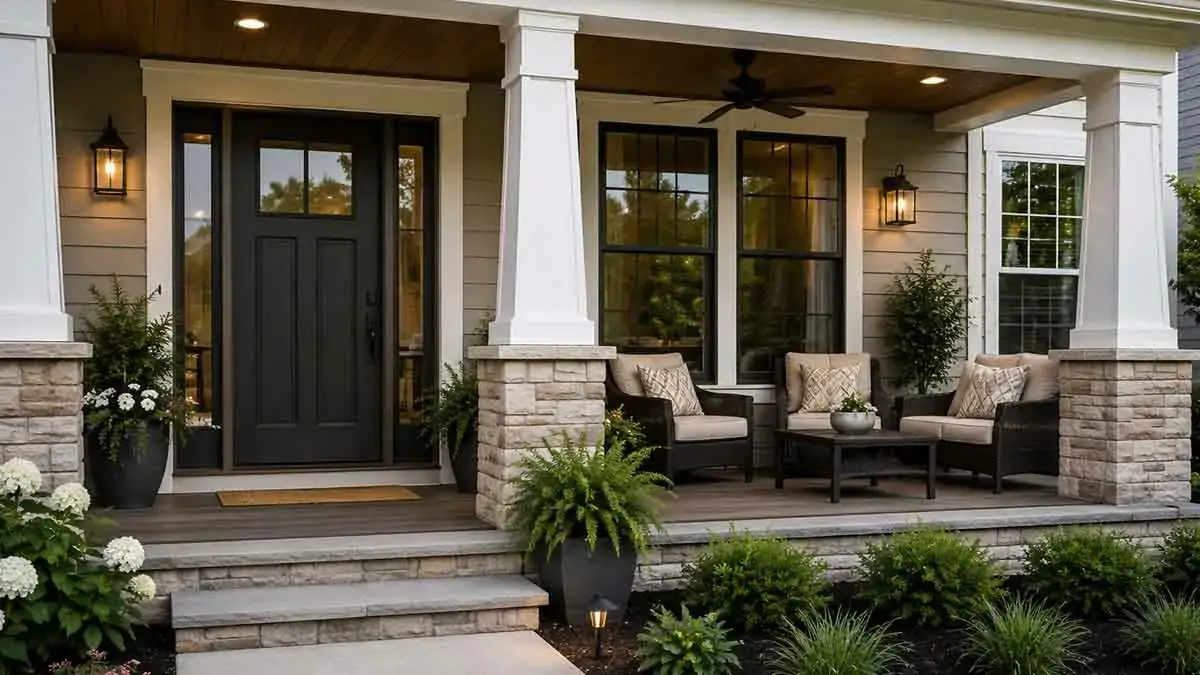
A front porch can be one of the most welcoming and visually important features of a home. It creates a transition between the street and the front door, provides useful outdoor living space, and can add character to the entire exterior.
Improving a front porch does not always require a major renovation. Simple updates such as repainting the front door, replacing outdated lighting, adding planters, or arranging comfortable seating can make a noticeable difference.
More extensive projects, such as replacing porch flooring, repairing steps, upgrading railings, improving drainage, screening the porch, or expanding the structure, can provide greater functional improvements when the existing porch needs more attention.
The best front porch improvements should balance appearance, safety, comfort, durability, and the architectural style of the home.
This guide covers practical front porch improvement ideas for different budgets and porch sizes, along with material choices, lighting, landscaping, comfort upgrades, and important planning considerations.
Table of Contents
Why Improve Your Front Porch?
A front porch serves both a practical and visual purpose. Because it sits directly at the entrance to the home, even relatively small changes can have a noticeable effect on curb appeal.
Improving a front porch can help:
- Increase curb appeal
- Create a more welcoming entrance
- Provide additional outdoor living space
- Improve comfort
- Improve nighttime visibility
- Update an outdated exterior
- Make the entrance safer
- Create better connections between the home and landscaping
- Provide a place to sit and relax
- Improve the overall appearance of the front elevation
A successful porch improvement should complement the architecture of the home rather than compete with it.
Inspect Your Front Porch Before Making Changes
Before focusing on paint, furniture, or decorations, inspect the porch itself.
Look for:
- Cracked flooring
- Rotting wood
- Loose railings
- Damaged steps
- Peeling or failing paint
- Water damage
- Rust
- Poor drainage
- Damaged lighting
- Unstable posts
- Structural movement
- Signs of moisture intrusion
Safety and structural problems should be addressed before cosmetic improvements.
For example, painting a damaged railing may improve its appearance temporarily, but it does not make an unstable railing safe.
If you find significant structural deterioration, consult an appropriately qualified professional before proceeding with decorative upgrades.
Refresh the Front Door
The front door is usually the visual focal point of the porch.
Refreshing it can be one of the simplest ways to improve the entire entrance.
Consider:
- Repainting the door
- Replacing outdated hardware
- Installing a new handle or lock
- Updating the door knocker
- Adding a decorative wreath
- Replacing worn weatherstripping
- Improving the lighting around the door
- Updating the house numbers
A contrasting door color can add visual interest, while a neutral color can create a more understated appearance.
The door color should work with the siding, trim, roof, porch flooring, and surrounding landscaping.
Paint the Porch
Painting can dramatically change the appearance of a porch without requiring a major renovation.
Possible surfaces to paint include:
- Porch flooring
- Railings
- Posts
- Trim
- Ceiling
- Exterior door
- Decorative architectural elements
Always use exterior-rated products that are appropriate for the specific surface and level of foot traffic.
For porch floors and steps, choose a product designed for those applications rather than using an interior wall paint.
Neutral colors can create a classic appearance, while a carefully selected accent color can emphasize architectural features.
Upgrade Porch Flooring
The porch floor experiences foot traffic and exposure to weather, making its condition important for both appearance and safety.
Depending on the existing structure, possible improvements include:
- Repairing damaged boards
- Repainting wood flooring
- Staining suitable wood
- Replacing worn boards
- Repairing concrete
- Resurfacing concrete
- Installing suitable exterior tile
- Replacing deteriorated flooring materials
The selected surface should be appropriate for outdoor exposure and provide suitable traction under expected conditions.
If the flooring is structurally damaged, fix the underlying problem rather than covering it with a new finish.
Repair or Replace Porch Railings
Railings can strongly influence the appearance of a porch while also providing an important safety function.
If the existing railing is loose, damaged, or deteriorated, determine whether it can be repaired or should be replaced.
Common railing materials include:
- Wood
- Metal
- Composite materials
- Other exterior-rated systems
The design should complement the home’s architecture.
When installing or replacing railings, follow applicable local building requirements regarding height, spacing, structural attachment, and other safety considerations.
Improve Porch Steps
Front steps should be stable, easy to navigate, and clearly visible.
Inspect steps for:
- Cracks
- Uneven surfaces
- Loose materials
- Deteriorated wood
- Damaged railings
- Poor lighting
- Water accumulation
Possible improvements include:
- Repairing damaged surfaces
- Replacing deteriorated steps
- Adding or improving handrails
- Improving step lighting
- Correcting drainage problems
- Applying suitable exterior finishes
Do not treat a significant structural or settlement problem as a cosmetic issue.
Upgrade Porch Lighting
Good lighting can improve both the appearance and usability of a front porch.
Common options include:
- Wall sconces
- Ceiling fixtures
- Pendant lights
- Recessed lighting
- Step lights
- Lantern-style fixtures
- Pathway lights
Focus on illuminating the areas that people actually use, including the front door, steps, walkway, and immediate porch area.
Outdoor fixtures should be rated for the conditions where they will be installed.
Add Layered Lighting
Instead of depending on a single bright fixture, use several complementary light sources.
For example, a porch might combine:
- A wall light beside the front door
- A ceiling fixture
- Low-level step lighting
- Pathway lights
- Accent lighting near planters
Layered lighting can reduce dark areas while creating a more comfortable and balanced appearance.
Avoid excessive brightness or glare that could make the entrance uncomfortable for residents or visitors.
Add Comfortable Seating
Seating can transform a porch from a purely decorative entrance into a functional outdoor living area.
Possible options include:
- Outdoor chairs
- Benches
- Rocking chairs
- Compact sofas
- Lounge chairs
Choose furniture designed for outdoor exposure.
Before purchasing furniture, measure the porch and preserve enough space for people to walk comfortably between the entrance and seating area.
The goal is to make the porch useful without obstructing the front door or creating a crowded layout.
Add a Porch Swing
A porch swing can become a focal point while providing a comfortable place to relax.
Before installing a suspended swing, verify that the porch framing and attachment point are designed to support the expected load.
Do not assume that any ceiling beam or decorative structure can safely support a swing.
If the existing structure is not suitable, a freestanding swing can provide a safer alternative without modifying the porch framing.
Create a Small Seating Area
A small porch does not need a large furniture arrangement.
A compact setup could include:
- Two small chairs
- A narrow side table
- Outdoor cushions
- One or two planters
Keep the arrangement proportional to the porch.
Leave a clear route to the front door and avoid placing furniture where it could interfere with steps or handrails.
Add Plants and Planters
Plants can soften hard surfaces and make a front porch feel more welcoming.
Consider:
- Potted plants
- Hanging baskets
- Window boxes
- Seasonal flowers
- Small shrubs
- Container trees where appropriate
Use containers that complement the architecture of the home.
Large planters can create a strong visual statement, while smaller containers provide more flexibility.
Choose plants according to the amount of sunlight, moisture, temperature, and maintenance they will receive.
Create Symmetry Around the Front Door
Symmetry can make an entrance appear organized and intentional.
A simple arrangement could include:
- Matching planters
- Matching wall lights
- Similar decorative elements on both sides of the door
Symmetry is not necessary for every design. An asymmetrical arrangement can also work when the elements are balanced visually.
The important goal is to avoid an arrangement that looks accidental or overcrowded.
Upgrade House Numbers
House numbers are both decorative and functional.
Consider:
- Modern metal numbers
- Decorative plaques
- Large contrasting numbers
- Backlit numbers
- Simple contemporary designs
Place them where they can be easily seen from the street while maintaining a balanced relationship with the front door and other porch elements.
Clear house numbers can also make it easier for visitors and service providers to identify the property.
Add a Welcome Mat
A welcome mat is a small improvement, but it can help define the entrance.
Choose one that is:
- Designed for outdoor use
- Easy to clean
- Appropriate for the porch size
- Resistant to expected weather conditions
Make sure the mat does not interfere with the door opening or create a tripping hazard.
Use Outdoor Rugs and Textiles
Outdoor rugs can visually define a seating area and add color without requiring permanent construction.
Other options include:
- Outdoor cushions
- Weather-resistant pillows
- Outdoor curtains
- Seat pads
Choose products designed for exterior use.
Avoid using indoor fabrics where they will be regularly exposed to rain, humidity, sunlight, or temperature changes.
Textiles can also be changed relatively easily, making them useful when you want to update the porch seasonally.
Add Privacy
Some front porches face busy streets or are positioned close to neighboring homes.
Privacy can be improved with:
- Outdoor curtains
- Decorative screens
- Trellises
- Tall planters
- Suitable plants
- Partial privacy panels
Privacy features should not obstruct required access, emergency routes, ventilation, or important sightlines.
For larger structural privacy modifications, check local requirements before construction.
Improve the Porch Ceiling
The ceiling is often overlooked during porch renovations, even though it can have a strong effect on the overall appearance.
Possible improvements include:
- Repainting the ceiling
- Installing an appropriate wood-look finish
- Adding exterior-rated panels
- Improving lighting
- Repairing damaged materials
A clean, well-finished ceiling can make the porch feel more complete.
Any ceiling material should be appropriate for outdoor exposure and compatible with the existing structure.
Improve the Landscaping Around the Porch
The area surrounding the porch is part of the overall entrance design.
Consider:
- Flower beds
- Low-maintenance shrubs
- Ground cover
- Small ornamental trees
- Decorative stone
- Mulch
- Landscape lighting
Use landscaping to create a natural transition between the porch, walkway, driveway, and front yard.
Avoid planting vegetation where mature growth will block windows, obscure house numbers, interfere with steps, or create drainage problems.
Improve the Walkway Connection
A front porch becomes more inviting when the walkway leading to it is clear, safe, and visually connected to the rest of the property.
Improvements may include:
- Repairing damaged paving
- Defining walkway edges
- Adding pathway lighting
- Removing overgrown plants
- Improving drainage
- Adding complementary landscaping
- Creating a clearer connection between the driveway and front door
A well-defined walkway can also help separate pedestrian movement from vehicle areas.
Make a Small Porch Feel Larger
Limited space does not mean a porch cannot be comfortable.
Use:
- Compact furniture
- Narrow side tables
- Vertical planters
- Wall-mounted lighting
- Minimal decorations
- Light visual elements
- Furniture with open or visually lightweight designs
Avoid filling every available area.
Keeping the entrance and walking path clear can make a small porch feel significantly more spacious.
When space is extremely limited, prioritize one or two useful features rather than trying to include everything.
Improve Porch Comfort
The best porch design depends on how you intend to use the space.
For Relaxing
Prioritize:
- Comfortable seating
- Shade
- Side tables
- Soft outdoor textiles
- Appropriate lighting
- Privacy
For Entertaining
Prioritize:
- Flexible seating
- Clear circulation
- Durable surfaces
- Good lighting
- Easy access to the house
For a Decorative Entrance
Focus more on:
- Front door design
- Lighting
- Planters
- House numbers
- Architectural details
- A clean walkway connection
Defining the main purpose of the porch can help prevent unnecessary purchases and overcrowding.
Screen or Enclose the Porch
Screening or partially enclosing a porch can improve comfort in areas where insects, weather, or privacy are concerns.
Potential options include:
- Fixed screen panels
- Retractable screens
- Outdoor curtains
- Partial privacy walls
- Other suitable enclosure systems
The appropriate solution depends on the climate, existing structure, ventilation needs, and local requirements.
Larger enclosure projects can affect the structure, electrical systems, drainage, and usable space. They may also require permits, so check local requirements before beginning construction.
Front Porch Improvement Ideas on a Budget
A porch can look significantly better without a major renovation budget.
Affordable improvements may include:
- Repainting the front door
- Cleaning the porch thoroughly
- Repainting railings
- Replacing the welcome mat
- Adding planters
- Updating house numbers
- Replacing an outdated light fixture
- Adding outdoor cushions
- Installing simple pathway lighting
- Adding a small outdoor rug
- Trimming surrounding landscaping
Combining several small improvements can create a larger visual change than spending the entire budget on one decorative feature.
Front Porch Ideas for Older Homes
Older homes may require more preparation before cosmetic improvements begin.
Inspect for:
- Rot
- Structural deterioration
- Damaged steps
- Loose railings
- Deteriorated paint
- Water intrusion
- Poor drainage
- Outdated electrical components
Where practical, preserve architectural details that contribute to the home’s character.
However, historic appearance should not take priority over structural safety, electrical safety, or proper moisture management.
When replacing older materials, choose solutions that respect the home’s architecture while meeting current requirements where applicable.
Choosing Front Porch Materials
The right porch material depends on the existing structure, climate, budget, appearance, and maintenance expectations.
Wood
Wood offers a traditional appearance and can be painted or stained. However, it requires regular inspection and maintenance to control moisture-related deterioration.
Composite Materials
Composite decking and trim products can provide a lower-maintenance alternative to traditional wood, although performance and appearance vary by product.
Concrete
Concrete can provide a durable porch floor and may be repaired or resurfaced when the underlying structure remains sound.
Brick
Brick can create a traditional appearance and work well with many architectural styles.
Stone
Natural or manufactured stone can add texture and visual character, although installation requirements and costs can vary significantly.
Whatever material you choose, make sure it is designed for exterior use and appropriate for the local climate.
Front Porch Improvement Costs
The cost of improving a front porch varies considerably depending on its size, condition, materials, and scope of work.
Lower-Cost Improvements
These may include:
- Painting
- Cleaning
- Plants
- Planters
- House numbers
- Lighting
- Outdoor accessories
- Furniture
Mid-Range Improvements
These can include:
- Flooring refinishing
- New railings
- New lighting systems
- Improved landscaping
- Concrete resurfacing
- Exterior privacy features
Larger Projects
More extensive work can include:
- Structural repairs
- Complete flooring replacement
- Porch expansion
- New steps
- Roof or ceiling modifications
- Screening or enclosure
- Drainage improvements
Labor, material selection, structural condition, site access, and local requirements can all affect the final cost.
Before starting a large project, obtain detailed estimates that distinguish structural work from cosmetic upgrades.
DIY vs. Professional Porch Improvements
Some porch improvements can be handled by experienced homeowners.
Projects That May Be DIY-Friendly
Depending on your experience, suitable projects may include:
- Cleaning
- Painting
- Planting
- Decorating
- Installing simple outdoor accessories
- Replacing certain decorative elements
Projects Better Suited to Professionals
Professional assistance is generally recommended for:
- Structural repairs
- Electrical work
- Major stair construction
- Porch expansion
- Roof modifications
- Significant drainage work
- Structural railing installation
- Major enclosure projects
Work involving structural components, electrical systems, or significant changes to the building should be approached carefully and completed according to applicable requirements.
Common Front Porch Improvement Mistakes
Avoid these common problems when upgrading a front porch.
Overcrowding the Space
Too much furniture and decoration can make the porch uncomfortable and restrict movement.
Ignoring Structural Problems
Cosmetic improvements should never cover damaged framing, flooring, steps, or railings.
Using Indoor Materials Outdoors
Paint, fabrics, furniture, flooring, and fixtures should be appropriate for outdoor conditions.
Installing a Swing Without Checking the Structure
A suspended swing places additional loads on its attachment points. Verify that the structure can safely support it.
Poor Lighting Placement
Lights should improve visibility without creating excessive glare or shining directly into people’s eyes.
Ignoring Drainage
Water should not collect around the porch or be directed toward the home’s foundation.
Blocking the Entrance
Furniture, planters, rugs, and decorations should not interfere with the door, steps, or required walking paths.
Mixing Too Many Styles
Too many colors, materials, and decorative themes can make the entrance look disconnected from the rest of the home.
How to Plan a Front Porch Improvement Project
A structured approach can make the project easier to manage.
Step 1: Inspect the Existing Porch
Check the flooring, steps, railings, posts, ceiling, lighting, drainage, and surrounding areas.
Step 2: Address Safety and Structural Problems
Repair deterioration before adding decorative finishes or furniture.
Step 3: Define How You Will Use the Porch
Decide whether the primary purpose is relaxing, entertaining, greeting visitors, or improving curb appeal.
Step 4: Set a Budget
Separate essential repairs from optional cosmetic improvements.
Step 5: Choose a Design Direction
Select colors, materials, furniture, lighting, and landscaping that complement the home’s architecture.
Step 6: Plan the Layout
Measure the porch and make sure furniture and accessories leave comfortable circulation space.
Step 7: Complete Structural Work First
Handle flooring, steps, railings, drainage, electrical work, or other construction before adding furniture and decorations.
Step 8: Add Lighting and Landscaping
Coordinate the porch with the walkway, driveway, front yard, and entrance.
Step 9: Add Furniture and Accessories
Finish the space with seating, planters, rugs, cushions, house numbers, and other details.
Step 10: Plan for Maintenance
Choose finishes and materials that match the amount of maintenance you are realistically willing to perform.
Final Thoughts
Front porch improvements can range from simple cosmetic updates to major structural renovations. The most effective projects improve the entrance without sacrificing safety, functionality, or the architectural character of the home.
Start by inspecting the existing porch and addressing structural, drainage, or safety problems. Once the foundation is sound, focus on high-impact improvements such as the front door, lighting, flooring, railings, seating, plants, landscaping, and house numbers.
For a small porch, prioritize a clear entrance and a few well-chosen features. For a larger porch, you can create dedicated areas for seating, relaxation, privacy, and entertaining.
With thoughtful planning and materials suited to the home’s climate and construction, a front porch can become a more attractive, comfortable, and functional part of the property.