
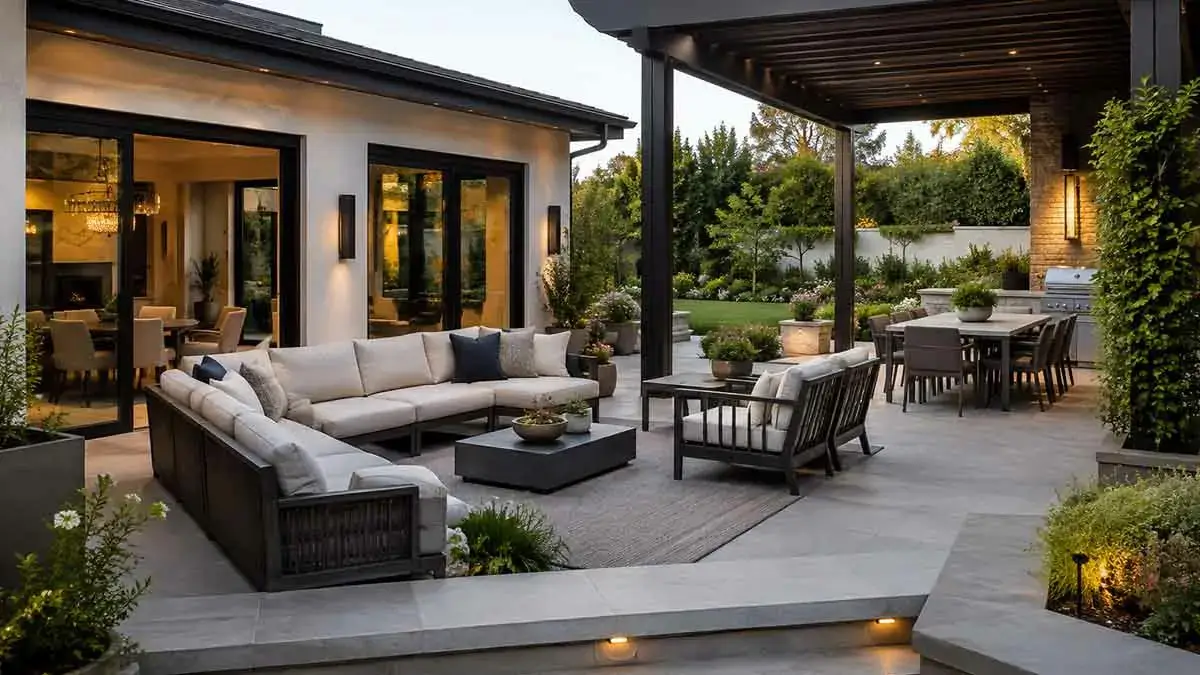
Creating a comfortable outdoor living space can extend the usable area of your home and give you a practical place to relax, dine, entertain, or spend time with family. A well-planned outdoor area does not have to be large or expensive. Even a small patio, deck, porch, balcony, or backyard corner can become a functional extension of the home.
The best outdoor living spaces combine comfort, durability, privacy, shade, lighting, landscaping, and practical layout. The right design also depends on how you plan to use the space, the local climate, and the amount of maintenance you are willing to handle.
From simple furniture and lighting upgrades to patios, pergolas, outdoor kitchens, and dedicated entertainment areas, there are outdoor living ideas for almost every home and budget.
Table of Contents
What Is an Outdoor Living Space?
An outdoor living space is an exterior area designed for regular use rather than simply serving as open yard space.
Common examples include:
- Patios
- Decks
- Front or back porches
- Covered patios
- Pergolas
- Outdoor kitchens
- Poolside areas
- Garden seating areas
- Backyard entertainment spaces
- Balconies and terraces
The purpose is to create an outdoor environment that supports specific activities while remaining comfortable, safe, and visually connected to the home.
An effective outdoor living space should feel like a natural extension of the home’s interior rather than a collection of unrelated furniture and accessories.
How to Plan an Outdoor Living Space
Before purchasing furniture or beginning construction, determine how you will use the space.
Consider:
- How many people will normally use it?
- Will you mainly relax, dine, or entertain?
- Will children use the area?
- Do you need an outdoor cooking area?
- How much sun does the space receive?
- Is privacy important?
- Will you use the space after sunset?
- Does the area need protection from rain or wind?
- How much maintenance are you willing to perform?
Also measure the available space and identify existing doors, windows, steps, utilities, trees, drainage paths, and property boundaries.
A basic layout plan can prevent furniture from blocking circulation or leaving important features inaccessible.
Create a Comfortable Outdoor Seating Area
Seating is often the foundation of an outdoor living area.
Popular options include:
- Outdoor sofas
- Sectionals
- Lounge chairs
- Armchairs
- Benches
- Rocking chairs
- Adirondack-style chairs
Choose furniture according to the available space and the number of people who will use it.
Leave sufficient clearance around doors, walkways, cooking areas, and stairs. In a small space, two comfortable chairs and a compact table may be more practical than a large sectional.
Cushions and fabrics should be designed for outdoor conditions and stored appropriately when severe weather is expected.
Add an Outdoor Dining Area
If you regularly eat outside, create a dedicated dining zone.
A basic setup can include:
- Outdoor dining table
- Weather-resistant chairs
- Shade
- Lighting
- Serving or storage space
When possible, locate the dining area close enough to the home’s kitchen to make carrying food and dishes easier.
For smaller spaces, consider:
- Folding tables
- Extendable tables
- Compact bistro sets
- Benches that can serve multiple purposes
The dining table should leave enough room for chairs to move in and out comfortably.
Build or Improve a Patio
A patio can provide a stable foundation for seating, dining, cooking, and entertaining.
Common patio materials include:
- Concrete
- Concrete pavers
- Brick
- Natural stone
- Exterior-rated porcelain tile where appropriate
The material should complement the home’s exterior while also performing well in the local climate.
Proper grading and drainage are essential. Water should not collect against the foundation or create persistent puddles around the living area.
If an existing patio is structurally sound, improvements such as cleaning, resurfacing, repairing damaged areas, or replacing furniture may be enough to transform the space.
Improve an Existing Deck
An existing deck does not necessarily need to be replaced to become a better outdoor living area.
Possible improvements include:
- Cleaning the surface
- Repairing damaged boards
- Refinishing suitable wood
- Replacing damaged railings
- Adding lighting
- Installing shade
- Updating furniture
- Creating separate activity zones
- Adding outdoor storage
Before making cosmetic improvements, inspect the deck for structural deterioration, loose connections, rot, water damage, and other safety concerns.
Structural problems should be addressed before adding furniture or decorative features.
Add a Pergola or Covered Structure
A pergola can visually define an outdoor living area while providing partial shade.
It can be positioned over:
- Seating
- Dining areas
- Patios
- Decks
- Outdoor kitchens
Pergolas can also support suitable lighting, privacy panels, or climbing plants.
A roofed structure provides greater weather protection than an open pergola, but it may involve more substantial construction and local approval requirements.
Choose the structure according to the size of the area, local weather, and architectural style of the home.
Create Outdoor Shade
Shade can make a major difference in how comfortable an outdoor living area feels.
Possible solutions include:
- Patio umbrellas
- Retractable awnings
- Pergolas
- Shade sails
- Covered patios
- Gazebos
- Strategically planted trees
Flexible shade solutions can work well when you want to change the layout or adjust coverage throughout the day.
When selecting a shade structure, consider wind exposure, drainage, maintenance, and the structure’s ability to withstand local weather.
Install an Outdoor Kitchen
An outdoor kitchen can turn a patio or backyard into a more functional entertaining area.
Depending on the space and budget, an outdoor kitchen may include:
- Grill
- Countertop
- Cabinets
- Sink
- Refrigerator
- Storage
- Serving area
Outdoor kitchens require more planning than ordinary furniture installations because they may involve electrical connections, plumbing, gas lines, drainage, ventilation, and weather protection.
Use equipment and materials specifically designed for outdoor conditions. Complex utility connections should be handled according to applicable safety requirements and local regulations.
Create an Outdoor Bar
An outdoor bar can provide a dedicated place for serving drinks and entertaining without requiring a full outdoor kitchen.
Options include:
- Built-in counters
- Bar-height tables
- Outdoor stools
- Storage cabinets
- Compact beverage equipment
A small bar can work particularly well in spaces where a full kitchen would take up too much room.
Keep the design proportional to the outdoor area and provide enough circulation around the seating.
Add a Fire Feature
A fire feature can create a focal point and extend the comfortable use of an outdoor space during cooler evenings.
Options include:
- Fire pits
- Outdoor fireplaces
- Built-in fire features
- Gas-powered outdoor fire units
The appropriate option depends on the available space, local regulations, fuel source, and desired maintenance.
Always follow manufacturer requirements for clearances and installation. Keep combustible furniture, structures, plants, and other materials at appropriate distances.
Install Outdoor Lighting
Outdoor lighting improves both usability and safety after sunset.
Useful locations include:
- Seating areas
- Dining spaces
- Walkways
- Steps
- Patios
- Pergolas
- Outdoor kitchens
- Landscaping
Consider the purpose of each fixture rather than simply adding more lights.
Outdoor electrical fixtures should be rated for their intended environment, and permanent electrical installations should follow applicable safety requirements.
Use Layered Lighting
A single bright fixture is rarely the best approach for an outdoor living area.
Instead, combine several lighting levels:
Ambient Lighting
Provides general illumination for the overall space.
Task Lighting
Helps illuminate activities such as cooking, dining, or using steps.
Accent Lighting
Highlights landscaping, architectural details, plants, or other focal points.
Pathway Lighting
Improves visibility along walking routes.
Layered lighting can make an outdoor area feel more comfortable while reducing dark spots and excessive glare.
Add Privacy Features
Privacy can make an outdoor living space significantly more comfortable, particularly in densely developed neighborhoods.
Possible solutions include:
- Privacy screens
- Fences
- Hedges
- Trellises
- Trees
- Outdoor curtains
- Pergola panels
- Tall planters
Use privacy elements strategically rather than enclosing the entire space unnecessarily.
Consider sunlight, airflow, views, property boundaries, and local requirements before installing permanent screens or structures.
Use Landscaping to Define the Space
Landscaping can soften hard surfaces and help connect an outdoor living area with the rest of the property.
Ideas include:
- Flower beds
- Shrubs
- Ornamental grasses
- Small trees
- Ground cover
- Planters
- Decorative stone
Choose plants based on local climate, sunlight, irrigation needs, and mature size.
Avoid placing aggressive root systems too close to foundations, paving, drainage systems, or utilities.
Create Separate Outdoor Zones
Large outdoor spaces often become more useful when divided into functional zones.
For example:
Dining zone: table, chairs, lighting, and nearby serving space.
Relaxation zone: sofa, lounge chairs, side tables, and shade.
Cooking zone: grill, countertop, storage, and task lighting.
Entertainment zone: seating, appropriate outdoor electronics, and lighting.
You can visually separate these areas with furniture placement, outdoor rugs, planters, changes in paving, or low landscape features.
Make a Small Outdoor Space Feel Larger
A small patio or balcony can still become a comfortable outdoor living area.
Use:
- Compact furniture
- Folding chairs
- Wall-mounted features
- Vertical planters
- Narrow tables
- Multi-purpose furniture
- Minimal decoration
Keep the main circulation path clear and avoid filling every available surface with furniture.
Using fewer but more useful pieces can make a small space feel more open.
Use Multi-Functional Outdoor Furniture
Multi-purpose furniture is particularly useful when space is limited.
Examples include:
- Storage benches
- Ottomans
- Extendable tables
- Folding chairs
- Modular seating
- Benches that double as storage
Furniture that performs multiple functions can reduce clutter and make it easier to change the layout for different activities.
Add an Outdoor Rug
An outdoor rug can visually define a seating or dining area without requiring construction.
Choose a rug specifically designed for exterior use and suitable for exposure to moisture and sunlight.
Make sure the rug lies flat and does not interfere with doors, stairs, or walking paths.
The size should be large enough to visually connect the main furniture rather than appearing like a small isolated mat.
Choose Weather-Resistant Materials
Outdoor spaces are exposed to conditions that interior materials do not normally experience.
Consider resistance to:
- Sunlight
- Rain
- Humidity
- Wind
- Temperature changes
- Dirt and debris
Furniture frames, cushions, flooring, countertops, fabrics, and finishes should all be selected according to the local environment.
Even weather-resistant products benefit from regular cleaning and appropriate seasonal storage.
Add Outdoor Storage
Storage helps keep an outdoor living space organized.
Useful options include:
- Deck boxes
- Storage benches
- Outdoor cabinets
- Weather-resistant containers
- Small sheds where appropriate
Storage can hold:
- Cushions
- Outdoor games
- Gardening tools
- Small accessories
- Seasonal items
Keep stored materials dry and follow manufacturer recommendations for ventilation and weather protection.
Create an Outdoor Entertainment Area
An entertainment area can make the backyard more suitable for gatherings and family activities.
It might include:
- Comfortable seating
- Dining space
- Outdoor lighting
- Shade
- Appropriate outdoor speakers
- Outdoor-rated television equipment
Electronic equipment should be selected and installed for outdoor use. Indoor-rated devices should not be placed in exposed locations.
Plan electrical connections carefully so cords and outlets do not create trip or moisture hazards.
Add an Outdoor Shower
An outdoor shower can be particularly useful near:
- Swimming pools
- Beaches
- Outdoor recreation areas
- Gardens
- Mudrooms or heavily used outdoor entrances
It can reduce the amount of dirt, sand, and water brought inside.
Outdoor plumbing should be designed for local weather conditions. In areas subject to freezing temperatures, the system may require appropriate winterization or freeze protection.
Create a Relaxation Area
Not every outdoor living space needs to focus on entertaining.
A quiet relaxation area might include:
- Lounge chair
- Hammock
- Porch swing
- Small side table
- Soft lighting
- Plants
- Privacy screening
Position the seating where it benefits from desirable views, shade, airflow, or garden surroundings.
Design an Outdoor Living Space for Families
Family outdoor spaces should balance comfort, durability, and safe movement.
Consider:
- Open circulation areas
- Durable furniture
- Stable surfaces
- Shade
- Toy storage
- Flexible seating
- Clearly defined activity zones
Avoid unstable furniture and unnecessary sharp edges where young children will regularly use the area.
Keep cooking equipment, fire features, and other potential hazards appropriately separated from play areas.
Create a Garden Seating Area
A garden seating area can provide a quieter alternative to a large patio.
Place a bench or compact seating arrangement near:
- Flower beds
- Mature trees
- Garden paths
- Shaded areas
- Water features
- Views of the landscape
A garden seating area can be created with relatively little construction, making it useful for homeowners who want an outdoor retreat without building a large structure.
Outdoor Living Ideas on a Budget
You do not need a major construction project to improve an outdoor space.
Affordable improvements can include:
- Rearranging existing furniture
- Cleaning patios and decks
- Adding outdoor cushions
- Installing solar pathway lights
- Adding potted plants
- Creating a small seating area
- Adding an outdoor rug
- Painting suitable outdoor furniture
- Using planters for privacy
- Adding simple shade with an umbrella
Prioritize improvements that directly affect how you use the space.
For example, if the area is uncomfortable because of intense sunlight, adding shade may provide more value than purchasing additional decorations.
Outdoor Living Space Costs
Outdoor living costs vary widely depending on the scale and complexity of the project.
Lower-cost improvements may include:
- Furniture
- Lighting
- Plants
- Outdoor rugs
- Cleaning
- Decorative upgrades
Larger investments may include:
- New patios
- Deck construction
- Pergolas
- Covered structures
- Outdoor kitchens
- Drainage improvements
- Electrical and plumbing work
- Major landscaping
Important cost factors include:
- Size of the area
- Material selection
- Site preparation
- Labor
- Drainage
- Utility connections
- Structural requirements
- Landscaping
- Permits or local approvals
When budgeting, consider the entire installed project rather than focusing only on the visible materials.
DIY vs. Professional Outdoor Projects
Some outdoor improvements are suitable for experienced homeowners.
DIY-friendly projects may include:
- Planting
- Furniture assembly
- Outdoor decorating
- Basic cleaning
- Simple solar lighting
- Small container gardens
Professional assistance is generally more appropriate for:
- Structural decks
- Major patio construction
- Covered additions
- Outdoor kitchens
- Electrical work
- Plumbing
- Gas connections
- Drainage systems
- Significant grading
Projects involving structural loads or utility connections should be planned and completed according to applicable building and safety requirements.
Common Outdoor Living Space Mistakes
Buying Furniture Before Planning the Layout
Furniture should fit the available space while leaving sufficient room for circulation.
Ignoring Drainage
Poor drainage can damage patios, decks, landscaping, and even the home’s foundation.
Choosing Indoor Materials
Interior furniture and finishes may deteriorate quickly when exposed to outdoor conditions.
Adding Too Much Furniture
An overcrowded outdoor area becomes difficult to navigate and less comfortable.
Forgetting Shade
A beautiful patio may receive little practical use if it becomes excessively hot during the day.
Ignoring Privacy
Outdoor areas that are highly exposed to neighbors or traffic may feel less comfortable than expected.
Using Too Many Materials
Combining too many colors, textures, and paving materials can make the space look disorganized.
Failing to Consider Maintenance
Every outdoor feature requires some level of cleaning, inspection, repair, or seasonal care.
How to Build an Outdoor Living Space Step by Step
A practical planning sequence is:
1. Evaluate the available space.
Measure the area and identify existing structures, utilities, drainage paths, trees, and access points.
2. Define the main purpose.
Decide whether the priority is dining, relaxation, entertaining, cooking, family activities, or a combination.
3. Inspect existing surfaces and structures.
Check patios, decks, walls, steps, drainage, and other existing elements before adding new features.
4. Create a functional layout.
Position seating, dining, cooking, and circulation areas before purchasing furniture or materials.
5. Set a realistic budget.
Include site preparation, labor, utilities, materials, and potential unexpected repairs.
6. Choose durable materials.
Select products suited to the local climate and the amount of maintenance you are willing to perform.
7. Plan shade and privacy.
Add umbrellas, pergolas, screens, landscaping, or other appropriate solutions.
8. Plan lighting and utilities.
Determine where lighting, electrical outlets, water, or other services may be needed.
9. Complete structural and utility work first.
Major construction should be completed before furniture and decorative features are added.
10. Add furniture and landscaping.
Choose pieces that fit the layout and complement the home’s architecture.
11. Add decorative details.
Use rugs, cushions, planters, accessories, and other details to personalize the space.
12. Establish a maintenance routine.
Plan regular cleaning, inspections, furniture care, plant maintenance, and seasonal preparation.
Final Thoughts
Outdoor living spaces can make a home more functional by extending everyday activities beyond the interior. Whether you have a small patio, a large backyard, an existing deck, or a simple garden corner, thoughtful improvements can create a comfortable and useful outdoor environment.
The best outdoor living space starts with how you intend to use it. From there, choose the appropriate layout, furniture, shade, privacy features, lighting, landscaping, and materials.
You do not have to complete everything at once. A phased approach can allow you to improve the space gradually while keeping costs manageable and ensuring that each upgrade contributes to the way you actually use your home.