
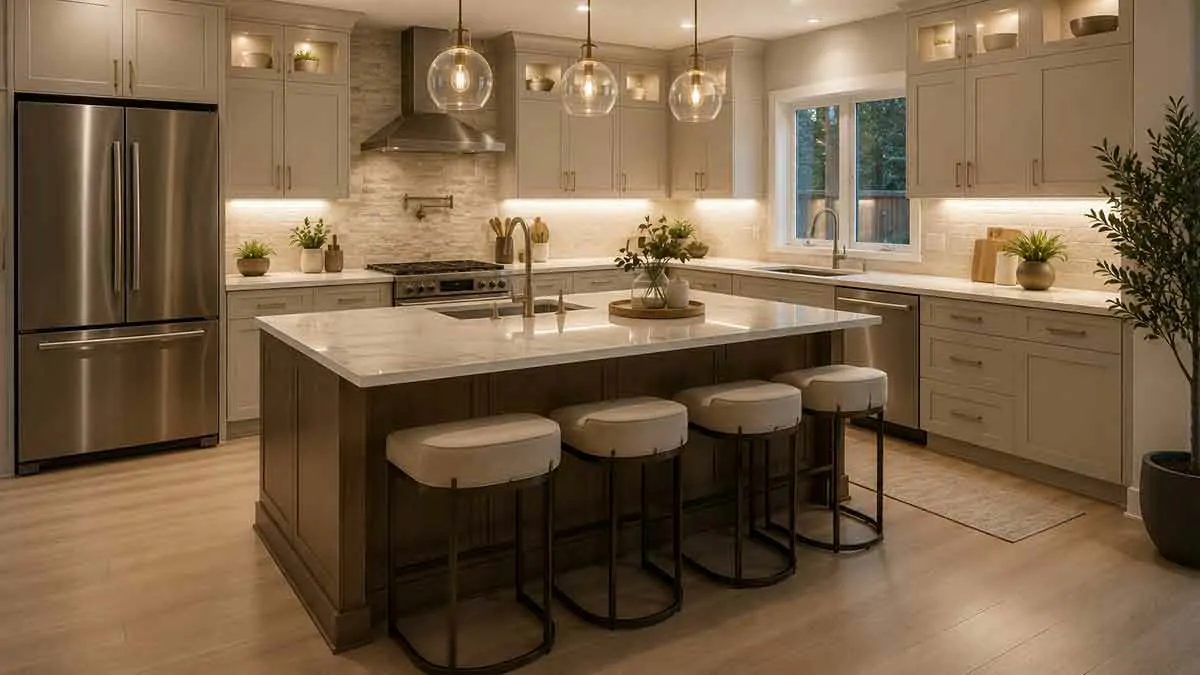
Good kitchen lighting can make a major difference in how a kitchen looks, feels, and functions. A well-designed lighting plan can make food preparation easier, improve visibility, highlight architectural features, and create a more comfortable atmosphere for everyday activities.
The best kitchen lighting ideas combine different types of lighting rather than relying on a single ceiling fixture. Ambient lighting provides general illumination, task lighting focuses on work areas, and accent lighting adds visual interest.
Whether you are remodeling a large kitchen, updating a small kitchen, or simply replacing outdated fixtures, the right lighting can improve both functionality and design.
This guide explains the main types of kitchen lighting, where to use them, how to choose fixtures, and how to create a practical lighting plan for your kitchen.
Table of Contents
Why Kitchen Lighting Matters
The kitchen is one of the most active areas of a home.
It may be used for:
- Food preparation
- Cooking
- Cleaning
- Eating
- Homework
- Working
- Entertaining
- Socializing
Because the kitchen serves multiple purposes, one type of lighting is rarely enough.
A layered lighting plan can provide the right amount of illumination for different activities while also improving the overall appearance of the room.
Good kitchen lighting should help you:
- See food clearly
- Work safely
- Reduce shadows
- Improve countertop visibility
- Highlight important features
- Create a comfortable atmosphere
- Make the kitchen feel more inviting
Types of Kitchen Lighting
Kitchen lighting can generally be divided into three main categories:
- Ambient lighting
- Task lighting
- Accent lighting
Using these layers together creates a more flexible lighting system.
Ambient Kitchen Lighting
Ambient lighting provides general illumination throughout the kitchen.
It should create a comfortable baseline level of light without leaving significant dark areas.
Common ambient lighting options include:
- Recessed ceiling lights
- Flush-mount fixtures
- Semi-flush fixtures
- Ceiling-mounted LED fixtures
- Track lighting
The size and layout of the kitchen determine how many fixtures are needed.
Avoid concentrating all ambient lighting in one area. Distribute fixtures so the main parts of the room receive relatively even illumination.
Task Lighting for Kitchen Work Areas
Task lighting provides focused illumination where specific activities take place.
Important task-lighting areas include:
- Countertops
- Food preparation surfaces
- Sink
- Cooktop
- Kitchen island
- Pantry
- Coffee station
Task lighting can improve visibility and reduce shadows created by overhead fixtures.
Under-cabinet lighting is one of the most practical examples because it places light directly on the countertop.
Accent Kitchen Lighting
Accent lighting is primarily used to highlight specific features or add atmosphere.
It can be used to emphasize:
- Glass-front cabinets
- Open shelving
- Architectural details
- Artwork
- Decorative objects
- Backsplashes
- Kitchen islands
Accent lighting does not replace ambient or task lighting. Instead, it adds another layer to the overall design.
Under-Cabinet Lighting
Under-cabinet lighting is one of the most useful kitchen lighting ideas for improving countertop visibility.
It can illuminate work surfaces without occupying valuable counter space.
Common options include:
- LED strips
- LED bars
- Puck lights
- Integrated cabinet lighting
When installing under-cabinet lighting, position the light so it illuminates the countertop rather than shining directly into the user’s eyes.
Consider placing fixtures toward the front of the cabinet underside when appropriate so the light reaches the main working area.
Kitchen Ceiling Lighting
Ceiling fixtures provide general illumination and can establish the overall lighting style of the kitchen.
Popular choices include:
- Recessed lights
- Flush mounts
- Semi-flush fixtures
- Track lights
- Decorative ceiling fixtures
The right choice depends on ceiling height, kitchen size, layout, and design style.
A low ceiling may benefit from a compact flush-mount fixture, while a larger kitchen with a higher ceiling may accommodate more decorative lighting.
Recessed Kitchen Lighting
Recessed lights are installed into the ceiling and provide a clean, streamlined appearance.
They can work well for general illumination and can also be positioned to highlight specific areas.
When planning recessed lighting, avoid placing fixtures only in the center of the room.
Consider where people stand and where cabinets and countertops are located.
If a recessed light is placed directly behind a person working at the counter, the person’s body can create shadows on the work surface.
Pendant Lighting Over a Kitchen Island
Pendant lights are popular above kitchen islands because they provide both functional and decorative lighting.
They can:
- Illuminate the island
- Define the kitchen’s central area
- Add visual character
- Complement the cabinet and hardware finishes
The number and size of pendants should be based on island dimensions and the desired visual balance.
Avoid installing fixtures that are so large that they obstruct sight lines across the kitchen.
Chandelier Kitchen Lighting
A chandelier can provide a decorative focal point in a large kitchen or dining area.
It may work particularly well above:
- Large islands
- Dining tables
- Breakfast areas
However, chandeliers should be selected according to the scale of the room.
An oversized fixture can make a compact kitchen feel crowded.
Track Lighting
Track lighting allows several fixtures to be positioned along a common track.
It can be useful when you want to direct light toward different areas of the kitchen.
Track lighting can illuminate:
- Countertops
- Sinks
- Islands
- Cabinets
- Dining areas
It can be especially useful in kitchens where installing multiple ceiling fixtures is difficult.
Wall Sconces
Wall sconces can provide decorative or supplemental lighting.
They can be used near:
- Open shelving
- Breakfast areas
- Sinks
- Decorative walls
- Dining spaces
Sconces can add visual interest but should not interfere with cabinet doors, shelves, or normal movement.
Cabinet Interior Lighting
Lighting inside cabinets can improve visibility and add a decorative element.
It is particularly useful for:
- Glass-front cabinets
- Tall pantry cabinets
- Deep storage areas
- Display cabinets
Interior lighting can make it easier to locate items while also highlighting dishes and decorative objects.
Toe-Kick Lighting
Toe-kick lighting is installed near the bottom of kitchen cabinets.
It is primarily decorative but can also provide low-level illumination at night.
It can help create a soft visual effect without requiring bright overhead lighting.
Motion sensors or automatic controls can make this type of lighting more convenient for nighttime use.
Pantry Lighting
Pantry lighting should provide enough illumination to see shelves and stored food clearly.
A single ceiling fixture may not be sufficient in a deep pantry.
Consider:
- Ceiling lighting
- Vertical lighting
- Shelf lighting
- Motion-activated fixtures
The goal is to eliminate dark areas where items can easily be overlooked.
Sink Lighting
The sink should receive enough task lighting for washing dishes and food preparation.
An overhead fixture, recessed light, pendant, or appropriately positioned under-cabinet fixture can provide useful illumination.
Avoid placing a fixture where it creates glare on water or reflective surfaces.
Stove and Cooktop Lighting
Cooking surfaces require good visibility.
Range hoods often include integrated lighting, which can provide useful task illumination.
If the hood does not provide sufficient light, additional lighting may be necessary depending on the kitchen design.
Lighting should illuminate the cooking surface without creating excessive glare.
Kitchen Dining Area Lighting
If the kitchen includes a dining table or breakfast area, consider treating it as a separate lighting zone.
A pendant or chandelier can define the dining area while providing focused illumination.
A dimmable fixture can allow the lighting level to change depending on whether the table is being used for:
- Meals
- Homework
- Work
- Entertaining
- Casual conversation
Small Kitchen Lighting Ideas
Small kitchens benefit from lighting that maximizes brightness without creating visual clutter.
Consider:
- Under-cabinet lighting
- Recessed ceiling lights
- Compact flush-mount fixtures
- Small pendants
- Light-colored surfaces
- Cabinet interior lighting
- Reflective backsplash materials
Avoid oversized fixtures that take up too much visual space.
In a small kitchen, good lighting distribution can make the room feel brighter and more open.
Large Kitchen Lighting Ideas
Large kitchens often require multiple lighting zones.
A combination may include:
- Recessed ambient lighting
- Pendant lights over the island
- Under-cabinet task lighting
- Cabinet accent lighting
- Dining-area lighting
- Pantry lighting
Large kitchens should not depend on a single large ceiling fixture.
Multiple smaller lighting sources can provide better control and reduce dark areas.
Modern Kitchen Lighting Ideas
Modern kitchens often work well with simple fixtures and clean lines.
Potential choices include:
- Minimalist pendants
- Linear island fixtures
- Recessed LEDs
- Integrated cabinet lighting
- Slim under-cabinet fixtures
- Simple track lighting
A consistent finish across multiple fixtures can create a cohesive appearance.
Traditional Kitchen Lighting Ideas
Traditional kitchens may benefit from:
- Decorative pendants
- Glass shades
- Classic chandeliers
- Wall sconces
- Warm metal finishes
Lighting should complement the cabinetry, hardware, countertops, and architectural details.
Farmhouse Kitchen Lighting Ideas
Farmhouse-style kitchens often use lighting with a practical and slightly decorative appearance.
Popular choices may include:
- Industrial-style pendants
- Metal fixtures
- Lantern-inspired lights
- Simple glass shades
- Warm finishes
The fixture should complement the kitchen rather than overwhelming the other design elements.
How to Choose Kitchen Light Fixtures
When choosing a fixture, consider:
- Kitchen size
- Ceiling height
- Island dimensions
- Cabinet layout
- Existing natural light
- Design style
- Light output
- Fixture size
- Maintenance
- Installation requirements
The fixture should be appropriately scaled to the area it serves.
For example, a small pendant may disappear visually above a large island, while an oversized pendant can overwhelm a compact kitchen.
Kitchen Lighting Color Temperature
Light color affects the atmosphere and appearance of the kitchen.
Common LED color temperatures include:
- Warm white
- Neutral white
- Cool white
Warm light can create a comfortable atmosphere.
Neutral light can provide a balanced appearance that works well for general kitchen tasks.
Cooler light can provide a crisp appearance but may feel less comfortable in some residential kitchens.
Try to maintain consistency between fixtures that illuminate the same area.
Mixing significantly different light colors can make the kitchen appear visually uneven.
Kitchen Lighting Brightness
Brightness should match the purpose of the lighting.
Task areas generally require stronger and more focused illumination than decorative areas.
When selecting LED fixtures, consider the fixture’s lumen output rather than relying only on wattage.
A kitchen lighting plan should provide enough illumination for safe food preparation without creating excessive glare.
The required amount depends on:
- Kitchen size
- Ceiling height
- Surface colors
- Natural light
- Fixture type
- Intended activity
Kitchen Lighting and Natural Light
Natural light should be considered when planning artificial lighting.
Observe how sunlight enters the kitchen at different times of the day.
You may need more artificial lighting in areas that remain naturally dark.
Avoid blocking windows with unnecessary tall cabinets or fixtures when possible.
Reflective surfaces can also help distribute available natural and artificial light.
Smart Kitchen Lighting
Smart lighting can provide additional control and convenience.
Depending on the system, homeowners may be able to:
- Adjust brightness
- Change schedules
- Control lights remotely
- Use motion sensors
- Create lighting scenes
- Integrate lights with other smart-home systems
Smart lighting can be particularly useful for nighttime kitchen use.
However, choose systems that remain practical and easy for everyone in the household to operate.
Energy-Efficient Kitchen Lighting
LED lighting is widely used in kitchens because it can provide efficient illumination and is available in many fixture formats.
Potential benefits include:
- Lower energy consumption
- Long operating life
- Low heat output
- Wide range of color temperatures
- Compact fixture designs
Energy efficiency also depends on how long lights are operated and how the lighting system is controlled.
Dimmers, timers, occupancy sensors, and smart controls can help reduce unnecessary lighting use where appropriate.
Use Dimmers for Flexible Kitchen Lighting
Dimmers can make kitchen lighting more adaptable.
Bright lighting can be useful for:
- Cooking
- Cleaning
- Food preparation
Lower lighting levels may be more appropriate for:
- Dining
- Entertaining
- Evening relaxation
Make sure the selected fixtures, bulbs, switches, and controls are compatible with dimming.
Create Separate Lighting Zones
Instead of controlling every light with one switch, divide the kitchen into zones.
Possible zones include:
- General ceiling lighting
- Island lighting
- Under-cabinet lighting
- Pantry lighting
- Dining lighting
- Accent lighting
Separate controls allow you to use only the lighting you need at a particular time.
Coordinate Lighting With Kitchen Design
Lighting fixtures should work with the rest of the kitchen.
Consider their relationship with:
- Cabinet hardware
- Faucets
- Appliances
- Countertops
- Backsplash
- Flooring
- Furniture
You can use matching finishes for a coordinated appearance or intentionally combine finishes when the overall design supports it.
Kitchen Lighting for Different Activities
The kitchen may need different lighting levels throughout the day.
Cooking
Use strong task lighting around countertops and cooking areas.
Cleaning
Bright, evenly distributed ambient lighting can make surfaces and corners easier to see.
Dining
Use softer lighting around the dining area.
Entertaining
Combine ambient and accent lighting to create a more comfortable atmosphere.
Nighttime Use
Low-level lighting can help with navigation without fully illuminating the entire kitchen.
Common Kitchen Lighting Mistakes
Relying on One Ceiling Fixture
A single fixture often creates shadows and dark work areas.
Placing Lights Directly Behind the User
This can cause the user’s body to block light from reaching the countertop.
Installing Too Many Recessed Lights
Too many ceiling fixtures can create excessive brightness and make the ceiling visually busy.
Ignoring Under-Cabinet Lighting
Overhead lighting may not adequately illuminate countertops.
Choosing Fixtures That Are Too Large
Oversized fixtures can overwhelm a small kitchen or interfere with sight lines.
Mixing Incompatible Light Colors
Significantly different color temperatures can create an inconsistent appearance.
Forgetting Dimmers
Fixed-brightness lighting may be less flexible for kitchens used for both cooking and entertaining.
Ignoring Glare
Reflective countertops, stainless steel appliances, glass, and glossy surfaces can increase glare.
Forgetting Cabinet and Door Clearance
Pendant lights, sconces, and other fixtures should not interfere with doors, cabinets, or normal movement.
Treating Decorative Lighting as Task Lighting
A beautiful fixture does not necessarily provide sufficient illumination for food preparation.
How to Plan Kitchen Lighting Step by Step
Step 1: Evaluate the Existing Kitchen
Identify dark areas, shadows, glare, and locations where lighting is insufficient.
Step 2: Identify Kitchen Work Zones
Mark the main areas used for:
- Food preparation
- Cooking
- Cleaning
- Storage
- Dining
Step 3: Plan Ambient Lighting
Determine how the entire kitchen will receive general illumination.
Step 4: Add Task Lighting
Provide focused lighting for countertops, islands, sinks, and cooking areas.
Step 5: Add Accent Lighting
Use decorative lighting only where it contributes to the overall design.
Step 6: Consider Natural Light
Observe where daylight already provides sufficient illumination and where additional lighting is needed.
Step 7: Select Fixture Types
Choose recessed lights, pendants, under-cabinet fixtures, sconces, or other fixtures based on each zone’s requirements.
Step 8: Choose Light Color
Select a consistent color temperature for fixtures that work together.
Step 9: Plan Controls
Use separate switches, dimmers, sensors, or smart controls where appropriate.
Step 10: Check Scale and Clearance
Verify fixture dimensions and make sure doors, cabinets, appliances, and people have adequate clearance.
Step 11: Coordinate With Electrical Work
Electrical wiring and fixture locations should be planned before walls, ceilings, cabinets, or other finishes are completed.
Step 12: Test the Lighting
Once installed, evaluate brightness, shadows, glare, and coverage before considering the lighting plan complete.
Final Thoughts
The best kitchen lighting ideas combine functionality, comfort, and design.
Instead of relying on one central fixture, use layers of ambient, task, and accent lighting. Under-cabinet lighting can improve countertop visibility, pendant lights can define an island, and recessed or ceiling fixtures can provide general illumination.
Consider the size and layout of the kitchen, natural light, cabinet configuration, work zones, and the activities that take place in the room.
A well-planned lighting system can make cooking easier, improve safety, highlight the kitchen’s design, and create a more comfortable space throughout the day.
Frequently Asked Questions
What type of lighting is best for a kitchen?
A combination of ambient, task, and accent lighting is generally more effective than relying on a single type of fixture.
Is under-cabinet lighting worth it?
Yes. Under-cabinet lighting can provide focused illumination directly on countertops and reduce shadows created by overhead fixtures.
How many lights should a kitchen have?
There is no universal number. The required amount depends on kitchen size, ceiling height, layout, natural light, fixture output, and the activities performed in the space.
Are recessed lights good for kitchens?
Recessed lights can provide clean, distributed ambient lighting when positioned correctly. They should be planned around work areas rather than simply arranged in the center of the ceiling.
Are pendant lights good over a kitchen island?
Yes. Pendant lights can provide task lighting and serve as a decorative focal point above an island, provided they are appropriately sized and positioned.
What color temperature is best for kitchen lighting?
A neutral or warm-neutral light is often a practical choice for residential kitchens, but the best color temperature depends on the desired atmosphere, finishes, and other lighting in the home.
Should kitchen lights be dimmable?
Dimmable lighting can be useful because kitchens are used for different activities. Bright light can support cooking and cleaning, while lower levels can create a more relaxed atmosphere.
How can I make a small kitchen look bigger with lighting?
Use evenly distributed lighting, under-cabinet fixtures, appropriate ceiling lighting, and reflective surfaces. Avoid oversized fixtures and dark areas.
What is the best lighting for kitchen countertops?
Task lighting positioned to illuminate the countertop directly is generally the most useful. Under-cabinet lighting is a common solution.
Should all kitchen light fixtures match?
They do not need to be identical. However, fixtures should have a coordinated relationship through their finish, shape, scale, or overall design style.
How can I reduce kitchen lighting energy use?
LED fixtures, dimmers, timers, occupancy sensors, and smart controls can help reduce unnecessary energy use when selected and used appropriately.
Can kitchen lighting improve home design?
Yes. Lighting can emphasize cabinets, countertops, islands, architectural details, and other features while also improving the overall atmosphere of the room.