
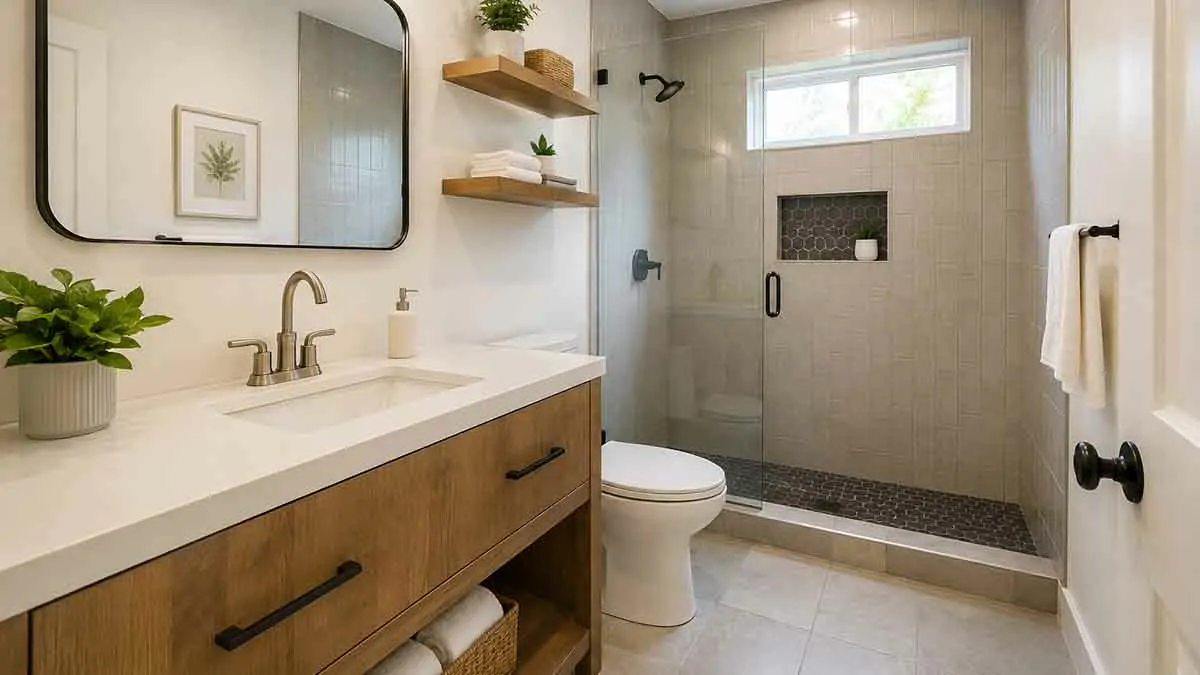
A bathroom renovation does not have to require a large budget to make a meaningful difference. With careful planning, homeowners can improve the appearance, functionality, and comfort of a bathroom while avoiding unnecessary construction costs.
A successful bathroom renovation on a budget starts with understanding which improvements provide the most value. Reusing functional fixtures, keeping the existing layout, updating surfaces, improving lighting, and making targeted cosmetic changes can transform an outdated bathroom without requiring a complete rebuild.
In this guide, we explain practical budget bathroom renovation ideas, where to spend your money, which improvements can reduce costs, and how to avoid common mistakes that can cause a bathroom renovation budget to increase.
Table of Contents
What Is a Budget Bathroom Renovation?
A budget bathroom renovation focuses on improving an existing bathroom without completely rebuilding the space.
Instead of replacing every fixture and changing the layout, homeowners can concentrate on the areas that need the most attention.
Common budget-friendly improvements include:
- Painting the walls
- Refinishing the vanity
- Replacing cabinet hardware
- Updating faucets
- Replacing the mirror
- Improving lighting
- Refreshing tile
- Replacing worn flooring
- Improving storage
- Updating selected fixtures
- Improving ventilation
The objective is not simply to spend as little as possible. A good budget renovation uses available money where it creates the greatest improvement in functionality, appearance, and durability.
How Much Does a Budget Bathroom Renovation Cost?
The cost of a bathroom renovation varies according to the bathroom size, location, materials, labor, and scope of work.
A cosmetic refresh can cost substantially less than a full bathroom remodel involving new plumbing, tile, fixtures, and structural changes.
Before purchasing materials, create a complete budget that accounts for:
- Materials
- Labor
- Fixtures
- Tile
- Plumbing
- Electrical work
- Lighting
- Delivery
- Waste disposal
- Permits where required
- Unexpected repairs
- Contingency funds
A contingency reserve is particularly important in older bathrooms. Removing flooring, walls, or fixtures can reveal hidden moisture damage, deteriorated plumbing, or other problems.
Set a Realistic Bathroom Renovation Budget
Start by determining the maximum amount you can comfortably spend.
Then divide the renovation into three priorities.
Essential Repairs
These address problems that affect safety, water management, or basic functionality.
Examples include:
- Plumbing leaks
- Water damage
- Failed waterproofing
- Unsafe electrical components
- Poor ventilation
- Damaged flooring
- Deteriorated surfaces
These issues should generally be addressed before cosmetic improvements.
High-Impact Improvements
These upgrades can significantly improve the bathroom without requiring major construction.
Examples include:
- Vanity refinishing
- New lighting
- Updated hardware
- New mirror
- Faucet replacement
- Fresh paint
- Improved storage
Optional Improvements
These are features that can be added if the budget allows.
Examples include:
- Decorative tile
- Premium fixtures
- Heated flooring
- Custom cabinetry
- Designer lighting
- High-end finishes
Prioritizing the renovation this way helps prevent decorative upgrades from consuming money needed for essential work.
Keep the Existing Bathroom Layout
One of the most effective ways to control bathroom renovation costs is to keep the existing layout.
Moving a toilet, sink, shower, or bathtub can require significant plumbing changes.
Changing the layout may also require:
- New water supply lines
- New drain connections
- Flooring repairs
- Wall repairs
- Additional labor
- Electrical modifications
If the existing layout functions well, consider upgrading the finishes instead.
For example, keeping the existing shower and vanity locations while replacing the faucet, lighting, mirror, hardware, and surfaces can create a substantial improvement without major plumbing work.
Refinish or Paint the Bathroom Vanity
Replacing a bathroom vanity can be expensive, especially when the existing cabinet is structurally sound.
If the vanity is in good condition, refinishing or painting it may provide a more affordable alternative.
Before painting, inspect:
- Cabinet boxes
- Doors
- Drawers
- Hinges
- Drawer slides
- Areas exposed to water
Clean and prepare the surface properly before applying an appropriate coating.
Changing the vanity color and hardware can make an older bathroom appear considerably more modern.
Replace Bathroom Hardware
Small hardware changes can have a noticeable effect on the overall appearance of a bathroom.
Consider replacing:
- Cabinet knobs
- Cabinet pulls
- Towel bars
- Toilet paper holders
- Robe hooks
- Shower accessories
Try to maintain a consistent finish throughout the room.
Replacing several related hardware pieces can create a more cohesive appearance without requiring major construction.
Update the Bathroom Faucet
A faucet is both a functional fixture and a visible design element.
Replacing an outdated faucet can refresh the vanity area without replacing the entire sink or countertop.
Before purchasing a faucet, check:
- Number of sink mounting holes
- Hole spacing
- Faucet dimensions
- Spout reach
- Handle configuration
- Sink compatibility
- Water connections
Choosing a compatible replacement can avoid unnecessary countertop modifications.
Refresh the Shower and Tub
A complete shower replacement can consume a large part of a bathroom renovation budget.
If the existing shower or tub is structurally sound and properly waterproofed, consider targeted improvements instead.
Potential upgrades include:
- New showerhead
- New faucet trim
- Updated controls
- New shower curtain
- New glass enclosure where appropriate
- Regrouting
- Replacing damaged caulk
- Cleaning and refreshing existing surfaces
However, cosmetic repairs should not be used to conceal active leaks, water damage, or failed waterproofing.
If there are signs of moisture intrusion, investigate the underlying problem before applying new finishes.
Choose Affordable Bathroom Tile
Tile can strongly influence the appearance of a bathroom, but premium tile is not always necessary.
Affordable options can include:
- Basic ceramic tile
- Porcelain tile
- Simple subway tile
- Standard-format wall tile
- Simple geometric patterns
Simple tile layouts can reduce installation complexity.
You can also limit decorative tile to focal areas rather than covering every surface with expensive materials.
When selecting tile, consider:
- Water exposure
- Slip resistance
- Cleaning requirements
- Durability
- Installation cost
- Long-term maintenance
The cheapest tile is not necessarily the best value if installation or maintenance costs are significantly higher.
Improve Bathroom Lighting
Good lighting can make a bathroom feel cleaner, brighter, and more comfortable.
Instead of relying on a single overhead fixture, consider combining different lighting functions.
Ambient Lighting
Provides general illumination throughout the bathroom.
Task Lighting
Provides focused light around areas such as the vanity and mirror.
Accent Lighting
Can highlight architectural details or decorative features.
Vanity lighting deserves particular attention because poor lighting around the mirror can make everyday grooming more difficult.
When electrical modifications are required, use appropriate professional expertise and follow local electrical requirements.
Update the Bathroom Mirror
A mirror can become a major visual feature without requiring extensive renovation work.
Replacing an outdated mirror with a more suitable shape or frame can significantly change the appearance of the vanity area.
Options include:
- Framed mirrors
- Frameless mirrors
- Rounded mirrors
- Rectangular mirrors
- Medicine cabinets with integrated mirrors
Before installation, check the available wall space and the relationship between the mirror, vanity, lighting, and other fixtures.
Refresh Bathroom Walls
Painting is one of the simplest ways to update a bathroom.
Choose a coating appropriate for bathroom conditions and prepare the surface properly before painting.
Before applying new paint:
- Repair holes and cracks.
- Remove loose or damaged material.
- Clean the surface.
- Address moisture problems.
- Apply the appropriate primer when needed.
- Apply the selected finish.
Light and neutral colors can help a small bathroom appear brighter, while darker colors can be used strategically for contrast.
Upgrade Bathroom Flooring Strategically
Flooring does not always need to be replaced during a budget renovation.
If the existing floor is structurally sound and still performs well, cleaning or repairing it may be enough.
If replacement is necessary, compare materials based on:
- Water resistance
- Slip resistance
- Durability
- Maintenance
- Material cost
- Installation cost
Porcelain and ceramic tile are common choices for bathrooms, while certain luxury vinyl products can provide a comfortable and practical alternative when appropriate for wet-area conditions.
Do not select flooring based only on appearance. Bathroom floors should also provide appropriate traction and withstand moisture.
Improve Bathroom Storage
Better storage can make a bathroom feel more organized without requiring a complete cabinet replacement.
Consider:
- Drawer organizers
- Under-sink storage
- Wall-mounted shelves
- Medicine cabinets
- Over-the-toilet storage
- Narrow storage units
- Shower niches
- Baskets and containers
Use vertical wall space where possible, particularly in smaller bathrooms.
Keep frequently used products easily accessible while storing less frequently used items in less convenient locations.
Update the Toilet When Necessary
A toilet does not always need to be replaced during a bathroom renovation.
If the existing toilet functions properly and is in good condition, keeping it can help control costs.
Replacement may make sense when the toilet has:
- Persistent leaks
- Cracks
- Repeated flushing problems
- Poor performance
- Significant deterioration
If replacement is necessary, check rough-in dimensions and plumbing compatibility before purchasing a new toilet.
Improve Bathroom Ventilation
Ventilation is an important part of bathroom performance.
Excess humidity can contribute to:
- Condensation
- Mold growth
- Surface deterioration
- Paint problems
- Moisture damage
A properly functioning exhaust fan can help remove moisture and odors.
If the existing ventilation system is inadequate, improving it may be a better investment than spending the entire renovation budget on decorative features.
DIY vs. Professional Bathroom Renovation
Some bathroom improvements can be suitable for experienced DIY homeowners, while others require specialized skills.
Potential DIY Projects
Depending on your experience, you may be able to handle:
- Painting
- Cabinet hardware replacement
- Mirror installation
- Simple shelving
- Basic organization
- Certain decorative updates
Jobs Better Left to Professionals
Professional assistance is generally appropriate for:
- Major plumbing changes
- Electrical work
- Structural modifications
- Waterproofing systems
- Significant tile work
- Gas-related work
- Major ventilation modifications
Bathrooms combine water and electricity, making proper installation especially important.
Saving labor costs is not worthwhile if an installation error creates water damage, electrical hazards, or expensive repairs.
How to Save Money on a Bathroom Renovation
Keep Plumbing in the Same Location
Avoid moving toilets, sinks, showers, and bathtubs unless the existing layout is genuinely problematic.
Reuse Functional Fixtures
If a fixture works correctly and remains in good condition, consider keeping it.
Refinish Instead of Replace
Cabinets, vanities, and certain surfaces may be candidates for refinishing rather than replacement.
Choose Standard Materials
Common sizes and readily available products can reduce material and installation costs.
Use Decorative Tile Selectively
Create a focal area instead of using expensive tile throughout the entire room.
Compare Contractor Estimates
Obtain detailed proposals from multiple qualified contractors when professional work is required.
Renovate in Phases
Complete essential repairs first and postpone optional upgrades if necessary.
Avoid Unnecessary Layout Changes
Keeping plumbing and major fixtures in their existing locations can significantly reduce construction complexity.
High-Impact Budget Bathroom Renovation Ideas
If the renovation budget is limited, prioritize changes that create a noticeable improvement without requiring major construction.
Consider:
- Paint the walls.
- Refinish the vanity.
- Replace cabinet hardware.
- Install updated lighting.
- Replace the mirror.
- Update the faucet.
- Improve storage.
- Refresh damaged grout and caulk.
- Replace outdated shower accessories.
- Upgrade selected fixtures.
The best combination depends on the condition of your bathroom.
A bathroom with serious moisture problems should prioritize repairs, while a structurally sound bathroom may benefit more from cosmetic improvements.
Common Bathroom Renovation Mistakes
Changing the Layout Without a Strong Reason
Moving plumbing can dramatically increase the project cost.
Ignoring Water Damage
Covering stains or damaged materials without fixing the underlying moisture problem can lead to more serious deterioration.
Choosing Fixtures Without Measuring
Always verify dimensions and connection requirements before purchasing fixtures.
Spending Too Much on Decorative Materials
Premium finishes do not compensate for poor ventilation, damaged plumbing, or inadequate waterproofing.
Underestimating Labor
Installation can represent a significant portion of a renovation budget.
Forgetting Ventilation
A beautiful bathroom can still develop problems if excess moisture is not properly controlled.
Using Incompatible Materials
Bathroom surfaces and fixtures must be appropriate for their exposure to moisture and cleaning products.
Spending the Entire Budget
Keep a reserve for unexpected repairs and construction conditions.
How to Renovate a Bathroom on a Budget Step by Step
Step 1: Inspect the Existing Bathroom
Identify leaks, moisture damage, ventilation problems, damaged surfaces, and fixtures that need replacement.
Step 2: Set a Maximum Budget
Determine how much you can spend and reserve part of the budget for unexpected costs.
Step 3: Separate Repairs From Cosmetic Improvements
Fix structural, plumbing, electrical, and moisture-related problems before focusing on appearance.
Step 4: Keep the Existing Layout
Avoid moving major plumbing fixtures unless the current configuration creates significant functional problems.
Step 5: Identify High-Impact Upgrades
Choose improvements that provide the greatest visual and practical benefit for the available budget.
Step 6: Decide What You Can DIY
Handle suitable low-risk projects yourself while hiring professionals for specialized work.
Step 7: Compare Materials
Evaluate tile, flooring, lighting, fixtures, paint, hardware, and storage solutions based on both price and long-term performance.
Step 8: Get Detailed Quotes
For professional work, compare multiple estimates with clearly defined scopes of work.
Step 9: Complete Work in the Correct Order
Generally, plumbing, electrical, waterproofing, and other behind-the-wall work should be completed before final surfaces and decorative finishes.
Step 10: Track Every Expense
Record purchases, labor, delivery, and unexpected costs throughout the renovation.
This makes it easier to identify budget problems before the project is complete.
Is a Budget Bathroom Renovation Worth It?
A budget bathroom renovation can be worthwhile when the existing layout is functional and the main problems can be solved without major structural work.
You do not necessarily need a new bathroom layout, premium tile, or completely new fixtures to create a noticeable improvement.
In many cases, targeted changes to lighting, paint, hardware, storage, vanity finishes, mirrors, and selected fixtures can produce a substantial transformation.
However, cosmetic improvements should not replace necessary repairs. Water leaks, failed waterproofing, unsafe electrical systems, and serious ventilation problems should be addressed first.
Final Thoughts
A bathroom renovation on a budget is primarily about making smart decisions rather than simply choosing the cheapest materials.
Keeping the existing layout, reusing functional fixtures, refinishing the vanity, updating hardware, improving lighting, refreshing surfaces, and adding better storage can significantly improve a bathroom without the cost of a complete remodel.
Before starting, establish a realistic budget and prioritize essential repairs. Compare materials and contractor estimates carefully, avoid unnecessary plumbing changes, and maintain a contingency reserve for unexpected problems.
The most effective budget renovation is one that improves the bathroom’s functionality and appearance while avoiding expenses that do not provide meaningful long-term value.
Frequently Asked Questions
How can I renovate a bathroom on a small budget?
Focus on high-impact, low-cost improvements such as painting, updating hardware, replacing the mirror, improving lighting, refinishing the vanity, and improving storage. Keep the existing layout whenever possible.
What is the cheapest way to remodel a bathroom?
Keeping the existing plumbing and layout is often one of the most effective ways to reduce construction costs. Reusing functional fixtures and focusing on cosmetic improvements can also reduce expenses.
Should I replace my bathroom vanity?
Not necessarily. If the vanity is structurally sound and the layout works well, refinishing or painting it and replacing the hardware can provide a less expensive alternative.
Is it cheaper to refinish or replace a bathroom vanity?
Refinishing is generally less expensive than full replacement when the existing vanity is in good structural condition. The final decision depends on the cabinet material, condition, and desired result.
How can I make an old bathroom look better without remodeling it completely?
Paint, new lighting, updated hardware, a new mirror, improved storage, a new faucet, and refreshed grout or caulk can make a noticeable difference without major construction.
How can I save money on bathroom tile?
Use affordable standard tile, choose simple patterns, and limit decorative tile to focal areas. Installation complexity can also affect the total cost.
Should I move the toilet during a bathroom renovation?
Usually not if the existing location works well. Moving a toilet requires plumbing changes and can significantly increase labor and construction costs.
What bathroom improvements should not be done cheaply?
Do not compromise on plumbing repairs, waterproofing, electrical safety, structural work, or ventilation. These systems affect the long-term performance and safety of the bathroom.
Can I renovate a bathroom myself?
Some cosmetic tasks can be suitable for DIY, including painting, hardware replacement, and certain storage upgrades. Plumbing, electrical, waterproofing, and structural work may require qualified professionals.
How much should I keep for unexpected bathroom renovation costs?
Keeping a contingency reserve of roughly 10% to 20% of the planned renovation budget can provide protection against unexpected repairs and construction issues.