
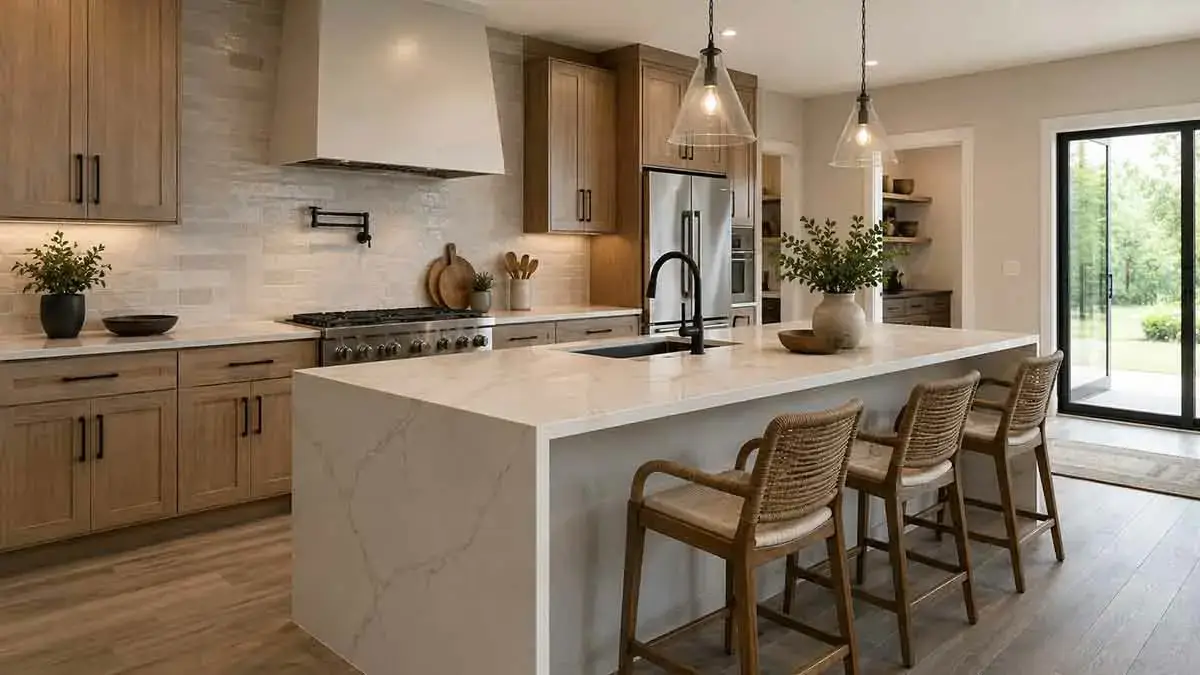
Choosing the right kitchen flooring is an important decision during a kitchen renovation. Kitchen floors must handle daily foot traffic, food spills, moisture, stains, dropped objects, frequent cleaning, and years of everyday use. At the same time, the flooring should complement the cabinets, countertops, backsplash, appliances, and overall style of the room.
There are many kitchen flooring options available, including porcelain tile, ceramic tile, luxury vinyl, natural stone, hardwood, engineered wood, laminate, concrete, cork, and linoleum. Each material has different strengths and weaknesses in areas such as durability, water resistance, comfort, maintenance, appearance, installation, and cost.
The best kitchen floor is not necessarily the most expensive one. The right choice depends on how you use your kitchen, how much maintenance you are willing to perform, your budget, and the conditions of the space.
This guide compares the most popular kitchen flooring options and explains how to choose a floor that balances appearance, performance, comfort, and long-term value.
What to Consider When Choosing Kitchen Flooring
Before selecting a flooring material, consider how the kitchen is used and what demands the floor will face.
Important factors include:
- Water and moisture resistance
- Durability
- Scratch resistance
- Stain resistance
- Slip resistance
- Comfort underfoot
- Cleaning requirements
- Maintenance
- Installation requirements
- Material cost
- Installation cost
- Expected lifespan
- Appearance
A busy family kitchen may need a different flooring solution from a lightly used kitchen.
Also consider the rooms surrounding the kitchen. If the kitchen connects directly to a dining room or living area, using compatible flooring can create a more cohesive appearance.
Popular Kitchen Flooring Options
The most common kitchen flooring materials include:
- Porcelain tile
- Ceramic tile
- Luxury vinyl flooring
- Natural stone
- Hardwood
- Engineered wood
- Laminate
- Concrete
- Cork
- Linoleum
No single material is ideal for every kitchen. The best option depends on which characteristics matter most to you.
Porcelain Tile Flooring
Porcelain tile is one of the most popular kitchen flooring options because it combines durability with strong moisture resistance.
Porcelain is made from refined clay and fired at high temperatures, producing a dense and hard material.
Advantages of Porcelain Tile
Porcelain flooring can provide:
- Excellent durability
- Strong moisture resistance
- Easy routine cleaning
- Good stain resistance
- Many colors and patterns
- Wood-look and stone-look designs
- Long service life
- Compatibility with many kitchen styles
Porcelain is available in many sizes and finishes, making it suitable for traditional, contemporary, and modern kitchens.
Disadvantages of Porcelain Tile
The main disadvantages include:
- Hard surface
- Cold feel in some climates
- Potential for cracking if improperly installed
- More demanding installation than some floating floors
- Grout that may require maintenance
Because tile is hard underfoot, people who spend many hours cooking may prefer a more resilient material or use anti-fatigue mats in work areas.
Best For
Porcelain tile is particularly suitable for homeowners who prioritize durability, moisture resistance, and long-term performance.
Ceramic Tile Flooring
Ceramic tile is another established kitchen flooring choice. It is available in a wide range of colors, patterns, sizes, and textures.
Advantages of Ceramic Tile
Ceramic flooring can offer:
- Good durability
- Moisture resistance
- Easy cleaning
- Extensive design choices
- Affordable options
- Simple replacement of individual damaged tiles
Ceramic tile can work well in traditional, transitional, farmhouse, and contemporary kitchens.
Disadvantages of Ceramic Tile
Ceramic tile can have some of the same drawbacks as porcelain.
It creates a hard surface that may be uncomfortable during prolonged standing. Grout lines can also collect dirt and may require periodic cleaning.
Best For
Ceramic tile is a practical choice for homeowners looking for a durable hard-surface floor with many design options and a broad range of price points.
Luxury Vinyl Flooring
Luxury vinyl flooring has become a popular choice for kitchen remodeling because it combines practical performance with a wide range of designs.
It is commonly available as luxury vinyl plank or luxury vinyl tile and can replicate the appearance of hardwood, stone, and other materials.
Advantages of Luxury Vinyl
Depending on the product, luxury vinyl can provide:
- Strong water resistance
- Comfortable feel underfoot
- Easy cleaning
- Wide design selection
- Relatively simple installation
- Good resistance to everyday wear
- Lower cost than some premium flooring materials
Many products use floating installation systems, which can be useful for certain renovation projects.
Disadvantages of Luxury Vinyl
Quality varies considerably between products.
Lower-quality flooring may be more susceptible to:
- Scratches
- Dents
- Surface wear
- Visible damage
The product’s wear layer, construction, installation requirements, and warranty should therefore be considered before purchasing.
Best For
Luxury vinyl is a strong option for homeowners who want a comfortable, practical, low-maintenance kitchen floor with a wide range of styles.
Natural Stone Flooring
Natural stone can give a kitchen a distinctive and premium appearance.
Common kitchen flooring stones include:
- Slate
- Travertine
- Limestone
- Marble
- Granite
Every piece of natural stone can have variations in color, texture, and pattern.
Advantages of Natural Stone
Natural stone can provide:
- Unique appearance
- Strong durability
- Natural character
- Premium visual appeal
- Wide design possibilities
- Long service life when properly maintained
Disadvantages of Natural Stone
The disadvantages depend on the specific stone.
Some natural stone floors may require periodic sealing and additional maintenance. Certain stones can also be susceptible to staining, scratching, or etching.
Material and installation costs can also be higher than many manufactured flooring options.
Best For
Natural stone is best suited to homeowners who value distinctive natural materials and are willing to accept additional maintenance and potentially higher costs.
Hardwood Kitchen Flooring
Hardwood can create a warm, natural, and timeless appearance.
It is especially attractive when the kitchen connects to other rooms that already have hardwood flooring.
Advantages of Hardwood
Hardwood offers:
- Natural appearance
- Warm visual character
- Comfortable feel
- Timeless style
- Potential for refinishing
- Strong continuity between connected rooms
With proper care, quality hardwood flooring can remain attractive for many years.
Disadvantages of Hardwood
Wood is more vulnerable to prolonged moisture exposure than many tile or waterproof flooring products.
Spills should be cleaned promptly, particularly around:
- Sinks
- Dishwashers
- Refrigerators
- Water lines
Hardwood can also develop scratches, dents, and surface wear from heavy traffic.
Best For
Hardwood is a good choice for homeowners who prioritize warmth, natural appearance, comfort, and continuity with existing wood floors.
Engineered Wood Flooring
Engineered wood combines a real wood surface with a layered construction. This structure can provide greater dimensional stability than solid hardwood in certain conditions.
Advantages of Engineered Wood
Engineered wood can provide:
- Real wood appearance
- Comfortable feel
- Good dimensional stability
- Wide range of styles
- Compatibility with many kitchen designs
- Potential for refinishing depending on product construction
It can be useful for homeowners who want the appearance of wood while considering an engineered flooring construction.
Disadvantages of Engineered Wood
Engineered wood is not automatically waterproof.
Performance varies by product, and some materials remain sensitive to prolonged moisture exposure.
The thickness of the real wood wear layer can also affect whether and how many times the floor can be refinished.
Best For
Engineered wood can be suitable for homeowners who want real wood flooring and prefer the construction characteristics of engineered products.
Laminate Kitchen Flooring
Laminate flooring can reproduce the appearance of wood, stone, and other materials while often offering a lower purchase price than premium natural materials.
Advantages of Laminate
Laminate can provide:
- Wide range of designs
- Affordable options
- Comfortable feel
- Easy routine cleaning
- Relatively simple installation
Some modern laminate products are specifically designed with improved moisture resistance.
Disadvantages of Laminate
Not every laminate product is appropriate for kitchen use.
Moisture that reaches vulnerable seams or edges can damage certain products. Water resistance therefore depends heavily on the specific flooring system and installation.
Always check the manufacturer’s specifications before installing laminate in a kitchen.
Best For
Laminate can work for homeowners who want an affordable wood-look or stone-look floor, provided the selected product is suitable for kitchen conditions.
Concrete Kitchen Flooring
Concrete flooring can provide a clean, modern, and industrial appearance.
It can be finished in different ways, including polishing, staining, coloring, and texturing.
Advantages of Concrete
Concrete can offer:
- High durability
- Modern appearance
- Design flexibility
- Easy cleaning
- Long service life when properly installed
Disadvantages of Concrete
Concrete has a hard surface and can feel cold underfoot.
Cracks can also develop depending on the substrate, installation, environmental conditions, and movement within the building.
Depending on the finish, sealing may also be necessary.
Best For
Concrete is particularly suitable for contemporary, minimalist, and industrial kitchen designs.
Cork Flooring
Cork is a less common kitchen flooring material that provides a softer feel than many hard surfaces.
It is produced from the bark of cork oak trees and has a distinctive natural appearance.
Advantages of Cork
Cork can provide:
- Comfortable feel
- Natural appearance
- Some sound absorption
- Resilience underfoot
- Warm visual character
Disadvantages of Cork
Cork can be sensitive to moisture if it is not properly installed and maintained.
It can also be damaged or compressed by heavy furniture, sharp objects, or excessive wear.
Best For
Cork can be a good option for homeowners who prioritize comfort, natural materials, and a softer surface.
Linoleum Flooring
Linoleum is a resilient flooring material made primarily from natural components, including linseed oil and other materials.
Modern linoleum is available in numerous colors and patterns.
Advantages of Linoleum
Linoleum can offer:
- Comfortable surface
- Broad design selection
- Easy routine maintenance
- Long service life when properly cared for
- Resilient performance
- Natural material composition
Disadvantages of Linoleum
Proper installation is important, particularly at seams and edges.
Moisture can become a problem if the flooring is improperly installed or maintained.
Best For
Linoleum can be suitable for homeowners looking for resilient flooring with a broad selection of colors and patterns.
Kitchen Flooring Options Comparison
| Flooring | Water Resistance | Durability | Comfort | Maintenance | Price Level |
|---|---|---|---|---|---|
| Porcelain Tile | Excellent | High | Low | Low | Medium |
| Ceramic Tile | Excellent | High | Low | Low–Moderate | Low–Medium |
| Luxury Vinyl | High* | Moderate–High | High | Low | Low–Medium |
| Natural Stone | Varies | High | Low | Moderate–High | Medium–High |
| Hardwood | Low–Moderate | High | High | Moderate | High |
| Engineered Wood | Moderate* | Moderate–High | High | Moderate | Medium–High |
| Laminate | Varies* | Moderate | High | Low | Low–Medium |
| Concrete | High | High | Low | Low–Moderate | Medium–High |
| Cork | Moderate* | Moderate | High | Moderate | Medium |
| Linoleum | Moderate* | Moderate–High | High | Moderate | Medium |
*Performance varies significantly by product, installation method, and manufacturer specifications.
The table is intended for general comparison rather than as a guarantee of performance for every product.
Best Kitchen Flooring for Water Resistance
If moisture resistance is the primary concern, porcelain and ceramic tile are among the strongest traditional options.
Many luxury vinyl products also provide excellent resistance to water, but performance depends on the specific product and installation.
Other materials, including laminate, engineered wood, cork, and linoleum, can have different levels of moisture resistance depending on their construction.
Always verify the manufacturer’s specifications instead of assuming that every product in a flooring category performs identically.
Best Kitchen Flooring for Easy Maintenance
If easy cleaning is a priority, porcelain tile, ceramic tile, and many luxury vinyl products are practical choices.
Routine maintenance generally includes:
- Sweeping or vacuuming
- Cleaning spills promptly
- Damp mopping when appropriate
- Following the manufacturer’s cleaning instructions
Natural stone and wood flooring may require more specialized care.
Best Kitchen Flooring for Comfort
Tile and concrete provide durability but have relatively hard surfaces.
If you spend several hours cooking or standing in the kitchen, a more resilient flooring material may provide greater comfort.
Options include:
- Luxury vinyl
- Cork
- Linoleum
- Hardwood
- Engineered wood
Anti-fatigue mats can also improve comfort in frequently used work areas.
Best Kitchen Flooring for Pets
Homes with pets need flooring that can handle traffic, moisture, dirt, and occasional accidents.
Potential options include:
- Porcelain tile
- Ceramic tile
- Luxury vinyl
- Durable laminate products
Consider scratch resistance, water resistance, ease of cleaning, and the manufacturer’s recommendations when comparing products.
Best Kitchen Flooring for Families
A busy family kitchen may experience heavy foot traffic, frequent spills, food debris, and regular cleaning.
Porcelain tile, ceramic tile, and quality luxury vinyl can be practical choices.
Hardwood and engineered wood can also work when spills are cleaned promptly and the flooring receives appropriate maintenance.
Best Kitchen Flooring for a Budget Renovation
If keeping costs under control is important, consider:
- Ceramic tile
- Basic luxury vinyl
- Laminate
- Selected linoleum products
However, do not compare flooring based only on material price.
The total project cost can also include:
- Subfloor preparation
- Removal of old flooring
- Underlayment
- Adhesives
- Trim
- Delivery
- Installation
- Disposal
A relatively inexpensive material can become expensive if the installation requires extensive preparation.
Kitchen Flooring and Interior Design
Kitchen flooring should work with the rest of the room rather than being selected in isolation.
Consider how the floor interacts with:
- Cabinets
- Countertops
- Backsplash
- Wall color
- Appliances
- Lighting
- Adjacent flooring
Light Flooring
Light-colored flooring can help reflect light and make a small kitchen feel brighter and more open.
Dark Flooring
Dark flooring can create contrast and a dramatic appearance but may make dust and debris more noticeable.
Wood-Look Flooring
Wood-look tile, luxury vinyl, and laminate can introduce warmth while offering different levels of moisture resistance, durability, and maintenance.
How to Choose the Right Kitchen Flooring Color
Color can influence how large, bright, or visually balanced a kitchen appears.
Neutral flooring can also make future changes to cabinets and wall colors easier.
Popular neutral flooring colors include:
- Light oak
- Warm beige
- Cream
- Gray
- Medium brown
- Natural stone tones
A highly distinctive pattern can become the dominant feature of the kitchen, so consider the entire design before making a final choice.
Choose the Right Tile Size
Tile size can influence both appearance and maintenance.
Large-format tiles can reduce the number of grout lines and create a more continuous visual effect.
Smaller tiles provide more pattern possibilities but generally create more grout lines that require cleaning.
The best tile size depends on the room’s dimensions, layout, cabinet arrangement, and desired design.
Consider Slip Resistance
Kitchen floors can become slippery when exposed to water, grease, or other spills.
Slip resistance should therefore be considered when selecting tile and other hard flooring materials.
A surface with appropriate traction can improve safety, but extremely textured surfaces may be more difficult to clean.
The goal is to find an appropriate balance between traction, maintenance, and appearance.
Consider Underfloor Heating
Underfloor heating can be an option when installing compatible flooring, particularly tile.
It can make a hard floor more comfortable in colder climates.
If you are considering radiant floor heating, plan the system before the flooring is installed and verify compatibility with the selected material.
Follow the flooring and heating-system manufacturers’ requirements.
Kitchen Flooring Installation
Proper installation is essential for long-term flooring performance.
Depending on the material, installation may require:
- Subfloor inspection
- Subfloor preparation
- Moisture testing
- Leveling
- Underlayment
- Adhesive
- Grout
- Expansion gaps
- Sealing
- Transition strips
Poor installation can contribute to:
- Cracking
- Movement
- Buckling
- Moisture damage
- Uneven surfaces
- Premature wear
Always follow the manufacturer’s installation requirements.
Kitchen Flooring Maintenance
Maintenance requirements differ between flooring materials.
General practices include:
- Clean spills promptly.
- Remove dirt and debris regularly.
- Use manufacturer-approved cleaning products.
- Avoid excessive water on moisture-sensitive flooring.
- Use protective pads under heavy furniture.
- Follow sealing recommendations where applicable.
- Repair damaged areas when necessary.
Regular maintenance can help preserve both the appearance and performance of kitchen flooring.
Common Kitchen Flooring Mistakes
Choosing Flooring Only for Appearance
A floor may look attractive but perform poorly under heavy traffic, moisture, or frequent cleaning.
Always consider the conditions of the kitchen before prioritizing appearance.
Ignoring Moisture
Kitchens contain several potential sources of water, including sinks, dishwashers, refrigerators, and plumbing connections.
Choose flooring that is appropriate for the level of moisture exposure.
Choosing the Cheapest Material Without Considering Installation
Material cost is only one part of the total project cost.
Subfloor preparation, labor, removal, underlayment, and finishing materials can significantly affect the final price.
Ignoring the Subfloor
An uneven, damaged, or unsuitable subfloor can cause problems even when high-quality flooring is installed.
Inspect and prepare the subfloor according to the flooring manufacturer’s requirements.
Using the Wrong Cleaning Products
Harsh chemicals, abrasive cleaners, or excessive water can damage certain flooring materials.
Use cleaning products recommended for the specific floor.
Forgetting Transition Areas
If the kitchen flooring meets another material, plan transitions before installation.
Differences in height, material, and expansion requirements should be considered.
Choosing a Slippery Surface
A smooth, attractive floor can become hazardous when wet.
Consider traction and slip resistance before purchasing.
How to Choose the Right Kitchen Flooring
Step 1: Evaluate the Kitchen
Consider traffic, moisture exposure, pets, children, cooking habits, and cleaning requirements.
Step 2: Set Your Total Budget
Include the flooring, installation, subfloor preparation, removal, delivery, and other related costs.
Step 3: Identify Your Priorities
Decide whether durability, water resistance, comfort, maintenance, appearance, or price is most important.
Step 4: Shortlist Flooring Materials
Choose several materials that meet your performance requirements.
Step 5: Compare Specific Products
Do not stop at the material category. Compare the actual product’s specifications, warranty, installation requirements, and maintenance recommendations.
Step 6: Consider the Kitchen Design
Make sure the flooring works with the cabinets, countertops, backsplash, walls, lighting, and surrounding rooms.
Step 7: Check the Subfloor
Confirm that the existing subfloor is suitable and determine whether repairs or leveling are required.
Step 8: Order Samples
View samples in the actual kitchen under both natural and artificial lighting.
Step 9: Plan the Installation
Coordinate flooring installation with cabinets, appliances, painting, and other renovation work.
Step 10: Follow Maintenance Requirements
Use the manufacturer’s recommended cleaning and maintenance procedures after installation.
Final Thoughts
There are many excellent kitchen flooring options, but the right material depends on the way your kitchen is used, your budget, design preferences, and the level of maintenance you are willing to provide.
Porcelain and ceramic tile are strong choices when durability and moisture resistance are priorities. Luxury vinyl offers comfort, practical performance, and a broad range of designs. Hardwood and engineered wood provide warmth and natural character, while natural stone can create a distinctive premium appearance. Laminate, cork, and linoleum offer additional alternatives for homeowners with specific budget, comfort, or design requirements.
Before choosing a floor, look beyond color and appearance. Evaluate water resistance, durability, comfort, cleaning, installation requirements, subfloor conditions, and long-term maintenance.
The best kitchen flooring is the material that fits the room’s real-world demands while providing the appearance, comfort, and value you expect from the renovation.