
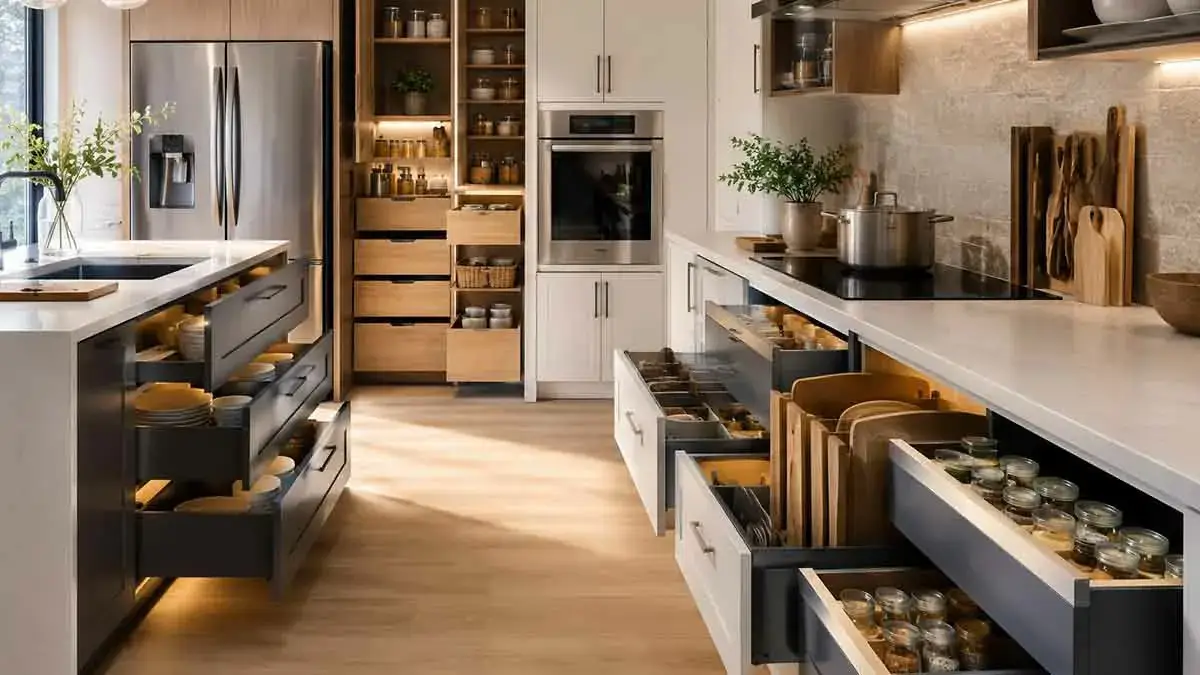
A well-organized kitchen is easier to use, easier to clean, and more comfortable for everyday cooking. However, limited cabinets, crowded countertops, awkward corners, and poorly organized drawers can make even a large kitchen feel short on storage.
The best kitchen storage ideas do not always require a complete remodel. Small improvements such as adding drawer organizers, using vertical cabinet space, installing pull-out shelves, or creating a dedicated pantry area can significantly increase usable storage.
Whether you have a small kitchen, a large family kitchen, or an open-concept space, the goal is the same: make better use of the space you already have.
This guide covers practical kitchen storage ideas for cabinets, drawers, countertops, pantries, corners, walls, and small kitchens, along with strategies for keeping the space organized over time.
Table of Contents
Why Kitchen Storage Matters
Kitchen storage is about more than simply finding a place for everything.
Good storage can improve:
- Accessibility
- Countertop space
- Cooking efficiency
- Organization
- Cleaning
- Safety
- Visual appearance
- Use of available space
When frequently used items are stored close to where they are needed, everyday tasks become easier.
For example, cooking utensils can be stored near the preparation area, pots and pans near the cooking zone, and dishes close to the dishwasher or dining area.
The most effective storage system combines available space with the way your household actually uses the kitchen.
Evaluate Your Existing Kitchen Storage
Before purchasing organizers or adding shelves, evaluate what you already have.
Start by identifying:
- Items you use every day
- Items you use occasionally
- Items you rarely use
- Duplicate items
- Storage areas that are difficult to access
- Cabinets with unused vertical space
- Drawers that need better organization
- Countertops that are regularly overcrowded
Remove or relocate items that are rarely used before adding more storage.
Adding organizers to an overcrowded cabinet will not solve the underlying problem if too many unnecessary items are being stored there.
Use Vertical Space
Vertical space is often one of the most overlooked kitchen storage opportunities.
Instead of using only the lower portion of a cabinet or wall, consider using the full available height.
Options include:
- Tall cabinets
- Shelf risers
- Stackable organizers
- Vertical tray dividers
- Wall-mounted shelves
- Tall pantry units
- Hooks and rails
Store frequently used items at comfortable heights and reserve higher areas for items that are used less often.
In a small kitchen, vertical storage can provide additional capacity without taking up valuable floor space.
Maximize Cabinet Storage
Kitchen cabinets can hold significantly more when their interiors are properly organized.
Useful solutions include:
- Adjustable shelves
- Shelf risers
- Pull-out shelves
- Drawer organizers
- Vertical dividers
- Stackable bins
- Corner organizers
- Under-shelf baskets
Avoid filling cabinets simply because space is available. Items should remain accessible without requiring you to remove several other objects first.
Good cabinet organization should make it easy to see what you own and retrieve what you need.
Add Pull-Out Cabinet Organizers
Deep lower cabinets can provide substantial storage but can also become difficult to access.
Pull-out shelves and organizers allow stored items to move toward you instead of requiring you to reach into the back of the cabinet.
They can be useful for:
- Pots and pans
- Food containers
- Small appliances
- Cleaning supplies
- Pantry items
Choose organizers based on the cabinet’s actual dimensions and weight requirements.
Improve Drawer Storage
Drawers are particularly useful for small kitchen items because their contents can be easier to see and access than items stored in deep cabinets.
Use drawer organizers for:
- Cutlery
- Cooking utensils
- Measuring tools
- Kitchen towels
- Food storage accessories
- Small gadgets
Adjustable dividers can provide flexibility as your storage needs change.
Avoid creating too many small compartments if the items you store require larger spaces.
Use Cabinet Door Storage
The inside of a cabinet door can provide additional storage without changing the cabinet’s footprint.
Depending on the cabinet, you can use door-mounted organizers for:
- Spices
- Cleaning supplies
- Measuring cups
- Cutting boards
- Wraps and bags
- Small kitchen tools
Check the available clearance before installation to ensure the door can close properly.
Make Better Use of Corner Cabinets
Corner cabinets are often among the most difficult areas to organize.
Depending on the cabinet design, useful solutions can include:
- Lazy Susans
- Pull-out corner organizers
- Corner drawers
- Adjustable shelves
- Custom storage inserts
A complicated organizer is not automatically better.
Choose a system that makes the items stored in the corner easier to access rather than simply filling the space.
Organize the Space Under the Sink
The cabinet beneath the sink is often difficult to use because of plumbing connections.
However, it can become valuable storage when organized correctly.
Consider:
- Pull-out bins
- Stackable containers
- Small shelves
- Door-mounted organizers
- Cleaning supply holders
Keep enough clearance around plumbing connections so maintenance remains possible.
Store cleaning products securely and keep potentially hazardous products away from children and pets.
Create a Functional Pantry
A pantry can make food storage much easier, but it does not have to be a large walk-in room.
Depending on the available space, pantry storage can include:
- Tall cabinets
- Pull-out pantry units
- Adjustable shelves
- Food storage bins
- Door-mounted racks
- Labeled containers
Group similar foods together so that frequently used ingredients are easy to locate.
For example, baking ingredients, canned foods, snacks, grains, and breakfast items can each have designated areas.
Use a Pull-Out Pantry
A narrow pull-out pantry can make use of small spaces that might otherwise remain unused.
It can store:
- Canned goods
- Spices
- Bottles
- Dry ingredients
- Sauces
- Snacks
Because the shelves pull forward, items at the back can remain accessible.
Before installing one, verify the available width and the manufacturer’s installation requirements.
Add Open Shelving
Open shelving can provide accessible storage while creating a lighter visual appearance.
It works well for items such as:
- Everyday dishes
- Glassware
- Mugs
- Cookbooks
- Decorative kitchen items
However, open shelves require organization because everything remains visible.
Do not use open shelving as an excuse to keep unnecessary items on display.
Use Wall-Mounted Kitchen Storage
Walls can provide additional storage without consuming much floor space.
Possible solutions include:
- Pegboards
- Rail systems
- Hooks
- Magnetic strips
- Wall-mounted shelves
- Hanging baskets
Use wall storage for items that are frequently used and benefit from easy access.
Avoid covering every available wall with storage because excessive visual clutter can make the kitchen feel crowded.
Create a Coffee or Beverage Station
If your household uses coffee or tea frequently, creating a dedicated beverage area can improve organization.
Store related items together, such as:
- Coffee maker
- Coffee beans
- Tea
- Mugs
- Filters
- Sweeteners
- Spoons
Keeping these items together can prevent them from spreading across multiple cabinets and countertops.
Organize Pots and Pans
Pots and pans are bulky and can quickly consume cabinet space.
Useful storage solutions include:
- Deep drawers
- Pull-out shelves
- Vertical dividers
- Pan organizers
- Wall-mounted racks
- Lid organizers
Store frequently used cookware where it can be accessed without moving large stacks of other items.
Store Baking Supplies Efficiently
Baking ingredients can become difficult to manage when flour, sugar, spices, tools, and baking equipment are scattered throughout the kitchen.
Create a dedicated baking zone where possible.
You can organize:
- Flour
- Sugar
- Baking powder
- Measuring cups
- Measuring spoons
- Mixing bowls
- Baking pans
- Decorating supplies
Clear containers can make ingredients easier to identify, but they are not necessary for every kitchen.
Organize Food Containers
Food storage containers often create unnecessary clutter because containers and lids are difficult to match.
Useful strategies include:
- Nesting containers by size
- Storing lids vertically
- Using drawer dividers
- Keeping containers in a dedicated cabinet
- Removing damaged or mismatched pieces
Choose one consistent storage method rather than allowing containers to spread across multiple cabinets.
Improve Spice Storage
Spices are small but can become surprisingly difficult to organize.
Possible solutions include:
- Drawer spice organizers
- Pull-out racks
- Tiered shelf risers
- Cabinet door racks
- Wall-mounted spice shelves
Store frequently used spices where they are easy to reach.
Check expiration dates periodically and remove spices that are no longer useful.
Organize Cleaning Supplies
Cleaning products should have a dedicated storage area where possible.
The space under the sink is often suitable, but other options include:
- Utility cabinets
- Tall storage cabinets
- Pull-out organizers
- Wall-mounted holders
Keep cleaning products separate from food and cooking ingredients.
Reduce Countertop Clutter
Countertops are valuable work surfaces, so avoid using them as permanent storage for everything you own.
Keep only frequently used items visible when possible.
Consider storing:
- Small appliances
- Cutting boards
- Cooking tools
- Food containers
- Decorative objects
inside cabinets or dedicated storage areas when they are not regularly used.
A clear countertop can make the kitchen feel larger while providing more space for food preparation.
Use a Kitchen Island for Storage
If the kitchen has enough space, an island can provide both workspace and storage.
Depending on its design, an island can include:
- Drawers
- Cabinets
- Open shelves
- Appliance storage
- Recycling bins
- Cookbook storage
However, an island should not be added simply to gain storage.
There must be enough clearance around it for comfortable movement and for cabinet and appliance doors to open properly.
Use a Kitchen Cart
A rolling kitchen cart can provide flexible storage without requiring permanent construction.
It can be used for:
- Small appliances
- Produce
- Cookbooks
- Serving items
- Extra countertop space
- Baking supplies
A cart is particularly useful when you need additional storage but do not want to remodel the cabinetry.
Kitchen Storage Ideas for Small Kitchens
Small kitchens require particularly efficient storage.
Consider:
- Full-height cabinets
- Narrow pull-out pantry units
- Deep drawers
- Wall-mounted storage
- Magnetic storage
- Fold-down surfaces
- Multi-purpose furniture
- Under-shelf baskets
- Cabinet door organizers
Avoid oversized storage furniture that blocks circulation.
In a small kitchen, every storage solution should be evaluated based on how much usable space it provides relative to the floor area it occupies.
Kitchen Storage Ideas for Deep Cabinets
Deep cabinets can hold many items but often create hidden storage.
To make them more practical, consider:
- Pull-out shelves
- Sliding baskets
- Stackable bins
- Shelf risers
- Drawer inserts
- Clear containers
The goal is to avoid creating multiple layers of objects that prevent access to items stored at the back.
Kitchen Storage Ideas for Renters
Renters may not be able to modify cabinets or walls permanently.
Fortunately, several temporary solutions can improve storage.
Options include:
- Removable hooks
- Freestanding shelves
- Rolling carts
- Over-the-door organizers
- Stackable bins
- Countertop organizers
- Removable shelf risers
Choose products that do not damage cabinets, walls, or countertops and follow the property’s rules.
How to Organize Kitchen Storage Step by Step
Step 1: Empty One Storage Area
Do not attempt to reorganize the entire kitchen at once.
Start with one cabinet, drawer, or pantry section.
Step 2: Remove Unnecessary Items
Separate damaged, duplicated, rarely used, and frequently used items.
Step 3: Group Similar Items
Keep related items together.
For example, place baking tools together and cooking utensils in a separate area.
Step 4: Identify Difficult Storage Areas
Look for deep cabinets, corners, high shelves, and spaces that are difficult to access.
Step 5: Choose Appropriate Organizers
Select organizers based on actual measurements rather than buying products first.
Step 6: Store Frequently Used Items Within Easy Reach
Everyday items should not require unnecessary bending, reaching, or moving other objects.
Step 7: Use Higher Areas for Occasional Items
Reserve high shelves and less accessible spaces for items you use less frequently.
Step 8: Clear the Countertops
Move unnecessary items into appropriate storage areas.
Step 9: Label Storage When Helpful
Labels can be particularly useful for pantry bins and food storage categories.
Step 10: Review the System Regularly
Kitchen storage needs change over time.
Periodically remove items you no longer use and adjust the organization system as necessary.
Common Kitchen Storage Mistakes
Buying Organizers Without Measuring
An organizer that does not fit properly can waste more space than it saves.
Measure cabinet widths, depths, heights, and door clearances before purchasing storage products.
Overcrowding Cabinets
More storage does not help if items become impossible to access.
Leave enough room to retrieve items comfortably.
Storing Frequently Used Items Too Far Away
Everyday tools should be located close to the areas where they are used.
Ignoring Vertical Space
Unused space above shelves and cabinets can represent significant storage capacity.
Using Too Much Open Storage
Open shelving can become visually cluttered when too many items are displayed.
Keeping Duplicate Items
Duplicate utensils, containers, and appliances can consume valuable storage.
Forgetting Countertop Space
A kitchen with plenty of cabinets can still feel cramped if the countertops are overloaded.
Choosing Storage Based Only on Appearance
A storage solution should improve accessibility and functionality, not simply look attractive.
Final Thoughts
The best kitchen storage ideas are based on how the kitchen is actually used.
Start by removing unnecessary items and identifying where storage problems occur. Then maximize existing cabinets and drawers, use vertical space, improve difficult corners, organize the pantry, and take advantage of walls and other underused areas.
For small kitchens, prioritize storage solutions that provide useful capacity without reducing circulation. For larger kitchens, focus on creating logical zones that make frequently used items easy to access.
You do not always need new cabinets or a major remodel to improve kitchen storage. With careful organization and a few well-chosen upgrades, you can make better use of the space you already have.
Frequently Asked Questions
How can I add more storage to my kitchen?
You can add storage by using vertical space, installing pull-out organizers, improving drawer organization, using cabinet doors, adding shelves, and making better use of corners and pantry areas.
How do I organize a small kitchen?
Start by removing items you rarely use, then maximize vertical storage, use deep drawers and pull-outs, keep countertops clear, and choose compact storage solutions that do not interfere with movement.
What is the best way to organize kitchen cabinets?
Group similar items together and keep frequently used items in easily accessible locations. Use shelf risers, pull-outs, dividers, and organizers where they improve access.
How can I make better use of deep kitchen cabinets?
Pull-out shelves, sliding baskets, stackable containers, and shelf risers can make deep cabinets easier to access and reduce hidden or wasted space.
How do I organize pots and pans?
Use deep drawers, pull-out shelves, vertical dividers, or dedicated pan organizers. Store the cookware you use most often in the easiest-to-reach location.
How can I reduce kitchen countertop clutter?
Keep only frequently used items on the counter and store small appliances, tools, and supplies in designated cabinets or storage areas when they are not needed.
Are open shelves a good kitchen storage solution?
Open shelves can provide accessible storage and make a kitchen feel visually lighter, but they require regular organization and cleaning. They work best when used selectively.
How can I improve pantry storage?
Group similar foods together, use adjustable shelves or bins, take advantage of vertical space, and consider a pull-out pantry when a narrow storage area is available.
How can I add kitchen storage without remodeling?
Use removable hooks, freestanding shelves, rolling carts, shelf risers, cabinet organizers, over-the-door storage, and countertop organizers.
What should I store in high kitchen cabinets?
Use high or difficult-to-access cabinets for items that are used occasionally, such as seasonal serving dishes, specialty cookware, or rarely used appliances.