
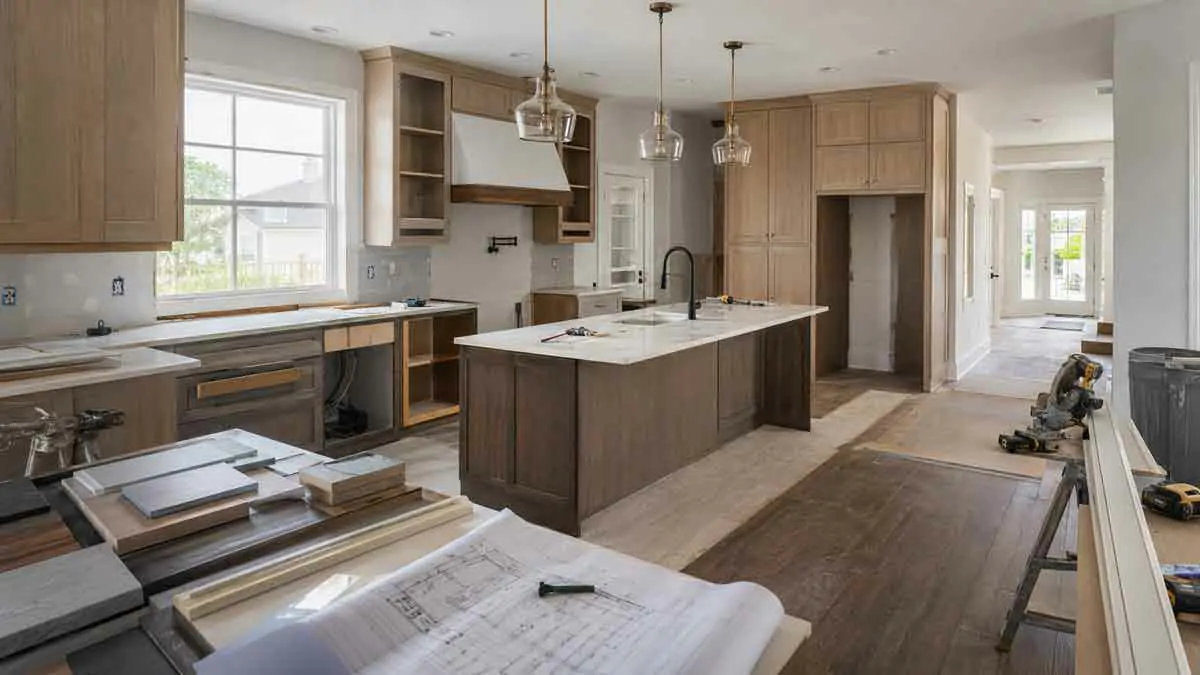
Understanding kitchen renovation cost is one of the most important steps before starting a kitchen remodel. A kitchen renovation can range from a relatively affordable cosmetic update to a major reconstruction involving new cabinets, countertops, flooring, plumbing, electrical work, appliances, and structural changes.
The total cost depends on the size of the kitchen, the condition of the existing space, the quality of materials, the extent of the renovation, labor rates, and the location of the home.
A small kitchen with minor cosmetic improvements may cost significantly less than a complete kitchen remodel that changes the layout and replaces most major components.
This guide explains how much a kitchen renovation costs, what affects the price, how the budget is typically divided, the difference between a cosmetic update and a full remodel, and how to control costs without sacrificing important improvements.
Table of Contents
How Much Does a Kitchen Renovation Cost?
There is no single price for a kitchen renovation because projects vary considerably in scope.
As a general planning framework:
- Cosmetic kitchen update: a few thousand dollars
- Small or partial renovation: several thousand to the low tens of thousands
- Mid-range kitchen remodel: often tens of thousands
- High-end or major kitchen renovation: can reach well into the tens of thousands or more
These are broad planning ranges rather than fixed market prices.
The actual cost depends on the materials selected, labor rates, kitchen size, project complexity, location, and whether the existing layout remains unchanged.
A renovation that keeps the plumbing and electrical layout in place can cost substantially less than one that relocates major systems.
Average Kitchen Renovation Cost by Project Type
The most useful way to estimate kitchen renovation cost is to classify the project according to its scope.
Cosmetic Kitchen Update
A cosmetic renovation focuses primarily on appearance.
It may include:
- Painting walls
- Repainting cabinets
- Replacing cabinet hardware
- Installing new lighting
- Replacing a backsplash
- Updating faucets
- Adding decorative features
This approach can significantly improve the appearance of a kitchen without replacing every major component.
Partial Kitchen Renovation
A partial renovation may replace selected components while keeping others.
For example:
- New countertops
- New backsplash
- Updated appliances
- New flooring
- Cabinet refinishing
- Improved lighting
This can provide a substantial improvement without the cost of a complete remodel.
Full Kitchen Remodel
A full remodel may involve:
- New cabinets
- New countertops
- New flooring
- New appliances
- Plumbing changes
- Electrical upgrades
- Lighting
- Backsplash
- Painting
- Layout modifications
Full remodels are considerably more expensive because they involve more labor, materials, and coordination.
High-End Kitchen Renovation
Luxury kitchens may include:
- Custom cabinetry
- Premium countertops
- High-end appliances
- Specialty lighting
- Custom millwork
- Large islands
- Premium flooring
- Complex layouts
The cost can increase rapidly as customization and material quality increase.
What Determines Kitchen Renovation Cost?
Several factors have a major influence on the final price.
Kitchen Size
A larger kitchen generally requires more:
- Cabinets
- Flooring
- Countertop material
- Paint
- Lighting
- Labor
However, kitchen size is only one part of the cost equation.
A small kitchen can still be expensive if it requires extensive plumbing, electrical, structural, or custom work.
Layout Changes
Keeping the existing layout is often more economical.
Moving:
- Sinks
- Dishwashers
- Gas appliances
- Electrical outlets
- Lighting
- Walls
can increase labor and installation costs.
Cabinet Selection
Cabinets can represent one of the largest portions of a kitchen renovation budget.
Options generally include:
- Stock cabinets
- Semi-custom cabinets
- Custom cabinets
Custom cabinetry typically costs more because it requires additional design, manufacturing, and installation.
Countertops
Countertop prices vary according to material, thickness, edge treatment, size, fabrication, and installation.
Common materials include:
- Laminate
- Butcher block
- Ceramic or porcelain
- Quartz
- Granite
- Natural stone
The material itself is only part of the total cost. Fabrication, cutouts, delivery, and installation can also contribute significantly.
Appliances
Replacing multiple appliances can quickly increase the renovation budget.
Potential appliances include:
- Refrigerator
- Range
- Cooktop
- Oven
- Dishwasher
- Microwave
- Range hood
Appliance prices vary dramatically between basic, mid-range, and premium models.
Labor
Labor can account for a substantial portion of total kitchen renovation cost.
The project may require:
- General contractor
- Carpenter
- Electrician
- Plumber
- Flooring installer
- Tile installer
- Painter
- Countertop installer
The more trades involved, the more complicated the scheduling and coordination can become.
Kitchen Renovation Cost by Kitchen Size
Kitchen size can provide a useful starting point, but it should not be the only basis for estimating cost.
Small Kitchen
A small kitchen typically requires fewer materials, but costs can still be significant if the renovation includes custom cabinets, premium appliances, or major system changes.
Medium Kitchen
A medium-sized kitchen offers more space for cabinets, countertops, flooring, and appliances, increasing material and labor requirements.
Large Kitchen
Large kitchens generally require more materials and labor.
Large islands, extensive cabinetry, multiple lighting zones, and premium finishes can increase costs further.
The relationship between size and cost is not perfectly linear because some major expenses, such as appliances and plumbing connections, remain relatively similar regardless of floor area.
Kitchen Renovation Cost Breakdown
A useful budget should separate the project into individual categories.
Cabinet Cost
Cabinets may account for a significant percentage of the total budget.
Costs depend on:
- Material
- Construction quality
- Number of cabinets
- Door style
- Hardware
- Interior accessories
- Customization
- Installation
If the existing cabinet boxes are in good condition, refinishing or repainting them can reduce the overall renovation cost.
Countertop Cost
Countertop costs depend on:
- Material
- Surface area
- Thickness
- Edge profile
- Sink cutouts
- Cooktop cutouts
- Fabrication
- Installation
Simple countertop designs generally cost less than highly customized installations.
Appliance Cost
Appliance costs can range from relatively modest to very high.
Before purchasing appliances, verify:
- Dimensions
- Electrical requirements
- Ventilation requirements
- Plumbing connections
- Cabinet clearances
Choosing appliances after cabinetry has been finalized can create compatibility problems.
Flooring Cost
Kitchen flooring costs depend on:
- Material
- Kitchen size
- Subfloor condition
- Installation method
- Removal of existing flooring
Common options include:
- Vinyl
- Laminate
- Tile
- Engineered wood
- Hardwood
Subfloor repairs can add unexpected costs.
Lighting and Electrical Cost
Kitchen renovations often involve electrical improvements.
Potential work includes:
- New outlets
- Under-cabinet lighting
- Ceiling fixtures
- Pendant lights
- Dedicated appliance circuits
- Switches
- Recessed lighting
Electrical costs increase when wiring or circuits must be significantly modified.
Plumbing Cost
Keeping plumbing in approximately the same location can help control costs.
Moving sinks, dishwashers, water lines, or drains can require additional labor and potentially more extensive construction.
Painting Cost
Painting is generally a smaller part of the total budget but can have a noticeable visual impact.
The cost depends on:
- Wall condition
- Preparation
- Number of coats
- Ceiling work
- Trim
- Cabinet painting
Surface preparation can be as important as the paint itself.
Backsplash Cost
Backsplash cost depends on:
- Material
- Pattern
- Surface area
- Tile size
- Layout complexity
- Installation labor
Simple tile layouts generally require less installation time than intricate patterns.
Labor Cost
Labor can include multiple specialized trades.
A complete renovation may require coordination between several contractors, and each stage can depend on the previous one.
For example:
Demolition → Plumbing/Electrical → Wall Preparation → Flooring → Cabinets → Countertops → Backsplash → Appliances → Final Installation
Poor scheduling can increase labor costs even when material costs remain unchanged.
Permit and Inspection Costs
Some kitchen renovations require permits or inspections, particularly when the project involves:
- Structural modifications
- New electrical circuits
- Electrical panel work
- Plumbing relocation
- Gas-related work
- Significant building changes
Requirements vary by jurisdiction.
Check local requirements before construction begins rather than assuming a permit is unnecessary.
Permit fees are usually a smaller part of the total project cost, but delays caused by missing approvals can be much more expensive.
Small Kitchen Renovation Cost
A small kitchen does not necessarily mean a cheap renovation.
Small kitchens can still become expensive when they involve:
- Custom cabinets
- Premium countertops
- High-end appliances
- Plumbing relocation
- Electrical upgrades
- Structural changes
For a limited budget, keeping the existing layout is often one of the most effective ways to reduce costs.
You can also prioritize the components that have the greatest visual or functional impact.
Large Kitchen Renovation Cost
Large kitchens typically require more materials and labor.
Costs can increase because of:
- Larger cabinet runs
- Larger countertops
- Bigger islands
- More flooring
- Additional lighting
- More appliances
- More complicated layouts
Large kitchens can also involve more extensive electrical and ventilation requirements.
Cosmetic Kitchen Renovation Cost
A cosmetic renovation is usually the most budget-friendly approach.
Possible improvements include:
- Cabinet painting
- New hardware
- New faucet
- Updated lighting
- New backsplash
- Wall painting
- Decorative shelving
- Minor flooring updates
The goal is to improve appearance without rebuilding the kitchen.
This approach is particularly useful when the existing cabinets, plumbing, electrical systems, and layout are still functional.
Mid-Range Kitchen Renovation Cost
A mid-range remodel usually replaces several major components without necessarily introducing extensive structural changes.
It may include:
- New cabinets
- New countertops
- Updated appliances
- New flooring
- Lighting improvements
- Backsplash
- Painting
Keeping the existing layout can make this type of renovation more predictable.
Full Kitchen Remodel Cost
A full kitchen remodel can involve nearly every part of the room.
Potential work includes:
- Demolition
- Structural modifications
- Plumbing relocation
- Electrical upgrades
- New cabinets
- New countertops
- New flooring
- New appliances
- Lighting
- Ventilation
- Backsplash
- Painting
- Final installation
Because so many trades may be involved, careful planning is essential.
What Makes a Kitchen Renovation More Expensive?
Several choices can significantly increase the final cost.
Moving Plumbing
Relocating sinks, drains, and water lines can require additional construction.
Changing the Layout
Removing walls or changing the kitchen footprint can introduce structural and engineering requirements.
Custom Cabinets
Custom cabinetry requires additional design and manufacturing.
Premium Materials
Luxury countertops, flooring, appliances, and fixtures can increase the budget quickly.
Poor Existing Conditions
Problems hidden behind walls, floors, or cabinets may require additional repairs.
Extensive Electrical Work
Older homes may require electrical upgrades before modern kitchen appliances can be installed safely.
Complex Designs
Intricate tile patterns, unusual cabinet configurations, and custom details increase labor.
Last-Minute Changes
Changing materials or designs after construction begins can result in additional labor, waste, and delays.
How Much Should You Budget for a Kitchen Renovation?
Start with the scope rather than selecting a random budget number.
Create a preliminary list of:
- Cabinets
- Countertops
- Appliances
- Flooring
- Lighting
- Electrical
- Plumbing
- Backsplash
- Painting
- Labor
- Permits
- Cleanup
Then obtain realistic quotes for the work involved.
Separate must-have improvements from nice-to-have upgrades.
For example:
Must-Have
- Damaged cabinets
- Unsafe electrical components
- Plumbing repairs
- Poor flooring
- Nonfunctional appliances
Nice-to-Have
- Premium hardware
- Decorative lighting
- Luxury finishes
- Custom storage accessories
- High-end appliances when existing ones are functional
This makes it easier to reduce the scope if the initial estimate exceeds your budget.
How to Reduce Kitchen Renovation Cost
You do not necessarily need to reduce quality to lower the cost.
Keep the Existing Layout
Avoid unnecessary plumbing and electrical relocation.
Refinish Instead of Replace
If cabinets are structurally sound, repainting or refinishing them may be considerably less expensive than replacing them.
Compare Materials
Evaluate multiple countertop, flooring, backsplash, and cabinet options.
Avoid Unnecessary Customization
Custom dimensions and specialty features can increase both material and labor costs.
Reuse Functional Appliances
If existing appliances are still reliable and fit the updated design, keeping them can reduce costs.
Prioritize High-Impact Improvements
Spend more on components that strongly affect function, durability, or appearance.
Plan Everything Before Construction
Last-minute changes are a common source of additional expense.
Where You Should Not Cut Costs
Some savings are not worth the risk.
Avoid compromising on:
- Electrical safety
- Plumbing integrity
- Structural work
- Waterproofing
- Ventilation
- Proper installation
- Necessary permits
- Qualified professional work where required
Saving money on a critical system can create much larger costs later.
DIY vs Professional Kitchen Renovation
Some kitchen improvements may be suitable for capable homeowners.
DIY tasks may include:
- Painting
- Cabinet hardware
- Simple decorating
- Some demolition
- Certain shelving projects
Professional help is generally more appropriate for:
- Electrical modifications
- Plumbing relocation
- Gas-related work
- Structural changes
- Complex cabinetry
- Countertop fabrication and installation
- Major flooring preparation
A hybrid approach can reduce labor costs while keeping specialized work in professional hands.
Kitchen Renovation Contingency Budget
Unexpected costs are common during renovation.
Potential problems include:
- Hidden water damage
- Damaged subfloors
- Outdated wiring
- Plumbing problems
- Structural issues
- Material shortages
- Changes required by existing conditions
Maintain a contingency reserve rather than allocating every dollar to planned improvements.
The appropriate amount depends on the age and condition of the home and the complexity of the renovation.
Older homes and projects involving demolition generally require greater financial flexibility.
How Long Does a Kitchen Renovation Take?
The construction portion of a kitchen renovation can range from several weeks to several months depending on the scope.
A simple cosmetic update may be completed relatively quickly.
A full remodel involving:
- Demolition
- Plumbing
- Electrical
- Cabinets
- Countertops
- Flooring
- Appliances
will generally take considerably longer.
Material lead times can also affect the schedule.
Custom cabinets, countertops, specialty fixtures, and appliances should be planned early so they do not interrupt construction.
Kitchen Renovation Cost Checklist
Before starting your project, estimate:
Design and Planning
- Design
- Measurements
- Plans
- Contractor estimates
Construction
- Demolition
- Structural work
- Electrical
- Plumbing
- HVAC or ventilation
- Wall repairs
Materials
- Cabinets
- Countertops
- Flooring
- Backsplash
- Paint
- Hardware
- Fixtures
Appliances
- Refrigerator
- Oven or range
- Dishwasher
- Microwave
- Range hood
Additional Costs
- Permits
- Inspections
- Waste disposal
- Delivery
- Temporary storage
- Final cleaning
- Contingency
A detailed list makes it easier to identify missing costs before construction begins.
Final Thoughts
Kitchen renovation cost depends primarily on the scope of the project, materials, labor, kitchen size, existing conditions, and whether major systems or the layout need to change.
A cosmetic update can provide meaningful improvements without the expense of a complete remodel. A full renovation can deliver a completely different kitchen but requires substantially more planning, money, and coordination.
The most effective way to control costs is to define the scope before construction, compare material options, keep the existing layout when practical, order materials early, and maintain a contingency for unexpected problems.
Do not choose materials based only on their initial price. Consider durability, installation requirements, maintenance, and how the material fits your overall budget.
Most importantly, prioritize safety, structural integrity, plumbing, electrical systems, and other critical work before spending heavily on decorative upgrades.
A well-planned kitchen renovation can improve functionality, comfort, appearance, and long-term usability while keeping the project financially manageable.
Frequently Asked Questions
How much does a kitchen renovation cost?
Kitchen renovation costs vary widely depending on the scope, size, materials, labor, location, and existing conditions. Cosmetic updates can cost relatively little, while full or high-end remodels can cost tens of thousands of dollars or more.
What is the most expensive part of a kitchen renovation?
Cabinetry, labor, appliances, and countertops can each represent significant portions of a renovation budget. The most expensive category depends on the project’s scope and material selections.
Is it cheaper to renovate or replace a kitchen?
A cosmetic or partial renovation is usually less expensive than completely rebuilding a kitchen. If the existing layout, cabinets, and major systems are still functional, selective upgrades may provide better value.
How can I reduce kitchen renovation costs?
Keeping the existing layout, refinishing usable cabinets, comparing materials, reusing functional appliances, avoiding unnecessary customization, and finalizing decisions before construction can help reduce costs.
How much should I spend on a kitchen renovation?
There is no universal amount. Establish your budget based on the home’s condition, your goals, the scope of work, and how long you plan to remain in the property. Get multiple project-specific estimates before committing.
Does a small kitchen cost less to renovate?
Not necessarily. A small kitchen uses fewer materials, but complex electrical, plumbing, cabinetry, or premium appliance choices can still make the renovation expensive.
Is a kitchen renovation worth the cost?
It can be worthwhile when it solves functional problems, improves the condition of the kitchen, increases comfort, or supports long-term property goals. The value depends on the quality and scope of the renovation.
Should I replace cabinets or refinish them?
If cabinet boxes are structurally sound and the layout works well, refinishing or repainting may be a cost-effective alternative to replacement. Damaged or poorly designed cabinets may justify replacement.
Do I need permits for a kitchen renovation?
Some kitchen renovations require permits, particularly when structural, electrical, plumbing, gas, or other regulated work is involved. Requirements vary by location, so check local regulations before starting.
How much should I set aside for unexpected kitchen renovation costs?
Keep a contingency reserve appropriate to the project’s complexity and the condition of the home. Renovations involving older properties, extensive demolition, or major system changes generally require more financial flexibility.
Can I renovate my kitchen myself?
Some cosmetic tasks may be suitable for DIY, but electrical, plumbing, structural, gas-related, and other specialized work may require professional expertise or permits. A hybrid approach can combine DIY work with professional services.
How long does a kitchen renovation take?
A cosmetic update may take days or weeks, while a substantial kitchen remodel can take several weeks or months. The final timeline depends on the scope, contractor schedule, inspections, material availability, and unexpected problems.