
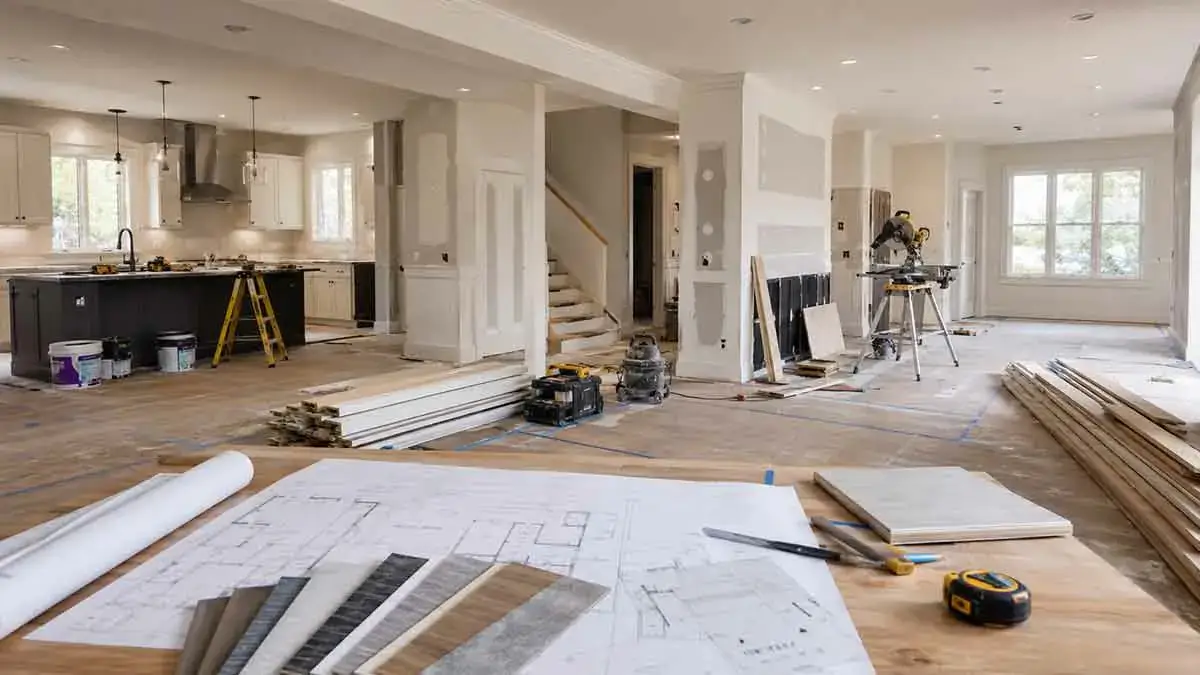
Understanding whole house renovation cost is essential before starting a project that affects most or all of an existing home. Renovating an entire house can involve kitchens, bathrooms, bedrooms, living spaces, flooring, electrical systems, plumbing, HVAC, insulation, windows, doors, roofing, and exterior improvements.
Unlike a single-room renovation, a whole-house project involves multiple systems that can affect one another. A change to the layout may require electrical, plumbing, HVAC, flooring, and drywall work at the same time. The condition of the property can also reveal additional problems once demolition begins.
This guide explains what determines whole house renovation cost, how to estimate the budget, which areas typically require the most planning, how to prioritize work, and how to control expenses throughout the project.
Table of Contents
What Is a Whole House Renovation?
A whole house renovation involves improving multiple rooms, building components, or major systems throughout an existing property.
Depending on the home’s condition and the homeowner’s goals, the project may include:
- Kitchen renovation
- Bathroom renovation
- Bedroom updates
- Living room improvements
- Flooring replacement
- Interior painting
- Electrical upgrades
- Plumbing upgrades
- HVAC improvements
- Insulation
- Window and door replacement
- Roofing
- Exterior repairs
- Structural modifications
A whole-house renovation does not automatically mean replacing every component.
If an existing system or finish is safe, functional, and appropriate for the home, keeping it may allow more of the budget to be directed toward areas that actually need improvement.
The most important first step is therefore to determine the difference between necessary repairs, functional improvements, and optional upgrades.
How Much Does a Whole House Renovation Cost?
There is no single price that applies to every whole-house renovation.
The final budget can vary according to:
- Home size
- Property condition
- Number of rooms affected
- Renovation scope
- Labor rates
- Material selections
- Layout changes
- Structural work
- Electrical requirements
- Plumbing requirements
- HVAC work
- Permit requirements
- Professional fees
- Project duration
- Location
A home that needs painting, flooring, lighting, and fixture updates throughout may have a very different budget from a property requiring structural modifications and replacement of major building systems.
For this reason, online cost averages are best used as preliminary planning references, not as a substitute for project-specific estimates.
The most reliable budget is based on the actual condition of the property and a clearly defined scope of work.
Whole House Renovation Cost Per Square Foot
Cost per square foot can be useful for developing an early renovation budget.
The basic calculation is:
Estimated Renovation Cost = Home Size × Estimated Cost Per Square Foot
For example, if a hypothetical 1,800-square-foot home were estimated at $100 per square foot:
1,800 × $100 = $180,000
This is only a mathematical example and should not be interpreted as a typical renovation price.
Two homes with identical floor areas can have very different renovation costs.
One may have:
- A sound structure
- Updated electrical wiring
- Functional plumbing
- Efficient HVAC
- Good windows
while another may require:
- Structural repairs
- Electrical replacement
- Plumbing work
- HVAC replacement
- Insulation improvements
- New windows
- Major layout changes
Square footage is therefore useful for establishing a starting framework, but it should not be the only factor used to estimate the project.
What Is Included in Whole House Renovation Cost?
A whole-house renovation budget can include many different categories.
Planning and Design
Depending on the scope, professional services may include:
- Architectural plans
- Interior design
- Structural engineering
- Property measurements
- Site assessments
- Project planning
- Permit preparation
These costs should be considered before construction begins rather than added later.
Demolition
Demolition may involve removing:
- Flooring
- Cabinets
- Fixtures
- Drywall
- Ceilings
- Doors
- Interior walls
- Appliances
The demolition budget may also include labor, debris removal, dumpster rental, transportation, and disposal fees.
Extensive demolition can expose hidden conditions that were not visible during the initial assessment.
Structural Work
Structural work may include:
- Removing load-bearing walls
- Reinforcing framing
- Repairing damaged floors
- Foundation repairs
- Roof structure repairs
- Enlarging openings
- Modifying structural supports
Structural changes can have a significant effect on both cost and schedule because they may require engineering, permits, specialized labor, and additional finishing work.
Electrical Work
A whole-house renovation can provide an opportunity to address:
- Outdated wiring
- Electrical panel capacity
- Outlets
- Switches
- Lighting
- Dedicated circuits
- Smoke and carbon monoxide detectors
- Smart home wiring
Electrical work is often easier to complete while walls and ceilings are already open.
Plumbing
Plumbing work may include:
- Replacing old pipes
- Repairing leaks
- Moving fixtures
- Installing new fixtures
- Updating supply lines
- Improving drainage
- Replacing shutoff valves
Moving plumbing fixtures generally creates more construction work than replacing fixtures in their existing locations.
HVAC
HVAC work may include:
- Equipment replacement
- Ductwork
- Ventilation
- Thermostats
- Zoning
- Air distribution
- Efficiency improvements
HVAC planning should account for the home’s size, insulation, windows, air sealing, and overall building performance.
Replacing equipment without considering the rest of the building can result in an inefficient system.
Insulation and Air Sealing
A renovation can be an opportunity to improve the building envelope.
Possible improvements include:
- Attic insulation
- Wall insulation
- Floor insulation
- Air sealing
- Weatherization
These improvements can support better indoor comfort and reduce unnecessary energy loss.
Windows and Doors
Window and exterior door replacement can improve:
- Energy efficiency
- Comfort
- Security
- Noise control
- Appearance
However, replacement should be based on condition, performance, and project goals rather than appearance alone.
Whole House Renovation Cost by Room
Breaking the project into individual areas can make the overall budget easier to understand.
Kitchen Renovation
A kitchen renovation may include:
- Cabinets
- Countertops
- Appliances
- Flooring
- Lighting
- Plumbing
- Electrical
- Backsplash
- Painting
One of the most effective ways to control construction complexity is to keep the existing kitchen layout when it already works well.
Moving sinks, appliances, gas lines, or other services can increase labor and installation requirements.
Bathroom Renovation
Bathroom renovation may include:
- Shower or tub
- Toilet
- Vanity
- Sink
- Tile
- Waterproofing
- Plumbing
- Electrical
- Ventilation
Waterproofing deserves particular attention because installation problems can lead to hidden moisture damage and expensive repairs.
Bedroom Renovation
Bedroom improvements may include:
- Flooring
- Paint
- Lighting
- Doors
- Closets
- Windows
- Built-in storage
Bedrooms generally involve fewer plumbing and mechanical changes than kitchens and bathrooms, which can make their scope easier to control.
Living Room Renovation
Living areas may involve:
- Flooring
- Painting
- Lighting
- Built-in storage
- Fireplace improvements
- Windows
- Doors
- Ceiling improvements
Removing walls or modifying openings can increase the cost substantially when structural work is required.
Basement Renovation
Basement renovation may require:
- Waterproofing
- Moisture control
- Insulation
- Flooring
- Electrical
- HVAC
- Plumbing
- Ceiling work
- Egress improvements
Moisture problems should be addressed before finishing the basement.
Finishing over an unresolved water problem can lead to damage and additional renovation costs later.
Attic Renovation
An attic project may include:
- Insulation
- Ventilation
- Flooring
- Electrical
- HVAC
- Structural modifications
- Stairs
- Windows
Available headroom, roof structure, access, and local building requirements can determine whether an attic can be converted into usable living space.
Major Factors That Affect Whole House Renovation Cost
1. Home Size
Larger homes generally require more:
- Materials
- Labor
- Flooring
- Paint
- Fixtures
- Construction time
However, size alone does not determine the final budget.
2. Existing Property Condition
The condition of the home can be one of the most important cost variables.
Potential problems include:
- Water damage
- Structural deterioration
- Outdated wiring
- Plumbing deterioration
- Roof damage
- Poor insulation
- Moisture problems
A property with significant deferred maintenance may require substantial repair before cosmetic improvements can begin.
3. Layout Changes
Changing the floor plan can increase costs because it may involve:
- Structural engineering
- New walls
- Electrical relocation
- Plumbing relocation
- HVAC modifications
- Flooring replacement
- Drywall
- Painting
Keeping the existing layout where practical can simplify the renovation.
4. Material Selection
Materials can range from economical to premium.
When choosing materials, consider:
- Durability
- Maintenance
- Function
- Appearance
- Installation requirements
- Expected lifespan
- Budget
The most expensive option is not necessarily the best option for every part of the home.
5. Labor
Whole-house renovations can require multiple trades, such as:
- General contractors
- Electricians
- Plumbers
- HVAC technicians
- Carpenters
- Drywall installers
- Flooring installers
- Painters
- Roofers
The more trades involved, the greater the need for coordination and scheduling.
6. Location
Local pricing can vary because of:
- Labor rates
- Material availability
- Transportation
- Building regulations
- Permit requirements
- Contractor demand
A renovation estimate from one market may not accurately represent costs in another.
7. Project Duration
Longer projects can create additional expenses related to:
- Labor
- Temporary accommodation
- Storage
- Financing
- Contractor overhead
- Repeated deliveries
Project duration should therefore be considered when creating the total renovation budget.
8. Permits and Inspections
Depending on the jurisdiction and scope of work, permits and inspections may be required.
Requirements can differ for:
- Structural modifications
- Electrical work
- Plumbing
- HVAC
- Additions
- Exterior changes
Verify local requirements before construction begins.
Cosmetic vs Full Whole House Renovation
A whole-house renovation can range from relatively simple cosmetic work to extensive reconstruction.
Cosmetic Renovation
A cosmetic project may focus on:
- Painting
- Flooring
- Lighting
- Fixtures
- Hardware
- Minor repairs
The existing structure and major systems generally remain in place.
Full Renovation
A more extensive renovation may include:
- Structural modifications
- Electrical upgrades
- Plumbing replacement
- HVAC improvements
- Insulation
- Window replacement
- Layout changes
- Kitchen renovation
- Bathroom renovation
- Exterior improvements
The difference between these scopes can create a substantial difference in total cost.
Whole House Renovation Cost by Project Scope
Rather than relying on a single cost category, it can be useful to define the project according to its scope.
Basic Whole House Renovation
A basic renovation may focus on:
- Paint
- Flooring
- Fixtures
- Lighting
- Minor repairs
Mid-Range Whole House Renovation
A mid-range project may include:
- Kitchen renovation
- Bathroom renovations
- Selected system upgrades
- Window improvements
- Lighting upgrades
- Storage improvements
- Interior finishes
Extensive Whole House Renovation
An extensive renovation may involve:
- Structural modifications
- Major electrical work
- Plumbing replacement
- HVAC replacement
- Insulation improvements
- Window and door replacement
- Multiple kitchen and bathroom renovations
- Premium finishes
- Exterior improvements
These categories are useful for planning but should not be treated as fixed price ranges.
The actual budget depends on the specific property and scope.
How to Build a Whole House Renovation Budget
Start with a complete assessment of the property.
For every room and major system, identify:
- What must be repaired
- What needs replacement
- What can remain
- What you want to improve
- What is optional
Then organize the expected costs into categories.
| Category | Estimated Cost | Priority |
|---|---|---|
| Structural work | — | High |
| Roof and exterior | — | High |
| Electrical | — | High |
| Plumbing | — | High |
| HVAC | — | High |
| Insulation | — | Medium |
| Kitchen | — | Medium |
| Bathrooms | — | Medium |
| Flooring | — | Medium |
| Painting | — | Low |
| Decorative upgrades | — | Low |
Obtain project-specific estimates before assigning final numbers to these categories.
It is also useful to separate the budget into:
Required Work + Desired Improvements + Optional Upgrades + Contingency
This makes it easier to reduce spending if the initial estimates exceed your available budget.
How to Prioritize Whole House Renovation Projects
A practical priority order is:
- Safety problems
- Water intrusion and moisture
- Structural repairs
- Roof and exterior protection
- Electrical systems
- Plumbing
- HVAC
- Insulation and building-envelope improvements
- Layout and functionality
- Flooring
- Cabinets and fixtures
- Painting
- Decorative improvements
This is not a universal construction sequence.
The actual order should be determined by the property’s condition and the planned work.
The key principle is to resolve problems that can damage the home or create safety risks before spending heavily on cosmetic finishes.
Renovation Sequence for a Whole House
A typical whole-house renovation may follow a sequence such as:
Planning → Permits → Demolition → Structural Work → Plumbing and Electrical → HVAC → Insulation → Drywall → Flooring → Cabinets → Fixtures → Painting → Final Finishes
The exact sequence can vary.
For example, flooring may need to be completed at a different point depending on the material and cabinet installation plan.
The main principle is to complete concealed systems and major construction before vulnerable finished surfaces are installed.
Why Renovation Sequencing Matters
Poor sequencing can create unnecessary costs.
Examples include:
- Damaging newly installed flooring
- Repainting walls after electrical work
- Removing newly installed fixtures
- Repeating installation work
- Delaying contractors
- Increasing material waste
Good coordination reduces rework and protects completed portions of the renovation.
Before work begins, contractors should understand which tasks depend on the completion of other trades.
Whole House Renovation Timeline and Cost
The timeline of a whole-house renovation depends heavily on the scope.
Projects can take longer when they involve:
- Multiple rooms
- Structural modifications
- Several contractors
- Permit approvals
- Inspections
- Custom materials
- Long material lead times
- Unexpected property conditions
If the home cannot be occupied during construction, temporary accommodation and storage can also become part of the overall project cost.
When planning your budget, consider the expected home renovation timeline as well as construction expenses.
Should You Renovate the Whole House at Once?
Renovating the entire property at once is not always the best approach.
A whole-house renovation may make sense when:
- Several systems need work
- Major demolition is already required
- Multiple upgrades can be coordinated
- The home will be difficult to occupy during construction
- You have sufficient funds
- You plan to remain in the property long term
A phased approach may be better when:
- The budget is limited
- Only certain rooms require immediate work
- The house can remain functional
- You want to reduce disruption
- Some improvements can safely wait
The right approach depends on both the property’s needs and your financial situation.
How to Phase a Whole House Renovation
A large renovation can be divided into logical stages.
Phase 1: Assessment and Planning
Evaluate the property and establish the complete scope.
Identify:
- Required repairs
- System upgrades
- Desired improvements
- Optional work
Phase 2: Critical Repairs
Address:
- Structural problems
- Roof issues
- Water intrusion
- Safety concerns
- Major exterior problems
Phase 3: Major Systems
Complete:
- Electrical
- Plumbing
- HVAC
- Insulation
- Other concealed work
Phase 4: Major Rooms
Renovate high-priority areas such as:
- Kitchen
- Bathrooms
- Other rooms requiring substantial work
Phase 5: Interior Finishes
Complete:
- Drywall
- Flooring
- Doors
- Trim
- Painting
Phase 6: Final Improvements
Finish:
- Lighting
- Hardware
- Storage
- Decorative details
Phasing can spread expenses over time while maintaining a logical construction strategy.
Contingency for Whole House Renovation
A contingency reserve is particularly important for whole-house renovations.
Unexpected expenses may result from:
- Hidden water damage
- Structural deterioration
- Outdated wiring
- Plumbing problems
- Additional demolition
- Material changes
- Inspection requirements
- Unforeseen site conditions
Older homes and projects involving extensive demolition can carry greater uncertainty.
The contingency should be treated as protection against unknown conditions rather than money available for optional upgrades.
DIY vs Professional Whole House Renovation
DIY work can reduce labor expenses when the task is appropriate for your skills and circumstances.
Potential DIY tasks may include:
- Painting
- Basic preparation
- Some demolition
- Simple finishing work
However, specialized work involving:
- Structural systems
- Electrical
- Plumbing
- Gas
- HVAC
may require qualified professionals and, depending on local regulations, permits or inspections.
The goal does not have to be completing the entire renovation yourself.
A practical approach is to identify tasks you can perform safely and competently while hiring qualified professionals for specialized work.
How to Reduce Whole House Renovation Cost
Keep the Existing Layout When Practical
Keeping kitchens, bathrooms, and major systems in their current locations can reduce construction complexity.
Reuse Functional Components
If an existing component is safe and in good condition, consider keeping it.
Potential examples include:
- Doors
- Flooring
- Cabinets
- Fixtures
- Windows
Replacing something simply because it is not new can unnecessarily increase the budget.
Choose Materials Strategically
Premium materials do not need to be used throughout the entire property.
Allocate more of the budget to areas where durability, performance, or daily use justifies the additional expense.
Compare Detailed Contractor Estimates
Do not compare contractors using the total price alone.
Review:
- Scope
- Labor
- Materials
- Permits
- Disposal
- Timeline
- Warranty
- Exclusions
A lower initial estimate can become more expensive if important work has been excluded.
Phase the Renovation
If immediate whole-house completion is not necessary, phasing can reduce financial pressure.
Avoid Unnecessary Design Changes
Changes during construction can result in:
- Additional labor
- Material waste
- Delays
- Rework
Finalize major design decisions before construction begins whenever possible.
Whole House Renovation Cost vs Moving
A major renovation should be compared with the financial and practical implications of moving.
Consider:
- Renovation cost
- Purchase price of another property
- Moving expenses
- Closing costs
- Financing
- Real estate fees
- Immediate repairs in the new property
Also consider factors that are difficult to express purely in dollars, such as:
- Location
- Neighborhood
- Lot
- Commute
- Existing property features
- Long-term plans
Renovation may be attractive when you like the location and the existing property provides a strong foundation for improvement.
Common Whole House Renovation Cost Mistakes
Underestimating the Scope
Whole-house projects contain many interconnected tasks.
Ignoring Hidden Conditions
Demolition can reveal problems that were not visible during the initial assessment.
Focusing Only on Appearance
Cosmetic improvements should not take priority over serious structural, moisture, electrical, plumbing, or mechanical problems.
Spending the Entire Budget
Leaving no financial reserve creates significant risk when unexpected conditions appear.
Changing the Plan During Construction
Late changes can increase both cost and construction time.
Failing to Coordinate Trades
Poor scheduling can cause delays, rework, and damaged finishes.
Forgetting Temporary Living Costs
If the property cannot be occupied, accommodation, storage, transportation, and other temporary expenses can become significant.
Choosing Materials Without Considering Installation
The purchase price of a product does not represent its total installed cost.
Installation requirements, preparation, labor, delivery, and waste can all affect the final expense.
Is a Whole House Renovation Worth It?
A whole-house renovation can be worthwhile when it substantially improves a property you want to keep.
It may make particular sense when:
- You like the location
- The basic structure is sound
- The layout can be improved
- Several systems require upgrading
- The property has long-term potential
- Moving would be expensive or inconvenient
However, the decision should not be based on renovation cost alone.
Consider the property’s current condition, expected improvements, potential long-term value, future maintenance, and how long you intend to remain in the home.
Final Thoughts
Understanding whole house renovation cost requires evaluating the property as a complete system rather than adding together a few individual room projects.
A whole-house renovation can involve structural work, roofing, electrical, plumbing, HVAC, insulation, kitchens, bathrooms, flooring, windows, doors, and interior finishes. The more systems and areas involved, the more important planning and coordination become.
Start with a detailed assessment of the home’s condition. Separate essential repairs from desired improvements and optional upgrades. Address safety, moisture, structural problems, and major systems before investing heavily in cosmetic finishes.
Then build a detailed budget based on the actual scope of work. Include professional services, demolition, labor, materials, permits, temporary expenses, and a contingency reserve.
If completing the entire project at once would create excessive financial or practical pressure, divide the work into logical phases.
The goal of a successful whole-house renovation is not simply to spend more. It is to make the right improvements, in the right order, while protecting the property’s condition and keeping the overall budget under control.
Frequently Asked Questions
How much does a whole house renovation cost?
There is no universal price. Whole house renovation cost depends on the property’s size, condition, location, labor rates, materials, layout changes, systems being upgraded, permits, and overall scope.
Is whole house renovation more expensive than renovating one room?
It can be because a whole-house project involves more rooms, systems, labor, coordination, and construction time. However, coordinating related work at the same time can sometimes reduce duplicated demolition and contractor mobilization.
Is it cheaper to renovate a whole house at once?
Not necessarily. Completing related work together can improve efficiency, but renovating everything at once requires a larger upfront budget and can create greater disruption. Phasing may be more practical for some homeowners.
What should be renovated first in a whole house?
Start with safety concerns, water intrusion, structural problems, roof and exterior protection, and essential systems such as electrical, plumbing, and HVAC. Cosmetic improvements should generally come later.
Can I renovate a whole house in phases?
Yes. A phased renovation can separate critical repairs, major systems, kitchens and bathrooms, interior finishes, and final improvements into manageable stages.
How long does a whole house renovation take?
The timeline depends on the size and condition of the property, project scope, number of trades, permits, inspections, material availability, and unexpected conditions discovered during construction.
How can I reduce whole house renovation cost?
Keeping the existing layout, reusing functional components, choosing materials strategically, comparing detailed contractor estimates, phasing the work, and avoiding unnecessary design changes can help control costs.
Should I replace everything during a whole house renovation?
No. A whole-house renovation does not require replacing components that are safe, functional, and suitable for your needs. Reusing good components can free more of the budget for areas that actually need improvement.
Should I hire a general contractor for a whole house renovation?
A general contractor can be useful when a project involves multiple trades and requires significant scheduling and coordination. The right choice depends on the complexity of the renovation and your ability to manage the work yourself.
What is the biggest financial risk in a whole house renovation?
Unexpected conditions discovered during construction can create significant additional expenses. A detailed initial assessment, clearly defined scope, contractor estimates, and an appropriate contingency reserve can help reduce this risk.