
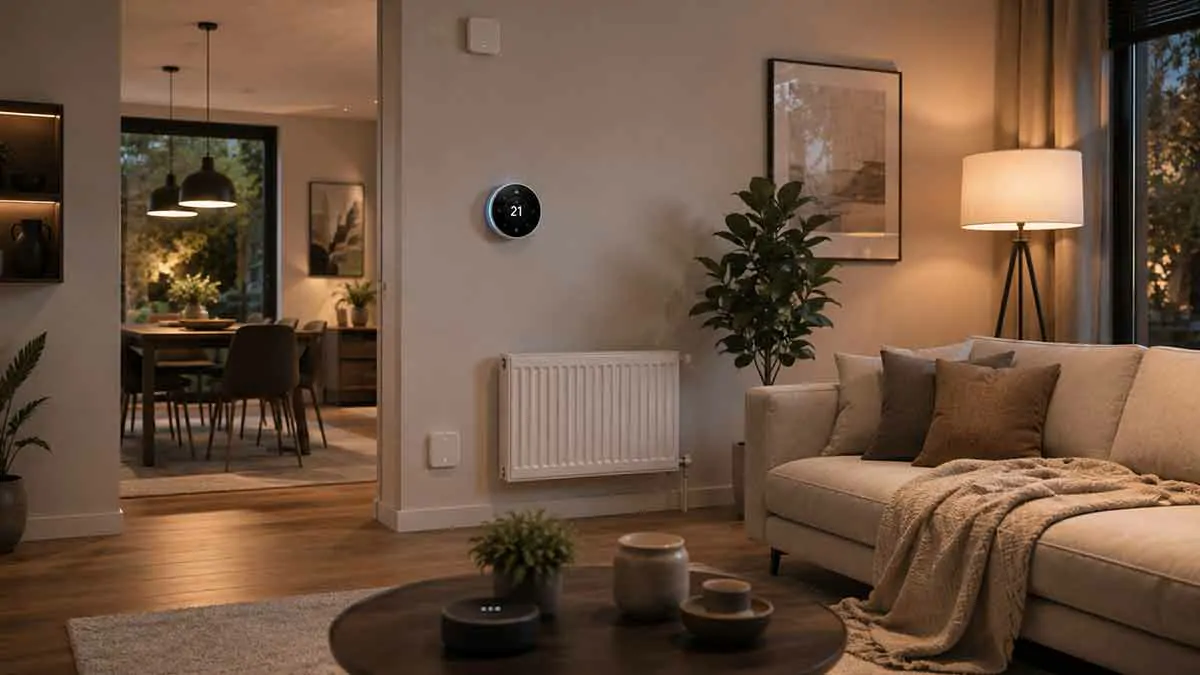
Smart heating controls make it easier to manage temperature, heating schedules, and energy use throughout the home. Instead of relying on a traditional thermostat with a fixed schedule, modern heating systems can use connected thermostats, room sensors, mobile apps, automation, and smart home platforms to adjust heating more intelligently.
For some homes, the biggest benefit is convenience. For others, smart heating controls can help reduce unnecessary heating by adapting operation to schedules, occupancy, weather conditions, or the way different rooms are used.
However, choosing the right system requires more than buying the most expensive smart thermostat. Compatibility with your heating system, room layout, connectivity, installation requirements, and the features you actually need all matter.
This guide explains how smart heating controls work, the main types available, how to choose the right system, and how to create a practical heating setup.
What Are Smart Heating Controls?
Smart heating controls are connected devices and systems that allow you to manage heating more intelligently.
A smart heating setup can include:
- Smart thermostats
- Room temperature sensors
- Smart radiator controls
- Smart valves
- Heating schedules
- Mobile apps
- Smart home integrations
- Automation routines
- Zone controls
Traditional heating controls usually depend on a simple thermostat and timer.
Smart heating controls can add more flexibility by allowing you to adjust settings remotely, create detailed schedules, respond to room conditions, and integrate heating with other connected devices.
The exact capabilities depend on the heating system and the products you choose.
How Smart Heating Controls Work
A typical smart heating system has three basic elements:
Sensors collect information.
Controls determine what should happen.
Heating equipment carries out the action.
For example, a temperature sensor may detect that a room has fallen below the desired temperature.
The control system can then tell the heating system to provide more heat.
More advanced systems can also consider schedules, occupancy, weather information, and other conditions.
A simple example could be:
Time: 6:30 AM
Target temperature: 20°C
Action: Start heating
Another could be:
Condition: Everyone is away
Action: Reduce the heating setting
These combinations are what make smart heating different from a basic timer.
Smart Thermostats
The smart thermostat is usually the central component of a smart heating system.
It replaces or works alongside a conventional thermostat and adds connected features.
Depending on the model, a smart thermostat may provide:
- Remote temperature control
- Heating schedules
- Mobile app access
- Automation
- Temperature sensing
- Learning features
- Energy reports
- Smart home integration
- Multi-zone support
The right thermostat depends heavily on your heating system.
Not every thermostat is compatible with every boiler, heat pump, furnace, or HVAC configuration.
Before buying one, check the manufacturer’s compatibility information carefully.
Room Temperature Sensors
A thermostat measures temperature at its installation location.
That can be a problem when the thermostat is in a hallway or another location that does not represent the room where you spend most of your time.
Room sensors can help by measuring temperature in additional areas.
For example, a bedroom upstairs may remain cooler than the area around the main thermostat.
A compatible sensor can provide more useful information and, depending on the system, help the heating system prioritize a particular room.
This is especially useful in:
- Multi-story homes
- Large houses
- Homes with uneven temperatures
- Rooms far away from the main thermostat
Smart Radiator Controls
Homes with radiator-based heating can use smart radiator controls to manage individual rooms.
A smart radiator valve can allow you to set different temperatures for different rooms rather than heating the entire home to the same level.
For example:
Bedroom: 18°C
Living room: 20°C
Bathroom: 21°C during selected hours
Spare room: Lower setting when unused
This can provide a more room-specific approach to heating.
Smart radiator controls are particularly interesting for homes where different rooms have very different schedules or comfort requirements.
Zoned Heating
Zoned heating divides a home into separate areas that can be controlled independently.
Instead of using one temperature setting for the entire house, different zones can follow different schedules.
For example:
Ground Floor
Heating during the day and evening.
Bedrooms
Higher comfort during the morning and evening, with lower settings during the day.
Guest Room
Minimal heating except when needed.
Zoning can provide more precise control and may reduce unnecessary heating in rooms that are not being used.
However, the practical benefits depend on the home’s layout, insulation, heating system, and how the controls are installed.
Smart Heating Schedules
Schedules are one of the easiest smart heating features to use.
Instead of manually adjusting the thermostat every morning and evening, you can create a recurring schedule.
A basic weekday schedule might look like:
6:30 AM: Comfort temperature
8:30 AM: Reduced temperature
5:00 PM: Comfort temperature
10:30 PM: Night setting
The exact temperatures and times should reflect how your household actually uses the home.
Avoid creating complicated schedules that change constantly unless there is a clear reason to do so.
Heating Based on Occupancy
Occupancy or presence-based heating can make schedules more flexible.
For example, a traditional schedule might assume that everyone leaves the house at 8:00 AM.
A smart system can use occupancy information to reduce heating when the home is empty and return to a comfortable setting when people come back.
This can be useful for households with irregular schedules.
However, occupancy detection is not always perfect, so it should not be treated as the only control method for important heating requirements.
Smart Heating and Weather Conditions
Some smart heating systems can use weather information or other environmental data to improve heating decisions.
For example, if outdoor conditions are unusually cold, the system may need to operate differently than it would on a mild day.
Weather-aware control can be particularly useful when combined with good scheduling and accurate indoor temperature measurements.
However, the most useful systems still prioritize actual indoor conditions rather than assuming outdoor temperature alone tells you what the home needs.
Smart Heating and Energy Saving
One of the main reasons homeowners consider smart heating controls is energy management.
A well-designed system can reduce unnecessary heating by:
- Lowering temperatures when rooms are unused
- Following occupancy patterns
- Using schedules
- Controlling individual rooms
- Avoiding unnecessary heating during absences
- Providing better visibility into heating behavior
The amount of energy saved depends on many factors.
These include:
- Building insulation
- Outdoor temperature
- Heating equipment efficiency
- Home size
- Household behavior
- Temperature settings
- How effectively the controls are used
Installing a smart thermostat does not automatically guarantee major savings.
The biggest benefit usually comes from using the system intelligently.
Smart Heating for Different Rooms
Different rooms may need different heating strategies.
Living Room
The living room is often occupied during the evening, so scheduled comfort heating may be useful.
Bedrooms
Bedrooms often benefit from lower temperatures than daytime living areas.
Kitchen
Cooking and appliances can naturally increase the temperature, so the heating schedule may not need to match the living room.
Bathroom
Bathrooms may need short periods of higher comfort, particularly in the morning and evening.
Home Office
A home office may need a different schedule when someone works from home.
Guest Room
A guest room may not need full heating every day.
Room-by-room control can therefore provide more flexibility than treating the entire house as one space.
Smart Heating Controls for Radiators
Radiator-based systems can benefit from a combination of a central thermostat and room-level controls.
Smart radiator valves can regulate individual rooms while the central system controls the main heating equipment.
This approach can be especially useful when:
- Rooms have different schedules
- Some rooms are rarely used
- Bedrooms need different temperatures
- The house has several floors
- You want more detailed control
Before installing smart radiator valves, verify compatibility with your existing radiator valves and heating system.
Smart Heating Controls for Heat Pumps
Heat pumps require a slightly different approach from conventional heating systems.
Heat pumps are often designed to operate differently from traditional boilers or furnaces, and frequent aggressive temperature changes may not always be appropriate.
A compatible control strategy should account for:
- Heat pump type
- System design
- Outdoor temperature
- Heating curve
- Building insulation
- Manufacturer recommendations
Homeowners considering smart controls for a heat pump should confirm compatibility with the specific heat pump model rather than assuming that a thermostat designed for a conventional heating system will provide the same results.
Smart Heating Controls for Boilers
Boiler-based heating systems are common in many homes, but compatibility varies significantly between systems and countries.
Before purchasing a smart thermostat or control system, check:
- Boiler type
- Heating controls
- Wiring requirements
- Compatibility
- Required receiver or bridge
- Whether hot water is also controlled
Some systems can provide more advanced control than a simple on/off thermostat.
The manufacturer’s compatibility documentation should always be checked before installation.
Smart Heating and Hot Water
Some heating systems also control domestic hot water.
A smart control system may allow you to manage:
- Heating schedules
- Hot water schedules
- Temperature settings
- Vacation periods
This can simplify household routines.
For example, hot water can be scheduled around the times when the household actually needs it rather than running according to an outdated fixed schedule.
The available controls depend on the heating system and the smart control platform.
Smart Heating Automation
Smart heating becomes more powerful when it is integrated with broader home automation.
For example:
Starter: Everyone leaves
Action: Reduce heating
Another automation could be:
Starter: Someone arrives home
Action: Return to the normal comfort setting
A bedtime automation could also coordinate heating with lighting and other household devices.
Automation should always be designed around predictable behavior.
If the household’s schedule changes frequently, overly rigid automations can become frustrating.
Smart Heating and Smart Home Platforms
Smart heating controls can often connect to broader platforms such as Google Home, Amazon Alexa, Apple Home, or other supported ecosystems.
This makes it possible to manage heating alongside:
- Smart lighting
- Smart plugs
- Smart speakers
- Sensors
- Security devices
- Other compatible equipment
The advantage is a more unified system.
For example, a homeowner could create an evening routine that adjusts heating, changes lighting, and activates other compatible devices.
However, cross-platform compatibility varies by product.
A device may support a smart home platform but expose only some of its functions.
Smart Heating and Matter
Matter is becoming an increasingly important consideration when choosing new smart home products.
Matter is designed to improve interoperability between compatible smart home devices and platforms.
For heating controls, Matter compatibility can make it easier to integrate supported products into broader smart home ecosystems.
However, a Matter logo does not mean every advanced feature will be available across every platform.
Always check the specific product’s supported functions before purchase.
Installation Considerations
Some smart heating controls are easy to install, while others require professional work.
Simple wireless sensors or certain smart radiator controls may be straightforward for homeowners to install.
Replacing a wired thermostat or modifying boiler controls can be more complicated.
Before installation, determine:
- Whether the system needs new wiring
- Whether a receiver is required
- Whether professional installation is recommended
- Whether power is available at the installation location
- Whether your existing heating equipment is compatible
Never modify electrical, gas, or heating equipment beyond your level of expertise.
Where Should a Smart Thermostat Be Installed?
Thermostat placement has a significant impact on performance.
A thermostat should generally represent the temperature of the space you want to control.
Avoid locations affected by:
- Direct sunlight
- Drafts
- Exterior doors
- Radiators
- Heat-producing appliances
- Kitchens
- Other unusual heat sources
A thermostat that is installed in a poor location may cause the heating system to run too much or too little.
If the home has significant temperature differences between rooms, additional sensors or zoning may provide a better solution.
How Smart Heating Controls Handle Vacations
A vacation or away mode can reduce heating when the home is unoccupied for an extended period.
Depending on the system, you may be able to configure:
- Reduced temperature
- A specific return date
- Frost protection
- Hot water settings
- Remote monitoring
The appropriate settings depend on the climate, building, plumbing system, and heating equipment.
In cold conditions, turning heating off completely may create risks such as freezing pipes or other problems.
For extended absences, follow the recommendations for your specific heating system and property.
Smart Heating and Insulation
Smart heating controls work best when combined with a reasonably efficient building envelope.
Poor insulation can cause heat to escape quickly, making the heating system work harder regardless of how intelligent its controls are.
Improving areas such as:
- Loft or attic insulation
- Wall insulation
- Floor insulation
- Windows
- Doors
- Draught sealing
can sometimes provide more meaningful long-term benefits than simply adding another smart device.
Smart controls and efficient insulation work together.
Controls determine when and where heating operates, while insulation helps retain the heat once the system produces it.
Smart Heating and Open Windows
Some smart heating systems can work with sensors that detect changes in temperature or window activity.
An open window can cause a room temperature to drop unexpectedly.
A suitable automation may respond by temporarily reducing heating in that room.
This can help prevent heating from running unnecessarily while a window is open.
However, the exact capabilities depend on the sensors and heating system being used.
Smart Heating for Older Homes
Older homes can benefit from smart heating controls, but they may require more careful planning.
Potential challenges include:
- Uneven insulation
- Large temperature differences
- Older boilers
- Radiator balancing issues
- Drafts
- Limited thermostat wiring
- Complex heating zones
In such homes, simply replacing the thermostat may not solve the underlying problem.
Room sensors, radiator controls, insulation improvements, and better zoning may provide a more complete solution.
Common Smart Heating Problems
The Temperature Feels Different From the Thermostat
The thermostat may be located in a room that is warmer or cooler than the area you occupy.
Consider using a compatible room sensor or changing the control strategy.
Heating Turns On Too Frequently
Check the temperature settings, thermostat location, schedule, and system configuration.
Some Rooms Stay Cold
Uneven heating may be caused by radiator sizing, balancing, insulation, airflow, sensor placement, or zoning.
Smart Controls Lose Connection
Check Wi-Fi or other network connectivity and verify that the control system is receiving power.
Remote Control Stops Working
Some systems depend on internet services or manufacturer cloud platforms for remote access.
Local heating controls may still work even when remote access is unavailable, depending on the system.
How to Make Smart Heating Controls More Reliable
Start with a simple heating schedule.
Use accurate temperature measurements.
Keep thermostats and sensors in appropriate locations.
Avoid creating multiple automations that control the same heating equipment in conflicting ways.
Make sure your home network is reliable.
Keep manual control available.
Most importantly, understand how your heating system actually works before adding layers of automation.
Good smart heating design is based on the heating system first and the smart features second.
Best Smart Heating Controls for Different Homes
The best setup depends on the property.
Small Apartment
A single compatible smart thermostat may be enough.
Family Home
A thermostat combined with room sensors can provide more balanced control.
Large Multi-Story Home
Zoned heating and room-level controls can provide greater flexibility.
Radiator-Based Home
Smart radiator valves can provide room-by-room temperature control.
Heat Pump Home
Use controls designed specifically for the heat pump system and follow the manufacturer’s operating recommendations.
Frequently Empty Home
Scheduling and presence-based control can reduce unnecessary heating.
What to Look For When Buying Smart Heating Controls
Before purchasing, compare:
Compatibility
Make sure the control system works with your heating equipment.
Sensors
Check whether additional room sensors are supported.
Zoning
Consider whether individual rooms can be controlled separately.
App Quality
The mobile app should make scheduling and adjustment straightforward.
Smart Home Integration
Check compatibility with your preferred smart home platform.
Connectivity
Understand whether the system uses Wi-Fi, another wireless technology, or a dedicated bridge.
Installation
Determine whether professional installation is required.
Manual Operation
Make sure you can still control the heating if the network or smart service becomes unavailable.
Subscription Costs
Check whether important features require an ongoing subscription.
Are Smart Heating Controls Worth It?
Smart heating controls can be worthwhile when you want more precise control over temperature, schedules, and heating behavior.
They are particularly useful for homes with changing schedules, multiple rooms, uneven temperatures, or heating areas that are often unused.
The benefits are less about making heating “smart” for its own sake and more about making it easier to operate efficiently.
A smart thermostat combined with sensible scheduling may be enough for one home.
Another property may benefit much more from room sensors, smart radiator valves, and zoning.
The right solution depends on the heating system and the household.
Final Thoughts
Smart heating controls can transform the way a home manages temperature.
A basic system can provide remote control and scheduling, while more advanced setups can combine thermostats, room sensors, radiator controls, zoning, occupancy information, and smart home automation.
The most important step is to choose controls that are genuinely compatible with your heating equipment.
From there, focus on practical automation rather than unnecessary complexity.
Smart controls work best when combined with good insulation, appropriate heating settings, reliable connectivity, and a system that remains easy to operate manually.
The result is not simply a more technologically advanced heating system. It is a home that can maintain comfortable temperatures with less repetitive adjustment and better control over when and where heating is used.