
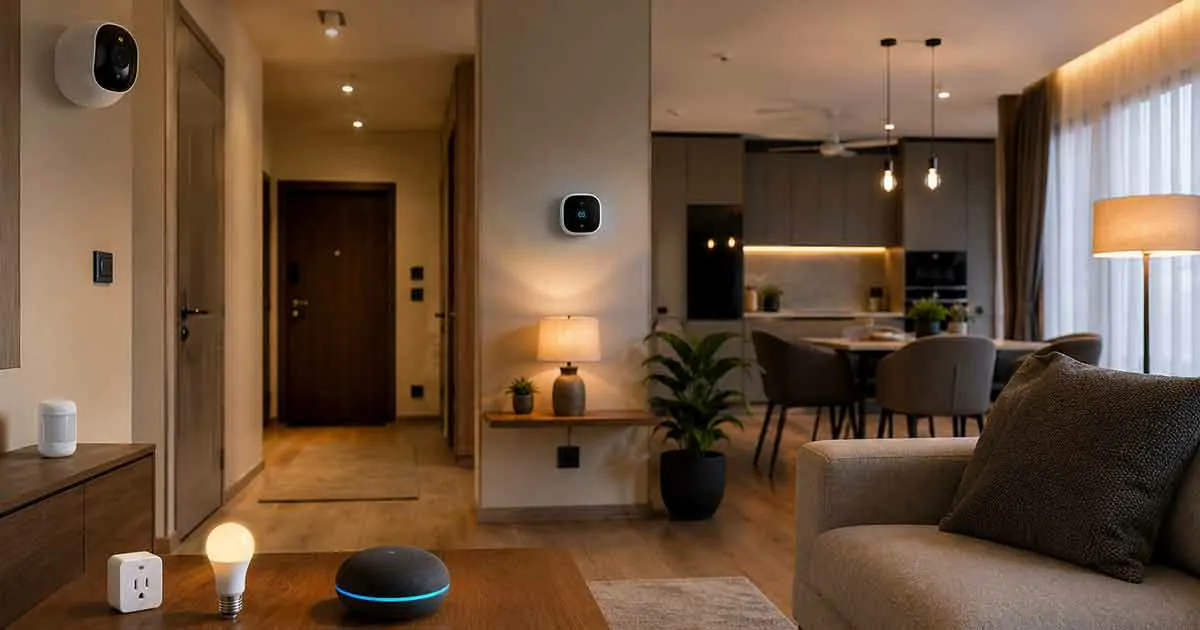
Living in an apartment does not mean you have to miss out on the convenience of smart home technology. In fact, apartments can be an excellent environment for smart devices because many products are easy to install, require little space, and can be removed when you move.
The best smart home devices for apartments can help renters and homeowners improve lighting, comfort, security, energy use, and everyday convenience without making permanent changes to the property.
However, apartment living comes with a few special considerations. You may have restrictions on drilling or rewiring, limited space, shared Wi-Fi networks, building security systems, and lease rules that affect which devices you can install.
This guide covers practical smart home devices for apartments and explains what to consider before adding them to your living space.
Table of Contents
Why Smart Home Devices Work Well in Apartments
Apartments often have smaller floor plans and fewer rooms than detached houses. That can actually make smart home automation easier to manage.
Instead of installing dozens of devices, you can focus on a small number of products that solve specific problems.
Smart devices can help you:
- Control lights from your phone
- Automate appliances
- Adjust temperature
- Improve apartment security
- Monitor doors and windows
- Reduce unnecessary energy use
- Control devices with voice commands
- Create daily routines
- Manage your home remotely
The key is choosing devices that provide useful functionality without requiring complicated installation.
What to Consider Before Buying Smart Devices for an Apartment
Before purchasing smart home products, consider the limitations of your apartment and your lease.
Rental Restrictions
Renters should check whether their lease restricts drilling, wiring, changing locks, or installing permanent equipment.
Fortunately, many smart devices are designed to work without permanent modifications.
Smart plugs, smart bulbs, wireless sensors, and some smart cameras can usually be installed with minimal changes to the property.
Available Space
Apartment space is often limited, so large hubs and unnecessary equipment can quickly create clutter.
Look for compact devices that can perform multiple functions or fit naturally into your existing setup.
Wi-Fi Coverage
Smart devices depend on reliable connectivity.
A small apartment may have good Wi-Fi coverage, but thick walls, concrete construction, or a poorly positioned router can still create connection problems.
Before installing many devices, make sure your Wi-Fi signal is strong enough throughout the apartment.
Building Rules
Apartment buildings may have specific rules concerning exterior cameras, door hardware, shared hallways, and other security equipment.
A device that is acceptable inside your apartment may not be appropriate for common areas.
Always check building policies before installing anything that affects shared spaces.
Moving to Another Apartment
Renters should also think about portability.
Devices such as smart bulbs, plugs, sensors, speakers, and some cameras can be moved to a new apartment relatively easily.
Portable products can therefore provide better long-term value for renters.
Best Smart Home Devices for Apartments
You do not need to automate your entire apartment. Start with the devices that provide the biggest practical benefits.
1. Smart Plugs
Smart plugs are one of the easiest smart home upgrades for an apartment.
They plug directly into an existing electrical outlet and allow compatible appliances to be controlled through an app or smart home platform.
You can use them for:
- Floor lamps
- Table lamps
- Fans
- Coffee makers
- Small appliances
- Decorative lights
- Seasonal decorations
Smart plugs can also create schedules and routines.
For example, a lamp can turn on automatically in the evening and switch off at bedtime.
Because they do not require permanent installation, smart plugs are particularly useful for renters.
2. Smart Light Bulbs
Smart bulbs are another excellent option for apartments.
They can replace compatible standard bulbs without requiring changes to the electrical wiring.
Depending on the model, smart bulbs can provide:
- Remote control
- Scheduling
- Dimming
- Color adjustment
- Lighting scenes
- Automation
- Voice control
You can also use schedules to make an apartment appear occupied while you are away.
One advantage of smart bulbs is that they can move with you when you change apartments.
3. Smart Light Switches
Smart switches can provide more permanent lighting automation, but they require more consideration in an apartment.
Unlike smart bulbs, smart switches are installed into the wall and may require electrical wiring.
Before installing one, check:
- Whether your lease permits electrical modifications
- Whether the switch requires a neutral wire
- Whether it is compatible with your electrical system
- Whether professional installation is necessary
For renters, smart bulbs are generally easier. For apartment owners, smart switches may be a more permanent solution.
4. Smart Thermostats
A smart thermostat can make temperature management more convenient and may help reduce unnecessary heating or cooling.
Depending on the model and HVAC system, features can include:
- Temperature scheduling
- Remote temperature control
- Home and away settings
- Automated temperature adjustments
- Energy monitoring
- Smart home integration
However, thermostat compatibility is particularly important in apartments.
Some apartment buildings use centralized heating or cooling systems that do not support conventional smart thermostats.
Before purchasing one, identify the type of HVAC system used in your apartment and check compatibility.
5. Smart Speakers
A smart speaker can serve as a convenient control center for compatible devices.
Instead of opening an app, you can use voice commands to control lights, plugs, thermostats, and other connected products.
A smart speaker can also provide:
- Timers
- Alarms
- Reminders
- Music
- Weather information
- Voice-controlled routines
For a small apartment, one strategically positioned speaker may be enough to provide convenient voice control.
6. Smart Sensors
Smart sensors can make apartment automation more responsive without taking up much space.
Useful options include:
- Motion sensors
- Door sensors
- Window sensors
- Temperature sensors
- Humidity sensors
- Water leak sensors
For example, a motion sensor near an entrance could trigger a light when you arrive home.
A water leak sensor near a washing machine or sink could also provide an early warning of a potential plumbing problem.
Sensors are especially useful in apartments because they are generally small and can often be installed without permanent modifications.
7. Smart Locks
Smart locks can provide convenient keyless entry, but apartment compatibility is critical.
Some apartments have standardized locks, while others use building-managed access systems.
Depending on the property, a smart lock may provide:
- Keypad entry
- Smartphone access
- Temporary access codes
- Automatic locking
- Activity notifications
Before replacing an apartment lock, check your lease and building requirements.
Some rental properties do not permit tenants to replace the primary lock, while others may allow approved devices.
8. Video Doorbells
A video doorbell can improve awareness around your apartment entrance.
However, apartment residents need to consider privacy and building rules.
A doorbell camera may capture shared hallways, neighboring doors, or other residents. Some buildings may restrict this type of recording.
If permitted, a video doorbell can provide features such as:
- Motion alerts
- Live video
- Visitor notifications
- Two-way communication
- Recorded footage
For renters, choose a model that can be installed without permanent modifications when possible.
9. Indoor Security Cameras
Indoor cameras can help monitor pets, entrances, or important areas inside an apartment.
They are particularly useful when you are away from home.
Before choosing one, consider:
- Video quality
- Night vision
- Motion detection
- Privacy controls
- Local storage
- Cloud storage requirements
- Smartphone notifications
Privacy is especially important with indoor cameras. Choose a device that provides reliable privacy controls and position it carefully.
A camera should never be installed in a private area where recording could create a serious privacy concern.
10. Smart Air Quality Monitors
Apartment residents may benefit from monitoring indoor air quality because ventilation can vary significantly between buildings.
Smart air quality monitors can measure conditions such as:
- Temperature
- Humidity
- Particulate matter
- Carbon dioxide
- Other air-quality indicators
Depending on the device, information may be displayed through an app or dashboard.
These monitors can help you understand changes in indoor conditions and determine when ventilation or other improvements may be useful.
11. Smart Air Purifiers
A smart air purifier can combine air cleaning with connected controls.
Depending on the model, you may be able to:
- Schedule operation
- Monitor air quality
- Change fan speeds
- Create automatic modes
- Control the purifier remotely
Compact models are particularly suitable for apartments because they can be moved between rooms as needed.
When choosing one, consider the size of the room rather than simply buying the largest model available.
12. Smart Fans
Smart fans can provide convenient control without requiring major installation.
Some models can be controlled through an app, while others can work with smart plugs or smart home platforms.
A simple setup can allow a fan to turn on automatically during certain hours or as part of a bedtime routine.
This can be particularly useful in apartments without extensive climate-control options.
13. Smart Energy Monitoring Devices
Smart energy monitoring devices can help apartment residents understand how electricity is being used.
Depending on the device, you may be able to monitor the consumption of individual appliances or broader household energy patterns.
This can help identify appliances that consume more electricity than expected.
For renters, plug-in energy monitors are often more practical than systems that require electrical-panel installation.
Best Smart Home Devices for Renters
Renters should generally prioritize devices that are:
- Easy to install
- Easy to remove
- Portable
- Wireless
- Compatible with standard outlets
- Unlikely to damage walls
- Independent of permanent electrical modifications
A practical renter-friendly setup might include smart bulbs, smart plugs, sensors, a smart speaker, and a portable indoor camera.
These products can provide many smart home benefits without changing the apartment itself.
Best Smart Home Devices for Small Apartments
Small apartments do not need a large number of connected devices.
Instead, focus on multifunctional products.
A compact setup could include:
Living Room
- Smart bulb
- Smart speaker
- Smart plug
- Indoor air quality monitor
Bedroom
- Smart bulb
- Smart plug
- Temperature sensor
Entryway
- Motion sensor
- Door sensor
- Smart lock if permitted
Kitchen
- Smart plug
- Water leak sensor
- Energy monitor
This approach keeps the system useful without filling the apartment with unnecessary technology.
Smart Home Automation Ideas for Apartments
Automation is where several simple devices can become more useful together.
Evening Lighting Routine
A simple evening routine could turn on selected lights automatically around sunset.
This can make the apartment more comfortable without requiring you to switch on multiple lights manually.
Bedtime Routine
A bedtime routine could:
- Turn off selected lights
- Switch off compatible appliances
- Adjust the thermostat
- Lock the door if a compatible smart lock is installed
Away Routine
When you leave the apartment, an automation could:
- Turn off lights
- Switch off selected smart plugs
- Adjust the thermostat
- Send a notification if a monitored door remains open
Arrival Routine
When you return, compatible devices could:
- Turn on entry lighting
- Adjust the temperature
- Turn on selected appliances
The exact automation options depend on the smart home platform and devices you use.
Smart Home Security for Apartments
Security is one of the most useful reasons to install smart devices in an apartment.
However, apartment security is different from security for a detached house.
You may not control:
- Building entrances
- Hallway cameras
- Main door access
- Building alarms
- Parking areas
- Exterior lighting
Instead, focus on the areas you can control.
Useful devices include:
- Door sensors
- Window sensors
- Indoor cameras
- Smart locks where permitted
- Motion sensors
- Smart lights
A simple combination of sensors and notifications can help you stay aware of activity inside your apartment.
Privacy Considerations for Apartment Smart Devices
Connected devices can collect information about activity inside your home.
Before installing a smart device, consider:
- What data does it collect?
- Does it require a cloud account?
- Can recordings be stored locally?
- Can you disable the microphone?
- Can you disable the camera?
- Does the manufacturer provide privacy controls?
- What happens if you stop using the device?
Cameras and voice assistants deserve particular attention because they can capture sensitive information.
Choose products with privacy settings that match your comfort level.
Do Smart Home Devices Require a Subscription?
Not necessarily.
Many smart home devices provide useful basic functionality without a monthly subscription.
For example, smart bulbs and smart plugs often provide their primary controls without requiring recurring payments.
Security products are different. Some cameras and video doorbells offer basic features without a subscription but charge for cloud recording, extended video history, or advanced services.
Before buying a device, determine exactly which features remain available without a paid plan.
This is particularly important for renters who may want a simple smart home without adding recurring household expenses.
How to Choose the Right Smart Home Ecosystem
Your smart home ecosystem determines how easily different devices can work together.
Before buying multiple products, consider the platform you already use or intend to use.
Compatibility can affect:
- Voice control
- Automation
- Device management
- App usage
- Smart home routines
- Future expansion
Choosing compatible products from the beginning can make the system easier to manage.
Standards such as Matter may also improve interoperability between compatible smart home products, although support varies by device and platform.
Common Mistakes Apartment Residents Should Avoid
Installing Permanent Devices Without Permission
Do not assume that you can replace a thermostat, lock, switch, or doorbell simply because the device is easy to purchase.
Check your lease and building rules first.
Buying Devices That Depend on a Specific Network
Some smart devices work best with particular Wi-Fi configurations or connectivity standards.
Check compatibility before purchasing several devices.
Ignoring Privacy
A smart camera may provide convenience but can also introduce privacy concerns.
Understand where recordings are stored and who can access them.
Buying Too Many Devices
You do not need a smart version of every appliance.
Start with the problems you want to solve and choose devices accordingly.
Forgetting About Moving
Renters should consider whether devices can be removed and reused.
Portable devices generally provide more flexibility than permanent installations.
A Simple Apartment Smart Home Setup
If you want to start with a small budget, begin with a few practical devices.
A simple apartment setup could include:
- Two or three smart bulbs
- One or two smart plugs
- A smart speaker
- A motion sensor
- A door or window sensor
- An indoor air quality monitor
After using these devices for a while, you can determine which additional automations are actually useful.
There is no need to automate everything at once.
Are Smart Home Devices Worth It for Apartments?
For many apartment residents, smart home devices are worth considering because they can improve convenience without requiring major changes to the property.
The most useful products are usually the ones that solve everyday problems.
Smart bulbs can simplify lighting. Smart plugs can automate ordinary appliances. Sensors can provide alerts. Smart speakers can make control easier. Energy monitors can help you understand electricity use.
The best setup depends on your apartment, your lease, your budget, and the amount of automation you actually want.
Final Thoughts
The best smart home devices for apartments are practical, compact, and easy to install.
Renters should generally prioritize portable products such as smart plugs, smart bulbs, sensors, speakers, and compatible indoor cameras. Apartment owners may have more flexibility to install smart switches, thermostats, and other permanent devices.
Before buying anything, check compatibility, privacy settings, building restrictions, installation requirements, and subscription policies.
A successful apartment smart home does not need dozens of devices. A small collection of well-chosen products can provide useful automation, better convenience, improved awareness, and greater control over your living space.