
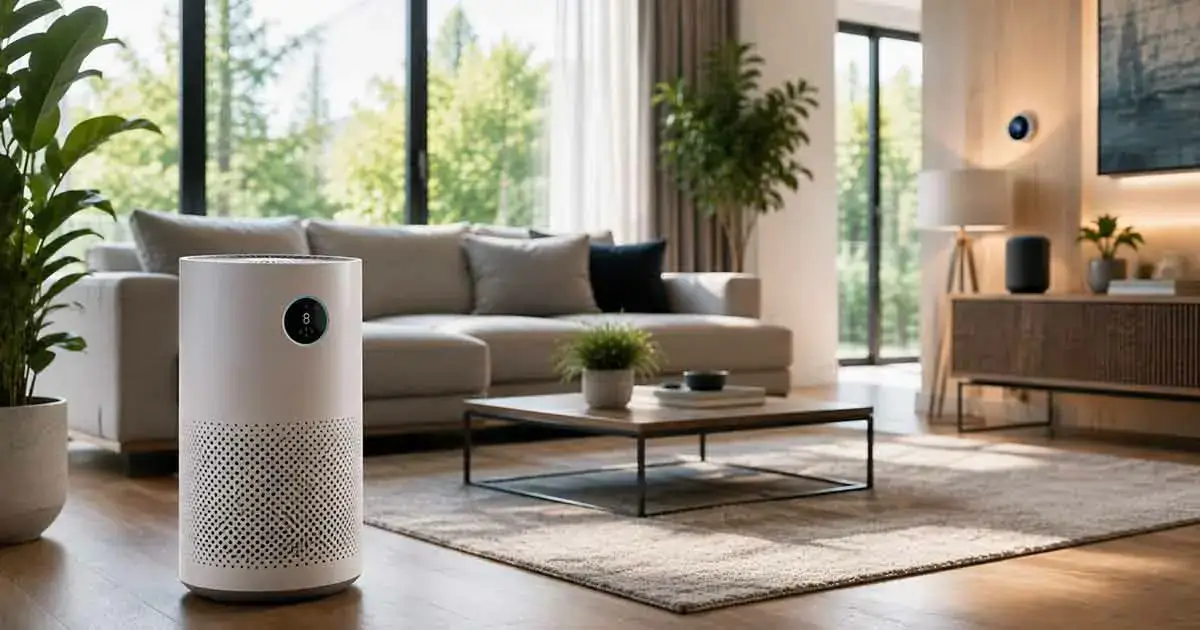
Indoor air quality plays an important role in maintaining a comfortable and healthy home environment. Dust, pet dander, pollen, smoke particles, and other airborne contaminants can affect air quality and overall comfort.
Smart air purifiers combine advanced filtration technology with connected features that allow homeowners to monitor and manage indoor air quality more effectively.
This guide explains the benefits of smart air purifiers, important features to consider, and how to choose the best smart air purifier for your home.
What Is a Smart Air Purifier?
A smart air purifier is an air cleaning device that uses filters and sensors to remove airborne particles while providing connected monitoring and control features.
Unlike traditional air purifiers, smart models can connect to:
- Mobile applications
- Smart home platforms
- Voice assistants
- Home automation systems
Many models provide real-time air quality information and automated operation.
Benefits of Smart Air Purifiers
Improved Indoor Air Quality
The primary purpose of an air purifier is to reduce airborne contaminants.
These may include:
- Dust
- Pollen
- Pet dander
- Smoke particles
- Other airborne pollutants
Cleaner indoor air can improve overall comfort throughout the home.
Real-Time Air Quality Monitoring
Many smart air purifiers include built-in sensors.
These sensors can:
- Detect particle levels
- Measure indoor air conditions
- Display air quality information
This allows homeowners to better understand their indoor environment.
Automatic Operation
Smart air purifiers can automatically adjust fan speed based on air quality conditions.
This helps maintain cleaner air without constant manual adjustments.
Remote Control
Connected apps allow users to:
- Turn the purifier on or off
- Change operating modes
- Monitor performance
- Receive notifications
Remote control adds convenience and flexibility.
Smart Home Integration
Many smart air purifiers can work with other smart home products.
This allows integration with:
- Smart speakers
- Smart home hubs
- Home automation routines
Important Smart Air Purifier Features
HEPA Filtration
High-efficiency particulate air (HEPA) filters are commonly used to capture fine particles.
They are often considered an important feature for effective air cleaning.
Air Quality Sensors
Sensors provide automatic monitoring and adjustment.
Useful capabilities include:
- Real-time readings
- Automatic fan control
- Indoor air quality reports
Coverage Area
Every air purifier is designed for a specific room size.
Before purchasing, verify that the purifier can effectively cover the intended space.
Noise Levels
Noise can be an important consideration, especially for:
- Bedrooms
- Home offices
- Living areas
Many models include quiet operation modes.
Mobile App Support
A quality app should provide:
- Easy controls
- Performance information
- Maintenance reminders
- Air quality data
Filter Replacement Notifications
Many smart air purifiers notify users when filters require replacement.
This helps maintain consistent performance.
Types of Smart Air Purifiers
Small Room Air Purifiers
Designed for:
- Bedrooms
- Offices
- Small living spaces
These units are usually compact and energy efficient.
Large Room Air Purifiers
Designed for larger areas such as:
- Open living rooms
- Large family rooms
- Combined living spaces
They typically provide greater airflow capacity.
Multi-Function Air Purifiers
Some models combine air purification with additional features such as:
- Humidification
- Advanced monitoring
- Enhanced automation
How to Choose the Best Smart Air Purifier
Identify Your Main Needs
Different households have different priorities.
Examples include:
- General air quality improvement
- Pet-related concerns
- Seasonal allergens
- Smoke reduction
Match Coverage Area to Room Size
Choosing the correct size is essential for effective performance.
An undersized purifier may not adequately clean the air.
Compare Smart Features
Important connected features include:
- App control
- Air quality monitoring
- Automation
- Voice assistant support
Review Maintenance Requirements
Filter replacement and ongoing maintenance should be considered before purchase.
Consider Energy Efficiency
Energy-efficient models may help reduce operating costs over time.
Smart Air Purifiers and Home Automation
Smart air purifiers can become part of a larger connected home system.
They may work alongside:
- Smart speakers
- Smart home hubs
- Smart thermostats
- Indoor environmental monitoring devices
Automation examples include:
- Increasing purification when air quality declines
- Activating specific modes during certain times of day
- Integrating with broader smart home routines
Common Smart Air Purifier Buying Mistakes
Choosing the Wrong Size
Selecting a purifier that is too small for the room can reduce effectiveness.
Ignoring Filter Costs
Replacement filters represent an ongoing ownership expense.
Focusing Only on Smart Features
Air cleaning performance should remain the primary consideration.
Neglecting Maintenance
Regular filter replacement is necessary for consistent operation.
Frequently Asked Questions
Are smart air purifiers worth buying?
For many homeowners, smart air purifiers provide improved monitoring, automation, and convenience compared to standard models.
Do smart air purifiers improve air quality?
They are designed to reduce airborne particles and improve indoor air conditions when used correctly.
Can smart air purifiers work automatically?
Many models include sensors that automatically adjust operation based on air quality readings.
Do smart air purifiers require Wi-Fi?
Most connected features require Wi-Fi, although basic purification functions may continue operating without internet access.
How often do filters need replacement?
Replacement schedules vary depending on the model, filter type, and usage conditions.
Final Thoughts
Smart air purifiers combine air cleaning performance with connected technology that makes monitoring and maintaining indoor air quality easier.
By selecting a model with appropriate coverage, reliable filtration, and useful smart features, homeowners can create a cleaner and more comfortable indoor environment.