
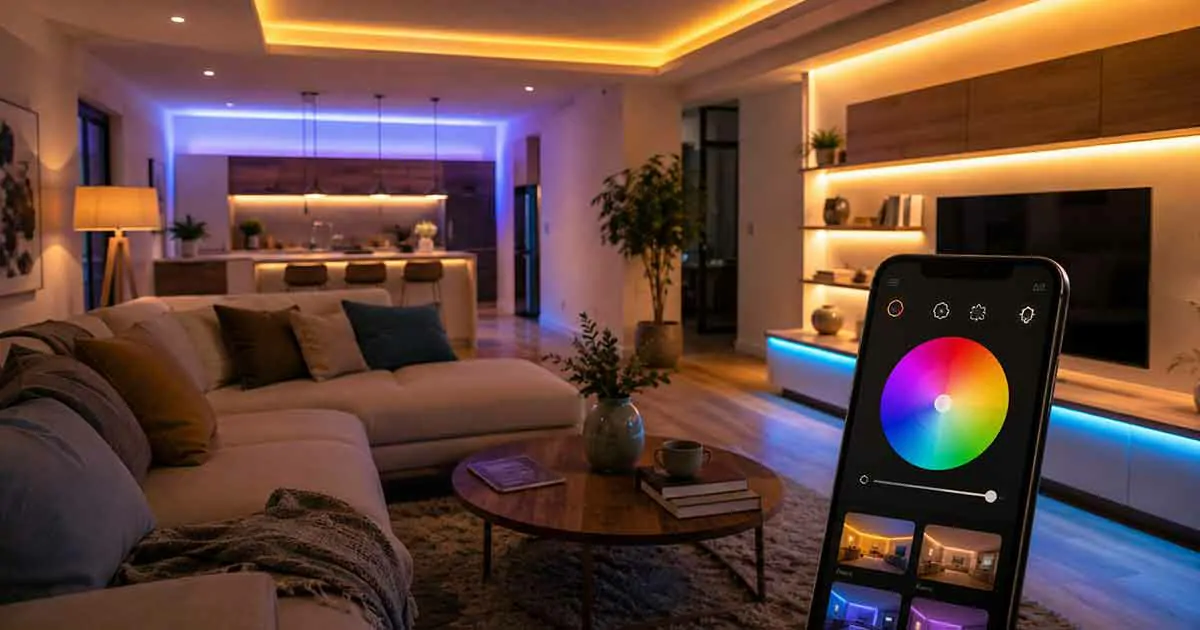
Smart lighting systems have become one of the easiest ways to make a home more comfortable, efficient, and connected. Unlike traditional lighting, smart lighting allows homeowners to control brightness, schedules, colors, and automation through smartphones, voice assistants, and smart home platforms.
From simple smart bulbs to complete automated lighting solutions, these systems can transform how homeowners use and experience their living spaces.
This guide explains how smart lighting systems work, their benefits, different types, important features, installation options, and how to choose the right smart lighting setup for your home.
What Are Smart Lighting Systems?
Smart lighting systems are connected lighting solutions that allow users to control and automate lights through digital technology.
They typically include:
- Smart bulbs
- Smart switches
- Smart fixtures
- Lighting hubs
- Mobile applications
- Voice assistant integration
Unlike traditional lights, smart lighting can respond to schedules, sensors, and user commands.
How Do Smart Lighting Systems Work?
Smart lighting systems use wireless communication technologies to connect lights with control devices.
Common technologies include:
- Wi-Fi
- Bluetooth
- Zigbee
- Z-Wave
A typical smart lighting setup includes:
- Smart lighting devices.
- A connection method or hub.
- A control app or voice assistant.
- Automation settings.
For example, homeowners can create a routine where lights gradually turn on in the morning or automatically switch off when everyone leaves the house.
Benefits of Smart Lighting Systems
Improved Convenience
Smart lighting makes controlling lights easier.
Homeowners can:
- Turn lights on or off remotely
- Adjust brightness instantly
- Create schedules
- Use voice commands
These features reduce the need for manual control.
Energy Efficiency
Smart lighting can help reduce unnecessary energy consumption.
Benefits include:
- Automatic schedules
- Motion-based activation
- Remote control
- Energy monitoring
Lights can be used more efficiently by turning off when not needed.
Enhanced Home Security
Smart lighting can improve security by creating the appearance of activity when homeowners are away.
Useful features include:
- Automated schedules
- Motion activation
- Remote control
- Integration with security systems
Lighting can become an important part of a complete home protection strategy.
Better Comfort and Atmosphere
Smart lighting allows homeowners to customize their environment.
Options include:
- Adjustable brightness
- Color changes
- Different lighting scenes
- Room-specific settings
This creates a more personalized home experience.
Types of Smart Lighting Systems
Smart Bulbs
Smart bulbs are the easiest entry point for beginners.
Features include:
- Easy installation
- Brightness control
- Color options
- App management
They are ideal for homeowners who want to upgrade existing lamps and fixtures.
Smart Light Switches
Smart switches replace traditional switches while keeping existing light fixtures.
Advantages include:
- Control of multiple lights
- Better integration
- Cleaner installation
They are useful for whole-room lighting control.
Smart Light Strips
Smart light strips provide decorative and functional lighting.
Common uses include:
- Entertainment areas
- Kitchens
- Bedrooms
- Workspaces
Smart Outdoor Lighting
Outdoor smart lighting improves both convenience and security.
Applications include:
- Garden lighting
- Pathway lights
- Entry lighting
- Security illumination
Important Smart Lighting Features
Voice Control
Voice assistants allow homeowners to control lights without using a phone.
Common integrations include:
- Google Assistant
- Amazon Alexa
- Apple HomeKit
Scheduling and Automation
Scheduling allows lights to operate automatically.
Examples:
- Turning lights on at sunset
- Creating morning routines
- Switching lights off during sleep hours
Motion Detection
Motion sensors can activate lights automatically.
Benefits include:
- Convenience
- Energy savings
- Improved safety
Remote Access
Remote control allows homeowners to manage lighting from anywhere.
Useful features include:
- Checking lights remotely
- Creating schedules
- Adjusting settings while away
Color and Brightness Control
Many smart lights allow customization of:
- Brightness levels
- Warm and cool tones
- Color settings
Smart Lighting Installation Options
DIY Installation
Many smart bulbs and devices are designed for easy installation.
Typical steps include:
- Installing the bulb or switch
- Connecting the device
- Setting up the app
- Creating automation routines
Professional Installation
Professional installation may be useful for:
- Whole-home systems
- Complex wiring
- Large properties
How to Choose the Right Smart Lighting System
Consider these factors:
Compatibility
Choose lighting products that work with your existing smart home platform.
Purpose
Decide what you want to improve:
- Convenience
- Energy efficiency
- Security
- Home atmosphere
Budget
Smart lighting options are available at different price levels.
Start with important areas and expand gradually.
Connectivity
Consider whether you prefer:
- Wi-Fi devices
- Hub-based systems
- Bluetooth solutions
Common Smart Lighting Mistakes
Buying Incompatible Products
Always check compatibility before purchasing.
Installing Too Many Devices at Once
A gradual approach makes systems easier to manage.
Ignoring Security Settings
Connected devices should use:
- Strong passwords
- Updated software
- Secure networks
Using Poor Placement
Lighting effectiveness depends on proper placement and coverage.
Smart Lighting Ideas for Different Rooms
Living Room
Use smart lighting for:
- Entertainment scenes
- Adjustable brightness
- Comfortable evening settings
Bedroom
Smart lighting can support:
- Relaxing environments
- Sleep routines
- Morning wake-up schedules
Kitchen
Useful features include:
- Under-cabinet lighting
- Task lighting
- Automated schedules
Outdoor Areas
Smart outdoor lighting improves:
- Safety
- Security
- Property appearance
Frequently Asked Questions
Are smart lighting systems worth it?
Yes. They improve convenience, energy efficiency, and home customization.
Do smart lights need Wi-Fi?
Some use Wi-Fi, while others use Bluetooth or smart hubs.
Can smart lighting save electricity?
Yes. Automation and scheduling can help reduce unnecessary lighting usage.
Are smart bulbs easy to install?
Most smart bulbs are designed for simple DIY installation.
Can smart lighting improve security?
Yes. Automated lighting can make homes appear occupied and improve visibility.
Final Thoughts
Smart lighting systems provide an easy way to upgrade a modern home. By combining automation, energy efficiency, security features, and personalized control, smart lighting creates a more comfortable and connected living environment.
The best approach is to start with the areas that provide the most value and expand over time. With the right setup, smart lighting can become an essential part of a complete smart home experience.