
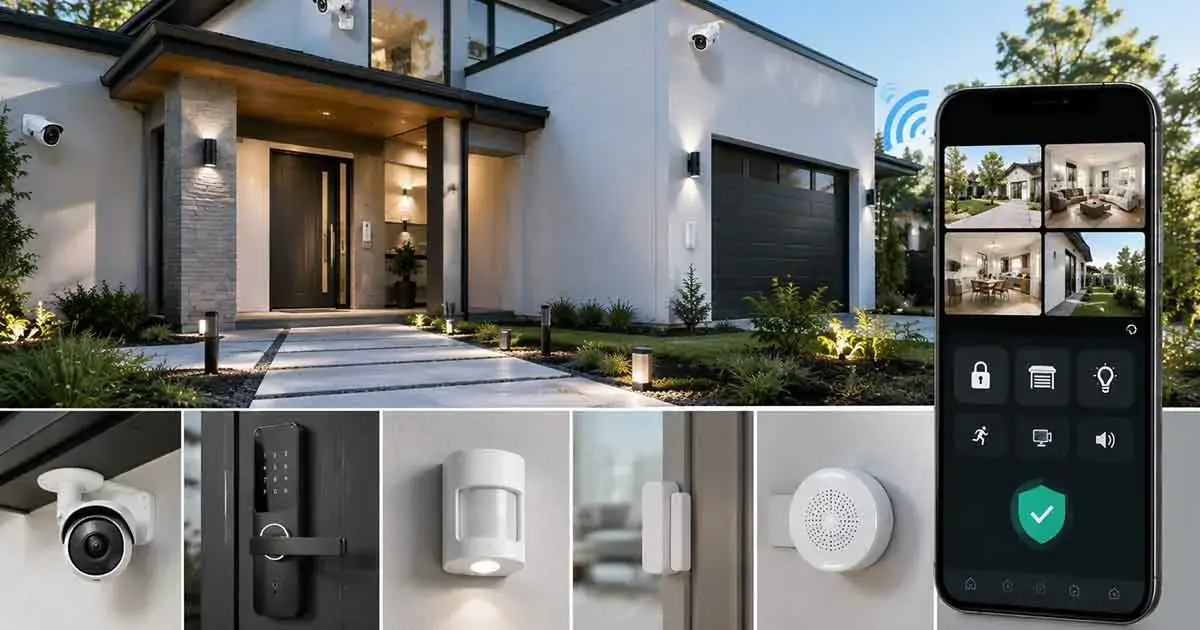
Smart home security systems have transformed the way homeowners protect their properties. By combining security cameras, smart locks, sensors, alarms, and mobile applications, these systems provide greater control, convenience, and awareness than traditional security solutions.
Modern homeowners want security systems that are easy to manage, accessible from anywhere, and capable of providing real-time alerts. Smart home security systems meet these needs by connecting multiple devices into a single, integrated platform.
This guide explains how smart home security systems work, their benefits, key components, important features, and how to choose the right system for your home.
What Is a Smart Home Security System?
A smart home security system is a network of connected security devices that work together to monitor and protect a property.
Unlike traditional security systems, smart systems allow homeowners to control and monitor devices remotely using smartphones, tablets, or computers.
A typical smart security setup may include:
- Security cameras
- Smart door locks
- Motion sensors
- Window and door sensors
- Smart lighting
- Alarm systems
- Video doorbells
These devices communicate through a central platform and provide real-time information about activity around the home.
Benefits of Smart Home Security Systems
Remote Monitoring
One of the biggest advantages of smart security systems is remote access.
Homeowners can:
- View live camera feeds
- Receive security alerts
- Lock or unlock doors
- Monitor sensors
- Check system status
This level of control is useful whether you are at work, traveling, or simply away from home.
Real-Time Notifications
Smart systems can immediately notify users when unusual activity occurs.
Common alerts include:
- Motion detection
- Door openings
- Window activity
- Security breaches
- Camera events
Fast notifications help homeowners respond quickly to potential security concerns.
Improved Home Security
Smart devices work together to create multiple layers of protection.
For example:
- Motion sensors trigger cameras
- Cameras record activity
- Smart lights activate automatically
- Alerts are sent to homeowners
This coordinated response can significantly improve security coverage.
Convenience and Automation
Automation allows security devices to operate without constant manual control.
Examples include:
- Automatically locking doors
- Scheduling outdoor lights
- Activating cameras when leaving home
- Creating custom security routines
Automation improves both convenience and security.
Essential Components of a Smart Home Security System
Security Cameras
Security cameras provide visual monitoring and recording capabilities.
Modern cameras often include:
- HD video
- Night vision
- Motion detection
- Mobile alerts
- Cloud storage
Cameras help homeowners monitor activity both inside and outside the property.
Smart Door Locks
Smart locks provide keyless entry and remote access control.
Benefits include:
- Temporary access codes
- Smartphone control
- Entry history tracking
- Remote locking
Smart locks are often integrated with cameras and alarms.
Motion Sensors
Motion sensors detect movement and trigger security actions.
They can activate:
- Cameras
- Alarms
- Smart lights
- Mobile notifications
Motion detection helps identify unusual activity quickly.
Door and Window Sensors
These sensors monitor entry points and alert homeowners when doors or windows are opened.
They provide an additional layer of awareness and protection.
Smart Lighting
Smart lighting improves visibility and can work with other security devices.
Features include:
- Scheduling
- Motion activation
- Remote control
- Automated routines
Proper lighting can help discourage suspicious activity.
Alarm Systems
Alarm systems remain an important component of modern security.
When combined with smart devices, alarms can respond more effectively to security events.
Wireless vs Wired Smart Security Systems
Wireless Systems
Advantages:
- Easier installation
- Flexible placement
- Expandable design
- Suitable for most homeowners
Wireless systems are often the most popular choice for modern homes.
Wired Systems
Advantages:
- Stable connections
- Reliable communication
- Suitable for large properties
Wired systems may require professional installation but can offer long-term reliability.
Important Features to Consider
Mobile App Control
A quality mobile app should provide:
- Device management
- Live monitoring
- Notifications
- Automation controls
The app often becomes the primary way homeowners interact with the system.
Smart Home Integration
Compatibility with smart home platforms allows devices to work together efficiently.
Integrated systems can improve both convenience and security.
Video Storage Options
Many systems offer:
- Cloud storage
- Local storage
- Hybrid storage solutions
Storage requirements depend on the number of cameras and recording preferences.
User Access Management
Smart systems should allow homeowners to manage multiple users and permissions.
This is useful for families, guests, and property managers.
Common Smart Home Security Mistakes
Relying on a Single Device
One device alone rarely provides complete protection.
A layered security approach is generally more effective.
Ignoring Software Updates
Regular updates help maintain device security and performance.
Weak Passwords
Strong passwords and account protection are essential for connected devices.
Poor Device Placement
Even advanced devices may be ineffective if installed in the wrong locations.
How to Choose the Right Smart Home Security System
Consider the following factors:
- Property size
- Security goals
- Budget
- Device compatibility
- Installation requirements
- Monitoring preferences
The best system is one that meets your specific needs rather than simply offering the most features.
Frequently Asked Questions
Are smart home security systems worth it?
Yes. Smart security systems provide improved monitoring, convenience, and control compared with many traditional solutions.
Do smart security systems require Wi-Fi?
Most smart systems use Wi-Fi for remote access and communication, although some devices offer alternative connection methods.
Can I install a smart security system myself?
Many wireless systems are designed for DIY installation, while larger systems may benefit from professional installation.
Are smart security systems secure?
When properly configured with strong passwords, updates, and reputable devices, smart security systems can provide strong protection.
What devices should I start with?
Many homeowners begin with security cameras, smart locks, and motion sensors before expanding their systems.
Final Thoughts
Smart home security systems provide a modern and flexible approach to protecting homes. By combining cameras, sensors, locks, alarms, and automation, homeowners can create a connected security environment that improves awareness and control.
Whether you are building your first security system or upgrading an existing setup, choosing the right devices and integrating them effectively can help create a safer and more secure home.