
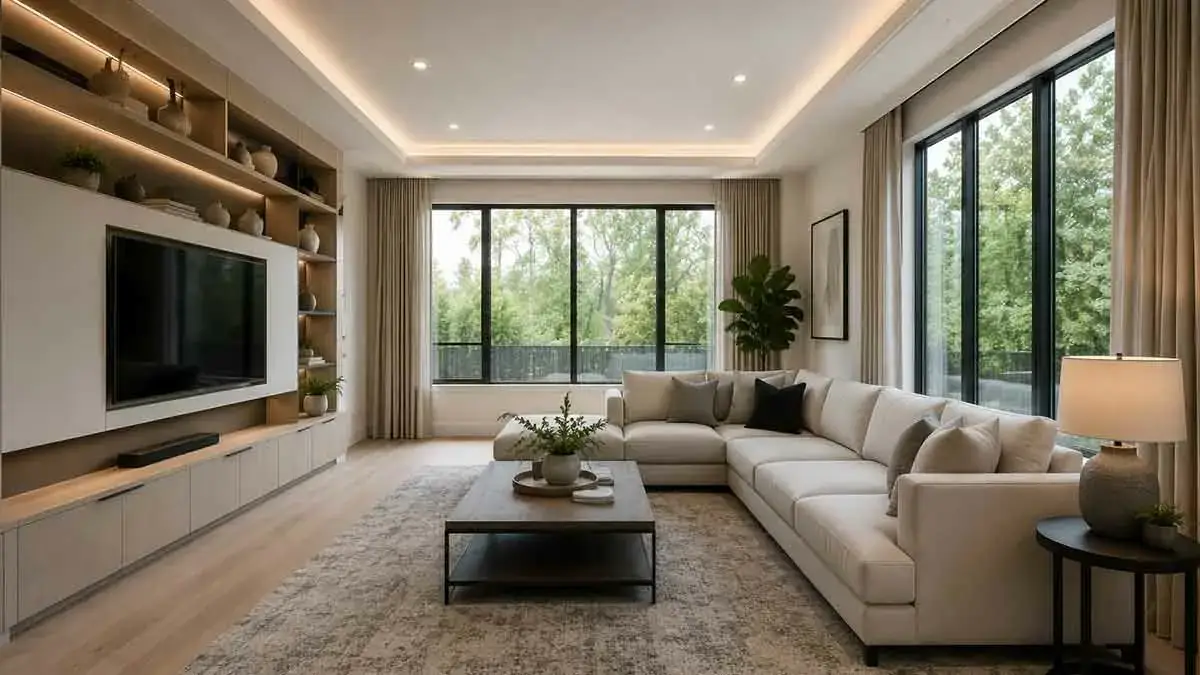
The living room is one of the most frequently used spaces in a home, making it an important area to consider when planning interior improvements. A well-designed living room should be comfortable, functional, visually appealing, and suited to the way the household uses the space.
Improving a living room does not always require a major renovation. Simple changes such as rearranging furniture, improving lighting, updating wall colors, adding storage, or replacing outdated finishes can make a noticeable difference. Larger projects may involve new flooring, built-in storage, improved electrical outlets, fireplace updates, or changes to the room’s layout.
The best living room improvements combine appearance with practical function. Before choosing furniture or decorative accessories, consider circulation, lighting, storage, comfort, and the proportions of the room.
This complete guide covers practical living room improvement ideas, from affordable updates and furniture placement to lighting, flooring, storage, layout improvements, and larger renovation projects.
Table of Contents
What Makes a Living Room Better?
A successful living room should balance several factors.
These include:
- Comfort
- Functionality
- Lighting
- Furniture placement
- Storage
- Visual balance
- Circulation
- Durability
- Personal style
A room can look attractive but still be uncomfortable if the furniture blocks pathways or the lighting is inadequate.
Likewise, a highly functional room can feel uninviting if it lacks appropriate colors, textures, and visual balance.
The goal is to create a space that works well and feels comfortable.
Assess Your Existing Living Room
Before buying new furniture or starting a renovation, evaluate the current room.
Look at:
- Room dimensions
- Door locations
- Window locations
- Existing lighting
- Electrical outlets
- Furniture placement
- Storage
- Flooring condition
- Wall condition
- Heating and cooling
- Natural light
Identify what is actually causing problems.
For example, replacing a sofa may not solve a room that feels cramped if the real problem is poor furniture placement.
Define Your Living Room Improvement Goals
Determine what you want to improve.
Common goals include:
- Making the room more comfortable
- Creating more seating
- Improving lighting
- Increasing storage
- Making the room feel larger
- Modernizing outdated finishes
- Improving entertainment space
- Creating a better family gathering area
- Improving energy efficiency
Separate essential improvements from purely decorative changes.
Improve the Living Room Layout
Layout has a major effect on how a living room feels.
Start by considering:
- Main walking paths
- Furniture proportions
- Window access
- Door clearance
- TV location
- Fireplace location
- Conversation areas
- Natural focal points
Avoid pushing every piece of furniture against a wall simply because the room is large enough to do so.
Furniture placement should support comfortable movement and interaction.
Arrange Furniture for Better Flow
Create clear pathways between major areas.
Avoid placing furniture where it blocks:
- Doorways
- Hallways
- Windows
- Heating vents
- Major circulation paths
Leave enough space for people to move comfortably around sofas, chairs, and tables.
The exact clearance depends on the room and furniture dimensions, so test the arrangement before making permanent changes.
Create a Conversation Area
If the living room is primarily used for socializing, arrange seating so people can comfortably interact.
A conversation area may include:
- Sofa
- Two accent chairs
- Coffee table
- Side tables
The seating does not necessarily need to face a television.
In larger rooms, multiple seating zones can make the space more useful.
Choose the Right Sofa Size
A sofa that is too large can overwhelm a small living room.
A sofa that is too small can make a large room feel empty.
Before buying, measure:
- Wall width
- Available floor depth
- Door openings
- Hallways
- Stairways
- Clearance around the furniture
Also check the manufacturer’s dimensions rather than relying only on product photographs.
Add Comfortable Accent Chairs
Accent chairs can increase seating without requiring another large sofa.
Consider:
- Armchairs
- Lounge chairs
- Swivel chairs
- Compact accent chairs
Choose chairs that complement the sofa without making the room visually crowded.
Use an Area Rug
An area rug can visually connect furniture and make a living room feel more cohesive.
It can also:
- Add warmth
- Improve acoustic comfort
- Define a seating zone
- Protect flooring
The rug should be appropriately sized for the furniture arrangement.
Choose the Right Rug Size
A common mistake is choosing a rug that is too small.
In many living rooms, at least the front legs of major seating pieces can sit on the rug.
The exact arrangement depends on room size and furniture configuration.
A rug should help define the seating area rather than appear like a small isolated object in the center of the room.
Improve Living Room Lighting
Lighting can dramatically change how a living room feels.
Instead of relying on one ceiling fixture, consider several layers.
Useful lighting types include:
- Ambient lighting
- Task lighting
- Accent lighting
Layered lighting allows the room to support different activities throughout the day.
Use Layered Lighting
A practical lighting plan may combine:
Ambient Lighting
Provides general illumination.
Task Lighting
Supports activities such as reading, working, or crafting.
Accent Lighting
Highlights artwork, architectural features, shelving, or other focal points.
Using several lighting sources creates greater flexibility than one central fixture.
Add Floor Lamps
Floor lamps can provide useful lighting without requiring new ceiling wiring.
They can work well beside:
- Sofas
- Reading chairs
- Side tables
- Dark corners
Choose a lamp that fits the scale of the room.
Use Table Lamps
Table lamps can provide softer localized lighting.
They are useful on:
- Side tables
- Consoles
- Media cabinets
- Desks
Using lamps at different heights can create a more layered visual effect.
Improve Natural Light
Natural light can make a living room feel brighter and more welcoming.
Consider:
- Removing heavy window coverings
- Using lighter curtains
- Cleaning windows regularly
- Replacing damaged window treatments
- Replacing inefficient windows when appropriate
Keep window areas visually open where privacy and climate conditions allow.
Choose a Living Room Color Palette
Color affects the perceived size and atmosphere of a room.
A simple palette may include:
- A primary wall color
- One or two complementary colors
- Coordinated furniture
- Accent colors through accessories
Neutral colors provide flexibility, while stronger colors can be introduced through artwork, pillows, rugs, or an accent wall.
Use Light Colors to Make the Room Feel Larger
Light colors can reflect more available light and make a room appear more open.
Useful options include:
- Soft white
- Warm white
- Light beige
- Pale gray
- Soft blue
Color alone cannot change the physical dimensions of a room, but it can influence how spacious the room feels.
Create an Accent Wall
An accent wall can add visual interest without requiring every wall to have a bold finish.
Possible options include:
- Paint
- Wallpaper
- Wood paneling
- Decorative wall tile
- Textured finishes
Choose one wall that naturally attracts attention, such as the wall behind a sofa or fireplace.
Improve the Living Room Ceiling
The ceiling can be overlooked during interior improvements.
Potential upgrades include:
- Fresh paint
- Updated light fixtures
- Simple ceiling trim
- Wood details
- Architectural molding
Keep the design proportional to the room.
Heavy ceiling details can make a small room feel visually compressed.
Upgrade Living Room Flooring
Flooring has a major effect on the appearance and durability of the living room.
Common options include:
- Hardwood
- Engineered wood
- Luxury vinyl
- Laminate
- Carpet
- Tile
Consider:
- Traffic
- Pets
- Children
- Maintenance
- Moisture exposure
- Comfort
- Budget
Choose a material that matches the way the room is actually used.
Hardwood Flooring
Hardwood can provide a durable and timeless appearance.
It works well with many design styles and can visually connect the living room with adjacent areas.
Protect hardwood from excessive moisture and follow the manufacturer’s maintenance recommendations.
Engineered Wood Flooring
Engineered wood combines a real wood surface with a layered construction.
It can provide the appearance of hardwood while offering dimensional stability that can be useful in many interior applications.
Luxury Vinyl Flooring
Luxury vinyl can imitate wood or stone while offering practical durability.
It may be useful for households that want easier maintenance and resistance to everyday wear.
Always check the product’s installation and subfloor requirements.
Carpet and Area Rugs
Wall-to-wall carpet can provide softness and acoustic benefits.
Area rugs provide more flexibility and can be replaced or moved without changing the entire floor.
The best option depends on comfort, maintenance, design preferences, and household needs.
Add Living Room Storage
Storage helps prevent clutter and makes the room easier to maintain.
Useful solutions include:
- Built-in cabinets
- Shelving
- Media consoles
- Storage ottomans
- Sideboards
- Baskets
- Built-in bookcases
Storage should be planned around what the room actually needs to hold.
Use Built-In Storage
Built-in storage can make efficient use of wall space.
Potential applications include:
- Built-in bookcases
- Fireplace cabinets
- Media storage
- Display shelves
- Window-seat storage
Built-ins can also create a more finished appearance than multiple unrelated furniture pieces.
Improve TV and Media Storage
Televisions and electronic equipment can quickly become visual clutter.
Use:
- Media consoles
- Built-in cabinets
- Wall-mounted storage
- Closed cabinets
- Shelving
Keep ventilation requirements in mind when placing electronic equipment inside cabinets.
Organize Cables and Electronics
Visible cables can make a living room look untidy.
Possible solutions include:
- Cable management channels
- Cable ties
- Concealed outlets
- Built-in cable openings
- Media cabinets
Electrical modifications should be completed safely and according to applicable requirements.
Add Shelving
Shelving provides storage and display space without necessarily occupying much floor area.
Use shelves for:
- Books
- Artwork
- Plants
- Decorative objects
- Storage baskets
Avoid filling every shelf completely. Empty space can help maintain visual balance.
Use Multi-Functional Furniture
Furniture that serves more than one purpose can be particularly useful in smaller homes.
Examples include:
- Storage ottomans
- Sofa beds
- Nesting tables
- Storage benches
- Extendable tables
Multi-functional pieces can increase flexibility without requiring additional floor space.
Improve Fireplace Design
A fireplace can become a natural focal point.
Possible improvements include:
- Updating the surround
- Repainting the mantel
- Replacing outdated materials
- Improving the hearth
- Adding built-in storage
- Improving the lighting around the fireplace
Any work involving the fireplace structure, chimney, fuel system, or ventilation should be approached appropriately for the specific system.
Update the Fireplace Surround
The surround can significantly affect the room’s overall style.
Possible materials include:
- Natural stone
- Porcelain tile
- Ceramic tile
- Brick
- Wood in appropriate locations
- Plaster or other approved finishes
Materials must be suitable for the fireplace’s heat exposure.
Improve Wall Decor
Wall decor can personalize the room, but too many objects can make it feel cluttered.
Consider:
- Artwork
- Large photographs
- Mirrors
- Wall shelves
- Architectural details
Use fewer, better-proportioned pieces rather than filling every available wall.
Use Mirrors
Mirrors can reflect light and create a greater sense of depth.
They work particularly well:
- Opposite windows
- Above consoles
- Behind seating areas
- On narrow walls
Position mirrors intentionally rather than using them simply as decoration.
Add Curtains and Window Treatments
Window treatments affect both appearance and comfort.
Options include:
- Curtains
- Roman shades
- Roller shades
- Blinds
- Layered window treatments
Consider light control, privacy, insulation, and the room’s design when choosing them.
Improve Living Room Comfort
Comfort involves more than choosing soft furniture.
Consider:
- Furniture ergonomics
- Temperature
- Lighting
- Noise
- Air movement
- Textiles
- Seating arrangement
A visually attractive room should also be comfortable for extended use.
Improve Acoustic Comfort
Hard floors, large windows, and bare walls can create excessive echo.
Acoustic improvements may include:
- Area rugs
- Curtains
- Upholstered furniture
- Bookshelves
- Acoustic wall treatments
- Fabric furnishings
These changes can make conversation and entertainment more comfortable.
Add Indoor Plants
Plants can add texture and natural color.
Options may include:
- Floor plants
- Small tabletop plants
- Hanging plants
- Shelf plants
Choose plants according to available light and the level of maintenance you can provide.
Avoid placing plants where water can damage flooring or furniture.
Use Textiles and Soft Furnishings
Textiles can make a living room feel warmer and more comfortable.
Consider:
- Throw pillows
- Blankets
- Curtains
- Area rugs
- Upholstered furniture
Use coordinated textures and colors rather than introducing too many competing patterns.
Choose Durable Living Room Materials
Living room materials should reflect household use.
For high-traffic homes, prioritize:
- Durable flooring
- Washable fabrics
- Strong furniture construction
- Scratch-resistant surfaces
- Easy-to-clean finishes
Homes with children or pets may require different material choices than formal living spaces used occasionally.
Make a Small Living Room Feel Bigger
A small living room can feel more spacious through careful planning.
Consider:
- Appropriately sized furniture
- Light colors
- Large mirrors
- Clear pathways
- Floating or raised furniture
- Built-in storage
- Layered lighting
- Minimal clutter
Avoid filling the room with too many individual furniture pieces.
Make a Large Living Room Feel More Comfortable
Large rooms can sometimes feel empty or disconnected.
Create defined zones for:
- Conversation
- Television
- Reading
- Games
- Work
- Relaxation
Large rugs, appropriately scaled furniture, lighting, and furniture groupings can help make a large room feel more balanced.
Make a Dark Living Room Brighter
If a living room receives limited natural light, focus on improving both natural and artificial illumination.
Try:
- Lighter wall colors
- Larger mirrors
- Layered lighting
- Light-colored furniture
- Less obstructive window treatments
- Reflective surfaces
Avoid relying entirely on one bright ceiling fixture.
Make a Living Room Look More Modern
A modern appearance does not require replacing everything.
Consider:
- Simple furniture
- Clean lines
- Limited decorative clutter
- Updated lighting
- Neutral colors
- Minimalist hardware
- Consistent finishes
- Integrated storage
Modern design is often more about proportion and simplicity than expensive materials.
Make a Living Room Look More Expensive
A sophisticated appearance can often be achieved through better coordination rather than higher spending.
Focus on:
- Properly sized furniture
- High-quality lighting
- Coordinated colors
- Large artwork
- Quality curtains
- Well-maintained flooring
- Minimal clutter
- Thoughtful accessories
Good proportions and consistency often create a stronger impression than excessive decoration.
Living Room Improvement Ideas on a Budget
Many improvements require little structural work.
Affordable options include:
- Repainting walls
- Rearranging furniture
- Replacing lamps
- Updating curtains
- Adding an area rug
- Changing throw pillows
- Installing shelves
- Decluttering
- Updating cabinet hardware
- Adding plants
Start with changes that address the room’s biggest problems.
Living Room Improvement Ideas Without Remodeling
If you do not want construction work, focus on:
- Furniture placement
- Lighting
- Paint
- Window treatments
- Storage organization
- Rugs
- Artwork
- Mirrors
- Textiles
- Decluttering
These changes can significantly improve the room without moving walls or plumbing.
Living Room Renovation Ideas
A larger renovation may include:
- New flooring
- Built-in storage
- Fireplace renovation
- New lighting circuits
- Additional electrical outlets
- Wall modifications
- New interior doors
- Improved insulation
- Window replacement
- Layout changes
Structural changes should be evaluated before construction begins.
Improve Electrical Outlets and Charging
Modern living rooms often require power for:
- Televisions
- Lamps
- Phones
- Computers
- Speakers
- Gaming systems
- Streaming devices
During renovation, consider where furniture will be placed and install outlets accordingly.
Electrical work should follow applicable safety requirements.
Plan Lighting Around Furniture
Lighting should be coordinated with the furniture layout.
For example:
- Reading chairs need task lighting.
- Sofas may benefit from nearby lamps.
- Media areas need controlled ambient lighting.
- Artwork may require accent lighting.
Planning lighting after furniture is installed can lead to inconvenient outlet and fixture locations.
Improve Energy Efficiency
A living room renovation can also provide an opportunity to improve energy performance.
Consider:
- LED lighting
- Better insulation
- Efficient windows
- Improved air sealing
- Smart thermostats
- Efficient heating and cooling controls
Improving the building envelope may be particularly worthwhile when walls, floors, or ceilings are already being opened.
Create a Flexible Living Room
A flexible living room can adapt to different activities.
Consider furniture that can be:
- Rearranged
- Folded
- Moved
- Stored
- Used for multiple purposes
Flexible layouts are especially useful in homes where the living room serves as an entertainment area, workspace, play area, and relaxation space.
Living Room Improvements for Families
Family living rooms need to balance comfort and durability.
Consider:
- Washable fabrics
- Durable flooring
- Closed storage
- Rounded furniture edges where appropriate
- Easy-access storage
- Flexible seating
Keep frequently used items accessible while providing storage for objects that should remain out of sight.
Living Room Improvements for Small Homes
In a small home, every piece of furniture should serve a purpose.
Useful strategies include:
- Multi-functional furniture
- Wall-mounted shelving
- Built-in storage
- Compact sofas
- Nesting tables
- Storage ottomans
- Light colors
- Clear circulation paths
Avoid oversized furniture that reduces usable floor area.
Common Living Room Improvement Mistakes
Choosing Furniture Without Measuring
Furniture may look appropriate online but be too large for the actual room.
Blocking Windows
Large furniture can reduce natural light and make a room feel darker.
Using a Rug That Is Too Small
A tiny rug can make the furniture arrangement feel disconnected.
Relying on One Light Fixture
Single-source lighting can create dark areas and reduce flexibility.
Overcrowding the Room
Too much furniture reduces circulation and makes the room feel smaller.
Ignoring Storage
Insufficient storage can lead to visible clutter.
Choosing Trends Over Function
A fashionable design may not suit the way the household actually uses the room.
Ignoring Electrical Needs
Insufficient outlets can lead to extension cords and cable clutter.
Using Too Many Decorative Elements
Excessive accessories can make even a large living room feel crowded.
Renovating Without a Complete Plan
Changing flooring, lighting, furniture, and wall colors independently can create an inconsistent result.
How to Prioritize Living Room Improvements
If your budget is limited, prioritize improvements based on their effect on function and comfort.
A practical order is:
- Repair structural or moisture problems.
- Improve safety and electrical issues.
- Fix major flooring or wall problems.
- Improve lighting.
- Improve furniture layout.
- Add or improve storage.
- Update major finishes.
- Add decorative elements.
This approach ensures that essential improvements are completed before cosmetic upgrades.
Final Living Room Inspection
After completing improvements, inspect the room carefully.
Check:
- Furniture circulation
- Lighting
- Electrical outlets
- Flooring
- Walls
- Doors
- Windows
- Storage
- Heating and cooling
- Cables
- Decorative finishes
Make sure the room is functional as well as visually complete.
Living Room Improvement Checklist
Use this checklist when improving your living room:
- Assess the existing room
- Define renovation goals
- Measure the space
- Plan furniture placement
- Create clear circulation paths
- Choose appropriately sized furniture
- Select a color palette
- Improve lighting
- Maximize natural light
- Review flooring
- Add appropriate storage
- Organize electronics and cables
- Plan electrical outlets
- Consider acoustic comfort
- Choose durable materials
- Add window treatments
- Reduce visual clutter
- Coordinate accessories
- Review energy-efficiency opportunities
- Inspect the completed improvements
Final Thoughts
The best living room improvement ideas do not necessarily require a major renovation. Small changes to furniture placement, lighting, color, storage, window treatments, and accessories can significantly improve how the room looks and functions.
For a larger project, consider flooring, built-in storage, electrical improvements, insulation, windows, fireplace updates, or changes to the layout. These improvements should be planned together rather than treated as isolated upgrades.
Start with the problems that affect everyday use. Improve circulation, comfort, lighting, and storage before spending heavily on decorative elements.
A successful living room should not simply look attractive. It should provide comfortable seating, practical storage, appropriate lighting, easy movement, and a design that works with the way the home is actually used.