
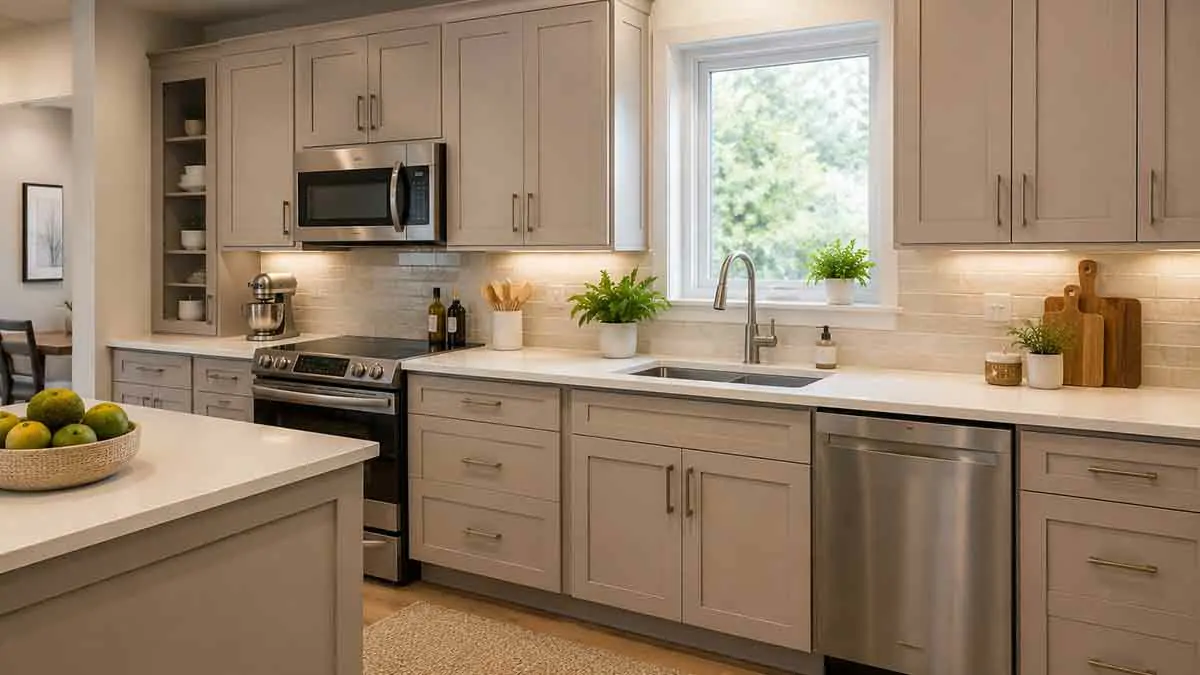
Kitchen cabinets have a major influence on both the appearance and functionality of a kitchen. When the cabinets are outdated, poorly organized, damaged, or simply no longer suit your needs, upgrading them can transform the room without requiring a complete kitchen remodel.
The best kitchen cabinet upgrade ideas do not always involve replacing every cabinet. Depending on their condition, you may be able to improve your kitchen with cabinet painting, new hardware, better storage systems, upgraded doors, improved lighting, or targeted replacements.
A well-planned cabinet upgrade can also make better use of existing storage while giving the kitchen a more modern and cohesive appearance.
This guide explains practical kitchen cabinet upgrade ideas, how to choose between upgrading and replacing cabinets, ways to improve cabinet storage, and common mistakes to avoid.
Table of Contents
Why Upgrade Kitchen Cabinets?
Kitchen cabinets perform two important roles: they provide storage and contribute significantly to the room’s visual design.
Upgrading them can improve:
- Storage capacity
- Organization
- Accessibility
- Appearance
- Kitchen functionality
- Durability
- Overall design
Cabinet upgrades can also be less disruptive than a complete kitchen renovation.
If the cabinet boxes are structurally sound and the existing layout works well, there may be no need to remove everything and start from scratch.
Instead, you can focus on the components that need improvement.
Assess Your Existing Kitchen Cabinets
Before deciding how to upgrade your cabinets, inspect their condition carefully.
Look at:
- Cabinet boxes
- Doors
- Drawer fronts
- Hinges
- Drawer slides
- Shelves
- Handles and knobs
- Interior surfaces
- Water damage
- Warping
- Cracks
- Loose joints
Cabinets may be good candidates for upgrading when the boxes are solid, the layout is functional, and most damage is cosmetic or limited to individual components.
Replacement may make more sense when cabinets have extensive water damage, severe structural deterioration, poor construction, or a fundamentally inefficient layout.
Paint or Refinish Kitchen Cabinets
Painting or refinishing is one of the most effective ways to change the appearance of existing cabinets.
It can be especially useful when the cabinet structure remains in good condition.
Popular cabinet colors include:
- White
- Warm white
- Light gray
- Beige
- Soft green
- Navy
- Natural wood tones
The best color depends on the kitchen’s lighting, countertop, backsplash, flooring, and overall style.
Proper preparation is essential.
Before painting, cabinets may need to be:
- Cleaned thoroughly
- Lightly sanded
- Repaired
- Primed
- Painted with an appropriate cabinet coating
- Allowed to cure properly
Poor preparation can lead to peeling, chipping, or an uneven finish.
Replace Cabinet Doors
If the cabinet boxes are still usable but the doors look outdated, replacing only the doors can provide a substantial visual change.
New doors can introduce a different style without requiring complete cabinet replacement.
Options include:
- Shaker doors
- Flat-panel doors
- Raised-panel doors
- Slab doors
- Glass-front doors
Door replacement can also make it easier to update the kitchen’s style while retaining existing cabinet storage.
Before ordering new doors, carefully measure every opening and confirm the hinge configuration and mounting requirements.
Upgrade Cabinet Hardware
Replacing knobs and handles is a relatively simple cabinet upgrade that can make the kitchen look more current.
Consider hardware based on:
- Cabinet style
- Finish
- Size
- Shape
- Ergonomics
- Hole spacing
Common finishes include:
- Brushed metal
- Polished metal
- Matte finishes
- Black
- Brass
- Bronze
Hardware should complement other kitchen elements rather than competing with them.
If replacing existing handles, matching the current mounting-hole spacing can simplify installation.
Add Soft-Close Hinges
Soft-close hinges can make cabinets quieter and more comfortable to use.
Instead of allowing doors to slam shut, the mechanism slows the door during closing.
This upgrade can be particularly useful in busy kitchens where cabinets are opened frequently.
Before purchasing hinges, verify that the replacement hardware is compatible with the existing cabinet doors and mounting system.
Upgrade Cabinet Drawer Slides
Older drawer slides may make drawers difficult to open, unstable, or noisy.
Replacing them with modern slides can improve:
- Smoothness
- Stability
- Weight capacity
- Accessibility
- Drawer lifespan
Full-extension slides can also make it easier to reach items stored at the back of deep drawers.
This can be a practical upgrade when the existing drawer boxes remain structurally sound.
Improve Cabinet Storage
One of the biggest advantages of upgrading existing cabinets is the opportunity to improve how the interior space is used.
Consider:
- Drawer organizers
- Shelf dividers
- Pull-out shelves
- Tray dividers
- Pot organizers
- Spice storage
- Lid organizers
- Vertical storage
The objective is to increase usable storage rather than simply adding more containers.
A well-organized cabinet can often provide more practical capacity without increasing its physical size.
Add Pull-Out Cabinet Organizers
Pull-out organizers can make deep cabinets easier to access.
They are useful for storing:
- Pots
- Pans
- Cleaning supplies
- Food containers
- Small appliances
- Pantry items
Instead of reaching into the back of a cabinet, you can pull the storage system forward.
Measure the cabinet opening and interior dimensions carefully before purchasing an organizer.
Use Deep Drawers More Effectively
Deep drawers can be particularly useful for heavy or bulky kitchen items.
They can store:
- Pots
- Pans
- Mixing bowls
- Food containers
- Plates
- Kitchen equipment
Use dividers to prevent items from shifting around.
Keep frequently used items in the most accessible drawers and reserve lower or less convenient storage for items used occasionally.
Upgrade Corner Cabinets
Corner cabinets can be difficult to use efficiently.
Depending on the configuration, possible solutions include:
- Lazy Susans
- Pull-out corner systems
- Corner drawers
- Adjustable shelving
- Specialized organizers
The right solution depends on the cabinet design and available space.
Avoid installing an expensive corner mechanism if it provides little practical benefit. A simple storage arrangement may sometimes work better.
Improve Under-Sink Storage
The cabinet beneath the kitchen sink often contains plumbing that reduces usable storage space.
You can improve it with:
- Pull-out bins
- Cleaning supply organizers
- Adjustable shelves
- Door-mounted racks
- Stackable containers
Do not block plumbing connections or shutoff valves.
Storage systems should leave enough access for maintenance and potential repairs.
Add Vertical Cabinet Storage
Vertical dividers can make narrow cabinet areas much more useful.
They can organize:
- Baking sheets
- Cutting boards
- Serving trays
- Large lids
- Cooling racks
Instead of stacking these items horizontally, store them vertically so individual pieces are easier to remove.
Install Cabinet Lighting
Cabinet lighting can improve both functionality and appearance.
Useful options include:
- Under-cabinet lighting
- Interior cabinet lighting
- Above-cabinet lighting
- LED strip lighting
Under-cabinet lighting is particularly useful because it illuminates countertop work areas.
Interior lighting can also be useful inside deep pantry cabinets or glass-front cabinets.
Electrical installation should comply with applicable local requirements.
Add Glass-Front Cabinet Doors
Glass-front doors can create a lighter visual appearance and provide a way to display attractive dishes or glassware.
They work particularly well when the cabinet contents are organized.
However, glass-front cabinets expose their contents, so they may not be ideal for storing items that create visual clutter.
Consider using glass doors on only a few upper cabinets instead of converting the entire kitchen.
Consider Open Cabinet Shelving
Open shelving can provide accessible storage and make upper sections of a kitchen feel less enclosed.
It can be useful for:
- Everyday dishes
- Mugs
- Cookbooks
- Decorative items
- Frequently used ingredients
However, open shelving requires regular organization and cleaning.
It should be considered an addition to the storage system rather than automatically replacing all upper cabinets.
Upgrade Cabinet Interior Accessories
Cabinet interiors can often be improved without changing the exterior.
Useful accessories include:
- Drawer dividers
- Spice racks
- Cutlery trays
- Plate organizers
- Lid holders
- Pull-out baskets
- Shelf risers
- Waste-bin systems
Choose accessories according to what you actually store.
A small number of well-chosen organizers can be more useful than filling every cabinet with storage products.
Add a Pantry Cabinet
A dedicated pantry cabinet can significantly improve food storage.
If space allows, consider a tall cabinet with:
- Adjustable shelves
- Pull-out shelves
- Door storage
- Multiple storage levels
A narrow pantry cabinet can also work well in a compact kitchen where a full walk-in pantry is not practical.
Keep frequently used foods between comfortable reach heights and use higher shelves for occasional-use items.
Choose the Right Cabinet Colors
Cabinet color can change the entire appearance of a kitchen.
Light Cabinet Colors
White, cream, and light gray can help create a bright and open appearance.
Dark Cabinet Colors
Navy, charcoal, deep green, and other darker tones can create contrast and visual depth.
Natural Wood
Wood finishes can introduce warmth and texture.
The right choice depends on:
- Natural light
- Kitchen size
- Countertop color
- Flooring
- Backsplash
- Wall color
- Overall design style
A small kitchen does not necessarily need white cabinets, but the overall palette should remain visually balanced.
Mix Cabinet Finishes Carefully
Using two cabinet finishes can create visual interest.
For example, some kitchens combine:
- Light upper cabinets with darker lower cabinets
- Painted cabinets with natural wood
- Neutral cabinets with a contrasting island
However, too many finishes can make a kitchen feel fragmented.
Choose a clear primary finish and use the secondary finish as an intentional accent.
Upgrade Cabinet Trim and Moldings
Cabinet trim can improve the finished appearance of a kitchen.
Possible upgrades include:
- Crown molding
- Decorative end panels
- Base trim
- Cabinet fillers
- Light rail molding
These details can help integrate cabinets with the surrounding walls and ceiling.
However, decorative trim should not interfere with cabinet doors, ventilation, or access to appliances.
Replace Damaged Cabinets
Not every cabinet needs to be replaced when only a few are damaged.
If one or two cabinet boxes are severely affected by:
- Water damage
- Warping
- Structural failure
- Severe deterioration
Targeted replacement may be more practical than replacing the entire kitchen.
Try to match the replacement cabinet with the existing dimensions and finish whenever possible.
If matching is difficult, consider using the replacement as an intentional design element, such as a contrasting cabinet section.
Custom vs. Stock Cabinet Upgrades
Cabinet upgrades can use different levels of customization.
Stock Components
Stock doors, hardware, organizers, and accessories are generally easier to source and can help control costs.
Semi-Custom Components
These offer more choices in dimensions, finishes, and configurations.
Custom Components
Custom cabinetry can be designed around unusual spaces and specific storage requirements but generally requires more planning and budget.
Choose the level of customization based on the problem you are trying to solve.
There is little benefit in paying for custom components when a standard solution already meets your needs.
DIY Kitchen Cabinet Upgrades
Several cabinet upgrades may be suitable for experienced DIY homeowners.
Potential projects include:
- Painting cabinets
- Replacing knobs and handles
- Installing simple organizers
- Replacing compatible hinges
- Installing drawer hardware
- Adding some shelving
- Installing certain cabinet accessories
Before beginning, make sure you understand the tools, measurements, materials, and installation requirements.
More complicated work may require professional assistance.
When to Hire a Professional
Professional help may be appropriate for:
- Custom cabinet modifications
- Structural changes
- Complex electrical work
- Major plumbing changes
- Cabinet installation
- Countertop modifications
- Significant layout changes
A professional can also help when cabinet alignment, measurements, or integration with appliances is critical.
Electrical and plumbing work should be performed according to local requirements and by appropriately qualified professionals where required.
How Much Do Kitchen Cabinet Upgrades Cost?
There is no single cost for upgrading kitchen cabinets because the project can range from a simple hardware replacement to extensive cabinet modifications.
The final budget depends on:
- Number of cabinets
- Cabinet condition
- Painting or refinishing
- Door replacement
- Hardware
- Hinges
- Drawer slides
- Storage accessories
- Lighting
- Professional labor
- Customization
A simple hardware upgrade can require a relatively small budget, while replacing cabinet doors, refinishing an entire kitchen, or installing new cabinetry can represent a much larger investment.
Before starting, create a list of every planned upgrade and separate essential improvements from optional features.
How to Plan a Kitchen Cabinet Upgrade
A structured process can help prevent unnecessary spending.
Step 1: Inspect the Cabinets
Determine whether the cabinet boxes, doors, drawers, and hardware are still usable.
Step 2: Identify the Biggest Problems
Decide whether the main issue is appearance, storage, accessibility, durability, or layout.
Step 3: Set a Budget
Determine how much you are comfortable spending and keep a reserve for unexpected repairs.
Step 4: Choose the Upgrade Level
Decide whether you need:
- Cosmetic upgrades
- Storage improvements
- Hardware replacement
- Door replacement
- Cabinet refinishing
- Partial cabinet replacement
- Complete replacement
Step 5: Measure Carefully
Measure cabinet openings, doors, drawers, and available interior space before ordering components.
Step 6: Select Materials and Hardware
Choose finishes that work with the existing countertop, backsplash, flooring, appliances, and lighting.
Step 7: Complete Functional Upgrades First
Improve hinges, drawer slides, storage systems, and damaged components before focusing on decorative details.
Step 8: Complete the Exterior Updates
Paint, refinish, replace doors, install hardware, and add trim as appropriate.
Step 9: Organize the Cabinets
Place frequently used items in convenient locations and use organizers where they provide genuine value.
Step 10: Review the Finished Kitchen
Check that doors and drawers open properly, hardware is secure, lighting works correctly, and storage remains accessible.
Common Kitchen Cabinet Upgrade Mistakes
Replacing Good Cabinets Unnecessarily
If the existing cabinet boxes are structurally sound, complete replacement may not be necessary.
Ignoring Water Damage
Cabinet damage around sinks and plumbing should be investigated before cosmetic upgrades are completed.
Buying Hardware Without Measuring
Different handles and hinges can have different mounting dimensions.
Measure before ordering.
Installing Too Many Organizers
Storage accessories can consume usable space if they are not selected carefully.
Choosing Cabinet Colors in Isolation
Cabinet color should work with countertops, flooring, backsplash, walls, and lighting.
Forgetting Appliance Clearances
Cabinet modifications should not interfere with refrigerators, ovens, dishwashers, or other appliances.
Blocking Plumbing Access
Under-sink organizers should leave pipes and shutoff valves accessible.
Focusing Only on Appearance
A cabinet upgrade should improve how the kitchen functions, not just how it looks.
Using Poor-Quality Hardware
Frequently used doors and drawers benefit from durable hinges, slides, and handles.
Making Changes Without a Measurement Plan
Even small cabinet modifications require accurate measurements.
Are Kitchen Cabinet Upgrades Worth It?
Kitchen cabinet upgrades can be worthwhile when the existing cabinets are structurally sound but need improvements in appearance, storage, or usability.
They can provide several benefits:
- Improved organization
- Better accessibility
- Updated appearance
- Extended cabinet usefulness
- Greater storage efficiency
- Less disruption than a full remodel
However, upgrades may not be the best solution when cabinets have extensive structural damage or when the existing kitchen layout is fundamentally inefficient.
In those situations, more extensive remodeling may provide better long-term results.
Final Thoughts
The best kitchen cabinet upgrade ideas focus on improving both appearance and functionality.
You do not always need to replace an entire kitchen to achieve a meaningful transformation. Painting cabinets, replacing doors, upgrading hardware, improving drawer systems, adding pull-outs, and reorganizing storage can make existing cabinetry much more useful.
Start by evaluating the condition of your cabinets and identifying the problems that matter most. Then choose upgrades that directly address those problems.
When the cabinet structure is sound, targeted improvements can provide an effective way to modernize the kitchen while avoiding unnecessary construction and expense.
Frequently Asked Questions
What is the easiest way to upgrade kitchen cabinets?
Replacing cabinet hardware is one of the simplest upgrades. Painting or refinishing cabinets can create a much larger visual change while retaining the existing cabinet structure.
Is it cheaper to upgrade cabinets or replace them?
Upgrading existing cabinets is often less expensive when the cabinet boxes are structurally sound and the layout already works well. The actual savings depend on the condition and scope of the project.
Can I paint my existing kitchen cabinets?
Yes, many existing cabinets can be painted when their surfaces are suitable and properly prepared. Cleaning, sanding, priming, and using an appropriate cabinet coating are important for durability.
How can I make kitchen cabinets more functional?
Add pull-out shelves, drawer organizers, vertical dividers, corner storage systems, pantry organizers, and other accessories that address specific storage problems.
Are soft-close hinges worth installing?
Soft-close hinges can improve everyday usability by reducing slamming and making cabinet doors quieter and smoother to operate.
How can I improve deep kitchen cabinets?
Pull-out shelves, drawers, and other sliding organizers can make deep cabinets easier to access and reduce items getting lost at the back.
Should I replace kitchen cabinet doors?
Replacing doors can be a practical option when the cabinet boxes are in good condition but the existing doors are outdated or damaged.
How can I upgrade kitchen cabinets without replacing them?
Consider painting, refinishing, new hardware, soft-close hinges, drawer slides, storage organizers, lighting, glass-front doors, and targeted replacement of damaged components.
Should kitchen cabinets match the island?
They do not have to match exactly. A contrasting island can create visual interest, but the finishes should still work together as part of a cohesive design.
When should kitchen cabinets be completely replaced?
Complete replacement may make more sense when cabinets have extensive structural damage, significant water damage, poor construction, or a layout that no longer meets the household’s needs.