
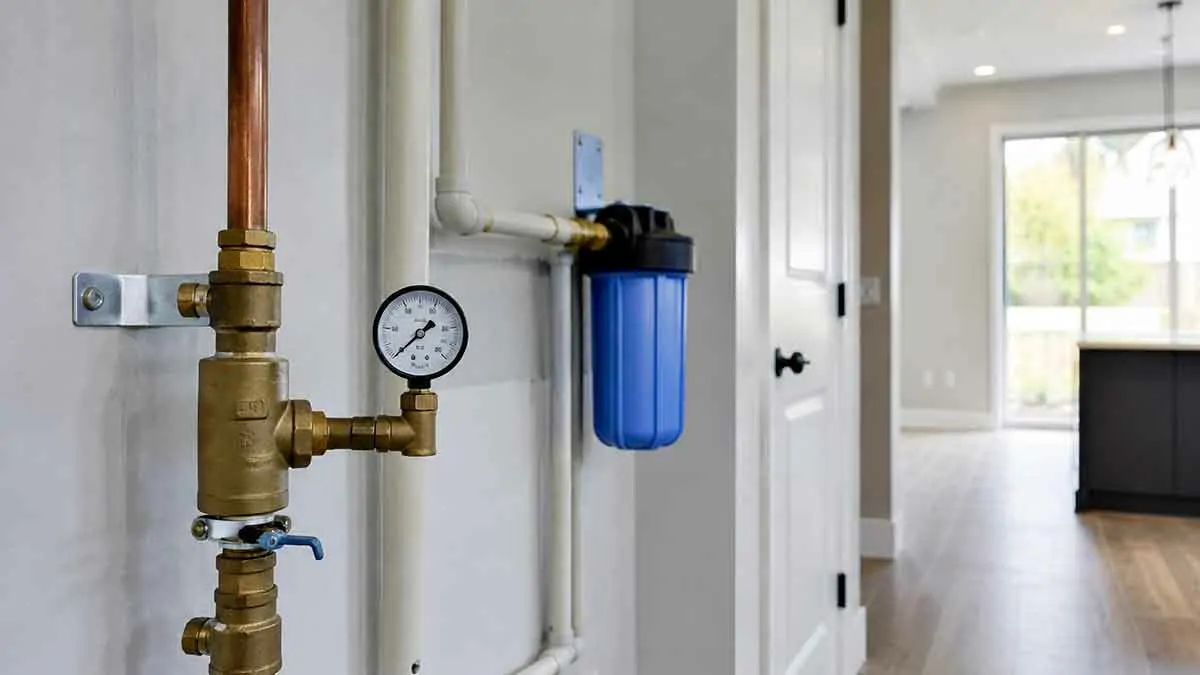
Low water pressure can make everyday tasks frustrating. Showers may feel weak, faucets may take longer to fill containers, and appliances such as washing machines or dishwashers may perform more slowly.
However, low water pressure does not always mean that the entire plumbing system needs to be replaced. The cause may be as simple as a clogged faucet aerator or partially closed shutoff valve, or it may involve a pressure regulator, supply line, plumbing restriction, leak, or municipal water supply.
The right solution starts with identifying whether the problem affects one fixture, several fixtures, or the entire house. This guide explains how to diagnose low water pressure, what homeowners can safely check, which solutions may improve pressure, and when professional plumbing service is appropriate.
Table of Contents
What Is Water Pressure?
Water pressure is the force that pushes water through the plumbing system.
It is commonly measured in pounds per square inch, or PSI.
Water pressure affects how strongly water flows from:
- Faucets
- Showers
- Toilets
- Appliances
- Outdoor hose connections
Pressure and flow are related but are not exactly the same thing. A plumbing restriction can reduce the amount of water delivered even when static pressure appears normal.
What Causes Low Water Pressure?
Low water pressure can have many causes.
Common possibilities include:
- Partially closed valves
- Clogged faucet aerators
- Mineral buildup
- Clogged showerheads
- Plumbing leaks
- Corroded pipes
- Restricted supply lines
- Faulty pressure regulators
- Low municipal water pressure
- Water meter restrictions
- Pressure-reducing equipment
- Problems with private wells or pumps
The first step is determining the extent and timing of the problem.
Check Whether the Problem Is Local or Whole-House
Turn on several fixtures and compare their performance.
If only one faucet or shower has weak pressure, the problem may be local to that fixture.
If several fixtures have low pressure, investigate the plumbing system or water supply.
If pressure suddenly drops throughout the home, look for a valve problem, leak, supply issue, or other system-wide cause.
Test Your Home’s Water Pressure
A simple water-pressure gauge can provide useful information.
For a meaningful reading:
- Attach the gauge to a suitable hose connection.
- Make sure water use inside the home is minimized.
- Open the connection as appropriate.
- Read the pressure.
- Compare the result with the plumbing system’s requirements.
For a more complete diagnosis, a plumber may measure both static pressure and pressure while water is flowing.
Pressure can vary depending on the water supply, elevation, plumbing configuration, and time of day.
Check the Main Water Shutoff Valve
A partially closed main shutoff valve can restrict water entering the home.
Locate the main valve and check whether it appears fully open.
Do not force a valve that is stuck or severely corroded. A damaged valve may need professional replacement.
Check Fixture Shutoff Valves
Individual fixtures usually have shutoff valves beneath sinks or near toilets.
Make sure the appropriate valve is fully open.
A partially closed valve can reduce flow to that fixture without affecting the rest of the house.
Clean Faucet Aerators
Faucet aerators can collect:
- Mineral deposits
- Sediment
- Rust particles
- Debris
A clogged aerator can make a faucet appear to have low water pressure.
Remove and clean the aerator if it can be safely removed. Replace it if it is damaged or heavily clogged.
Clean or Replace Showerheads
Mineral deposits can restrict water flow through showerhead openings.
If a shower suddenly has weaker flow:
- Remove the showerhead if practical.
- Inspect the openings.
- Clean mineral deposits according to the manufacturer’s instructions.
- Replace the showerhead if it is badly restricted.
Do not assume that replacing a showerhead with a high-flow model is always the best solution. Local water-efficiency requirements may limit fixture flow rates.
Check for Clogged Fixtures
Sediment and mineral buildup can affect:
- Faucets
- Showerheads
- Toilet fill valves
- Appliance supply connections
If only one fixture is affected, inspect that fixture before making larger plumbing changes.
Inspect the Pressure Regulator
Some homes have a pressure-reducing valve or pressure regulator that controls incoming water pressure.
A malfunctioning regulator can cause:
- Low water pressure
- Pressure fluctuations
- Changes in pressure throughout the house
Because regulators are part of the home’s plumbing system, replacement or adjustment should generally be handled by a qualified plumber.
Check for Plumbing Leaks
A leak can reduce available water flow and cause serious property damage.
Check accessible areas around:
- Sinks
- Toilets
- Water heaters
- Washing machines
- Dishwashers
- Exposed pipes
- Basement plumbing
Look for:
- Dampness
- Water stains
- Corrosion
- Mold-like odors
- Unexpectedly high water use
- Sound of running water when fixtures are off
If you suspect a significant hidden leak, shut off the water when appropriate and seek professional assistance.
Look for Corroded or Restricted Pipes
Older plumbing systems may develop internal corrosion or mineral buildup.
This can gradually reduce the effective diameter of pipes and restrict water flow.
Signs may include:
- Gradually declining water pressure
- Discolored water
- Corrosion around exposed plumbing
- Weak flow from multiple fixtures
- Frequent plumbing problems
If restricted pipes are suspected, a professional plumbing inspection can help determine whether repair, replacement, or another solution is appropriate.
Check the Water Meter
In some homes, problems near the water meter or service connection can affect water delivery.
Homeowners should not tamper with utility-owned equipment.
If the issue appears to be associated with the meter or municipal connection, contact the water utility or an appropriate plumbing professional.
Consider Municipal Water Pressure
The home may not be the source of the problem.
Municipal water pressure can vary because of:
- Local infrastructure
- Demand
- Elevation
- Water-main work
- Utility settings
- Neighborhood conditions
Ask the local water utility whether there are known pressure issues if multiple homes in the area are experiencing similar symptoms.
Check the Water Supply Line
The pipe supplying water from the main connection to the house can affect pressure.
Potential problems include:
- Corrosion
- Leaks
- Restrictions
- Undersized piping
- Damage
Replacing a water service line is a significant plumbing project and should be evaluated professionally.
Inspect the Plumbing System
A whole-house pressure problem may require a systematic plumbing inspection.
A plumber may evaluate:
- Main shutoff valves
- Pressure regulator
- Water meter connection
- Supply piping
- Distribution piping
- Leaks
- Corrosion
- Fixture restrictions
This approach is more reliable than replacing individual fixtures without identifying the underlying cause.
Consider a Water Pressure Booster Pump
A booster pump can increase water pressure when the incoming supply is consistently inadequate and the plumbing system is suitable for one.
A booster system may be useful when:
- Municipal pressure is low
- The home is located at a higher elevation
- The building has multiple floors
- Water demand is high
- Existing pressure is below the home’s practical requirements
A booster pump should be correctly sized and installed with appropriate controls and protection.
Do not install a booster pump simply to compensate for an undiagnosed leak or plumbing restriction.
Check for Problems With the Water Heater
If pressure is weak only at hot-water fixtures, the problem may be related to the hot-water system rather than the entire plumbing supply.
Possible causes include:
- Restricted valves
- Sediment buildup
- Blocked connections
- Water heater plumbing restrictions
If cold-water pressure is normal but hot-water flow is weak throughout the home, professional diagnosis may be appropriate.
Understand Hot vs. Cold Water Pressure
Comparing hot and cold water can help narrow down the source.
Low Pressure on Hot and Cold Water
Possible causes include:
- Main supply restriction
- Pressure regulator problem
- Plumbing restriction
- Low incoming pressure
- Leak
Low Pressure Only on Hot Water
Possible causes may include:
- Water heater restriction
- Hot-water valve problem
- Sediment
- Restricted hot-water piping
This distinction can save time when troubleshooting.
Check Water Pressure in Older Homes
Older homes may have plumbing systems that are more vulnerable to restrictions.
Common issues include:
- Corroded metal pipes
- Mineral buildup
- Aging valves
- Older service lines
- Multiple repairs over time
If pressure has declined gradually over many years, a broader plumbing assessment may be more useful than replacing individual fixtures.
Avoid Excessively High Water Pressure
Increasing water pressure is not always better.
Excessive pressure can contribute to:
- Plumbing leaks
- Fixture damage
- Appliance problems
- Pipe stress
- Water hammer
- Premature component failure
A qualified plumber can determine whether the home’s pressure is appropriate for its plumbing system and local requirements.
Do not adjust a pressure regulator blindly.
How to Increase Shower Water Pressure
If the shower is the main problem:
- Check the showerhead for mineral buildup.
- Confirm the shower valve opens properly.
- Compare hot and cold water flow.
- Check whether other fixtures have normal pressure.
- Inspect accessible supply restrictions.
- Replace a severely clogged showerhead when appropriate.
If the entire house has low pressure, changing the showerhead alone will not solve the underlying issue.
How to Improve Faucet Water Pressure
For a weak faucet:
- Clean the aerator.
- Check the fixture shutoff valves.
- Inspect the faucet cartridge where appropriate.
- Compare hot and cold flow.
- Check whether nearby fixtures have normal pressure.
If only one faucet remains weak after basic cleaning, the faucet itself may require repair or replacement.
How to Improve Water Pressure Throughout the House
For whole-house low pressure, investigate the problem in this order:
- Confirm the pressure with a gauge.
- Check the main shutoff valve.
- Check whether multiple fixtures are affected.
- Look for leaks.
- Check the pressure regulator.
- Consider municipal supply pressure.
- Inspect the main supply line.
- Evaluate internal plumbing restrictions.
- Consider a booster system if appropriate.
This process helps avoid spending money on equipment before identifying the actual cause.
Water Pressure vs. Water Flow
Water pressure and water flow should not be confused.
Pressure is the force available in the plumbing system.
Flow is the volume of water delivered over a period of time.
A clogged pipe may allow normal static pressure when no water is being used but provide poor flow when several fixtures operate simultaneously.
For this reason, a pressure reading alone may not explain every low-flow problem.
When Low Water Pressure Is an Emergency
Low pressure itself is not usually an emergency, but a sudden pressure change can sometimes signal a serious plumbing problem.
Seek prompt assistance when low pressure is accompanied by:
- Visible water leaks
- Flooding
- Sudden unexplained pressure loss
- Major pipe damage
- Unusual water discoloration
- Water pooling around the home
- A suspected underground service-line leak
If water damage is occurring, shut off the main water supply when safe and appropriate.
When to Call a Plumber
Professional plumbing service is appropriate when:
- Multiple fixtures have low pressure
- Pressure changes suddenly
- A pressure regulator appears faulty
- You suspect a hidden leak
- Pipes may be severely corroded
- The water service line may be restricted
- A booster pump is being considered
- Water pressure remains low after basic troubleshooting
- Plumbing modifications are required
A professional can measure pressure and flow and identify restrictions that are difficult to diagnose from the fixtures alone.
Common Water Pressure Mistakes
Replacing Fixtures Without Diagnosing the Problem
A new faucet or showerhead will not fix a whole-house supply problem.
Installing a Booster Pump Too Quickly
A booster pump can mask an underlying leak or restriction.
Ignoring a Sudden Pressure Drop
A sudden change deserves investigation.
Adjusting the Pressure Regulator Blindly
Incorrect adjustment can create excessive pressure and damage plumbing components.
Assuming Pressure and Flow Are the Same
A pressure reading does not always reveal a flow restriction.
Forcing Old Valves
Old valves can break or leak when forced.
Ignoring Municipal Supply Problems
The source of low pressure may be outside the property.
Simple Water Pressure Troubleshooting Checklist
Use this checklist to identify the likely source:
- Check whether one or multiple fixtures are affected
- Compare hot and cold water flow
- Test static water pressure
- Check the main shutoff valve
- Check fixture shutoff valves
- Clean faucet aerators
- Inspect showerheads
- Look for visible leaks
- Check for unusual water usage
- Inspect accessible plumbing
- Check the pressure regulator
- Consider municipal water pressure
- Check the water service line when appropriate
- Look for signs of pipe corrosion
- Avoid blindly increasing pressure
- Consider a booster system only after diagnosis
- Call a plumber for persistent whole-house problems
Final Thoughts
Increasing water pressure in your house starts with identifying why the pressure or flow is low. A clogged aerator, restricted showerhead, or partially closed valve may be easy to correct, while whole-house problems can involve the pressure regulator, supply line, municipal water pressure, leaks, or aging plumbing.
Start by determining whether the issue affects one fixture or the entire home. Check accessible valves and fixtures, measure water pressure when appropriate, and look for signs of leaks or plumbing restrictions.
If pressure remains low throughout the house, avoid simply installing a booster pump or adjusting the pressure regulator without diagnosis. A qualified plumber can evaluate pressure, flow, supply piping, and plumbing restrictions to determine the safest and most effective solution.
The goal is not to achieve the highest possible pressure. It is to maintain water pressure and flow that are appropriate for the home’s plumbing system while avoiding excessive pressure that can damage pipes, fixtures, and appliances.