
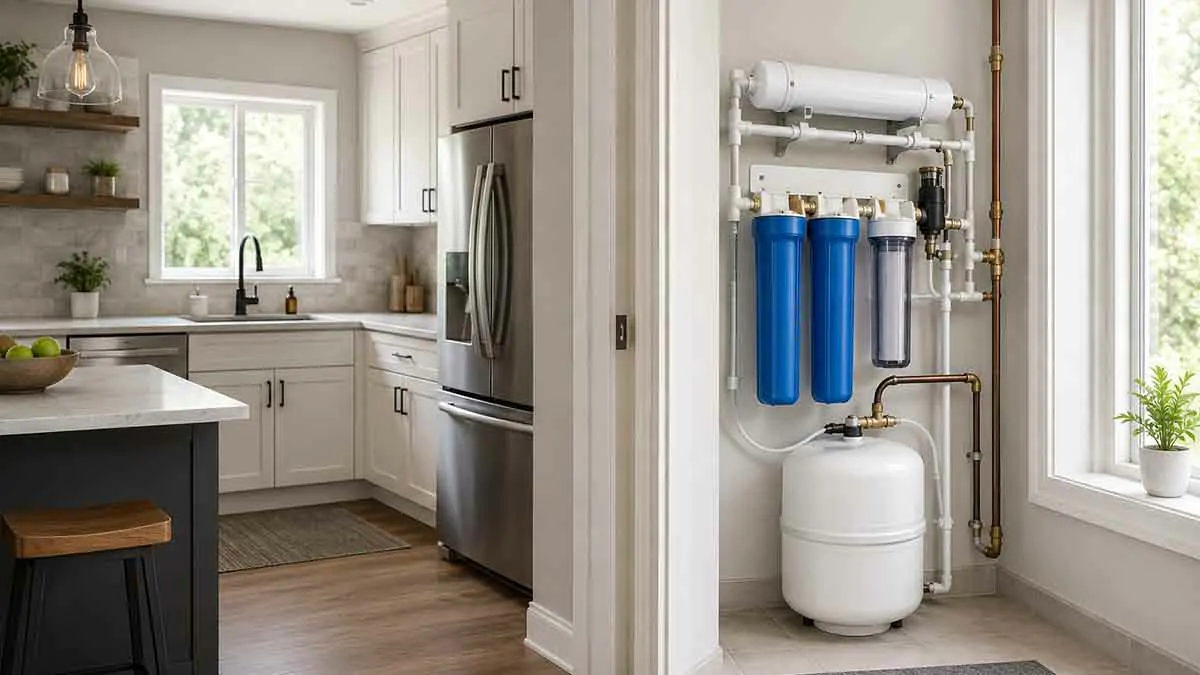
Clean water is essential for drinking, cooking, bathing, and everyday household use. Although municipal and private water supplies are treated or managed to meet applicable standards, the quality of water reaching your home can still vary depending on the source, plumbing, local conditions, and the contaminants that may be present.
A home water filtration system can help improve water quality by reducing specific contaminants, unpleasant tastes, odors, or particles. However, no single filtration system is ideal for every home. The right choice depends on your water source, water quality concerns, household size, budget, and the contaminants you want to reduce.
This complete guide explains the main types of home water filtration systems, how they work, their advantages and limitations, and how to choose the right system for your home.
Table of Contents
What Is a Home Water Filtration System?
A home water filtration system is equipment designed to treat water before or as it is used in the home.
Depending on the system, filtration may remove or reduce:
- Sediment
- Dirt and suspended particles
- Chlorine
- Unpleasant tastes and odors
- Certain chemicals
- Some microorganisms
- Specific dissolved contaminants
Different filtration technologies target different contaminants. This is why choosing a system based only on price or general claims about “clean water” can lead to disappointing results.
The first step is to understand what is actually in your water.
Why Consider a Water Filtration System?
Homeowners choose water filtration for several reasons.
One common reason is improving the taste and smell of drinking water. Chlorine and other substances can affect the taste of tap water, while sediment can make water appear cloudy.
A filtration system may also be useful when testing identifies specific contaminants that need to be reduced.
Other potential benefits include:
- Better-tasting drinking water
- Reduced unpleasant odors
- Cleaner-looking water
- Reduced sediment
- Protection for certain household fixtures
- Greater convenience than buying bottled water
The benefits depend on the filtration technology and the quality of the incoming water.
Test Your Water First
Water testing should be one of the first steps before buying a filtration system.
A water test can help identify which contaminants are actually present and whether treatment is necessary.
Testing may be especially important for homes that use private wells because water quality can vary and may change over time.
Depending on your location and water source, testing may examine factors such as:
- Bacteria
- Lead
- Nitrates
- pH
- Hardness
- Iron
- Manganese
- Chlorine
- Other contaminants
Do not assume that an expensive filtration system is automatically better. A system should be selected based on the specific water-quality problem it is designed to address.
Main Types of Home Water Filtration Systems
There are several types of residential water treatment systems.
The most common include:
- Sediment filters
- Activated carbon filters
- Reverse osmosis systems
- UV water treatment systems
- Whole-house filtration systems
- Point-of-use filters
- Water softeners
These technologies are not interchangeable.
Some primarily filter particles, while others are designed to reduce dissolved substances or address microorganisms.
Sediment Filters
Sediment filters are designed to remove suspended particles from water.
They can reduce materials such as:
- Sand
- Dirt
- Rust particles
- Silt
- Other physical debris
Sediment filtration is often used as a first stage in a larger water treatment system.
A sediment filter can help protect downstream filtration equipment from particles that might otherwise clog more sensitive components.
However, sediment filters are not designed to remove every type of dissolved contaminant.
Activated Carbon Filters
Activated carbon is one of the most common filtration technologies used in homes.
Carbon filters can help reduce certain substances that affect taste and odor, including chlorine. Depending on the specific filter design and certification, some carbon systems can also reduce additional contaminants.
Carbon filters are available in many forms, including:
- Faucet filters
- Refrigerator filters
- Under-sink systems
- Countertop filters
- Whole-house systems
The performance of a carbon filter depends on the type and amount of carbon, water flow rate, contact time, and the contaminants being targeted.
Always check the manufacturer’s specifications and certification claims.
Reverse Osmosis Systems
Reverse osmosis, commonly called RO, uses a semipermeable membrane to reduce a wide range of dissolved substances.
A typical under-sink RO system may include several treatment stages, such as:
- Sediment filtration
- Carbon filtration
- Reverse osmosis membrane
- Additional polishing filtration
Reverse osmosis can be useful when water testing identifies contaminants that conventional carbon filtration may not adequately address.
However, RO systems have some disadvantages.
They may:
- Require more installation space
- Produce wastewater during operation
- Require filter and membrane replacement
- Operate more slowly than a standard faucet
- Need proper installation and maintenance
Because RO systems vary significantly, review the specific contaminant reduction claims for the model you are considering.
UV Water Treatment Systems
Ultraviolet systems use UV light to inactivate certain microorganisms in water.
They are commonly considered for homes using private wells or other water sources where microbial contamination is a concern.
UV treatment does not work like a conventional filter that physically removes particles. Instead, it uses ultraviolet energy as part of the treatment process.
UV systems may require relatively clear water to work effectively, so they are sometimes combined with sediment filtration or other treatment technologies.
Follow the manufacturer’s maintenance schedule and replace lamps or other components when required.
Whole-House Water Filtration Systems
A whole-house filtration system treats water before it reaches multiple fixtures throughout the home.
This is often called point-of-entry treatment.
A whole-house system can be useful when the water-quality issue affects the entire home rather than just drinking water.
Potential benefits include:
- Treatment at multiple fixtures
- Filtered water for showers and sinks
- Reduced sediment throughout the plumbing
- Less need for individual faucet filters
However, whole-house systems generally cost more than point-of-use filters and may require professional installation.
The system must also be properly sized for the home’s peak water demand.
Point-of-Use Water Filters
Point-of-use systems treat water at a specific fixture.
Common examples include:
- Under-sink filters
- Faucet-mounted filters
- Countertop systems
- Refrigerator filters
- Filtered water pitchers
These systems are often less expensive and easier to install than whole-house systems.
They can be a practical choice when the main goal is improving drinking and cooking water rather than treating every water outlet in the home.
Water Softeners vs Water Filters
Water softeners and water filters are not the same thing.
A water softener is primarily designed to address hardness caused by minerals such as calcium and magnesium.
Hard water can contribute to:
- Mineral scale
- Spotting on fixtures
- Reduced soap performance
- Scale buildup in plumbing and appliances
A filtration system may target sediment, chlorine, taste, odor, or specific contaminants.
If hard water is the primary problem, a softener may be more appropriate than a standard filter.
Some homes may benefit from combining softening with filtration when they have multiple water-quality concerns.
Whole-House vs Under-Sink Filtration
The choice between whole-house and under-sink filtration depends on what you want to accomplish.
Whole-House Filtration
A whole-house system may be better when:
- The entire home’s water needs treatment.
- Sediment affects multiple fixtures.
- You want filtered water from several taps.
- A private well has a specific water-quality issue.
Under-Sink Filtration
An under-sink system may be better when:
- Drinking water is the main concern.
- You want a lower initial cost.
- You have limited installation requirements.
- You only need treatment at one fixture.
There is no universal winner. The best system depends on the source and intended use of the water.
How to Choose the Right Water Filtration System
Start by identifying the problem you want to solve.
Ask yourself:
- Is the water from a municipal supply or private well?
- Does the water have an unusual taste or odor?
- Is there visible sediment?
- Has the water been tested?
- Are specific contaminants present?
- Do you need treatment throughout the home?
- What is your budget?
- How much maintenance are you willing to perform?
Once you know the answers, compare systems designed specifically for those conditions.
Check Filter Certifications
Certification can help consumers compare filtration products more confidently.
Look for recognized testing and certification information that matches the contaminant you want to reduce.
Do not assume that a product certified for one contaminant will automatically reduce another.
Review the product’s documentation carefully and verify:
- Which contaminants are tested
- What reduction claims are supported
- The rated capacity
- Required replacement schedule
- Installation requirements
Certification should be considered alongside your water test results and household needs.
Consider Flow Rate
Flow rate is particularly important for whole-house filtration systems.
If a filter cannot handle the home’s water demand, you may notice reduced water pressure or inadequate flow when multiple fixtures are operating.
Consider your home’s peak water demand, including situations where several showers, faucets, appliances, or toilets may be used at the same time.
A professional can help determine the appropriate system capacity.
Consider Filter Replacement Costs
The purchase price is only part of the total cost of a filtration system.
Filters, membranes, UV lamps, replacement cartridges, and other components may need periodic replacement.
Before purchasing, determine:
- How often filters must be replaced
- The cost of replacement cartridges
- Whether replacement parts are readily available
- Whether professional service is required
- How much water the system uses during treatment
A system with a low purchase price can become expensive if replacement components are costly or need frequent replacement.
Maintain Your Water Filtration System
Regular maintenance is essential for filtration performance.
Depending on the system, maintenance may include:
- Replacing filter cartridges
- Cleaning filter housings
- Replacing RO membranes
- Sanitizing certain components
- Cleaning UV systems
- Checking connections for leaks
- Monitoring water pressure
- Inspecting the system for damage
Follow the manufacturer’s recommended maintenance schedule.
A neglected filter can become less effective and may restrict water flow.
Signs Your Filter May Need Replacement
A filtration system may provide warning signs when maintenance is needed.
Look for:
- Reduced water flow
- Changes in taste
- Changes in odor
- Cloudy water
- Visible sediment
- Filter replacement indicators
- Leaks around filter housings
Do not wait until a filter becomes completely clogged before replacing it.
Following the recommended replacement interval helps maintain consistent performance.
Common Water Filtration Mistakes
Homeowners can make several mistakes when choosing or maintaining a filtration system.
Buying Without Testing the Water
Without knowing what is actually in the water, you may choose a system that does not address the primary problem.
Choosing Based Only on Price
The cheapest system may not provide the filtration performance you need.
Ignoring Replacement Costs
Ongoing filter and maintenance costs can become significant over several years.
Installing an Undersized System
An undersized whole-house filter may restrict water flow when demand is high.
Failing to Replace Filters
Old filters may become clogged or lose effectiveness.
Assuming All Filters Remove the Same Contaminants
Different filtration technologies are designed for different purposes.
How Much Does a Home Water Filtration System Cost?
The cost of a water filtration system can vary considerably.
Simple pitcher or faucet filters are generally less expensive than under-sink systems, while whole-house filtration and advanced treatment systems can require a larger investment.
Total cost may include:
- Equipment
- Installation
- Replacement filters
- Membranes
- UV lamps
- Plumbing modifications
- Professional maintenance
Instead of comparing only the initial purchase price, consider the total cost of ownership over several years.
When to Consider Professional Installation
Some filtration systems are relatively simple to install, while others require plumbing modifications.
Professional installation may be appropriate for:
- Whole-house systems
- Reverse osmosis systems
- Complex multi-stage systems
- UV treatment systems
- Systems requiring new plumbing connections
- Homes with unusual water-quality problems
Professional installation can also help ensure proper flow direction, connections, pressure, drainage, and system operation.
Final Thoughts
The best home water filtration system is not necessarily the most expensive or most advanced model. It is the system that addresses the specific water-quality problems in your home while providing the capacity, maintenance requirements, and long-term cost that fit your needs.
Start by testing your water and identifying the contaminants or quality concerns you want to address. Then compare filtration technologies, certifications, flow rates, installation requirements, replacement costs, and maintenance schedules.
Whether you choose a simple point-of-use filter, an under-sink reverse osmosis system, or a whole-house treatment setup, selecting the right technology for your water is the key to getting reliable results.