
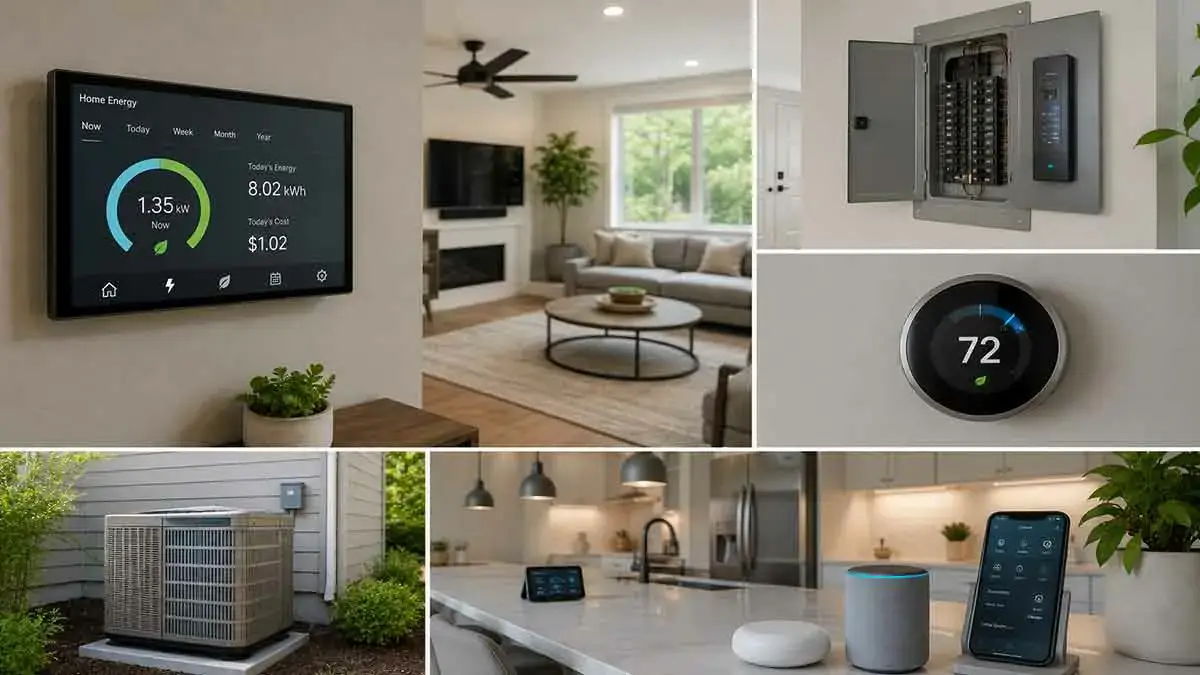
Home energy monitoring gives homeowners a clearer view of how electricity is used throughout the property. Instead of relying only on a monthly utility bill, an energy monitoring system can reveal consumption patterns, identify major electrical loads, and show how energy use changes throughout the day, week, or year.
This information can be especially useful when trying to reduce energy costs. A homeowner may discover that heating and cooling, water heating, electric vehicle charging, or another major load accounts for much more electricity than expected.
However, monitoring energy use does not automatically reduce consumption. Its real value comes from using the data to identify waste, prioritize improvements, evaluate household habits, and verify whether energy-saving measures are producing measurable results.
This guide explains how home energy monitoring works, what to monitor, how to interpret the data, and how to use energy information to make smarter efficiency decisions.
Table of Contents
What Is Home Energy Monitoring?
Home energy monitoring is the process of measuring and analyzing electricity consumption in a home.
Depending on the system, monitoring can occur at several levels.
Whole-Home Energy Monitoring
A whole-home monitor measures electricity entering the property and provides an overall picture of household consumption.
It can help you understand:
- Total electricity consumption
- Daily usage patterns
- Peak consumption periods
- Seasonal changes
- Changes after efficiency improvements
Whole-home monitoring is often a practical starting point because it provides useful information without requiring every appliance to be monitored individually.
Circuit-Level Energy Monitoring
Circuit-level monitoring measures electricity use on individual circuits within the electrical panel.
This can provide more detailed information about major loads such as:
- HVAC systems
- Electric water heaters
- Electric vehicle chargers
- Kitchen circuits
- Laundry equipment
- Other high-consumption electrical systems
Appliance-Level Monitoring
Some monitoring devices measure electricity consumption from individual outlets or appliances.
These can be useful for smaller loads such as:
- Televisions
- Computers
- Entertainment systems
- Refrigerators
- Lamps
- Portable equipment
The right level of monitoring depends on how much detail you need.
Why Monitor Home Energy Use?
A utility bill tells you how much electricity you consumed and what you were charged, but it usually does not explain which systems caused that consumption.
Energy monitoring can help answer questions such as:
- Which systems use the most electricity?
- When is household energy use highest?
- How much electricity does the HVAC system consume?
- Are certain devices using power continuously?
- How does energy use change between seasons?
- Did an efficiency improvement actually reduce consumption?
- What happens when household habits change?
This information allows energy-efficiency decisions to be based on actual household data rather than assumptions.
How Home Energy Monitoring Works
Many whole-home energy monitors use sensors installed around electrical conductors inside or near the home’s electrical panel.
The sensors measure electrical activity and send information to a monitoring device.
Depending on the system, the information may be displayed through:
- A mobile app
- A web dashboard
- A dedicated display
- A smart home platform
Some systems provide near-real-time consumption information, while others focus on historical trends and reports.
Panel-mounted monitoring equipment involves electrical work. Installation should follow manufacturer requirements and applicable electrical codes, and work inside an electrical panel should be performed by a qualified professional when required.
1. Start With Your Utility Bill
Before purchasing an energy monitor, review your existing utility bills.
Look for:
- Monthly electricity consumption
- Seasonal changes
- Electricity rates
- Peak usage periods
- Time-of-use pricing
- Fixed charges
- Other applicable fees
Your utility bill provides an important reference point for understanding overall consumption.
It also helps you determine whether reducing electricity use is likely to produce meaningful savings under your current rate structure.
2. Establish an Energy-Use Baseline
Record normal electricity consumption before making major efficiency improvements.
A baseline provides a reference for future comparisons:
Before improvement → After improvement
For example, if you improve attic insulation, compare electricity consumption during similar weather conditions before and after the work.
A baseline makes it easier to determine whether an improvement actually changed energy consumption.
3. Monitor Energy Use by Time of Day
Electricity consumption often changes significantly throughout the day.
You may see higher usage:
- In the morning
- During cooking periods
- During HVAC operation
- In the evening
- During laundry
- During electric vehicle charging
Time-based data can reveal patterns that are difficult to identify from a monthly utility bill.
It may also show whether certain loads operate during expensive peak-rate periods.
4. Identify Your Largest Energy Loads
Most homes have a relatively small number of major electrical loads that account for a significant portion of consumption.
Common examples include:
- Air conditioning
- Electric heating
- Heat pumps
- Water heaters
- Clothes dryers
- Ovens
- Electric vehicle chargers
Start by understanding these larger loads before spending time analyzing small devices.
Reducing a major load’s operating time or improving its efficiency can often have a greater impact than eliminating small amounts of standby consumption.
5. Monitor Heating and Cooling
Heating and cooling can be among the largest sources of household energy use.
Monitoring can help show how much electricity HVAC equipment consumes under different conditions.
Compare energy use with:
- Outdoor temperature
- Thermostat settings
- HVAC runtime
- Occupancy
- Season
A sudden change in HVAC energy consumption may justify further investigation into insulation, air leakage, equipment condition, or thermostat settings.
For homes that use natural gas, propane, heating oil, or another fuel for heating, electricity monitoring alone will not show total heating energy consumption. Fuel use must be considered separately.
6. Monitor Water Heater Energy Use
Electric water heaters can represent a substantial electrical load.
Monitoring can help identify:
- When the water heater operates most often
- Changes in consumption over time
- Effects of household hot-water habits
- Potential changes after efficiency improvements
If water heating represents a large share of electricity consumption, consider whether insulation, lower hot-water demand, equipment maintenance, or an efficient replacement could provide meaningful savings.
7. Monitor Refrigerators and Freezers
Refrigerators and freezers operate for long periods, making them useful appliances to monitor.
An older appliance may consume more electricity than expected.
If monitoring shows unusually high consumption, investigate:
- Appliance age
- Door seals
- Temperature settings
- Condenser cleanliness
- Overall condition
Do not automatically replace an appliance because it uses electricity. Compare expected energy savings with the purchase and installation cost.
8. Monitor Laundry Appliances
Laundry equipment can create noticeable electricity demand, particularly electric clothes dryers.
Monitoring can help reveal:
- Number of cycles
- Energy consumption per cycle
- Frequency of use
- Differences between operating settings
- Peak usage periods
Washing machines generally use less electricity than electric dryers, although total consumption depends on the equipment and operating pattern.
Reducing unnecessary dryer use and choosing appropriate cycles can help control energy consumption.
9. Monitor Kitchen Appliances
Kitchen appliances can contribute to household electricity consumption.
Potential loads include:
- Ovens
- Dishwashers
- Refrigerators
- Freezers
- Microwaves
- Coffee makers
Monitoring can help distinguish appliances that consume substantial energy from those that have relatively minor effects.
This can prevent homeowners from spending time and money trying to eliminate insignificant loads while overlooking major ones.
10. Identify Standby Energy Use
Some electronic devices continue to consume electricity even when they appear to be switched off.
Potential examples include:
- Game consoles
- Televisions
- Computers
- Network equipment
- Chargers
- Smart home devices
- Entertainment systems
Standby consumption varies significantly between devices.
Use monitoring to determine whether standby energy is meaningful in your home before investing in additional controls or replacement equipment.
11. Monitor Home Office Equipment
A home office may contain several devices that remain powered for long periods.
These may include:
- Desktop computers
- Monitors
- Printers
- Networking equipment
- Speakers
- Other electronics
Monitoring can show how much electricity the complete setup uses during working hours and when equipment is left operating unnecessarily.
Use sleep modes, automatic power management, and shutdown schedules where appropriate.
12. Track Electric Vehicle Charging
Home electric vehicle charging can become one of the largest electrical loads on a property.
Monitoring can help determine:
- Electricity used per charging session
- Daily charging consumption
- Monthly charging demand
- Charging schedules
- Changes in electricity use after purchasing an EV
If the utility uses time-of-use pricing, monitoring can also help determine whether changing charging times could reduce electricity costs.
13. Compare Weekday and Weekend Usage
Household energy use can change significantly between workdays and weekends.
Compare consumption during:
- Weekdays
- Weekends
- Holidays
- Periods of higher occupancy
Higher weekend consumption may result from:
- Increased HVAC operation
- More cooking
- Additional laundry
- Longer entertainment use
- More time spent at home
Identifying these patterns can help explain why energy use changes from one day to another.
14. Compare Seasonal Energy Consumption
Energy demand often changes throughout the year.
Compare consumption during:
- Winter
- Spring
- Summer
- Fall
Seasonal comparisons can reveal whether heating, cooling, water heating, or another load dominates energy use during specific periods.
For example, a large summer increase may indicate that cooling is the primary driver of higher electricity consumption.
15. Compare Energy Use With Weather
Weather is essential when interpreting energy data.
A home may consume substantially more electricity during an unusually hot or cold period simply because HVAC equipment is operating longer.
A more useful comparison combines:
Energy consumption + outdoor temperature + HVAC operation
This helps distinguish weather-driven increases from changes caused by equipment performance or household behavior.
When possible, compare similar weather periods rather than comparing arbitrary months.
16. Measure the Results of Energy Improvements
Energy monitoring is particularly valuable after making efficiency improvements.
Potential projects to evaluate include:
- Attic insulation
- Air sealing
- HVAC replacement
- Heat pump installation
- Smart thermostat installation
- Efficient appliances
- Window improvements
- Water-heating upgrades
Compare energy consumption before and after the improvement while accounting for weather, occupancy, and changes in household behavior.
The goal is not simply to see whether energy use changed, but to determine whether the improvement produced a meaningful change under comparable conditions.
17. Understand Energy Consumption vs. Cost
Energy consumption and energy cost are related but not identical.
Electricity consumption is commonly measured in:
kWh — kilowatt-hours
The final utility bill may also include:
- Energy charges
- Time-of-use rates
- Demand charges
- Fixed fees
- Taxes
- Other adjustments
Therefore, reducing kWh does not always produce a proportional reduction in the total bill.
Always interpret monitoring data in the context of the actual utility rate.
18. Understand Your Electricity Rate
Your electricity pricing structure can influence which energy-saving actions are most valuable.
Rates may vary according to:
- Time of day
- Season
- Total consumption
- Demand
- Utility plan
For example, shifting a flexible electrical load away from an expensive peak period may reduce costs even if total electricity consumption changes very little.
Understanding the rate structure makes energy monitoring much more useful.
19. Set Energy-Use Alerts
Some energy monitoring systems allow homeowners to create alerts.
Useful alerts may include:
- Unusually high consumption
- Unexpected overnight usage
- Continuous energy consumption
- Extended HVAC operation
- Abnormally high circuit activity
Alerts can help identify unusual behavior or potential equipment problems sooner.
20. Detect Unusual Energy Consumption
A sudden change in electricity use can have many causes.
Potential explanations include:
- HVAC problems
- Water heater issues
- Appliance malfunction
- Equipment operating unexpectedly
- A change in household behavior
- Extreme weather
Monitoring does not automatically identify the cause, but it can show when further investigation is warranted.
21. Identify Equipment That Runs Continuously
Some equipment is designed to operate for long periods, while other loads should operate only occasionally.
If monitoring shows continuous electricity use, first determine whether the behavior is normal.
Potential examples include:
- Refrigeration
- Pumps
- Network equipment
- Water heaters
- HVAC equipment
Do not disconnect equipment simply because it consumes electricity. Understand its intended operating cycle and safety requirements first.
22. Use Monitoring to Prioritize Improvements
Energy monitoring is most valuable when it helps determine where to focus effort and money.
For example:
If cooling represents a large share of electricity consumption, investigate:
- Air conditioning efficiency
- Attic insulation
- Air sealing
- Ductwork
- Solar heat gain
- Thermostat operation
If water heating is a major load, investigate:
- Hot-water demand
- Equipment efficiency
- Pipe insulation
- Water heater condition
The goal is to address the largest practical opportunities first.
23. Combine Energy Monitoring With Smart Home Controls
Energy monitoring can provide information, while smart controls can help change how equipment operates.
Possible combinations include:
- Energy monitoring + smart thermostat
- Energy monitoring + smart plugs
- Energy monitoring + smart lighting
- Energy monitoring + smart appliances
- Energy monitoring + home automation
However, adding connected devices does not automatically produce savings.
Controls should be configured to reduce unnecessary operation rather than simply increasing the number of connected devices in the home.
24. Use Smart Plugs for Smaller Loads
Smart plugs with energy-monitoring capabilities can measure compatible appliances and electronics.
They may be useful for:
- Televisions
- Computers
- Lamps
- Entertainment systems
- Small appliances
Always verify the electrical rating before connecting a device.
High-power equipment such as HVAC systems, electric water heaters, dryers, and EV chargers generally requires an appropriate dedicated monitoring approach rather than a standard smart plug.
25. Consider Circuit-Level Energy Monitoring
Whole-home monitoring provides an overall picture, while circuit-level monitoring provides more detailed information.
Circuit monitoring can help distinguish electricity consumption among major loads.
It may be particularly useful when you need to understand:
- HVAC consumption
- Electric water heating
- EV charging
- Kitchen circuits
- Laundry equipment
- Other dedicated circuits
Because circuit-level systems may require access to the electrical panel, installation should be performed by a qualified professional where required.
26. Choose an Energy Monitor With Useful Features
When comparing monitoring systems, consider the information you actually need.
Useful features may include:
- Whole-home monitoring
- Circuit-level monitoring
- Real-time consumption data
- Historical trends
- Mobile access
- Energy-use alerts
- Data export
- Utility-rate integration
- Smart home integration
- Measurement accuracy
- Data privacy controls
Avoid paying for advanced features that you are unlikely to use.
27. Consider Energy Data Privacy
Connected energy monitors may collect detailed information about household electricity patterns.
Energy data can potentially reveal:
- When people are home
- When major appliances operate
- Daily routines
- Seasonal patterns
- Changes in occupancy
Before purchasing a connected monitoring system, review its privacy policy, data-storage practices, account security, and data-sharing terms.
28. Understand Installation Requirements
Energy monitors can have very different installation requirements.
Some devices plug directly into an outlet and monitor a compatible appliance.
Others require sensors or equipment to be installed at the electrical panel.
Panel-mounted systems can expose users to electrical hazards and should not be installed by someone who is not qualified to work inside an electrical panel.
Follow the manufacturer’s installation instructions and applicable electrical requirements.
29. Avoid Monitoring Without Taking Action
Collecting energy data is only the beginning.
A useful energy-monitoring process is:
Monitor → Identify → Evaluate → Improve → Measure Again
For example:
- Monitor household consumption.
- Identify a major energy load.
- Determine why it consumes significant energy.
- Evaluate practical improvement options.
- Make the improvement.
- Monitor the results again.
This turns energy monitoring from a data-collection exercise into a practical energy-efficiency strategy.
Whole-Home vs. Circuit-Level Energy Monitoring
Whole-Home Monitoring
Whole-home monitoring is generally best for:
- Overall electricity consumption
- Daily trends
- Seasonal comparisons
- Identifying peak usage periods
- Establishing a household baseline
It provides a broad picture without requiring detailed measurement of every circuit.
Circuit-Level Monitoring
Circuit-level monitoring is better suited to:
- Identifying major electrical loads
- Measuring HVAC consumption
- Tracking EV charging
- Monitoring electric water heating
- Investigating unusual circuit activity
For many homeowners, whole-home monitoring is a sensible starting point. More detailed circuit monitoring can be added when the broader data shows that additional information would be useful.
How to Use Energy Monitoring to Reduce Energy Costs
A practical energy-monitoring strategy can follow six steps.
Step 1: Establish a Baseline
Measure normal electricity consumption before making significant changes.
Step 2: Identify Major Loads
Determine which systems consume the most electricity.
Step 3: Investigate the Cause
Consider whether high consumption is caused by:
- Long operating hours
- Inefficient equipment
- Poor insulation
- Air leakage
- Household habits
- Utility-rate timing
Step 4: Prioritize Improvements
Focus on opportunities with realistic savings potential and reasonable implementation costs.
Step 5: Measure the Results
Compare consumption before and after the improvement while considering weather and occupancy.
Step 6: Adjust the Strategy
Keep improvements that provide meaningful benefits and reconsider measures that produce little practical value.
Home Energy Monitoring Checklist
Before Installing a Monitor
- Review recent utility bills
- Understand your electricity rate
- Establish an energy baseline
- Identify major electrical loads
- Decide how much monitoring detail you need
- Compare whole-home and circuit-level options
- Review installation requirements
- Check data privacy practices
After Installation
- Monitor daily consumption
- Compare weekdays and weekends
- Review seasonal patterns
- Track HVAC consumption
- Identify major electrical loads
- Set useful alerts
- Investigate unusual usage
- Monitor energy-saving improvements
- Compare results over time
Common Home Energy Monitoring Mistakes
Focusing Only on the Monthly Bill
The bill shows consumption and cost but usually does not explain which systems caused the usage.
Ignoring Weather
Higher HVAC consumption during extreme weather may be expected.
Always consider outdoor conditions when comparing periods.
Judging Results From a Single Day
Daily electricity consumption can vary considerably.
Longer-term trends usually provide more useful information.
Assuming the Highest-Power Appliance Uses the Most Energy
Energy consumption depends on both power and operating time.
A device that uses moderate power continuously can consume more electricity than a high-power appliance that operates briefly.
Monitoring Too Many Devices
Not every appliance needs individual monitoring.
Start with the whole home or major loads and add detailed monitoring only when it answers a useful question.
Making Expensive Improvements Without Measuring Results
Energy monitoring can help determine whether an investment actually changed consumption.
Treating Data as a Diagnosis
An unusual energy pattern does not automatically mean that equipment is defective.
Use the data as a signal for further investigation rather than as a definitive diagnosis.
Final Thoughts
Home energy monitoring can transform a basic utility bill into a much clearer picture of how electricity is being used throughout the property.
By tracking consumption over time, identifying major loads, comparing energy use with weather, understanding electricity rates, and measuring changes after efficiency improvements, homeowners can make better decisions about energy-saving investments.
The monitor itself does not create energy savings. The value comes from what you do with the information.
Start with a baseline, identify the largest practical sources of consumption, investigate unusual patterns, make targeted improvements, and measure the results again.
When combined with efficient HVAC equipment, proper insulation, air sealing, smart controls, efficient appliances, and sensible household habits, home energy monitoring can become a useful tool for reducing unnecessary energy consumption and controlling long-term energy costs.