
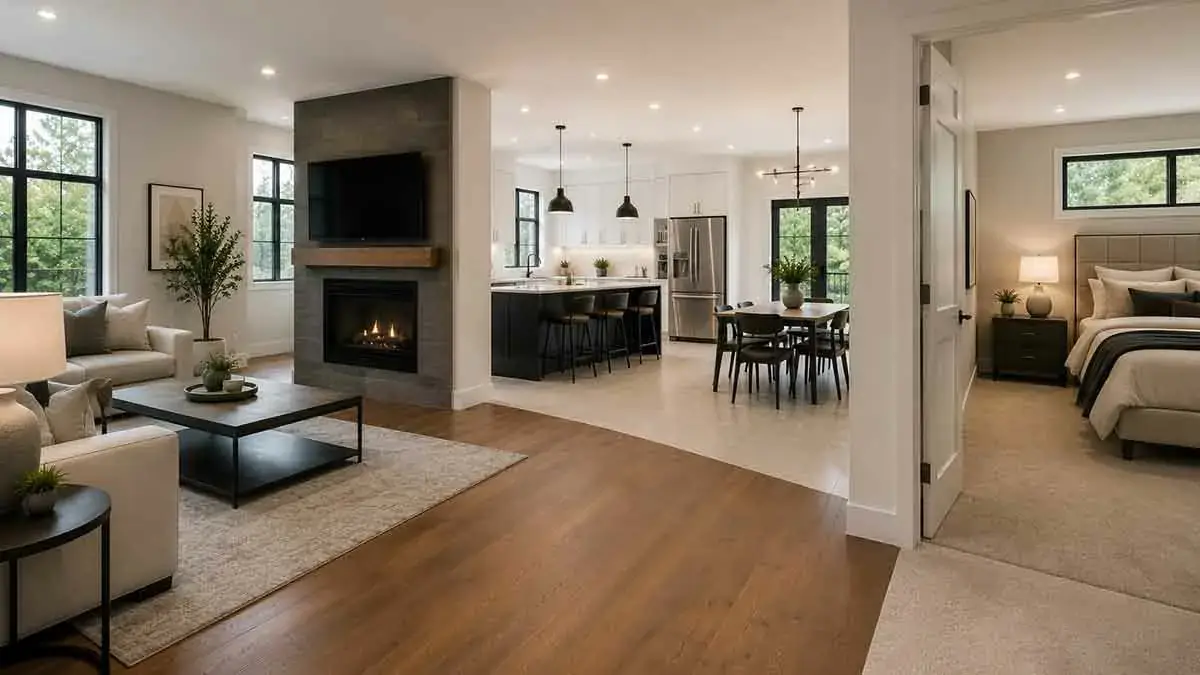
Choosing the right flooring is an important part of improving or renovating a home. Flooring affects much more than appearance. It influences comfort, durability, maintenance, moisture resistance, acoustics, indoor usability, and how connected different rooms feel.
The best flooring for a bedroom may not be the best choice for a bathroom or kitchen. High-traffic areas need durable surfaces, while bedrooms and living spaces may benefit from softer or warmer materials. Bathrooms and laundry rooms require careful attention to moisture, while garages and workshops need flooring that can handle impact, chemicals, and heavy use.
There is also no need to use exactly the same flooring throughout the entire house. A coordinated flooring plan can create visual continuity while allowing each room to use a material suited to its specific conditions.
This guide explains the most common flooring options, their advantages and limitations, and how to choose the right flooring for every room in your home.
Table of Contents
What to Consider Before Choosing Flooring
Before purchasing flooring, evaluate the conditions of the room and how the space is used.
Durability
Consider how much traffic the room receives.
Entryways, hallways, kitchens, and family rooms generally experience more wear than bedrooms or formal spaces.
Moisture Resistance
Bathrooms, kitchens, laundry rooms, basements, and mudrooms may experience spills, humidity, or leaks.
Choose flooring that is appropriate for the expected moisture conditions and follow the manufacturer’s installation requirements.
Maintenance
Think about how much cleaning and maintenance you are willing to perform.
Some floors require regular refinishing or sealing, while others need only routine sweeping and damp cleaning.
Comfort
Hard surfaces are durable and easy to clean, but softer materials may be more comfortable in bedrooms, offices, and living spaces.
Appearance
Flooring should work with the home’s:
- Wall colors
- Furniture
- Cabinets
- Doors
- Trim
- Lighting
- Overall design style
Budget
Consider the complete project cost rather than only the price per square foot.
The total may include installation, subfloor preparation, underlayment, transitions, trim, removal, and disposal.
Installation Requirements
Every flooring system has specific requirements.
These may include:
- Level subfloors
- Moisture testing
- Underlayment
- Adhesives
- Expansion gaps
- Grout
- Sealing
Understanding these requirements before purchasing can prevent expensive problems later.
Hardwood Flooring
Hardwood remains one of the most popular flooring options for residential interiors because of its natural appearance, durability, and long service life.
Common species include:
- Oak
- Maple
- Hickory
- Walnut
- Cherry
Hardwood can be stained or finished in different ways to complement a wide range of interior styles.
Advantages of Hardwood
- Natural appearance
- Long service life
- Can often be refinished
- Works with many design styles
- Adds warmth to interior spaces
Disadvantages of Hardwood
- Can be damaged by excessive moisture
- Can scratch or dent
- Requires maintenance
- Usually costs more than some alternatives
Hardwood is generally well suited to living rooms, dining rooms, bedrooms, and hallways where moisture exposure is limited.
Engineered Hardwood Flooring
Engineered hardwood consists of a real wood surface attached to a layered core.
It provides the appearance of hardwood while offering greater dimensional stability than some solid wood flooring applications.
Advantages
- Real wood surface
- Wide range of finishes
- Attractive appearance
- Good dimensional stability
- Suitable for many interior rooms
Disadvantages
- Still sensitive to excessive moisture
- Product quality varies
- Refinishing options depend on the thickness of the wood surface
Engineered hardwood can work well in bedrooms, living rooms, dining rooms, and other relatively dry areas.
Laminate Flooring
Laminate flooring uses multiple layers and a decorative surface designed to replicate wood, stone, or other materials.
It can provide an attractive appearance at a relatively accessible price.
Advantages
- Wide variety of designs
- Good resistance to everyday wear
- Easy routine maintenance
- Many installation systems are relatively straightforward
- Available at different price levels
Disadvantages
- Cannot generally be refinished like hardwood
- Moisture resistance varies by product
- Damaged sections may require replacement
- Some products look less natural than real wood
Always check whether a specific laminate product is suitable for the room where it will be installed.
Luxury Vinyl Flooring
Luxury vinyl flooring is available primarily as planks and tiles and can replicate the appearance of wood or stone.
It is widely used because many products offer strong resistance to everyday moisture and wear.
Advantages
- Many water-resistant or waterproof options
- Easy to maintain
- Wide range of designs
- Comfortable compared with some hard surfaces
- Suitable for many rooms
Disadvantages
- Quality varies considerably
- Can still be scratched or damaged
- Lower-quality products may have a less realistic appearance
Always check the manufacturer’s specifications before installing vinyl in moisture-prone areas.
Vinyl Sheet Flooring
Vinyl sheet flooring is installed as a continuous surface with relatively few seams.
This makes it useful in rooms where easy cleaning and moisture resistance are priorities.
Common applications include:
- Bathrooms
- Laundry rooms
- Kitchens
- Utility spaces
Professional installation can be valuable because seams, edges, and subfloor preparation affect long-term performance.
Tile Flooring
Tile is one of the most versatile flooring categories.
Common choices include:
- Ceramic tile
- Porcelain tile
- Natural stone
Tile is especially useful in areas where durability and moisture resistance are important.
The quality of the substrate and installation can significantly affect the finished result.
Ceramic Tile
Ceramic tile is available in many colors, shapes, textures, and patterns.
It can be suitable for:
- Kitchens
- Bathrooms
- Entryways
- Laundry rooms
- Mudrooms
Proper substrate preparation, grout installation, and sealing where required are important for long-term performance.
Porcelain Tile
Porcelain is a dense form of ceramic tile with low water absorption.
It can be manufactured to resemble:
- Wood
- Stone
- Concrete
- Marble
Porcelain is often a strong choice for high-traffic and moisture-prone areas.
Natural Stone Flooring
Natural stone can provide a distinctive and premium appearance.
Common options include:
- Marble
- Granite
- Slate
- Limestone
- Travertine
Different stones vary in porosity, hardness, slip resistance, and maintenance requirements.
Some require periodic sealing, so maintenance should be considered before installation.
Concrete Flooring
Concrete can provide a modern and minimalist appearance.
It can work well in:
- Basements
- Garages
- Workshops
- Modern interiors
- Utility spaces
Potential concerns include hardness, cracking, moisture, and surface temperature.
Carpet Flooring
Carpet provides softness, warmth, and acoustic benefits.
It is commonly used in:
- Bedrooms
- Living rooms
- Family rooms
- Home offices
Advantages of Carpet
- Soft underfoot
- Helps absorb sound
- Provides warmth
- Available in many styles and colors
Disadvantages of Carpet
- Can stain
- Requires regular vacuuming
- Not suitable for most wet areas
- Can retain dirt and odors if poorly maintained
Choose carpet according to the room’s traffic level and cleaning requirements.
Carpet Tiles
Carpet tiles can be useful in home offices, basements, playrooms, and other areas where localized replacement may be valuable.
If one section becomes damaged or stained, individual tiles can sometimes be replaced instead of replacing the entire floor.
Cork Flooring
Cork is a resilient material with a distinctive natural appearance.
It can provide:
- Cushioning
- Warmth
- Sound reduction
- A comfortable walking surface
Cork may work well in bedrooms, offices, and other relatively dry areas.
Moisture exposure and the manufacturer’s finish requirements should be considered.
Bamboo Flooring
Bamboo can provide a wood-like appearance and is available in several construction types.
Durability varies depending on the manufacturing process and product quality.
Before choosing bamboo, consider:
- Construction
- Finish
- Moisture exposure
- Installation requirements
- Manufacturer specifications
Rubber Flooring
Rubber flooring is durable, resilient, and resistant to impact.
It is commonly used in:
- Home gyms
- Workshops
- Utility areas
Its cushioning can make it particularly useful where standing or exercise activities are common.
Epoxy Flooring
Epoxy coatings are commonly applied over suitable concrete surfaces to create a durable finished floor.
They are particularly popular in:
- Garages
- Workshops
- Utility areas
Successful installation depends heavily on proper concrete preparation, cleaning, and moisture conditions.
Best Flooring for Every Room
Best Flooring for the Living Room
Living rooms require a balance between appearance, comfort, durability, and maintenance.
Popular choices include:
- Hardwood
- Engineered hardwood
- Luxury vinyl
- Laminate
- Carpet
- Tile
Hardwood and engineered wood create a traditional or natural appearance, while carpet can provide additional softness and sound absorption.
If the living room connects directly to other spaces, consider flooring that creates visual continuity.
Best Flooring for the Bedroom
Bedrooms generally prioritize comfort and warmth.
Suitable options include:
- Carpet
- Hardwood
- Engineered hardwood
- Luxury vinyl
- Cork
- Laminate
Hard flooring can be made more comfortable with an appropriately sized area rug.
Best Flooring for the Kitchen
Kitchen flooring must handle:
- Food spills
- Water
- Frequent cleaning
- Heavy foot traffic
- Dropped objects
Popular choices include:
- Porcelain tile
- Ceramic tile
- Luxury vinyl
- Sheet vinyl
- Suitable engineered flooring
Choose the material according to its moisture resistance, maintenance requirements, and installation system.
Best Flooring for the Bathroom
Bathrooms require flooring that can handle regular moisture.
Common options include:
- Porcelain tile
- Ceramic tile
- Luxury vinyl
- Sheet vinyl
Pay particular attention to:
- Water resistance
- Slip resistance
- Seams
- Drainage
- Waterproofing
- Installation quality
The flooring itself is only one part of bathroom moisture protection.
Best Flooring for Hallways
Hallways receive repeated foot traffic and often connect several rooms.
Good choices include:
- Hardwood
- Engineered hardwood
- Luxury vinyl
- Tile
- Laminate
Choose a material that can handle frequent use and coordinate with the rooms around it.
Best Flooring for the Entryway
Entryways experience some of the highest levels of dirt and moisture in a home.
Suitable options include:
- Porcelain tile
- Ceramic tile
- Luxury vinyl
- Stone
- Durable hardwood
An effective entry mat can reduce the amount of dirt and moisture reaching the floor.
Best Flooring for the Dining Room
Dining rooms benefit from flooring that is easy to clean and visually compatible with surrounding spaces.
Popular options include:
- Hardwood
- Engineered hardwood
- Luxury vinyl
- Laminate
- Tile
Consider food and drink spills as well as chair movement when selecting the material.
Best Flooring for the Home Office
A home office needs a balance between comfort, appearance, and durability.
Suitable options include:
- Hardwood
- Engineered wood
- Luxury vinyl
- Laminate
- Carpet
- Cork
If the room uses a rolling office chair, consider a suitable floor mat or flooring designed to tolerate chair movement.
Best Flooring for the Basement
Basements require special attention to moisture.
Potential choices include:
- Luxury vinyl
- Tile
- Concrete
- Carpet tiles
- Engineered flooring approved for basement use
Before installing any finished flooring, identify and correct moisture problems.
Best Flooring for the Laundry Room
Laundry rooms may experience leaks, humidity, and frequent cleaning.
Common choices include:
- Porcelain tile
- Ceramic tile
- Luxury vinyl
- Sheet vinyl
The flooring should be selected according to the room’s moisture conditions and the manufacturer’s installation requirements.
Best Flooring for the Garage
Garage flooring needs to tolerate demanding conditions.
Options include:
- Concrete
- Epoxy coatings
- Garage floor tiles
- Specialized rubber flooring
Consider:
- Vehicle weight
- Impact
- Chemicals
- Oil
- Temperature changes
- Cleaning
Best Flooring for a Home Gym
A home gym needs flooring that can handle impact and provide appropriate cushioning.
Common options include:
- Rubber flooring
- Rubber tiles
- Foam flooring for lighter activities
- Specialized gym flooring
The correct material and thickness depend on the equipment and activities performed in the room.
Best Flooring for a Playroom
A playroom should be comfortable, durable, and easy to clean.
Potential choices include:
- Carpet
- Carpet tiles
- Luxury vinyl
- Cork
- Durable laminate
Rugs can provide additional cushioning and warmth over hard flooring.
Best Flooring for a Mudroom
Mudrooms frequently encounter dirt, moisture, and outdoor debris.
Suitable options include:
- Porcelain tile
- Ceramic tile
- Luxury vinyl
- Stone
- Durable sheet flooring
Choose a surface that can be cleaned easily and withstand repeated use.
Best Flooring for Open-Concept Homes
Open-concept homes often benefit from consistent flooring across connected living areas.
Using the same material or complementary materials can make the home feel more cohesive.
However, rooms with significantly different moisture conditions may require different flooring.
Choosing Flooring for Different Needs
Flooring for High-Traffic Areas
High-traffic spaces require materials that can tolerate repeated use.
Potential choices include:
- Porcelain tile
- Hardwood
- Engineered wood
- Luxury vinyl
- High-quality laminate
Look at product specifications and wear ratings where available rather than judging durability only by appearance.
Flooring for Homes With Pets
Pet owners should consider:
- Scratch resistance
- Moisture resistance
- Stain resistance
- Cleaning requirements
- Traction
Luxury vinyl, tile, and selected hardwood products can work well depending on the household and the specific product.
Rugs can provide additional traction and comfort.
Flooring for Homes With Children
Families with children may prefer flooring that is durable, comfortable, and easy to clean.
Potential choices include:
- Luxury vinyl
- Laminate
- Tile
- Carpet
- Cork
The best material depends on the room and the type of activity taking place there.
Flooring for Allergy-Conscious Homes
Hard surfaces are often easier to clean than wall-to-wall carpet because they do not have the same textile surface that can collect dust and debris.
Potential options include:
- Hardwood
- Engineered wood
- Tile
- Luxury vinyl
However, flooring is only one part of indoor environmental quality. Cleaning practices, ventilation, humidity, furnishings, and other factors also matter.
Flooring Maintenance
Different flooring materials require different maintenance strategies.
Hardwood
Protect from excessive moisture and follow the manufacturer’s cleaning and refinishing recommendations.
Engineered Hardwood
Use cleaning methods appropriate for the specific finish and avoid excessive moisture.
Tile
Clean both the tile and grout regularly. Some natural stone products require periodic sealing.
Carpet
Vacuum regularly and perform deeper cleaning when necessary.
Vinyl
Routine sweeping and appropriate damp cleaning are generally sufficient for many products.
Laminate
Use cleaning methods approved for the product and avoid excessive water.
Always follow the manufacturer’s maintenance instructions.
Flooring Installation Requirements
Proper installation is essential to flooring performance.
Depending on the material, installation may require:
- Subfloor preparation
- Leveling
- Moisture testing
- Underlayment
- Adhesive
- Grout
- Expansion gaps
- Sealing
A high-quality floor can still perform poorly if it is installed over an unsuitable or improperly prepared surface.
Check the Subfloor
The subfloor should be evaluated before installing new flooring.
Look for:
- Uneven areas
- Moisture
- Rot
- Cracks
- Movement
- Structural damage
Repair underlying problems before covering them with new flooring.
Installing a new floor over an unstable or damaged subfloor can lead to movement, cracking, uneven surfaces, or premature failure.
Consider Floor Height
New flooring can change the finished floor height.
Check how this may affect:
- Doors
- Cabinets
- Appliances
- Baseboards
- Stair connections
- Room transitions
This is particularly important when replacing thick flooring with another material of significantly different thickness.
Plan Flooring Transitions
Different flooring materials often meet at doorways or between rooms.
Common transitions include:
- Hardwood to tile
- Carpet to hardwood
- Vinyl to tile
- Laminate to carpet
Plan transitions before installation so the finished surfaces meet cleanly and safely.
Avoid creating significant height differences that could become trip hazards.
Consider Radiant Floor Heating
Radiant floor heating can work with several flooring materials.
Tile and stone are commonly used because they transfer heat effectively.
Some wood, vinyl, and other materials may also be compatible, but compatibility depends on the specific product and heating system.
Always confirm requirements with both manufacturers before installation.
Choose the Right Flooring Color
Floor color can influence the visual character of a room.
Light Flooring
Light floors can make rooms appear brighter and more open.
Dark Flooring
Dark floors can create a richer and more dramatic appearance but may make dust and debris more visible.
Medium-Tone Flooring
Medium tones can provide a balance between visual warmth and everyday practicality.
Consider natural light, wall colors, furniture, room size, and the style of adjacent spaces before choosing a color.
Consider Flooring Patterns
The installation pattern can change the appearance of a room.
Popular options include:
- Straight plank
- Herringbone
- Chevron
- Basketweave
- Diagonal tile
- Large-format tile
Complex patterns can require more material, planning, and installation labor.
Compare Flooring Costs
Flooring cost should be evaluated as a complete project rather than simply by material price.
Consider:
- Flooring material
- Installation
- Subfloor preparation
- Underlayment
- Adhesive
- Grout
- Trim
- Transitions
- Removal of old flooring
- Disposal
- Delivery
- Future maintenance
A cheaper flooring product may become less economical if it requires extensive preparation or frequent replacement.
Budget Flooring Options
For projects with limited budgets, consider:
- Laminate
- Luxury vinyl
- Sheet vinyl
- Carpet
- Selected ceramic tile
Compare products based on durability, installation requirements, warranty, and room suitability.
Mid-Range Flooring Options
Mid-range projects may include:
- Quality luxury vinyl
- Engineered hardwood
- Ceramic tile
- Higher-quality laminate
- Carpet
The best value depends on the room and expected service life.
Premium Flooring Options
Premium flooring may include:
- Solid hardwood
- High-quality engineered hardwood
- Natural stone
- Custom tile
- Premium carpet
Higher material costs make installation quality even more important.
DIY Flooring Installation
Some flooring systems are suitable for experienced DIY homeowners.
Potentially accessible options include:
- Click-lock luxury vinyl
- Certain laminate systems
- Floating engineered flooring
- Carpet tiles
DIY installation still requires accurate measurements, proper preparation, appropriate tools, and careful adherence to manufacturer instructions.
Complex tile work, subfloor repairs, stairs, and moisture-sensitive installations may be better handled by professionals.
When to Hire a Flooring Professional
Professional installation may be appropriate for:
- Large flooring projects
- Complex patterns
- Natural stone
- Stairs
- Uneven subfloors
- Major subfloor repairs
- Moisture-sensitive installations
- Extensive tile work
A qualified professional can also identify problems that may not be obvious before installation.
Common Flooring Mistakes
Choosing Flooring Only for Appearance
A visually attractive floor may be unsuitable for the room’s conditions.
Ignoring Moisture
Water-sensitive materials can fail when installed in inappropriate areas.
Skipping Subfloor Preparation
Uneven or damaged subfloors can affect the finished floor.
Buying Without Accurate Measurements
Poor measurements can cause material shortages, unnecessary waste, and project delays.
Ignoring Door Clearance
A thicker floor can prevent doors from opening properly.
Using the Wrong Cleaning Products
Certain flooring finishes can be damaged by harsh chemicals or excessive water.
Choosing Only the Cheapest Product
Low initial cost does not necessarily provide the best long-term value.
Forgetting Flooring Transitions
Poorly planned transitions can create unattractive or unsafe connections.
Ignoring Acoustics
Hard surfaces can increase sound reflection, particularly in large open rooms.
How to Choose Flooring for Every Room
A simple decision process can make flooring selection easier.
Step 1: Identify the Room
Determine how the space is used.
Step 2: Evaluate Room Conditions
Consider:
- Traffic
- Moisture
- Sunlight
- Temperature
- Pets
- Children
- Cleaning requirements
Step 3: Set the Total Budget
Include materials, installation, preparation, removal, and related costs.
Step 4: Define Your Priorities
Decide whether your main priority is:
- Durability
- Comfort
- Appearance
- Maintenance
- Moisture resistance
- Cost
Step 5: Shortlist Suitable Materials
Choose several flooring types that meet the room’s basic requirements.
Step 6: Check Product Specifications
Review moisture ratings, installation requirements, maintenance instructions, warranties, and compatibility with the room.
Step 7: Inspect the Subfloor
Address moisture, movement, damage, or unevenness before installation.
Step 8: Plan Transitions
Determine where different flooring materials will meet.
Step 9: Calculate the Required Quantity
Measure carefully and account for appropriate installation waste according to the flooring manufacturer’s recommendations.
Step 10: Plan Installation and Maintenance
Make sure the flooring can be installed correctly and maintained according to its requirements.
Flooring Selection Checklist
Before purchasing flooring, ask:
- What room is the flooring for?
- How much traffic will it receive?
- Is moisture a concern?
- Are pets present?
- Are children using the space?
- How much maintenance is acceptable?
- What is the total project budget?
- Is the subfloor suitable?
- Will the new floor affect door clearance?
- Are transitions required?
- Is underlayment needed?
- Is radiant heating involved?
- Is professional installation necessary?
- How will the floor be cleaned?
- Does the product suit the room?
- Does the flooring coordinate with adjacent rooms?
Final Thoughts
The best flooring option depends on the room, the conditions it must handle, and the priorities of the household.
Hardwood can provide natural warmth and long-term appeal. Engineered hardwood offers a real wood surface with a layered construction. Luxury vinyl and tile can be practical choices for moisture-prone areas, while carpet and cork can add softness and acoustic comfort.
Instead of selecting flooring based only on appearance or price, consider durability, moisture, maintenance, comfort, installation requirements, and long-term value.
For a whole-home renovation, aim for a coordinated flooring plan rather than forcing the same material into every room. Use compatible colors and styles to create continuity while choosing materials that suit the specific needs of each space.
With careful planning, proper subfloor preparation, and correct installation, new flooring can improve the appearance, comfort, durability, and everyday functionality of your home.