
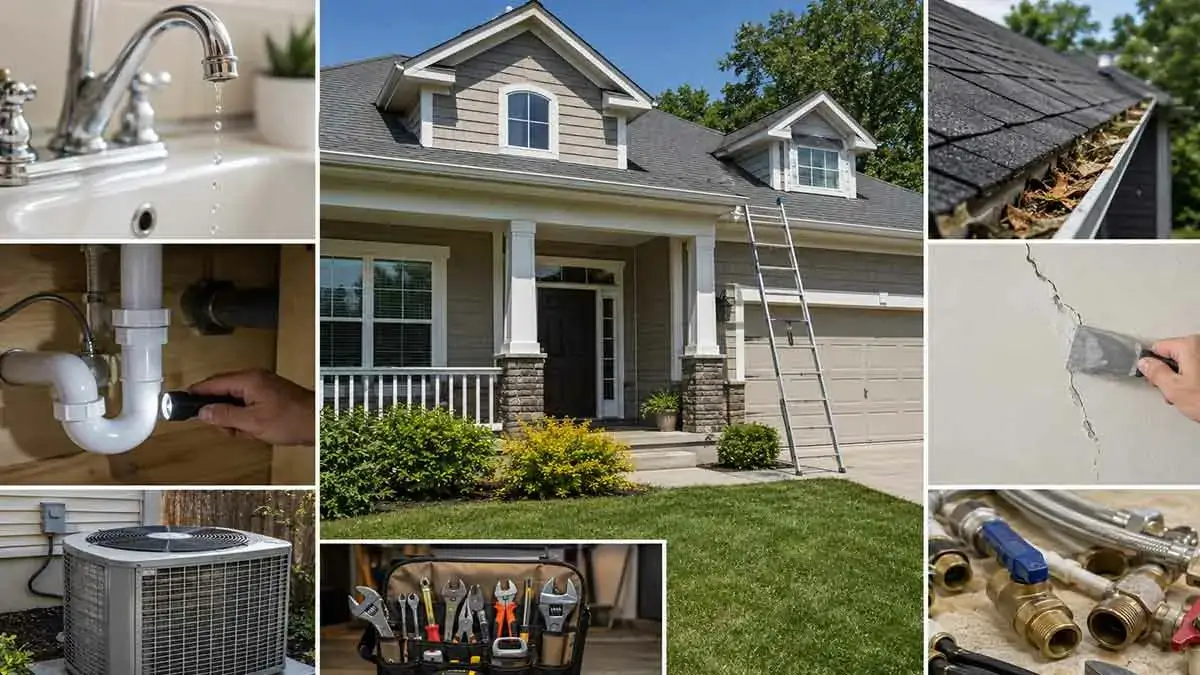
Every home develops problems over time. Some are minor maintenance issues that homeowners can address themselves, while others can indicate underlying plumbing, electrical, structural, roofing, or mechanical problems that require professional attention.
Recognizing common home problems early can help prevent additional damage, reduce repair costs, and keep the home safe and comfortable. A dripping faucet, clogged drain, drafty window, water stain, unusual HVAC noise, or flickering light may seem minor, but recurring or worsening problems should not be ignored.
The first step is to identify the symptoms, determine the likely cause, and decide whether the problem is safe to address yourself. Basic maintenance may be appropriate for simple issues, while electrical, gas, structural, roofing, and major plumbing problems often require qualified professionals.
This guide covers common home problems, their possible causes, practical solutions, and warning signs that indicate when professional help is needed.
Table of Contents
1. Leaking Faucet
A dripping faucet is one of the most common household plumbing problems. Even a slow leak can waste water and may indicate worn internal components.
Possible Causes
Common causes include:
- Worn washers
- Damaged seals
- Worn cartridges
- Loose connections
- Corroded components
How to Fix It
Turn off the water supply before disassembling the faucet.
Depending on the faucet design, the repair may involve replacing a washer, cartridge, O-ring, or other worn component. Clean mineral buildup from appropriate parts and reassemble the faucet according to its design.
When to Call a Professional
Contact a plumber if:
- The shutoff valve does not work
- The leak continues after repair
- The faucet body or plumbing is damaged
- Water is entering the wall or cabinet
- You cannot identify the source
2. Clogged Drain
Slow or blocked drains commonly occur in kitchens, bathrooms, showers, and laundry areas.
Possible Causes
Common causes include:
- Hair
- Soap residue
- Food debris
- Grease
- Mineral buildup
- Foreign objects
How to Fix It
Remove accessible debris and try a suitable plunger or drain-cleaning tool.
Avoid mixing chemical drain cleaners. Chemical products can create hazardous reactions and may damage some plumbing systems.
A recurring blockage may indicate buildup deeper in the drain line.
When to Call a Professional
Contact a plumber if:
- Multiple drains are blocked
- Water repeatedly backs up
- Sewage odors are present
- The blockage does not clear
- The drain problem keeps returning
3. Running Toilet
A toilet that continues running after flushing can waste water and increase utility costs.
Possible Causes
- Worn flapper
- Incorrect float adjustment
- Faulty fill valve
- Damaged flush mechanism
- Mineral buildup
How to Fix It
Remove the tank lid and observe the flushing mechanism.
Check whether the flapper seals correctly and whether the water level is appropriate. Replace worn components with parts compatible with the toilet.
When to Call a Professional
Professional help may be appropriate if the toilet leaks around its base, is cracked or unstable, or continues running after the internal components have been replaced.
4. Low Water Pressure
Low water pressure may affect one fixture or the entire home.
Possible Causes
- Clogged faucet aerator
- Mineral deposits
- Partially closed valve
- Plumbing leak
- Pipe deterioration
- Problems with the incoming water supply
How to Fix It
If only one faucet is affected, remove and clean its aerator.
Check accessible shutoff valves to make sure they are fully open.
If pressure is low throughout the home, the cause may involve the main supply, plumbing system, or a hidden leak.
When to Call a Professional
Sudden pressure loss throughout the house should be investigated, particularly when accompanied by unexplained water usage or signs of leakage.
5. Water Leak Under a Sink
Water beneath a kitchen or bathroom sink should be investigated promptly.
Possible Causes
- Loose supply connection
- Damaged flexible hose
- Worn drain seal
- Cracked pipe
- Leaking appliance connection
How to Fix It
Dry the cabinet and identify the exact source.
Tighten accessible connections carefully without overtightening them. Replace damaged washers, hoses, or fittings when appropriate.
When to Call a Professional
Call a plumber when the leak is hidden, involves damaged pipes, continues after basic repairs, or has already caused significant water damage.
6. Squeaky Doors
Squeaking doors are usually caused by friction or loose hardware.
Possible Causes
- Dry hinges
- Loose screws
- Misalignment
- Hinge wear
How to Fix It
Tighten loose hinge screws and apply an appropriate hinge lubricant.
If the door continues to squeak, inspect the hinges for damage or alignment problems.
7. Doors That Stick
A door that becomes difficult to open or close may be affected by humidity, movement, or hardware problems.
Possible Causes
- Wood swelling
- Loose hinges
- Misalignment
- Paint buildup
- Frame movement
How to Fix It
Identify where the door is rubbing.
Tighten the hinges and check whether the frame or hardware has shifted. Avoid removing large amounts of material until the underlying cause is understood.
When to Call a Professional
If several doors suddenly become difficult to close, or the problem occurs alongside cracks, uneven floors, or other signs of structural movement, professional evaluation may be appropriate.
8. Drafty Windows and Doors
Drafts can make rooms uncomfortable and increase heating or cooling demand.
Possible Causes
- Worn weatherstripping
- Deteriorated caulking
- Gaps around frames
- Poorly adjusted doors or windows
- Air leakage around exterior openings
How to Fix It
Inspect the weatherstripping and sealant around the opening.
Replace deteriorated weatherstripping and compatible caulking where appropriate. Check that doors and windows close properly.
Persistent drafts may indicate installation, insulation, or building-envelope problems.
9. Window Condensation
Condensation occurs when warm, moist air contacts a colder surface.
Possible Causes
- High indoor humidity
- Poor ventilation
- Cold window surfaces
- Air leakage
- Failed window seals
How to Fix It
Improve ventilation and manage indoor humidity.
Use exhaust fans in kitchens and bathrooms where appropriate and avoid allowing moisture to remain on window surfaces for extended periods.
Condensation between sealed panes may indicate a failed insulating glass seal and may require window repair or replacement.
10. Peeling Paint
Peeling or blistering paint is often more than a cosmetic problem.
Possible Causes
- Moisture
- Poor surface preparation
- Aging coatings
- Incompatible paint layers
- Excessive humidity
How to Fix It
Identify and correct the moisture source before repainting.
Remove loose paint using an appropriate method, prepare the surface, apply compatible primer where required, and use suitable interior or exterior paint.
Older painted surfaces may contain hazardous materials, so appropriate precautions are important before disturbing them.
11. Cracked Walls or Ceilings
Small cracks can occur because of normal material movement, drying, or temperature changes.
Possible Causes
- Normal settling
- Material shrinkage
- Temperature changes
- Moisture damage
- Foundation movement
How to Fix It
Monitor small, stable cracks.
For cosmetic cracks, clean and prepare the surface before applying a suitable filler and repainting.
When to Call a Professional
Professional evaluation is recommended for:
- Rapidly growing cracks
- Wide or significant cracks
- Repeated cracking
- Cracks accompanied by sticking doors
- Sloping floors
- Other signs of structural movement
12. Water Stains on Ceilings
A ceiling stain can indicate a roof, plumbing, condensation, or HVAC problem.
Possible Causes
- Roof leak
- Plumbing leak
- Condensation
- HVAC drainage problem
How to Fix It
Do not simply paint over the stain.
First identify and correct the moisture source. Allow affected materials to dry completely before repairing and repainting the surface.
If the ceiling is sagging, soft, or actively leaking, keep people away from the affected area and seek professional assistance.
13. Mold or Mildew Growth
Mold-like growth commonly develops where moisture remains present.
Possible Causes
- Plumbing leaks
- Roof leaks
- High humidity
- Poor ventilation
- Water intrusion
- Condensation
How to Fix It
The priority is controlling the moisture source.
Small areas of surface growth may sometimes be cleaned using appropriate methods and protective equipment. Extensive, recurring, or hidden growth may require professional assessment and remediation.
Do not treat visible growth without addressing the moisture problem that caused it.
14. Musty Smells
A persistent musty odor can indicate damp materials, poor ventilation, or hidden moisture.
Possible Causes
- Hidden plumbing leaks
- Damp basements
- Moisture in crawl spaces
- Roof leaks
- Poor ventilation
- Microbial growth
How to Fix It
Look for the source rather than masking the odor with air fresheners.
Inspect:
- Under sinks
- Basements
- Crawl spaces
- Attics
- Around windows
- HVAC areas
Persistent odors should be investigated, particularly when they occur with visible moisture or staining.
15. Roof Leaks
Roof leaks can cause damage to ceilings, insulation, walls, and structural materials.
Possible Causes
- Damaged roofing materials
- Failed flashing
- Damaged roof penetrations
- Poor drainage
- Aging components
How to Fix It
Inspect the roof from a safe location and look for visible damage.
A temporary measure may reduce water exposure during an emergency, but permanent repairs should use appropriate roofing materials and methods.
When to Call a Professional
Professional roofing assistance is recommended when the roof is steep, difficult to access, significantly damaged, or actively leaking.
16. Clogged Gutters
Blocked gutters prevent rainwater from draining properly.
Possible Causes
- Leaves
- Dirt
- Roof debris
- Nesting materials
How to Fix It
Clean gutters only when they can be accessed safely.
Remove accumulated debris and check that water flows freely through the downspouts.
Confirm that downspouts discharge water away from the foundation.
17. Damaged or Uneven Driveway
Driveways can develop cracks, stains, sinking, or uneven surfaces.
Possible Causes
- Weather exposure
- Soil movement
- Poor drainage
- Tree roots
- Aging materials
How to Fix It
Small surface cracks may sometimes be repaired with products designed for the specific driveway material.
Large cracks, significant settlement, drainage problems, or repeated movement may require professional assessment.
18. Loose Deck Boards or Railings
Decks and porches should be inspected regularly because structural deterioration can create safety hazards.
Possible Causes
- Loose fasteners
- Moisture damage
- Wood rot
- Aging materials
- Structural movement
How to Fix It
Replace damaged surface boards and tighten appropriate accessible fasteners.
Do not treat a structural problem as a cosmetic repair.
When to Call a Professional
Professional inspection is appropriate when:
- Railings are unstable
- Structural framing is deteriorated
- Significant rot is present
- Posts or connections appear damaged
- The deck moves unusually under load
19. Garage Door Problems
Garage doors contain moving and, in some systems, high-tension components.
Possible Causes
- Misaligned safety sensors
- Obstructions
- Dead remote batteries
- Damaged hardware
- Opener problems
How to Fix It
Check for obstructions and verify that safety sensors are aligned according to manufacturer instructions.
Replace remote batteries when necessary and inspect visible components for damage.
Do not attempt to repair springs, cables, or other high-tension components without appropriate training.
When to Call a Professional
Contact a qualified garage door technician for damaged springs, cables, major alignment problems, or repeated operational failures.
20. HVAC Not Heating or Cooling Properly
Poor HVAC performance can affect comfort, energy consumption, and indoor conditions.
Possible Causes
- Dirty filter
- Incorrect thermostat settings
- Blocked airflow
- Mechanical problems
- Electrical faults
- Refrigerant-related issues
How to Fix It
Check the thermostat settings and inspect the filter.
Make sure supply and return vents are unobstructed and verify that outdoor equipment has adequate clearance.
If the system still performs poorly, contact a qualified HVAC technician.
21. Noisy HVAC System
Unusual HVAC sounds can indicate developing mechanical problems.
Possible Causes
- Loose components
- Restricted airflow
- Motor problems
- Mechanical wear
- Debris
How to Fix It
Check the filter and accessible vents.
Do not disassemble equipment unless you are qualified to do so.
Persistent banging, grinding, squealing, or unusual vibration should be professionally evaluated.
22. Electrical Outlets Not Working
An outlet that stops working may have a simple cause, but electrical problems should be treated cautiously.
Possible Causes
- Tripped circuit breaker
- Tripped GFCI protection
- Faulty outlet
- Wiring problem
How to Fix It
Check the electrical panel for a tripped breaker.
If the area is protected by a GFCI device, check whether it needs to be reset.
If the outlet remains dead or the breaker repeatedly trips, contact a qualified electrician.
When to Call a Professional
Seek prompt professional assistance for:
- Burning smells
- Sparks
- Hot outlets
- Visible damage
- Repeated breaker trips
- Buzzing or crackling
23. Flickering Lights
Flickering may be caused by a loose bulb, faulty fixture, or electrical problem.
Possible Causes
- Loose bulb
- Faulty fixture
- Circuit overload
- Loose electrical connection
How to Fix It
If the issue is clearly limited to a loose bulb, turn off the fixture and tighten or replace the bulb.
If multiple lights flicker, the problem continues, or other electrical symptoms appear, have the system evaluated by a qualified electrician.
24. Pest Problems
Pests can enter homes through surprisingly small openings.
Common Entry Points
- Gaps around pipes
- Damaged screens
- Door gaps
- Cracks around exterior openings
- Roof or attic openings
How to Fix It
Seal appropriate openings, repair screens, control moisture, and remove accessible food sources.
Trim vegetation that is excessively close to the structure where appropriate.
Significant, recurring, or difficult-to-identify infestations may require professional pest control.
25. Sump Pump Problems
A sump pump helps remove water from certain basements or drainage systems.
Possible Causes
- Power failure
- Clogged intake
- Float switch problem
- Pump failure
- Blocked discharge line
How to Fix It
Test the pump according to the manufacturer’s instructions.
Check that the intake is unobstructed and that the discharge route is clear.
Consider appropriate backup measures in areas where basement flooding is a significant risk.
A pump that fails to operate correctly should be repaired or replaced promptly.
26. Water Heater Problems
Water heater problems can affect hot water availability and may cause leaks or other damage.
Warning Signs
Look for:
- Leaks
- Corrosion
- Unusual noises
- Inconsistent water temperature
- Reduced hot water capacity
How to Fix It
Follow the manufacturer’s maintenance instructions and inspect visible connections.
Do not ignore gas odors, significant leaks, electrical faults, or unusual equipment behavior.
When to Call a Professional
Professional service is appropriate for gas-related problems, significant leaks, electrical faults, pressure-related concerns, or major equipment failures.
27. Poor Indoor Air Quality
Indoor air quality can be affected by ventilation, moisture, dust, filtration, and household activities.
Possible Causes
- Dirty HVAC filters
- Poor ventilation
- Excess humidity
- Dust
- Moisture problems
- Indoor pollutants
How to Fix It
Maintain HVAC filters, control moisture, improve appropriate ventilation, and keep the home clean.
Persistent indoor air concerns may require professional assessment to identify the specific source.
28. Cracked or Deteriorated Caulking
Caulking eventually deteriorates and may allow water or air to pass through gaps.
Common Locations
- Windows
- Doors
- Bathrooms
- Kitchens
- Exterior penetrations
- Around fixtures
How to Fix It
Remove loose or deteriorated sealant where appropriate.
Clean and dry the surface before applying a compatible replacement product. Follow the manufacturer’s instructions for application and curing.
29. Loose Cabinet Doors or Drawers
Cabinet hardware can loosen with regular use.
Possible Causes
- Loose screws
- Worn hinges
- Misalignment
- Damaged drawer hardware
How to Fix It
Tighten accessible screws and adjust hinges according to the hardware design.
Replace damaged hinges, slides, or other components when necessary.
30. Slippery Walkways
Slippery outdoor surfaces can increase the risk of falls.
Possible Causes
- Algae
- Moss
- Standing water
- Ice
- Surface deterioration
How to Fix It
Clean the surface using a method appropriate for the material.
Improve drainage where water repeatedly accumulates and repair damaged or uneven sections that create additional hazards.
In freezing climates, use appropriate ice-management methods for the surface.
How to Decide Whether to DIY or Call a Professional
DIY repairs can be appropriate when:
- The problem is minor
- The cause is clear
- The repair is low-risk
- You understand the procedure
- You have the necessary tools
Professional help is generally preferable when the problem involves:
- Electrical systems
- Gas lines or appliances
- Major plumbing
- Structural components
- Roof access
- HVAC refrigerant
- Significant water damage
- Major foundation concerns
When safety is uncertain, professional evaluation is usually the better choice.
How to Prevent Common Home Problems
Regular preventive maintenance can reduce the frequency and severity of many household problems.
A practical routine should include:
- Checking for plumbing leaks
- Cleaning gutters
- Maintaining HVAC filters
- Inspecting the roof
- Checking exterior drainage
- Testing smoke and carbon monoxide alarms
- Inspecting caulking and weatherstripping
- Monitoring moisture
- Maintaining appliances
- Repairing small problems promptly
Keep records of important inspections, repairs, and professional servicing so you know when major systems were last maintained.
When a Home Problem Requires Immediate Attention
Some home problems can create immediate safety or property risks.
Seek prompt professional assistance for:
- Major water leaks
- Gas odors
- Burning electrical smells
- Electrical sparks
- Hot or damaged outlets
- Sewage backups
- Significant structural movement
- Major roof damage
- Carbon monoxide alarm activation
- Serious HVAC or heating problems
If there is an immediate danger to people or the property, prioritize safety and contact the appropriate emergency service.
Final Thoughts
Common home problems are often easier and less expensive to address when they are identified early. A leaking faucet, clogged drain, damaged seal, drafty window, or loose cabinet hinge may require only basic maintenance, while persistent water damage, electrical faults, structural movement, roofing problems, or major mechanical failures require a more careful response.
The most important step is to identify the likely cause before attempting a repair. Avoid simply treating the visible symptom when an underlying problem may still be present.
Build a regular preventive maintenance routine, monitor changes in your home, and address warning signs promptly. By knowing which repairs are appropriate for DIY maintenance and when to call a qualified professional, you can keep your home safer, more comfortable, and easier to maintain over the long term.