
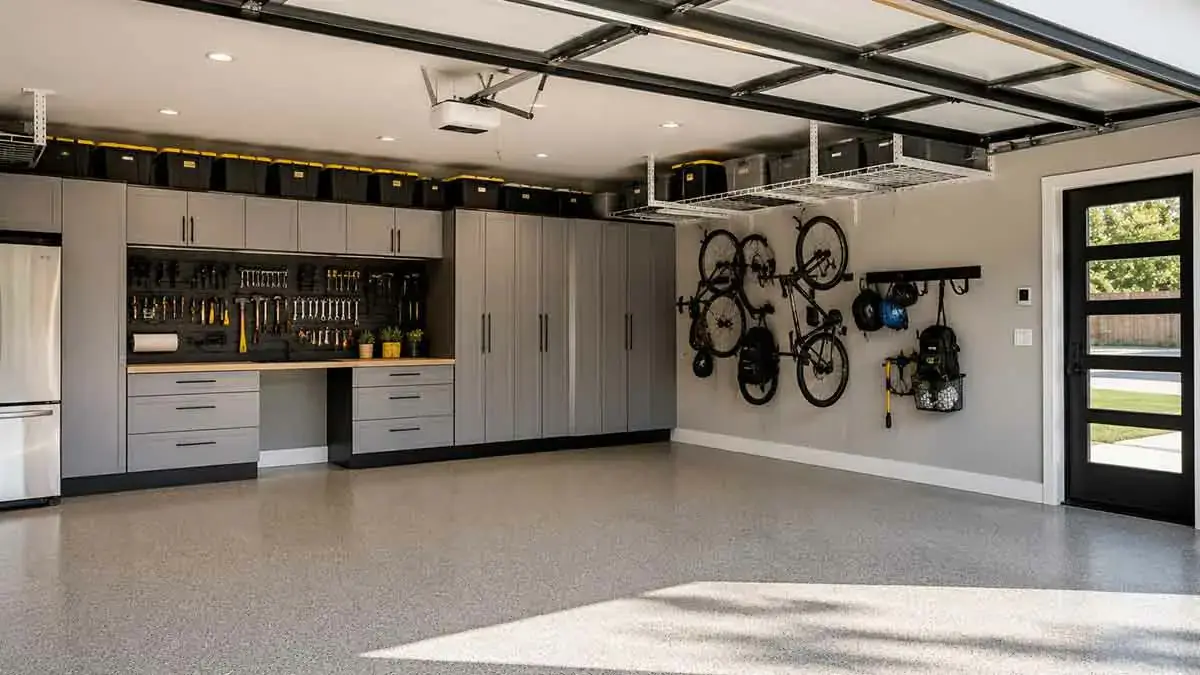
A garage can be much more than a place to park a vehicle. With the right improvements, it can become a cleaner, safer, more organized, and more functional part of the home.
Whether you use your garage for parking, storage, hobbies, home repairs, gardening, or a combination of purposes, relatively simple upgrades can make a significant difference. Useful improvements include better storage, lighting, flooring, insulation, ventilation, organization systems, workspaces, and garage door upgrades.
The best garage improvement ideas begin with how you actually use the space. A garage designed primarily for parking will have different priorities from one used as a workshop or storage area.
This guide explains practical garage improvement ideas for different needs and budgets, including organization, storage, comfort, safety, appearance, and long-term maintenance.
Table of Contents
Why Improve Your Garage?
A garage can provide valuable functional space without requiring a home addition.
Improving the garage can help:
- Increase storage capacity
- Reduce clutter
- Protect vehicles and equipment
- Create a dedicated workspace
- Improve visibility and safety
- Make parking easier
- Improve temperature control
- Make household projects more convenient
- Improve the appearance of the garage
- Make better use of existing square footage
The right improvements depend on the garage’s size, condition, climate, and primary purpose.
For example, a homeowner who mainly parks two vehicles may prioritize storage and circulation, while someone using the garage as a workshop may need better lighting, electrical access, ventilation, and work surfaces.
Assess Your Garage Before Improving It
Before buying storage systems or starting a renovation, inspect the garage.
Check:
- Floor condition
- Walls and ceiling
- Garage door
- Door opener
- Windows
- Electrical outlets
- Lighting
- Ventilation
- Water intrusion
- Drainage
- Cracks
- Signs of pests
- Existing storage systems
Also measure the available space and identify equipment that must remain accessible, such as electrical panels, water heaters, mechanical systems, or garage door components.
A garage improvement project should begin by solving existing problems rather than covering them with new storage or finishes.
Declutter and Remove Unnecessary Items
Decluttering is one of the simplest and least expensive garage improvements.
Sort belongings into categories such as:
- Keep
- Donate
- Sell
- Recycle
- Dispose
Then group the items you keep according to how frequently you use them.
Frequently used tools and equipment should be easy to reach. Seasonal items and belongings that are rarely needed can be placed in less accessible storage areas.
Removing unnecessary items creates floor space and makes it easier to determine what storage systems are actually needed.
Plan Garage Storage Zones
Instead of storing everything wherever there is available space, divide the garage into functional zones.
Possible zones include:
- Automotive supplies
- Tools
- Gardening equipment
- Sports equipment
- Seasonal decorations
- Household storage
- Recycling
- Workshop or hobby area
A clear zoning system makes it easier to find items and return them to the correct location.
Keep frequently used items between comfortable reach heights and reserve higher or less accessible areas for lightweight seasonal belongings.
Install Garage Wall Storage
Garage walls provide valuable storage space without taking up much floor area.
Options include:
- Shelving
- Pegboards
- Slatwall systems
- Hooks
- Wall-mounted cabinets
- Tool racks
- Sports equipment organizers
Wall-mounted storage can be especially useful when you need to preserve floor space for vehicles.
Heavy objects should be mounted using an appropriate system and secure attachment points. Always follow manufacturer load limits.
Use Garage Ceiling Storage
Overhead storage can provide additional capacity while keeping the floor clear.
It can be useful for:
- Seasonal decorations
- Camping equipment
- Storage bins
- Lightweight bulky items
- Infrequently used household belongings
Before installing ceiling storage, verify that the mounting system and supporting structure are appropriate for the intended load.
Keep stored items away from:
- Garage door mechanisms
- Vehicles
- Light fixtures
- Sprinklers where applicable
- Electrical equipment
- Other systems that require access
Ceiling storage should never interfere with the safe operation of the garage.
Add Garage Cabinets
Cabinets can create a cleaner appearance while keeping tools and supplies organized.
Options include:
- Freestanding cabinets
- Wall-mounted cabinets
- Tall storage cabinets
- Modular cabinet systems
Choose cabinets according to the items you need to store and the amount of wall space available.
If the garage doubles as a workshop, separate tool storage from general household storage so the work area remains easier to maintain.
Create a Garage Workbench
A workbench can turn part of a garage into a practical workspace.
It can be used for:
- Home repairs
- Gardening projects
- Woodworking
- Crafts
- Bicycle maintenance
- Tool maintenance
- DIY projects
A useful workbench may include:
- Durable work surface
- Drawers
- Shelving
- Tool storage
- Task lighting
- Convenient electrical access
Maintain enough clearance around the workbench for safe movement and vehicle access.
Improve Garage Lighting
Many garages have inadequate lighting, particularly older spaces that rely on a single ceiling fixture.
Better lighting can improve:
- Visibility
- Safety
- Organization
- Vehicle maintenance
- Workshop functionality
Consider using multiple fixtures to illuminate different parts of the garage.
Useful lighting locations include:
- Main ceiling
- Workbench
- Storage areas
- Garage entrance
- Side walls
- Vehicle maintenance areas
Electrical installations should be completed according to applicable safety requirements.
Add Task Lighting
General garage lighting may not provide enough illumination for detailed work.
Task lighting can be added around:
- Workbenches
- Tool storage
- Shelving
- Repair areas
- Hobby stations
Position task lights to reduce shadows and provide clear visibility of the work surface.
Adjustable fixtures can be useful when the same workspace is used for several different activities.
Upgrade the Garage Door
The garage door affects both the functionality and exterior appearance of the home.
Possible improvements include:
- Replacing an outdated door
- Repairing damaged components
- Replacing worn weather seals
- Improving insulation
- Updating the door’s appearance
- Improving hardware where appropriate
A new garage door can also contribute significantly to curb appeal, particularly when the garage faces the street.
Before replacing a door, confirm that the new system is compatible with the existing opening and supporting components.
Upgrade the Garage Door Opener
An old or unreliable opener can reduce convenience and create safety concerns.
Modern garage door openers may provide features such as:
- Quieter operation
- Remote controls
- Battery backup
- Automatic lighting
- Safety sensors
- Smartphone connectivity
Choose an opener that is compatible with the garage door and install it according to manufacturer requirements.
Test the safety features regularly and keep the door’s moving components properly maintained.
Improve Garage Door Insulation
An insulated garage door can help moderate temperatures inside the garage.
This may be particularly useful when:
- The garage is attached to the home
- Living spaces share walls with the garage
- The garage is used as a workshop
- You spend significant time inside
- The local climate experiences substantial temperature changes
However, the garage door is only one part of the thermal envelope.
Overall performance also depends on:
- Wall insulation
- Ceiling insulation
- Windows
- Personnel doors
- Weatherstripping
- Air sealing
Seal Gaps Around the Garage
Gaps around doors and windows can allow air, dust, insects, and moisture to enter.
Inspect:
- Garage door bottom seal
- Side seals
- Top seal
- Personnel door
- Window frames
- Wall penetrations
Replace damaged weatherstripping and seal appropriate openings using suitable materials.
Do not seal or block intentional ventilation openings or drainage paths.
Improve Garage Ventilation
Ventilation can help manage heat, moisture, and odors.
Depending on the garage and local requirements, options may include:
- Operable windows
- Exhaust fans
- Mechanical ventilation
- Passive airflow
Ventilation becomes especially important when the garage is used for projects involving paints, adhesives, chemicals, or other products that may produce fumes.
Always follow product safety instructions. Proper ventilation should complement safe storage and handling rather than replace them.
Never run a vehicle or fuel-burning equipment inside an enclosed garage longer than necessary, because exhaust gases can create serious health hazards.
Improve the Garage Floor
Garage floors experience vehicle traffic, dirt, moisture, chemicals, and heavy equipment.
Improvement options include:
- Deep cleaning
- Concrete repairs
- Concrete sealing
- Garage floor coatings
- Interlocking floor tiles
The best solution depends on the existing concrete condition and how the garage is used.
Before applying a coating or finish, the concrete should be properly cleaned and prepared, and the selected product should be suitable for garage conditions.
Repair Garage Floor Cracks
Concrete garage floors can develop cracks for several reasons.
Inspect cracks for:
- Increasing width
- Uneven surfaces
- Moisture
- Settlement
- Recurring movement
Minor cracks may be repairable with an appropriate concrete repair product.
However, large, widening, displaced, or repeatedly recurring cracks may indicate a more significant problem and should be evaluated before cosmetic repairs are made.
Add a Garage Floor Coating
A suitable floor coating can make the garage easier to clean and create a more finished appearance.
Potential systems include:
- Epoxy-based coatings
- Polyaspartic coatings
- Other manufacturer-approved garage floor systems
The performance of a coating depends heavily on:
- Concrete condition
- Surface preparation
- Moisture conditions
- Product quality
- Installation technique
Do not apply a coating over concrete with unresolved moisture or structural problems.
Organize Garden Tools
Long-handled garden tools can quickly consume valuable floor space.
Use:
- Wall-mounted tool racks
- Hooks
- Vertical organizers
- Dedicated cabinets
- Tool storage rails
Store sharp and heavy tools securely and position them where they will not fall into walking or parking areas.
Keep frequently used gardening tools near the garage entrance if they are regularly carried directly into the yard.
Organize Sports Equipment
Sports equipment can be difficult to organize because it often includes bulky and irregularly shaped items.
Create dedicated storage for:
- Bicycles
- Balls
- Scooters
- Golf equipment
- Skis
- Outdoor games
- Protective equipment
Wall-mounted and vertical storage can help reclaim floor space.
Use accessible storage for equipment used frequently and higher storage for seasonal items.
Create a Bicycle Storage Area
Bicycles can take up substantial floor space when stored randomly.
Possible systems include:
- Wall hooks
- Vertical racks
- Floor stands
- Ceiling-mounted systems
Choose a system that allows bicycles to be removed without damaging the bikes, walls, vehicles, or other stored equipment.
Keep bicycle storage clear of the garage door’s operating path.
Create a Mudroom-Style Garage Entry
A garage connected directly to the home can function as a practical transition zone.
Consider adding:
- Bench seating
- Hooks
- Shoe storage
- Shelving
- Durable floor mats
- Wall organizers
- Storage baskets
This arrangement can help keep shoes, bags, coats, gardening equipment, and outdoor items from spreading into the main living areas.
Use durable and easy-to-clean materials in this high-traffic area.
Improve Garage Security
The garage can provide access to vehicles, storage, and sometimes the interior of the home.
Security improvements may include:
- Reliable garage door locks
- Functional personnel-door locks
- Exterior lighting
- Secure windows
- Garage door monitoring
- Properly protected remote controls
If using smart garage technology, secure the associated account and use strong authentication.
Keep access codes and remote controls private and avoid leaving garage remotes unsecured in vehicles parked outside.
Add Exterior Garage Lighting
Exterior lighting can improve visibility around the garage after dark.
Options include:
- Wall-mounted fixtures
- Motion-activated lights
- Driveway lighting
- Entry lighting
Place fixtures where they illuminate the garage door, pedestrian entrance, and surrounding walking areas.
Avoid excessive glare that could interfere with drivers or disturb neighboring properties.
Improve Garage Windows
Garage windows can provide natural light and, where appropriate, ventilation.
If existing windows are outdated, consider:
- Weatherstripping
- Improved glazing
- Replacement windows
- Privacy treatments
Pay particular attention to windows in attached garages because air leakage between the garage and living spaces can affect indoor comfort.
Use appropriate privacy solutions if the windows provide direct views into the garage.
Add a Utility Sink
A utility sink can be a valuable addition for homeowners who use the garage for cleaning, gardening, or DIY projects.
It can be useful for:
- Washing tools
- Cleaning gardening equipment
- Rinsing muddy items
- Household projects
- Cleaning small equipment
Plumbing, drainage, and water-resistant finishes need to be planned carefully.
Because utility sinks may require new plumbing connections, professional installation may be appropriate depending on the existing system and local requirements.
Create a Dedicated Hobby or Workshop Area
A garage can provide valuable space for hobbies that are difficult to accommodate indoors.
Possible uses include:
- Woodworking
- Crafts
- Gardening
- Bicycle maintenance
- Model building
- Home repairs
- DIY projects
Create a dedicated zone with:
- Appropriate work surfaces
- Storage
- Task lighting
- Ventilation
- Electrical access
- Easy-to-clean flooring
Keep tools and materials organized and provide adequate clearance for safe movement.
Use Labels to Improve Organization
Labels can make an organized garage much easier to maintain.
Label:
- Storage bins
- Cabinets
- Shelves
- Drawers
- Seasonal containers
- Tool storage
Clear labels help household members return items to the correct location and reduce the time spent searching for equipment.
Use consistent categories rather than creating too many highly specific labels.
Make the Garage More Comfortable
If you spend substantial time in the garage, comfort can become an important consideration.
Possible improvements include:
- Better insulation
- Improved lighting
- Appropriate ventilation
- Weatherstripping
- Better flooring
- Organized storage
- Comfortable work surfaces
Heating or cooling systems require special consideration in a garage because fuel-burning equipment, combustion air, electrical systems, and ventilation can present safety issues.
Any permanent heating or cooling installation should be appropriate for the space and comply with applicable requirements.
Garage Improvement Ideas on a Budget
Many effective garage improvements require little investment.
Affordable options include:
- Decluttering
- Reorganizing existing storage
- Adding hooks
- Installing a pegboard
- Using labeled storage bins
- Improving lighting
- Cleaning the floor
- Sealing appropriate gaps
- Adding a basic workbench
- Installing simple exterior lighting
Prioritize improvements that solve the biggest functional problems.
For example, adding wall storage may provide more value than buying additional cabinets if the main problem is a lack of usable floor space.
Garage Improvement Costs
Garage improvement costs vary significantly depending on the project’s size and complexity.
Lower-cost improvements may include:
- Storage hooks
- Shelving
- Labels
- Lighting
- Cleaning
- Minor repairs
- Basic organization systems
More expensive improvements may include:
- Garage door replacement
- Floor coating
- Insulation
- Electrical upgrades
- Plumbing
- Custom cabinetry
- Windows
- Major ventilation systems
- Structural modifications
Other factors affecting cost include:
- Garage size
- Material selection
- Labor
- Existing conditions
- Site preparation
- Permits
- Utility requirements
For major projects, obtain detailed estimates and account for unexpected repairs.
DIY vs. Professional Garage Improvements
Some garage improvements are well suited to DIY projects.
DIY-friendly tasks may include:
- Decluttering
- Cleaning
- Organizing
- Installing simple storage
- Labeling containers
- Painting
- Basic decorating
Professional assistance is generally more appropriate for:
- Electrical work
- Plumbing
- Structural modifications
- Major garage door installation
- New windows
- Complex insulation work
- Permanent heating or cooling systems
- Major ventilation changes
When a project affects structural components, electrical systems, plumbing, gas equipment, or building-code requirements, use appropriately qualified professionals.
Common Garage Improvement Mistakes
Using All Available Space for Storage
A garage needs clear space for vehicles, walking, doors, equipment, and emergency access.
Ignoring Vertical Space
Walls and ceilings can provide valuable storage without consuming useful floor area.
Overloading Storage Systems
Always follow the manufacturer’s weight limits and installation requirements.
Blocking Essential Equipment
Do not obstruct electrical panels, water heaters, vents, garage door mechanisms, or other systems that require inspection and maintenance access.
Poor Lighting
A garage can remain difficult to use even when it is well organized if work areas are poorly illuminated.
Ignoring Moisture
Water intrusion, condensation, and poor drainage can damage stored belongings, flooring, walls, and structural components.
Storing Hazardous Materials Improperly
Paints, fuels, chemicals, and other potentially hazardous materials should be stored according to their labels and applicable safety requirements.
Making the Garage Too Difficult to Use
Storage should improve functionality rather than create obstacles. Maintain clear routes to vehicles, doors, equipment, and important utilities.
How to Plan a Garage Improvement Project
A practical planning process is:
1. Inspect the garage.
Identify structural, moisture, electrical, ventilation, flooring, and door problems.
2. Declutter the space.
Remove items that are no longer needed before designing new storage.
3. Define the primary purpose.
Decide whether the garage will mainly serve as a parking area, storage space, workshop, hobby area, or combination.
4. Measure the available space.
Account for vehicles, doors, walking routes, equipment, and required clearances.
5. Create storage zones.
Group items according to their purpose and frequency of use.
6. Use vertical storage first.
Consider walls and appropriate overhead areas before sacrificing valuable floor space.
7. Address structural and moisture problems.
Repair significant problems before installing cosmetic finishes or permanent storage.
8. Improve lighting and ventilation.
Make the space easier and safer to use before adding decorative upgrades.
9. Upgrade flooring and the garage door where appropriate.
Choose improvements based on condition, climate, budget, and expected use.
10. Add workspaces and specialized storage.
Create dedicated areas for tools, hobbies, gardening, sports, or household projects.
11. Improve security and exterior appearance.
Consider locks, monitoring, lighting, and garage door appearance.
12. Establish a maintenance routine.
Inspect the garage periodically, clean storage areas, maintain the garage door, and address small problems before they become larger repairs.
Final Thoughts
Garage improvement can transform an ordinary parking and storage area into one of the most useful spaces in the home. You do not necessarily need a complete renovation to make a noticeable difference.
Start by decluttering and assessing the garage’s condition, then prioritize improvements based on how you use the space. Better wall storage, organized zones, improved lighting, flooring upgrades, garage door improvements, insulation, ventilation, and a dedicated work area can all increase functionality.
The most effective garage is not necessarily the one with the most storage. It is the one that provides enough organized space for vehicles, equipment, projects, and everyday activities while remaining safe and easy to use.
A phased approach can also make the project more manageable. Solve structural and moisture problems first, improve essential functionality next, and then add finishing touches that make the garage cleaner, more comfortable, and better suited to your needs.