
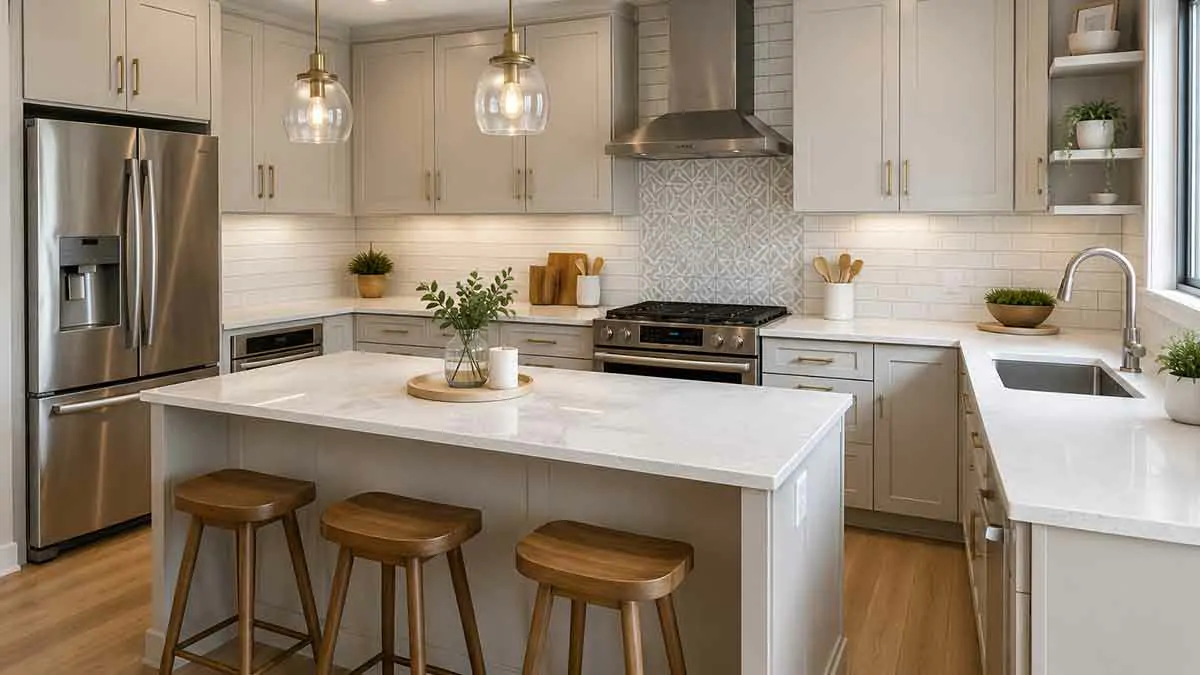
A kitchen backsplash can protect walls from water, grease, food splashes, and everyday cooking mess while also adding an important design element to the room. Because the backsplash sits between countertops and upper cabinets or other wall areas, it can have a significant effect on the overall appearance of a kitchen.
The best kitchen backsplash ideas combine practical protection with a design that complements the cabinets, countertops, flooring, lighting, and overall style of the kitchen.
There are many backsplash materials to choose from, including ceramic tile, porcelain tile, glass, natural stone, metal, peel-and-stick products, and slab surfaces. Each option differs in durability, maintenance, installation requirements, appearance, and cost.
This guide explains popular kitchen backsplash ideas, materials, patterns, colors, installation considerations, and how to choose the right backsplash for your kitchen.
Table of Contents
What Is a Kitchen Backsplash?
A kitchen backsplash is a protective wall surface installed behind countertops, sinks, cooking areas, and other locations where walls may be exposed to moisture, grease, or food.
A backsplash can cover:
- The wall behind the countertop
- The area behind the sink
- The wall behind the range or cooktop
- The space between countertops and upper cabinets
- An entire kitchen wall
The size of the backsplash depends on the kitchen design and the level of protection required.
Some homeowners install a traditional backsplash between the countertop and upper cabinets, while others extend the material higher to create a stronger visual feature.
Why Install a Kitchen Backsplash?
A backsplash serves both functional and decorative purposes.
Wall Protection
Cooking can expose walls to:
- Water
- Oil
- Grease
- Food particles
- Steam
- Cleaning products
A suitable backsplash creates a surface that is generally easier to clean than painted drywall.
Visual Design
A backsplash can introduce:
- Color
- Texture
- Pattern
- Contrast
- Natural materials
- Visual continuity
It can become a subtle background element or a major focal point.
Easier Cleaning
Many backsplash materials can be wiped clean more easily than ordinary painted wall surfaces.
However, maintenance depends on the material and grout system selected.
Popular Kitchen Backsplash Materials
The most common backsplash materials include:
- Ceramic tile
- Porcelain tile
- Glass tile
- Natural stone
- Marble
- Metal
- Peel-and-stick materials
- Large-format slabs
The right material depends on the kitchen’s exposure to moisture and heat, desired appearance, maintenance preferences, and budget.
Ceramic Tile Backsplash
Ceramic tile is one of the most widely used kitchen backsplash materials.
It is available in numerous colors, shapes, textures, and patterns.
Advantages
Ceramic tile can provide:
- Broad design flexibility
- Easy cleaning
- Many affordable options
- Good durability
- Simple replacement of individual damaged tiles
- Compatibility with many kitchen styles
Disadvantages
The grout between tiles can collect dirt and may require periodic cleaning.
Installation also requires careful surface preparation and proper alignment.
Best For
Ceramic tile is a versatile choice for homeowners seeking a practical backsplash with extensive design options.
Porcelain Tile Backsplash
Porcelain tile is denser and generally less porous than standard ceramic tile.
It can be used for both simple and high-end backsplash designs.
Advantages
Porcelain can offer:
- Good durability
- Low water absorption
- Easy cleaning
- Stone-look and wood-look designs
- Large-format options
Disadvantages
Some porcelain products can be more difficult to cut and install than standard ceramic tile.
Premium designs may also increase material costs.
Best For
Porcelain works well for homeowners who want a durable, low-maintenance backsplash with a wide range of appearances.
Glass Tile Backsplash
Glass tile can create a bright and contemporary appearance.
Because glass reflects light, it can help make some kitchens feel more open and illuminated.
Advantages
Glass tile can offer:
- Reflective appearance
- Wide color selection
- Easy surface cleaning
- Contemporary design
- Resistance to moisture
Disadvantages
Glass can show fingerprints, water spots, and installation imperfections more easily.
Some glass tiles also require specialized cutting and installation.
Best For
Glass backsplash tile is particularly suitable for modern kitchens and spaces where additional visual brightness is desirable.
Natural Stone Backsplash
Natural stone provides a distinctive appearance because each piece can have unique patterns and variations.
Common materials include:
- Slate
- Travertine
- Limestone
- Granite
- Marble
Advantages
Natural stone offers:
- Unique appearance
- Natural texture
- Premium visual character
- Compatibility with traditional and contemporary designs
Disadvantages
Some natural stones are porous and may require sealing.
Certain stones can also be sensitive to staining, acids, or harsh cleaning products.
Best For
Natural stone works well when the goal is to create a distinctive backsplash with natural variation.
Marble Backsplash
Marble is a popular choice for homeowners seeking an elegant and premium appearance.
It can create a strong visual connection with marble countertops or other natural materials.
However, marble requires more care than many ceramic or porcelain products. It can be vulnerable to staining and etching, particularly when exposed to acidic substances.
If marble is selected, follow the manufacturer’s or stone professional’s recommendations for sealing and maintenance.
Metal Backsplash
Metal backsplash panels or tiles can create a modern or industrial appearance.
Common options include:
- Stainless steel
- Copper
- Aluminum
- Other metal finishes
Advantages
Metal can provide:
- Contemporary appearance
- Easy cleaning
- Heat-resistant options
- Strong visual contrast
- Compatibility with modern appliances
Disadvantages
Some metal surfaces can show fingerprints, scratches, or water spots.
The finish should be selected based on the level of maintenance you are willing to perform.
Peel-and-Stick Backsplash
Peel-and-stick backsplash products can provide a relatively simple way to update a kitchen without traditional tile installation.
They are available in designs that imitate:
- Subway tile
- Stone
- Marble
- Geometric patterns
- Other decorative materials
Advantages
They can offer:
- Simple installation
- Lower initial cost
- Minimal tools
- Easy cosmetic updates
- Useful options for some rental or temporary projects
Disadvantages
Not every product is appropriate for areas exposed to significant heat, steam, or moisture.
Adhesion can also vary depending on the wall surface.
Always follow the manufacturer’s installation and heat-exposure requirements.
Slab Backsplash
A slab backsplash uses a large continuous piece of material rather than individual tiles.
Potential materials include:
- Quartz
- Natural stone
- Porcelain slab
- Other suitable surface materials
Advantages
A slab backsplash can create:
- Fewer seams
- A clean appearance
- Strong visual continuity
- Easier surface cleaning in some applications
Disadvantages
Large slabs can be expensive and may require professional fabrication and installation.
They can also be more difficult to transport and install.
Subway Tile Backsplash
Subway tile remains a popular choice because of its simple and adaptable appearance.
Traditional subway tile is rectangular, but modern versions are available in different proportions, colors, textures, and finishes.
Common layouts include:
- Traditional running bond
- Stacked
- Vertical
- Offset patterns
The choice of grout color can significantly change the appearance.
A matching grout creates a more continuous look, while contrasting grout emphasizes the individual tile shapes.
Large-Format Tile Backsplash
Large-format tiles can reduce the number of visible grout lines.
This can create a cleaner and more continuous appearance.
They can work particularly well in contemporary kitchens.
However, large tiles require careful measurements and installation because uneven walls may make alignment more challenging.
Mosaic Backsplash
Mosaic tiles can create intricate patterns and add visual interest.
They are available in materials such as:
- Ceramic
- Glass
- Stone
- Metal
- Mixed materials
Mosaic backsplashes can work well as accent areas behind a range or cooktop.
However, more grout lines can increase cleaning requirements.
Herringbone Backsplash
A herringbone pattern arranges rectangular tiles in a zigzag configuration.
It can create a strong decorative effect without requiring unusually shaped tiles.
Herringbone can work with:
- Ceramic
- Porcelain
- Marble
- Glass
- Other rectangular tiles
Because the installation pattern is more complex than a standard running bond, labor can be higher.
Kitchen Backsplash Color Ideas
Color should complement the rest of the kitchen rather than compete with it.
Consider the relationship between the backsplash and:
- Cabinets
- Countertops
- Flooring
- Walls
- Appliances
- Lighting
White Backsplash
White backsplashes can create a clean and bright appearance.
They work with many cabinet and countertop colors and can be especially useful in smaller kitchens.
Neutral Backsplash
Beige, cream, gray, and soft natural tones provide flexibility and can work with many interior styles.
Neutral materials are also useful when you expect to change other kitchen finishes in the future.
Dark Backsplash
Dark backsplash materials can create contrast against light cabinets and countertops.
They can produce a dramatic appearance but may make a small kitchen feel darker if lighting is limited.
Backsplash Ideas for Small Kitchens
A backsplash can influence how spacious a small kitchen appears.
Consider:
- Light colors
- Simple patterns
- Reflective surfaces
- Large-format tiles
- Consistent color relationships
- Limited visual clutter
Glass or glossy surfaces can reflect light, while large-format tiles can reduce the number of grout lines.
However, the backsplash should remain consistent with the cabinets and countertops rather than relying on visual tricks alone.
Backsplash Ideas for Modern Kitchens
Modern kitchens often work well with:
- Large-format porcelain
- Simple subway tile
- Glass
- Slab surfaces
- Minimal geometric patterns
- Neutral colors
- Metal accents
A simple backsplash can reinforce a modern design without competing with sleek cabinets and appliances.
Backsplash Ideas for Traditional Kitchens
Traditional kitchens can work well with:
- Ceramic tile
- Marble
- Natural stone
- Subway tile
- Decorative mosaics
Warm neutrals and classic patterns can complement traditional cabinetry and hardware.
How to Coordinate a Backsplash With Countertops
The countertop and backsplash should generally work as a coordinated pair.
If the countertop has a strong pattern, consider a simpler backsplash.
If the countertop is relatively plain, the backsplash can provide more texture or pattern.
For example:
- Patterned countertop + simple backsplash
- Simple countertop + decorative backsplash
- Natural stone countertop + complementary stone or tile
- Solid-color countertop + patterned tile
Avoid choosing both materials independently without viewing them together.
How to Coordinate a Backsplash With Cabinets
Cabinet color is another major factor.
Light Cabinets
Light cabinets can work with:
- White tile
- Soft gray
- Beige
- Natural stone
- Dark contrasting materials
Dark Cabinets
Dark cabinets may pair well with:
- Light backsplash materials
- Warm neutral tile
- Natural stone
- Reflective glass
Wood Cabinets
Wood cabinetry can be complemented by:
- Neutral ceramic tile
- Stone
- Simple white tile
- Earth-tone materials
The goal is to create contrast or continuity intentionally.
How High Should a Kitchen Backsplash Be?
The height depends on the kitchen design and the areas requiring protection.
A common approach is to cover the wall between the countertop and upper cabinets.
Some designs extend the backsplash:
- Behind the range
- Behind the sink
- To the underside of upper cabinets
- Up an entire feature wall
- Behind open shelving
There is no single height that works for every kitchen.
The backsplash should be planned around the cabinetry, countertop, appliances, and overall design.
Should the Backsplash Match the Countertop?
The backsplash does not need to exactly match the countertop.
In many kitchens, coordinating rather than matching creates a more interesting result.
You can use:
- Similar colors with different textures
- Contrasting colors
- A simple tile with a patterned countertop
- A decorative backsplash with a simple countertop
The key is to make sure the materials share at least some visual relationship.
Kitchen Backsplash Maintenance
Maintenance depends heavily on the material and grout.
General practices include:
- Wipe spills promptly.
- Clean grease regularly.
- Use manufacturer-approved cleaners.
- Avoid abrasive products when the material is sensitive to scratching.
- Clean grout periodically.
- Reseal materials when required.
Natural stone may require more maintenance than ceramic or porcelain tile.
Always follow the care recommendations for the specific product.
Kitchen Backsplash Installation
Proper installation is important for both appearance and long-term performance.
Depending on the material, installation may involve:
- Preparing the wall surface
- Measuring the installation area
- Planning the tile pattern
- Marking reference lines
- Cutting tiles or panels
- Applying adhesive or mortar
- Installing the backsplash
- Allowing the setting material to cure
- Applying grout where required
- Sealing when appropriate
- Finishing edges and transitions
Electrical outlets and switches should also be considered before installation.
If electrical components need to be relocated, use a qualified professional and follow local requirements.
Common Kitchen Backsplash Mistakes
Choosing the Backsplash Before the Countertop
If the countertop has already been selected, it is easier to choose a backsplash that complements it.
Using Too Many Patterns
Combining a highly patterned countertop, backsplash, flooring, and cabinets can make the kitchen visually chaotic.
Ignoring Grout Color
Grout can strongly affect the final appearance.
Choosing a Material Without Considering Maintenance
Some beautiful materials require more regular care than others.
Ignoring Heat Exposure
Not every backsplash product is appropriate directly behind a range or cooktop.
Check product specifications before installation.
Poor Surface Preparation
Uneven or damaged walls can create installation problems.
Forgetting Electrical Outlets
Outlet locations should be incorporated into the backsplash design before installation begins.
Installing Without a Layout Plan
Starting from an arbitrary point can result in awkward cuts and uneven visual alignment.
How to Choose a Kitchen Backsplash Step by Step
Step 1: Evaluate Your Kitchen
Look at the cabinets, countertops, flooring, appliances, wall color, and lighting.
Step 2: Define the Purpose
Decide whether your priority is:
- Wall protection
- Easy cleaning
- Visual impact
- Budget
- A combination of these goals
Step 3: Set a Budget
Include materials, installation, tools, adhesive, grout, trim, and other required supplies.
Step 4: Choose the Material
Compare ceramic, porcelain, glass, stone, metal, slab, and other suitable options.
Step 5: Choose the Color
Select a color that works with the existing kitchen rather than treating the backsplash as an isolated element.
Step 6: Choose the Pattern
Decide between a simple layout, stacked tiles, running bond, herringbone, mosaic, or another pattern.
Step 7: Check Maintenance Requirements
Understand cleaning, sealing, and long-term care before purchasing.
Step 8: Check Heat and Moisture Requirements
Make sure the selected product is appropriate for its intended location.
Step 9: Measure the Installation Area
Calculate the required material and include an appropriate allowance for cuts and waste.
Step 10: Review Samples in the Kitchen
View samples under the actual kitchen lighting and next to the cabinets and countertop.
Step 11: Plan Installation Details
Account for outlets, corners, edges, transitions, and areas behind appliances.
Step 12: Install Carefully
Follow the manufacturer’s instructions or hire an experienced installer when the project requires specialized work.
Final Thoughts
The best kitchen backsplash ideas combine practical protection with a design that complements the rest of the kitchen.
Ceramic and porcelain tile provide versatile and durable options, while glass can add brightness and natural stone can create a distinctive appearance. Metal, peel-and-stick products, and slab materials offer additional choices for different styles, budgets, and installation requirements.
Before choosing a backsplash, consider the countertop, cabinets, flooring, lighting, cooking habits, maintenance requirements, and available budget.
A successful backsplash does not have to be complicated. A simple material installed carefully and coordinated with the rest of the kitchen can create a polished result while providing valuable protection for the walls.
Frequently Asked Questions
What is the best material for a kitchen backsplash?
There is no single best material for every kitchen. Ceramic and porcelain tile are versatile choices, while glass, natural stone, metal, and slab materials can work well depending on the desired appearance, maintenance, and budget.
Is a kitchen backsplash necessary?
A backsplash is not always required across the entire kitchen, but it can protect walls from water, grease, food splashes, and everyday wear while making cleaning easier.
What is the easiest kitchen backsplash to install?
Peel-and-stick products can be relatively easy to install, while traditional tile installation requires more preparation, cutting, adhesive, and grouting.
What backsplash is easiest to clean?
Smooth surfaces with fewer grout lines are generally easier to wipe clean. Large-format tile and slab materials can reduce the amount of grout that requires maintenance.
Is subway tile still popular for kitchens?
Yes. Subway tile remains a versatile option because it works with many kitchen styles and can be installed in several patterns and colors.
What backsplash makes a small kitchen look bigger?
Light-colored and reflective materials can help a small kitchen feel brighter. Large-format tiles can also create a more continuous appearance by reducing visible grout lines.
Should a kitchen backsplash be lighter or darker than the cabinets?
Either can work. A lighter backsplash can create contrast with dark cabinets, while a darker backsplash can provide contrast against light cabinetry. The choice should also consider countertops and lighting.
Does the backsplash need to match the countertop?
No. The backsplash does not need to match the countertop exactly. Coordinating colors, materials, or textures can create a more balanced design.
How far should a backsplash extend?
It commonly extends from the countertop to the underside of upper cabinets, but it can also extend behind a range, sink, open shelving, or an entire feature wall depending on the design.
Is natural stone a good kitchen backsplash?
Natural stone can provide a distinctive and premium appearance, but some stones require sealing and more careful maintenance than ceramic or porcelain tile.
Can I install a backsplash over existing tile?
Sometimes, but the existing surface must be suitable for the new installation. It should be stable, clean, properly bonded, and compatible with the selected installation system. Manufacturer requirements should be followed.
How much extra backsplash material should I buy?
The required amount depends on the layout and installation pattern. It is generally wise to purchase additional material to account for cuts, breakage, and future repairs. The exact allowance should be based on the product and installation pattern.