
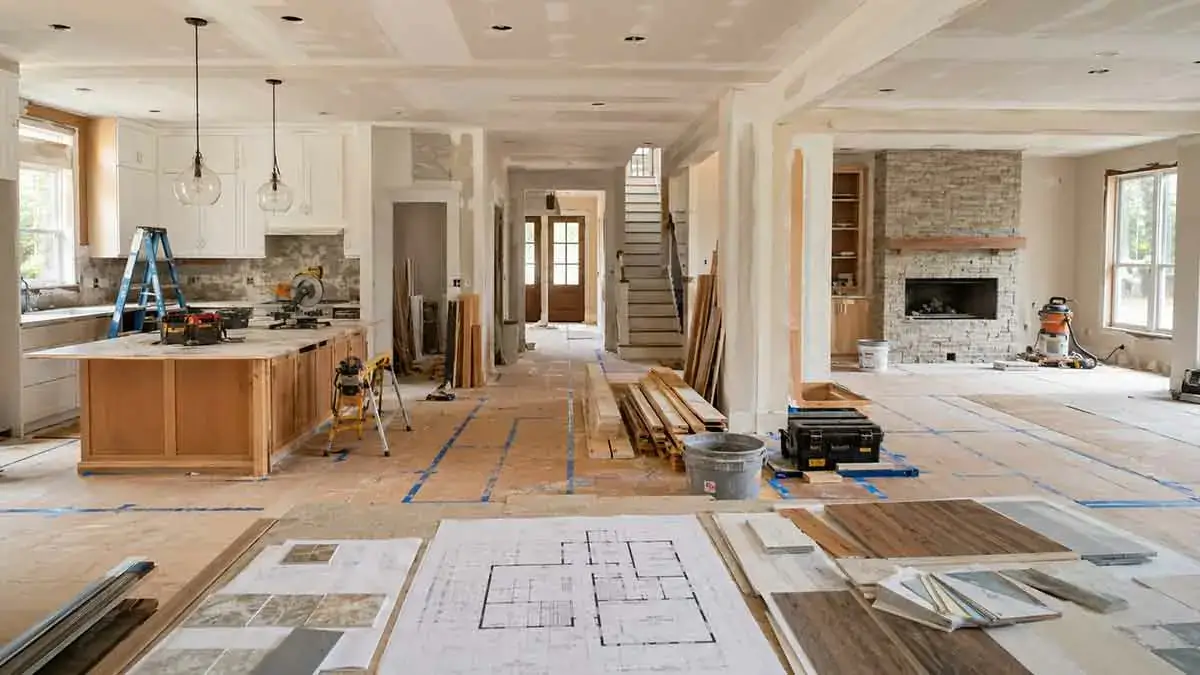
Understanding full house renovation cost is one of the most important steps before starting a whole-home remodeling project. Renovating an entire house can involve kitchens, bathrooms, bedrooms, flooring, electrical systems, plumbing, HVAC, insulation, windows, roofing, structural work, and interior finishes.
The cost can vary dramatically because a full house renovation can mean anything from a cosmetic refresh to a complete renovation that takes the home down to the framing and replaces most major systems.
For preliminary planning, current 2026 cost guides commonly place whole-house renovation costs across a very broad range depending on scope, with cosmetic projects at the low end and extensive gut renovations substantially higher. Cost per square foot is useful for creating an initial budget, but local labor rates, property condition, materials, and structural requirements can change the final number significantly.
This guide explains how to estimate full house renovation cost, what a whole-home renovation can include, which factors have the biggest effect on the budget, how to organize the work, and how to reduce unnecessary expenses.
Table of Contents
What Is a Full House Renovation?
A full house renovation is a project that updates multiple rooms and/or major building systems throughout an existing home.
It may include:
- Kitchen renovation
- Bathroom renovation
- Bedroom improvements
- Living areas
- Flooring
- Interior painting
- Electrical upgrades
- Plumbing upgrades
- HVAC replacement or improvements
- Insulation
- Windows and doors
- Roofing
- Exterior repairs
- Structural improvements
However, full house renovation does not automatically mean replacing everything.
If an existing roof, window system, flooring, electrical component, or other element is safe and in good condition, keeping it may be more financially sensible than replacing it simply because the rest of the house is being renovated.
The scope should therefore be based on the actual condition and long-term goals of the property.
How Much Does a Full House Renovation Cost?
There is no single national price that applies to every whole-house renovation.
Current 2026 cost guides show that the same term can describe projects ranging from relatively inexpensive cosmetic updates to extensive gut renovations costing well into the hundreds of thousands of dollars. Some current estimates place cosmetic work around $15–$40 per square foot, while substantial or gut-level projects can reach $100–$200+ per square foot depending on the market and scope.
A useful planning framework is:
| Renovation Scope | Approximate Planning Range |
|---|---|
| Cosmetic refresh | $15–$40 per sq. ft. |
| Moderate renovation | $40–$100 per sq. ft. |
| Extensive/full renovation | $100–$200+ per sq. ft. |
| High-end or complex renovation | Can exceed $200 per sq. ft. |
These are planning ranges, not contractor quotes. They should not be used as a substitute for local estimates.
For example, a 2,000-square-foot house at a hypothetical $100 per square foot would have a base renovation cost of:
2,000 × $100 = $200,000
A different house of exactly the same size could cost substantially more or less depending on its condition and the work required.
Full House Renovation Cost Per Square Foot
Cost per square foot is one of the easiest ways to create an initial whole-house renovation budget.
The basic formula is:
Estimated Renovation Cost = Home Size × Estimated Cost Per Square Foot
For example:
- 1,500 sq. ft. × $60 = $90,000
- 2,000 sq. ft. × $100 = $200,000
- 2,500 sq. ft. × $125 = $312,500
- 3,000 sq. ft. × $150 = $450,000
These examples are mathematical planning scenarios rather than guaranteed market prices.
The most important limitation of the square-foot method is that renovation costs are not perfectly proportional to house size.
A 1,200-square-foot house requiring a complete electrical replacement, plumbing replacement, structural repairs, and a new kitchen can cost more than a 2,000-square-foot house receiving mostly cosmetic updates.
Why Cost Per Square Foot Can Be Misleading
Two homes with identical floor areas can have very different renovation budgets because of:
- Age
- Existing condition
- Number of bathrooms
- Kitchen complexity
- Layout
- Structural requirements
- Electrical condition
- Plumbing condition
- HVAC requirements
- Finish level
- Local labor rates
Use cost per square foot as a starting point, then replace the estimate with detailed project-level quotes.
Full House Renovation Cost by Home Size
The following examples show how a hypothetical cost-per-square-foot rate changes with house size.
| Home Size | At $50/sq. ft. | At $100/sq. ft. | At $150/sq. ft. |
|---|---|---|---|
| 1,000 sq. ft. | $50,000 | $100,000 | $150,000 |
| 1,500 sq. ft. | $75,000 | $150,000 | $225,000 |
| 2,000 sq. ft. | $100,000 | $200,000 | $300,000 |
| 2,500 sq. ft. | $125,000 | $250,000 | $375,000 |
| 3,000 sq. ft. | $150,000 | $300,000 | $450,000 |
These figures demonstrate the calculation rather than predicting the actual price of a specific project.
The final budget should come from the renovation scope and local contractor estimates.
What Is Included in a Full House Renovation?
A whole-home renovation can include several major stages and trades.
Planning and Design
Before construction begins, the project may require:
- Property assessment
- Measurements
- Architectural plans
- Interior design
- Structural engineering
- Material selection
- Permit planning
- Contractor coordination
Design and professional service fees should be included in the budget from the beginning.
Demolition
Demolition may involve removing:
- Old flooring
- Cabinets
- Fixtures
- Appliances
- Drywall
- Ceilings
- Doors
- Interior partitions
Large projects can also generate substantial disposal and hauling costs.
Structural Work
Structural work may include:
- Removing load-bearing walls
- Reinforcing framing
- Repairing damaged framing
- Modifying openings
- Floor structure repairs
- Foundation repairs
- Roof structure repairs
Structural changes can have a major effect on both the budget and construction schedule.
Electrical Work
A major renovation is often an opportunity to address outdated electrical infrastructure.
Potential work includes:
- Electrical panel upgrades
- Rewiring
- New outlets
- New switches
- Dedicated circuits
- Lighting
- Smoke and carbon monoxide detectors
- Smart-home wiring
Electrical work generally needs to be completed before walls are closed.
Plumbing
Plumbing work can include:
- Replacing old supply pipes
- Updating drainage
- Moving fixtures
- Replacing shutoff valves
- Installing new fixtures
- Repairing leaks
- Updating water lines
Keeping plumbing fixtures near their existing locations can reduce construction complexity.
HVAC
A whole-house renovation may include:
- HVAC replacement
- Ductwork
- Ventilation
- Thermostats
- Zoning
- Air distribution
- Efficiency improvements
HVAC sizing should account for the home’s insulation, windows, floor area, climate, and building envelope.
Insulation and Air Sealing
When walls or ceilings are opened, it may be cost-effective to improve insulation and air sealing.
Potential improvements include:
- Attic insulation
- Wall insulation
- Floor insulation
- Air sealing
- Weatherization
These improvements can contribute to better comfort and lower energy waste.
Windows and Doors
Replacing windows and exterior doors can improve:
- Energy performance
- Comfort
- Security
- Noise control
- Appearance
Replacement should be based on condition and performance rather than assuming every existing window must be replaced.
Interior Finishes
The final stage can include:
- Flooring
- Drywall
- Paint
- Trim
- Interior doors
- Cabinets
- Countertops
- Tile
- Lighting
- Fixtures
- Hardware
Finish selections can have a significant effect on the total renovation budget.
Full House Renovation Cost by Major Category
Instead of looking only at individual rooms, it is useful to divide the project into major cost categories.
| Category | Typical Budget Priority |
|---|---|
| Structural repairs | Very High |
| Roofing and exterior protection | Very High |
| Electrical | High |
| Plumbing | High |
| HVAC | High |
| Insulation and air sealing | High |
| Kitchen | High |
| Bathrooms | High |
| Windows and doors | Medium to High |
| Flooring | Medium |
| Drywall and painting | Medium |
| Decorative finishes | Lower |
The exact percentage assigned to each category depends on the property.
For example, an older home with failing plumbing may require a much larger plumbing budget than a newer home.
Similarly, a house with a sound kitchen may not need a large kitchen allocation.
Full House Renovation Cost by Room
Breaking the project into rooms can make the scope easier to understand.
Kitchen
Kitchen renovation can involve:
- Cabinets
- Countertops
- Appliances
- Flooring
- Lighting
- Electrical
- Plumbing
- Backsplash
- Painting
Kitchens can become expensive quickly because they combine cabinetry, appliances, electrical work, plumbing, countertops, and finish materials.
Keeping the existing layout can often reduce construction complexity.
Bathrooms
Bathroom renovation may include:
- Shower
- Bathtub
- Toilet
- Vanity
- Sink
- Tile
- Waterproofing
- Plumbing
- Electrical
- Ventilation
Waterproofing should be treated as a functional requirement rather than a cosmetic upgrade.
Bedrooms
Bedroom renovation commonly includes:
- Flooring
- Paint
- Lighting
- Doors
- Closets
- Storage
- Windows
Bedrooms generally have fewer plumbing requirements than kitchens and bathrooms, which can make them easier to budget.
Living Areas
Living rooms and common areas may include:
- Flooring
- Paint
- Lighting
- Built-ins
- Fireplace improvements
- Windows
- Doors
- Ceiling work
Removing walls or changing structural elements can substantially increase the cost.
Basement
A basement renovation may require:
- Waterproofing
- Insulation
- Flooring
- Electrical
- HVAC
- Plumbing
- Ceiling work
- Egress improvements
Moisture problems should be corrected before finishing the basement.
Attic
An attic renovation may include:
- Insulation
- Ventilation
- Flooring
- Electrical
- HVAC
- Structural modifications
- Stairs
- Windows
Available headroom, roof structure, and local requirements can determine whether an attic is suitable for finished living space.
Major Factors That Affect Full House Renovation Cost
1. House Size
A larger house generally requires more materials and labor.
However, size should never be used as the only pricing factor.
2. Property Condition
The condition of the existing house can be one of the biggest cost drivers.
Potential problems include:
- Water damage
- Structural deterioration
- Outdated wiring
- Plumbing deterioration
- Roof damage
- Poor insulation
- Mold or moisture problems
- Damaged finishes
3. Layout Changes
Changing the floor plan can increase costs because it may require:
- Structural engineering
- New framing
- Electrical relocation
- Plumbing relocation
- HVAC modifications
- Drywall
- Flooring replacement
Keeping the existing layout can therefore be an important cost-control strategy.
4. Material Selection
Materials can range from budget products to premium and custom finishes.
When choosing materials, consider:
- Durability
- Maintenance
- Function
- Appearance
- Availability
- Installation requirements
- Long-term value
5. Labor
Whole-house renovations often require multiple trades.
Coordinating:
- General contractors
- Electricians
- Plumbers
- HVAC technicians
- Carpenters
- Drywall installers
- Tile installers
- Painters
adds project-management complexity.
6. Location
Renovation prices vary by region because labor rates, material transportation, contractor availability, permit requirements, and local construction conditions differ.
A national online average should therefore be treated only as a starting reference.
7. Project Duration
Long projects can create additional costs through:
- Temporary accommodation
- Storage
- Financing
- Contractor overhead
- Extended project management
- Repeated material deliveries
8. Permit and Professional Requirements
Depending on the location and scope, permits, inspections, architectural services, engineering, or other professional services may be required.
Confirm local requirements before construction begins.
Cosmetic vs Partial vs Full Renovation
The phrase full house renovation can mean different things.
Cosmetic Renovation
A cosmetic renovation generally focuses on visible improvements such as:
- Paint
- Flooring
- Lighting
- Hardware
- Fixtures
- Minor repairs
Major systems and structural components remain largely unchanged.
Partial Renovation
A partial renovation may include:
- Kitchen renovation
- Bathroom renovation
- New flooring
- Painting
- Selected electrical work
- Selected plumbing work
- Limited system upgrades
Full Renovation
A more extensive whole-house renovation may involve:
- Multiple kitchens and bathrooms
- Electrical upgrades
- Plumbing replacement
- HVAC work
- Insulation
- Windows
- Structural changes
- New interior finishes
Gut Renovation
A gut renovation goes considerably further.
It can involve extensive demolition followed by replacement or reconstruction of:
- Framing elements
- Electrical
- Plumbing
- HVAC
- Insulation
- Drywall
- Kitchens
- Bathrooms
- Flooring
- Interior finishes
The deeper the renovation, the more important professional planning and contingency funding become.
How to Create a Full House Renovation Budget
Start with a complete property assessment.
For every room and system, identify:
- What must be repaired
- What must be replaced
- What can remain
- What you want to improve
- What is optional
Then divide the budget into categories.
| Category | Estimated Cost | Priority |
|---|---|---|
| Structural work | — | High |
| Roofing and exterior | — | High |
| Electrical | — | High |
| Plumbing | — | High |
| HVAC | — | High |
| Insulation | — | Medium |
| Kitchen | — | Medium |
| Bathrooms | — | Medium |
| Windows and doors | — | Medium |
| Flooring | — | Medium |
| Painting | — | Lower |
| Decorative finishes | — | Lower |
Do not fill these categories with arbitrary percentages before obtaining actual estimates.
Instead, use contractor proposals and material selections to build a realistic project budget.
How Much Contingency Should You Include?
A contingency reserve is particularly important for whole-house renovations because demolition can reveal conditions that were not visible during the initial inspection.
A common planning range is approximately 10% to 20% of the renovation budget, with older homes and extensive gut renovations generally warranting a larger reserve.
For example:
Base renovation budget: $200,000
15% contingency: $30,000
Planning budget: $230,000
The contingency should be reserved for genuine unknowns rather than used as an excuse to expand the scope.
Potential unexpected costs include:
- Hidden water damage
- Structural problems
- Deteriorated wiring
- Damaged plumbing
- Additional demolition
- Required code upgrades
- Unforeseen site conditions
What Should Be Renovated First?
A practical priority order is:
- Safety problems
- Water intrusion
- Structural issues
- Roofing and exterior protection
- Electrical
- Plumbing
- HVAC
- Insulation and air sealing
- Layout and functionality
- Kitchens and bathrooms
- Flooring
- Paint
- Decorative finishes
The exact sequence can change depending on the property.
The principle is simple: protect the house and repair essential systems before spending heavily on finishes.
Renovation Sequence for a Whole House
A typical whole-house renovation may follow this general sequence:
Planning → Permits → Demolition → Structural Work → Rough Plumbing and Electrical → HVAC → Insulation → Drywall → Flooring → Cabinets → Fixtures → Painting → Final Finishes
The exact sequence depends on the project.
Good coordination matters because installing finished surfaces too early can result in unnecessary damage and rework.
Why Renovation Sequencing Matters
Poor sequencing can increase the renovation budget.
For example, installing new flooring before major electrical or plumbing work is complete can result in damage to the finished floor.
Similarly, painting walls before drywall, plumbing, or electrical work is complete can require sections to be repaired and repainted.
Good sequencing reduces:
- Rework
- Material waste
- Damage
- Labor duplication
- Delays
Full House Renovation Timeline
The duration of a whole-house renovation depends on:
- Number of rooms
- Project scope
- Structural work
- Permit approvals
- Inspections
- Contractor availability
- Material lead times
- Property condition
- Unexpected discoveries
A cosmetic renovation may be relatively short, while an extensive whole-house renovation can continue for many months.
If the home cannot be occupied during construction, include temporary accommodation, storage, transportation, and other living expenses in the project budget.
How to Control Full House Renovation Cost
Keep the Existing Layout When Possible
Moving kitchens, bathrooms, plumbing lines, and major systems can increase labor and material requirements.
Reuse Sound Components
Consider keeping components that are still functional and appropriate, such as:
- Doors
- Flooring
- Cabinets
- Windows
- Fixtures
if they meet your requirements.
Choose Materials Strategically
Premium materials can be worthwhile in high-use areas, but not every surface needs to be upgraded to the highest specification.
Get Detailed Contractor Estimates
Do not compare contractors based only on the headline total.
Compare:
- Scope
- Labor
- Materials
- Permits
- Disposal
- Timeline
- Warranty
- Exclusions
- Payment schedule
Minimize Mid-Project Changes
Design changes after construction begins can create additional labor, material waste, delays, and change orders.
Phase the Work When Necessary
If the entire project cannot be comfortably funded or completed at once, divide it into logical phases rather than cutting essential work from the scope.
Should You Renovate the Whole House at Once?
Not always.
Renovating the entire house at once can make sense when:
- Multiple systems need replacement
- Major demolition is already required
- You plan to stay for many years
- The existing layout needs significant improvement
- Several rooms require renovation
- You want to coordinate major upgrades
A phased renovation may be better when:
- The budget is limited
- Only certain areas require immediate work
- The house remains functional
- You want to reduce disruption
- Some systems are already in good condition
The best choice depends on the property’s condition and your financial situation.
How to Phase a Full House Renovation
A practical phased approach can look like this.
Phase 1: Assessment and Planning
Inspect the property, define the scope, obtain professional advice where needed, and establish the initial budget.
Phase 2: Critical Repairs
Address:
- Structural problems
- Roof problems
- Water intrusion
- Safety issues
- Major exterior problems
Phase 3: Major Systems
Complete:
- Electrical
- Plumbing
- HVAC
- Insulation
Phase 4: Kitchens and Bathrooms
Renovate the major functional spaces.
Phase 5: Interior Finishes
Complete:
- Drywall
- Flooring
- Paint
- Doors
- Trim
Phase 6: Final Improvements
Complete:
- Lighting
- Hardware
- Storage
- Decorative details
Phasing should still follow a logical construction sequence so completed work is not damaged by later phases.
DIY vs Professional Full House Renovation
DIY can reduce labor costs for suitable tasks.
Potential DIY work may include:
- Painting
- Basic preparation
- Some demolition
- Simple finishing work
However, complex work involving:
- Structural systems
- Electrical
- Plumbing
- Gas
- HVAC
may require qualified professionals and, depending on local rules, permits or inspections.
The goal is not to perform every task yourself.
Instead, identify work that you can complete safely and competently while using qualified professionals for specialized work.
How to Compare the Cost of Renovating vs Moving
A full renovation is a major financial decision.
Compare the renovation budget with the potential cost of purchasing another property, including:
- Purchase price
- Closing costs
- Moving expenses
- Financing costs
- Realtor fees
- Immediate repairs
- Renovation requirements in the new property
Also consider factors that are difficult to price directly:
- Location
- Neighborhood
- Lot
- Existing property
- Commute
- Layout
- Long-term plans
If you already have a property in a location you value, renovation may provide more practical value than moving.
Common Full House Renovation Cost Mistakes
Underestimating the Scope
A whole-house renovation involves interconnected systems, not simply a collection of individual rooms.
Ignoring Hidden Conditions
Demolition can reveal problems that were impossible to identify during a basic inspection.
Focusing Only on Finishes
New flooring and attractive cabinets cannot compensate for serious structural, electrical, plumbing, or moisture problems.
Spending the Entire Budget
Using every dollar on planned work leaves no financial flexibility for unexpected conditions.
Changing the Design During Construction
Late changes can create significant additional costs.
Comparing Contractors Only by Price
The cheapest estimate may exclude important work or use lower-grade assumptions.
Failing to Coordinate Trades
Poor scheduling can cause delays, rework, and damage to completed work.
Forgetting Temporary Living Costs
If the house becomes unlivable, accommodation, storage, meals, and transportation can add significantly to the total project cost.
Double-Counting Costs
When creating a budget, make sure kitchen and bathroom costs are not added twice if they are already included in a whole-house per-square-foot estimate.
Is a Full House Renovation Worth It?
A full house renovation can be worthwhile when it solves major functional problems and improves the home’s long-term usability.
It may make particular sense when:
- You like the location
- The property has a sound underlying structure
- The layout can be improved
- Several systems need updating
- You plan to remain in the home for many years
However, the financial decision should consider the total renovation cost, the home’s current value, its potential value, and the cost of alternatives.
A renovation should improve the property without creating a budget that is disproportionate to the home’s overall value or your long-term plans.
Final Thoughts
Understanding full house renovation cost requires looking at the entire property rather than pricing individual rooms in isolation.
A whole-home renovation can include structural repairs, roofing, electrical, plumbing, HVAC, insulation, windows, kitchens, bathrooms, flooring, and interior finishes. The scope of work is therefore the biggest factor determining the final budget.
Start with a thorough assessment of the home’s condition. Identify essential repairs and systems before choosing finishes. Use cost-per-square-foot figures only as an initial planning tool, then replace them with detailed local estimates.
Keep the existing layout when practical, reuse sound components, compare contractors based on detailed scope, and avoid unnecessary changes after construction begins.
Most importantly, maintain a contingency reserve. Whole-house renovations can uncover hidden conditions, and having funds available for legitimate surprises can prevent the project from stalling.
The most successful renovation is not necessarily the most expensive one. It is the project where the scope is clearly defined, essential work is prioritized, construction is properly sequenced, and the budget is managed from planning through completion.
Frequently Asked Questions
How much does a full house renovation cost?
The cost varies widely according to house size, location, property condition, labor rates, materials, and project scope. Current 2026 planning guides show that cosmetic projects can be around $15–$40 per square foot, while extensive renovations can reach $100–$200+ per square foot in some markets. These figures are planning ranges rather than guaranteed prices.
Is it cheaper to renovate the whole house at once?
It can be. Completing related work together may reduce repeated demolition, contractor mobilization, and duplicated project-management costs. However, phasing can make a large project easier to finance and manage.
What should be renovated first in a whole house?
Start with safety problems, water intrusion, structural issues, roofing, and essential systems such as electrical, plumbing, and HVAC. Cosmetic finishes should generally come later.
How long does a full house renovation take?
The timeline depends on the scope, number of rooms, permits, inspections, materials, contractors, and unexpected conditions. A detailed schedule should be created after the project scope is established.
Should I renovate an old house completely?
Not necessarily. An older house may benefit from extensive renovation, but the decision should be based on its structure, systems, condition, location, and your long-term plans.
Can I renovate a whole house in phases?
Yes. Phasing can make a large renovation more manageable. Critical repairs and major systems should generally be addressed before cosmetic improvements.
How can I reduce full house renovation costs?
Keep the existing layout where practical, reuse sound components, compare detailed contractor estimates, choose materials strategically, avoid unnecessary design changes, and maintain a clear project scope.
Should I replace everything during a full renovation?
No. A full renovation does not require replacing components that are safe, functional, and suitable for your needs.
Should I hire a general contractor for a full house renovation?
A general contractor can be useful when multiple trades need to be coordinated. The larger and more complex the project, the more valuable professional project coordination can become.
What is the biggest financial risk in a full house renovation?
Unexpected conditions discovered during construction are one of the biggest risks. A detailed inspection, clearly defined scope, realistic estimates, and a contingency reserve can reduce the financial impact.
How much contingency should I budget for a whole-house renovation?
A common planning range is approximately 10% to 20%, with older properties and extensive renovations generally requiring more flexibility.
Is cost per square foot a reliable way to estimate renovation cost?
It is useful for an initial estimate, but it is not sufficient for a final budget. Two houses with the same floor area can have very different costs because of their condition, layout, systems, materials, and local labor rates.