
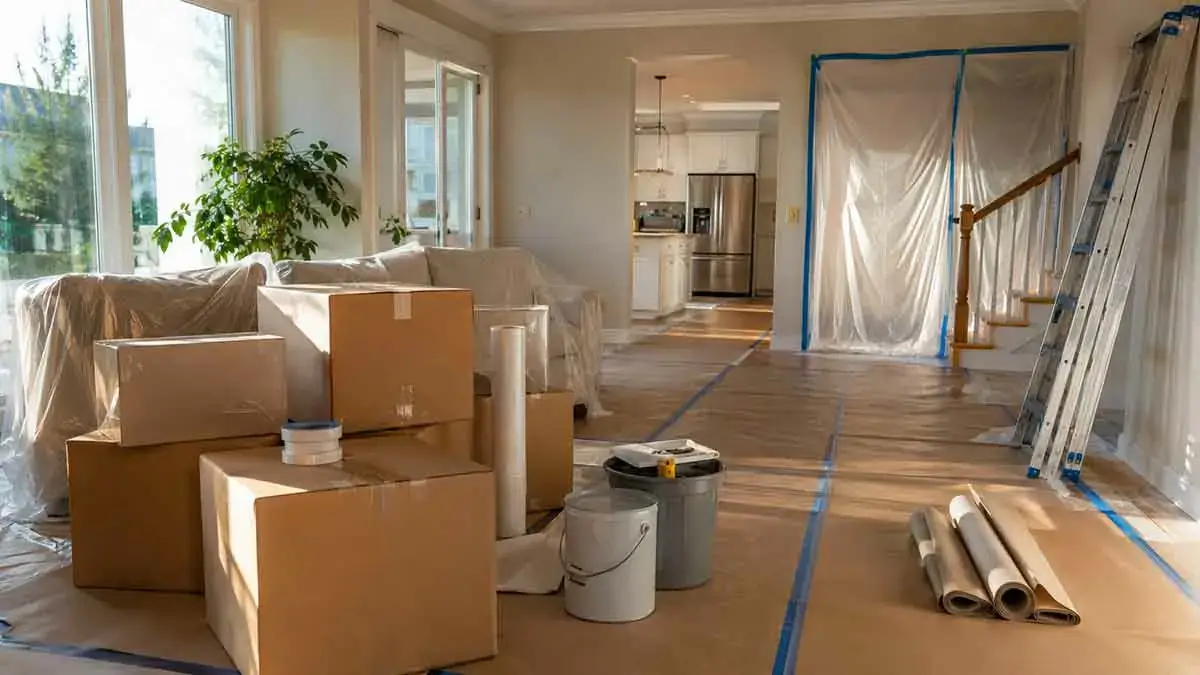
Preparing your home before a renovation can make the entire project easier to manage. Proper preparation helps protect your belongings, improve job-site safety, reduce unnecessary delays, and give contractors a more organized environment to work in.
Many homeowners focus on what will happen during construction but underestimate the importance of preparing the home beforehand.
Preparing for a renovation involves much more than moving furniture. Depending on the project, you may need to pack belongings, protect floors and surfaces, secure valuables, prepare temporary living spaces, plan for dust and noise, arrange contractor access, and prepare for utility interruptions.
This guide explains how to prepare your home for a renovation, including what to remove, what to protect, how to prepare your family and pets, and what to confirm before construction begins.
Table of Contents
Why Should You Prepare Your Home Before a Renovation?
Proper preparation can help you:
- Protect furniture and personal belongings
- Reduce the risk of damage to finished areas
- Improve contractor access
- Reduce preventable delays
- Keep the work area organized
- Improve job-site safety
- Minimize the spread of dust and debris
- Protect valuable and fragile items
- Make temporary living arrangements easier
- Reduce disruption to your daily routine
Preparation also gives you an opportunity to identify potential problems before construction begins.
1. Confirm the Renovation Scope
Before preparing the house, make sure you understand exactly what will be renovated.
Review:
- Rooms included in the project
- Walls being removed or modified
- Floors being replaced
- Cabinets being removed
- Electrical work
- Plumbing work
- HVAC work
- Painting
- Exterior work
- Areas that will remain occupied
A clear scope helps you determine which belongings need to be removed and which areas require protection.
If you are still finalizing the project, our step-by-step home renovation planning guide can help you organize the work before construction begins.
2. Create a Pre-Renovation Checklist
Create a preparation checklist several days or weeks before the scheduled start date.
Include tasks such as:
- Moving furniture
- Packing belongings
- Protecting floors
- Removing wall decorations
- Securing valuables
- Preparing appliances
- Setting up temporary living spaces
- Arranging pet care
- Planning meals
- Preparing children for construction
- Confirming contractor access
- Preparing for waste disposal
- Taking photographs
- Confirming utility arrangements
- Reviewing the construction schedule
A written checklist makes it easier to complete small but important tasks before the workers arrive.
3. Remove Furniture From the Work Area
Furniture should generally be removed from rooms where major construction will take place.
If possible, move furniture to:
- Another room
- A garage
- A storage area
- A temporary storage unit
Avoid simply moving everything into the middle of the room if workers need access to walls, floors, ceilings, cabinets, or built-in features.
Furniture that must remain nearby should be properly covered and protected according to the contractor’s recommendations.
4. Protect Furniture and Belongings
Renovation work can produce dust, debris, vibrations, moisture, and accidental impacts.
Depending on the situation, furniture can be protected with:
- Furniture covers
- Moving blankets
- Protective wrapping
- Secure storage containers
- Appropriate plastic sheeting
Do not assume that closing a door will completely protect belongings from construction dust. Fine particles can travel through gaps, air movement, and ventilation pathways.
5. Remove Wall Decorations
Before construction begins, remove fragile or valuable objects from walls.
This may include:
- Pictures
- Mirrors
- Shelves
- Clocks
- Decorative objects
- Wall-mounted electronics
Drilling, demolition, hammering, and other construction activities can create vibrations that cause wall-mounted items to fall or become damaged.
6. Pack Small and Fragile Items
Pack belongings that could be damaged by dust, vibration, moisture, temperature changes, or accidental impacts.
Examples include:
- Glassware
- Decorative objects
- Electronics
- Collectibles
- Books
- Artwork
- Small appliances
Use sturdy containers and label boxes clearly so you can find essential items during the renovation.
7. Secure Valuable and Important Items
Do not leave valuable or sensitive belongings inside an active construction area.
Secure or relocate:
- Jewelry
- Cash
- Important documents
- Electronics
- Collectibles
- Personal records
- Other small valuable items
Whenever possible, move these belongings to a secure location outside the renovation area.
8. Take Photos Before Construction
Photograph the home before construction begins.
Take pictures of:
- Walls
- Floors
- Ceilings
- Doors
- Windows
- Furniture
- Valuable items
- Areas surrounding the work zone
These photographs provide a record of the property’s condition before work begins.
If walls or ceilings will be opened, photograph visible pipes, wiring, framing, and other relevant components before they are covered.
Keep the photographs organized by room and store copies securely.
9. Protect Floors
Floor protection is particularly important when construction involves demolition, drywall, painting, plumbing, electrical work, heavy equipment, or material deliveries.
Depending on the flooring type and project, protection may include:
- Temporary floor coverings
- Protective runners
- Heavy-duty sheets
- Cardboard
- Moving blankets
The contractor should determine the appropriate protection for the specific surface and construction activities.
10. Protect Doors and High-Traffic Areas
Workers may repeatedly use the same entrance, hallway, staircase, or doorway throughout the project.
Protect vulnerable areas such as:
- Door frames
- Doors
- Hallways
- Staircases
- Corners
- Baseboards
This becomes especially important when workers are carrying cabinets, appliances, drywall, flooring, lumber, or other large materials through the home.
11. Create a Defined Construction Zone
If possible, separate the renovation area from the rest of the house.
Appropriate temporary barriers or containment methods can help limit the movement of:
- Dust
- Debris
- Construction materials
- Tools
- Workers
The contractor should determine the appropriate containment method for the project.
Do not block required ventilation, emergency exits, utility access, or other essential pathways.
12. Prepare for Dust
Dust is one of the most common disruptions during renovation.
Even projects that appear to be limited to one room can spread dust into nearby areas.
Ask the contractor about measures such as:
- Dust barriers
- Protective coverings
- Appropriate ventilation
- Job-site cleaning
- Containment procedures
Keep doors to unaffected rooms closed when practical and avoid storing sensitive belongings near the work area.
13. Prepare for Noise
Renovation can produce substantial noise from:
- Drilling
- Sawing
- Demolition
- Hammering
- Power tools
- Material movement
Consider how construction noise will affect your:
- Work-from-home schedule
- Children
- Pets
- Daily activities
- Neighbors
If possible, plan alternative work or living arrangements during the loudest stages of construction.
14. Plan Your Temporary Living Space
If you plan to remain at home during the renovation, decide which areas will remain usable.
You may need to create temporary:
- Bedroom space
- Kitchen space
- Bathroom access
- Work area
- Storage area
- Dining area
Keep temporary living spaces separated from construction as much as practical.
If most of the home will be affected, temporary accommodation may be a better option.
15. Prepare a Temporary Kitchen
A kitchen renovation can make normal cooking difficult or impossible.
Before demolition, consider setting up a temporary kitchen with essential items such as:
- Microwave
- Electric kettle
- Small refrigerator
- Basic cookware
- Plates
- Cups
- Utensils
- Food storage containers
Choose a location away from construction dust and heavy traffic.
Planning simple meals in advance can also reduce daily disruption.
16. Plan for Bathroom Access
If a bathroom is being renovated, determine which bathroom will remain available.
This is particularly important when:
- The home has only one bathroom
- Multiple bathrooms are being renovated
- Plumbing will be temporarily shut off
- Extensive demolition is planned
Discuss expected water interruptions with the contractor before work begins.
17. Protect Appliances
If appliances are being removed, replaced, or relocated, plan their handling before construction begins.
Examples include:
- Refrigerator
- Oven
- Dishwasher
- Washing machine
- Dryer
Confirm:
- Who will disconnect the appliance
- Where it will be stored
- Whether special handling is required
- When replacement appliances will arrive
- Who will install them
Do not disconnect gas or electrical appliances yourself unless you are appropriately qualified and local requirements permit you to do so.
18. Identify Utilities and Important Shutoffs
Before construction begins, identify the location of important utility controls.
These may include:
- Main water shutoff
- Electrical panel
- Gas shutoff where applicable
- HVAC controls
- Individual water shutoffs
Make sure household members know where these controls are located.
The contractor should also understand the relevant utility configuration before beginning work.
19. Prepare for Utility Interruptions
Renovation work may temporarily interrupt:
- Water
- Electricity
- Gas
- Heating
- Cooling
- Internet
Ask the contractor when interruptions are expected and how long they may last.
If utilities need to be shut off, plan around those periods, especially if you work from home or have children or other household members who depend on uninterrupted access.
20. Prepare Your Pets
Pets can become stressed by unfamiliar people, loud noises, dust, open doors, and changes to their environment.
During renovation:
- Keep pets away from construction areas
- Secure gates and doors
- Maintain normal feeding routines
- Provide a quiet area
- Consider temporary care during highly disruptive stages
- Keep tools and construction materials out of reach
Never assume that a pet will recognize a construction area as dangerous.
21. Prepare Children for Construction
Children should not have unrestricted access to an active construction area.
Job sites can contain:
- Tools
- Nails
- Sharp materials
- Dust
- Electrical equipment
- Open walls
- Temporary hazards
Establish clear boundaries before construction begins and, whenever possible, keep children completely away from the work zone.
22. Plan Contractor Access
Determine how workers will enter and leave the property.
Discuss:
- Main entrance
- Side entrance
- Garage access
- Parking
- Keys
- Access codes
- Security systems
- Delivery areas
Establish a clear access process before construction begins.
23. Inform Neighbors When Appropriate
Major renovations can create:
- Noise
- Dust
- Construction traffic
- Parking changes
- Temporary exterior disruptions
If the project is likely to affect neighboring properties, informing nearby residents in advance can help maintain good relationships.
For exterior renovations, be especially considerate about working hours, construction vehicles, and material deliveries.
24. Plan Material Delivery Areas
Renovation materials can include:
- Drywall
- Lumber
- Cabinets
- Flooring
- Appliances
- Tile
- Windows
- Doors
Determine where deliveries can safely take place.
Make sure delivery routes do not create unnecessary risks for household members, children, pets, vehicles, landscaping, or existing structures.
25. Prepare for Construction Debris
Renovations can generate substantial waste.
Depending on the project, you may need:
- Trash containers
- Dumpster service
- Recycling
- Material disposal
- Specialized waste handling
Confirm who is responsible for debris removal and disposal.
Do not assume that final cleanup or waste removal is automatically included in the contractor’s scope.
26. Protect Outdoor Areas
Exterior areas can be affected by material deliveries, construction vehicles, scaffolding, debris, and equipment.
Protect or relocate:
- Outdoor furniture
- Plants
- Decorations
- Grills
- Garden equipment
If heavy vehicles will access the property, discuss potential impacts on driveways, lawns, walkways, and landscaping with the contractor.
27. Secure Windows and Exterior Openings
If windows, doors, or exterior walls will be removed or opened, plan how the home will remain protected.
Temporary protection may be needed against:
- Rain
- Wind
- Dust
- Animals
- Unauthorized access
The contractor should determine appropriate weatherproofing and security measures based on the project and expected conditions.
28. Plan Your Daily Routine
A renovation can significantly disrupt normal household routines.
Consider:
- Where you will eat
- Where you will work
- Where children will play
- Where pets will stay
- Where you will park
- Which entrances you can use
- When construction will take place
Planning these details before work begins can make the renovation easier to manage.
29. Create a Communication Plan
Decide how you will communicate with the contractor before construction begins.
Establish:
- Primary contact person
- Preferred communication method
- Expected response times
- Update frequency
- Change-order process
- Emergency contact information
A clear communication system reduces confusion and allows important decisions to be handled quickly.
30. Review the Contract Before Construction
Before the first day of work, review the signed contract carefully.
Confirm:
- Scope of work
- Payment schedule
- Start date
- Estimated completion date
- Materials
- Contractor responsibilities
- Homeowner responsibilities
- Cleanup
- Permits
- Change-order procedures
- Warranty terms
Make sure you understand what is included and excluded from the project.
31. Prepare Your Budget for Unexpected Costs
Even a carefully planned renovation can uncover unexpected problems.
Maintain a contingency reserve for issues such as:
- Hidden water damage
- Damaged wiring
- Plumbing problems
- Structural repairs
- Unexpected material changes
Avoid spending the entire renovation budget before construction starts.
A realistic reserve provides flexibility if additional work becomes necessary.
32. Protect Important Documents
Keep renovation-related documents organized and accessible.
Save:
- Contracts
- Estimates
- Invoices
- Permits
- Plans
- Inspection records
- Product warranties
- Receipts
- Change orders
Store digital copies in a secure location as well.
33. Prepare for Security During Construction
Construction can temporarily change how secure your home is.
When doors, windows, or exterior walls are being modified, discuss appropriate security measures with the contractor.
Depending on the project, this may include:
- Temporary locks
- Alarm systems
- Access codes
- Keys
- Smart locks
- Security cameras
Change temporary access codes after the project is completed when appropriate.
34. Remove or Protect Sensitive Electronics
Electronics can be vulnerable to dust, moisture, vibration, and power interruptions.
Move sensitive equipment away from construction whenever possible.
This may include:
- Computers
- Televisions
- Gaming equipment
- Network equipment
- Audio systems
- Smart home hubs
If internet or network equipment must remain active, plan how workers can access nearby areas without damaging cables or equipment.
35. Prepare for Cleaning
Construction cleanup occurs throughout the project, but the house may remain dusty until major work is complete.
Plan for:
- Routine job-site cleanup
- Final construction cleaning
- Dust removal
- Window cleaning
- Floor cleaning
- Debris removal
Confirm whether final cleaning is included in the contractor’s contract.
36. Complete a Final Pre-Construction Walkthrough
Before demolition or construction begins, walk through the property with the contractor.
Confirm:
- Work boundaries
- Materials
- Access routes
- Protected areas
- Utility locations
- Storage locations
- Delivery areas
- Construction schedule
- Security arrangements
This walkthrough provides one final opportunity to identify misunderstandings before work begins.
What Should You Remove Before a Renovation?
As a general rule, remove anything that is:
- Fragile
- Valuable
- Easily damaged
- Difficult to clean
- Not needed during construction
This may include:
- Artwork
- Mirrors
- Collectibles
- Electronics
- Decorative objects
- Small furniture
- Valuable documents
The more extensive the renovation, the more thoroughly you should clear the affected areas.
How Many Days Before a Renovation Should You Start Preparing?
The amount of preparation time depends on the size and complexity of the renovation.
For a small project, preparation may take only a few days.
For a larger renovation, begin several weeks in advance.
A practical preparation schedule might look like this:
2–4 weeks before:
Finalize plans, confirm materials, arrange storage, and organize temporary living arrangements.
1–2 weeks before:
Pack belongings, remove valuables, arrange pet care, and prepare temporary spaces.
Several days before:
Move furniture, protect floors, confirm access, and complete the pre-construction preparations.
Day before:
Remove remaining personal items, secure valuables, confirm utility arrangements, and verify the contractor’s arrival time.
The larger the project, the earlier preparation should begin.
Home Renovation Preparation Checklist
Planning
- Confirm renovation scope
- Review contract
- Confirm schedule
- Confirm permits
- Confirm materials
- Establish communication plan
Home Preparation
- Remove furniture
- Pack fragile items
- Secure valuables
- Remove wall decorations
- Protect floors
- Protect doors and hallways
- Establish construction boundaries
Household Preparation
- Create temporary living areas
- Set up a temporary kitchen if needed
- Plan bathroom access
- Prepare children
- Arrange pet care
- Plan work arrangements
- Plan meals
Construction Preparation
- Confirm contractor access
- Prepare material delivery areas
- Arrange debris removal
- Identify utility shutoffs
- Protect outdoor areas
- Plan security
- Confirm utility interruptions
Documentation
- Photograph existing conditions
- Save contracts
- Save permits
- Save plans
- Save receipts
- Save warranties
- Save inspection records
Common Home Preparation Mistakes
Leaving Furniture in the Work Area
Furniture can obstruct construction, slow workers down, and increase the risk of damage.
Forgetting Fragile Decorations
Vibration from drilling, demolition, and other construction activities can damage wall-mounted or nearby objects.
Not Planning for Dust
Dust can spread beyond the immediate renovation area if proper containment is not used.
Ignoring Pets
Open doors, loud noises, unfamiliar workers, and construction materials can create serious risks for animals.
Failing to Plan Daily Life
Losing access to a kitchen, bathroom, bedroom, or workspace can make a renovation much more disruptive than expected.
Not Confirming Contractor Responsibilities
Unclear responsibilities for cleanup, appliance removal, protection, or debris disposal can lead to disagreements.
Spending the Entire Budget Before Construction
Unexpected problems can appear after demolition begins, so maintaining a financial reserve is important.
Final Thoughts
Knowing how to prepare your home for a renovation can make a significant difference in how smoothly the project progresses.
Start by confirming the scope, reviewing the contract, and creating a practical preparation checklist. Then clear the work areas, protect belongings and surfaces, secure valuables, prepare temporary living spaces, and establish clear access and communication arrangements.
Do not overlook the people and animals living in the home. Children, pets, remote workers, and other household members may require additional planning during disruptive construction stages.
Most importantly, prepare for disruption rather than assuming the renovation will have little effect on your daily routine.
A well-prepared home gives contractors better access, protects your belongings, reduces preventable problems, and helps you stay organized throughout the project.
The more extensive the renovation, the more valuable preparation becomes. Taking time to prepare properly before construction begins can save time, reduce stress, and help protect both your home and your renovation budget.
Frequently Asked Questions
How should I prepare my house before a renovation?
Start by confirming the project scope, removing furniture and valuables from work areas, protecting floors and surfaces, preparing temporary living spaces, and reviewing contractor access and responsibilities.
Should I move all furniture out before renovating?
Furniture should generally be removed from active construction areas. Items that cannot be moved should be properly covered and protected according to the contractor’s recommendations.
Should I remove pictures from the walls before renovation?
Yes. Vibration from drilling, demolition, and other construction activities can cause wall-mounted objects to fall or become damaged.
How do I protect my belongings from renovation dust?
Remove sensitive items from the work area, cover or store remaining belongings appropriately, and discuss dust containment and cleaning procedures with the contractor.
Where should I stay during a home renovation?
For small projects, you may be able to remain at home using unaffected rooms. Major renovations involving kitchens, bathrooms, structural work, or multiple rooms may make temporary accommodation more practical.
How do I prepare my kitchen for renovation?
Remove food, cookware, small appliances, and personal belongings. If the kitchen will be unavailable, create a temporary kitchen with essential appliances and supplies before demolition begins.
How do I prepare pets for renovation?
Keep pets away from construction areas, provide a quiet and secure space, and consider temporary care during particularly noisy or disruptive stages.
How early should I start preparing for a renovation?
Small projects may require only a few days of preparation, while larger renovations should generally be prepared for several weeks in advance.
Should I take pictures before a renovation?
Yes. Photograph rooms, surfaces, furniture, and valuable items before construction. If walls or ceilings will be opened, documenting visible wiring, plumbing, and framing can also be useful.
What should I do with valuables during renovation?
Move valuable items, important documents, jewelry, cash, electronics, and collectibles to a secure location outside the construction area whenever possible.
Should I prepare for unexpected renovation costs?
Yes. Maintain a contingency reserve because demolition and construction can reveal hidden problems that were not visible during initial planning.