
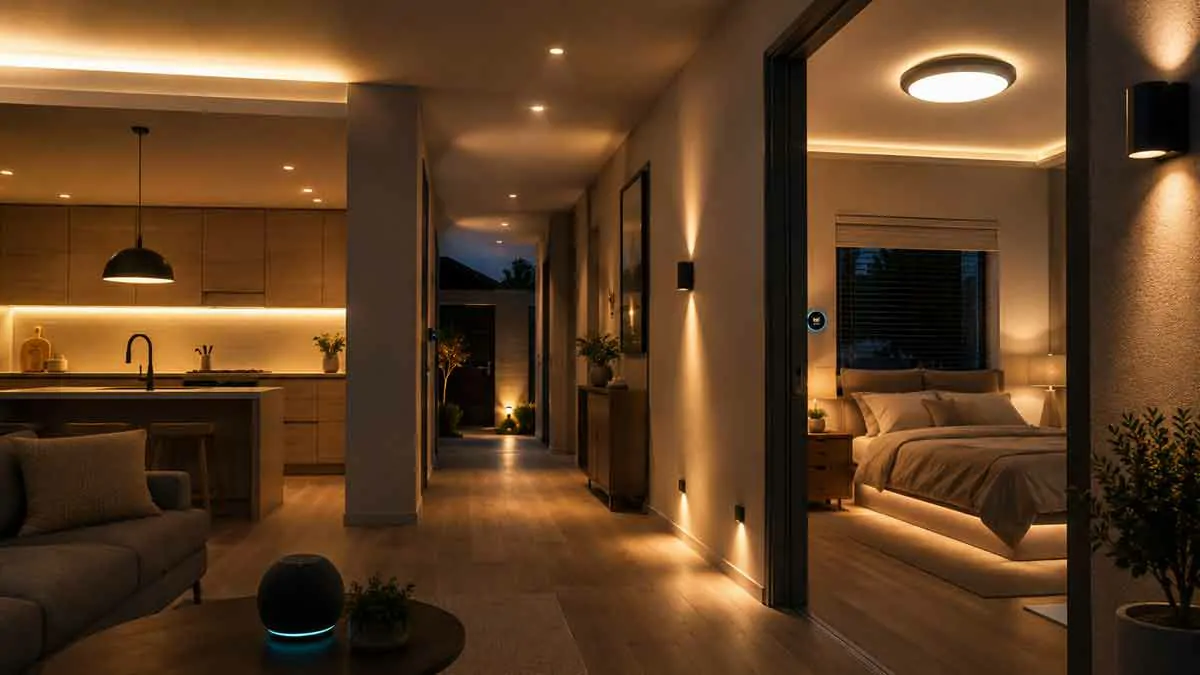
Smart home lighting can do much more than turn lights on and off. With the right setup, you can create a comfortable atmosphere, improve visibility, reduce unnecessary energy use, and make everyday routines easier.
From bright task lighting in the kitchen to relaxing lights in the bedroom, smart lighting gives you more control over how each room feels and functions. You can adjust brightness, change color temperature, create schedules, and control lights from your phone or with voice commands.
The best approach is not to use the same lighting setup throughout the entire house. Each room has different purposes, so your smart lighting should match the activities that happen there.
In this guide, we’ll explore practical smart home lighting ideas for every room, including recommended lighting types, useful automation routines, and simple ways to make your home more comfortable and efficient.
Why Smart Lighting Is Useful at Home
Traditional light switches provide a simple on-and-off function. Smart lighting adds another layer of control.
Depending on the system you choose, you can control individual bulbs, groups of lights, or entire rooms. Many smart lighting products can also be connected to a broader smart home system, allowing lights to respond to schedules, sensors, or other devices.
Some of the most useful benefits include:
- Remote control from a smartphone
- Voice control through compatible assistants
- Adjustable brightness
- Adjustable color temperature
- Automated schedules
- Motion-based lighting
- Sunrise and sunset routines
- Vacation lighting schedules
- Reduced energy waste
- Customized lighting scenes
Smart lighting does not have to mean replacing every light fixture in your home. You can start with one or two rooms and expand the system gradually.
Smart Lighting Ideas for the Living Room
The living room usually serves several purposes. It may be used for watching television, reading, entertaining guests, working, or simply relaxing.
Because of this, flexible lighting is especially useful.
Create Different Lighting Scenes
Instead of using one brightness level all day, create several scenes for different activities.
For example:
Bright Scene: Higher brightness for cleaning, reading, or daytime activities.
Relax Scene: Softer, warmer lighting for evenings.
Movie Scene: Dimmed lights positioned away from the television.
Guest Scene: Balanced lighting that creates a welcoming atmosphere.
These scenes can often be activated through a smartphone app, voice command, or automation.
Use Warm Lighting in the Evening
Cool, bright lighting can feel energizing during the day, while warmer light can create a more relaxed atmosphere at night.
A smart bulb with adjustable color temperature allows you to change the lighting throughout the day without replacing the bulb.
Add Accent Lighting
Smart LED strips or smaller smart lamps can highlight shelves, artwork, entertainment centers, or architectural features.
Accent lighting should complement the main room lighting rather than replace it.
Smart Kitchen Lighting Ideas
The kitchen needs practical illumination because many activities require good visibility.
Smart lighting can make the kitchen more functional while also allowing you to automate lights that are frequently forgotten.
Use Smart Under-Cabinet Lighting
Under-cabinet lights are particularly useful for countertops and food preparation areas.
Smart LED strips or compatible under-cabinet fixtures can provide focused task lighting without requiring the main ceiling lights to be turned on.
You can also schedule them to activate in the morning or turn off automatically at night.
Use Brighter Light for Food Preparation
Kitchen task areas generally benefit from brighter, clearer lighting.
Consider using a cooler or neutral color temperature when preparing food, cleaning countertops, or performing detailed tasks.
Automate Kitchen Lighting
A simple schedule can turn on selected kitchen lights around breakfast time and switch them off later in the morning.
Motion sensors can also be useful for pantry areas or other spaces where you may enter with your hands full.
Smart Bedroom Lighting Ideas
Bedroom lighting should prioritize comfort and relaxation.
Instead of relying on a bright overhead light, consider using several layers of softer lighting.
Create a Bedtime Lighting Routine
A smart lighting routine can gradually reduce brightness in the evening.
For example, you could schedule bedroom lights to become warmer and dimmer before bedtime. This creates a consistent transition from daytime activity to a more relaxed environment.
Use Smart Bedside Lamps
Smart bedside lamps can be controlled without getting out of bed.
You can turn them off using a voice command or schedule them to switch off automatically after you normally fall asleep.
Add Gentle Morning Lighting
Smart lighting can also be useful in the morning.
A gradual increase in brightness can create a more comfortable start to the day than suddenly turning on a bright overhead light.
Smart Bathroom Lighting Ideas
Bathrooms require practical lighting, but that does not mean every light needs to operate at maximum brightness all the time.
Use Different Brightness Levels
Bright lighting can be useful when shaving, applying makeup, or cleaning.
At night, however, lower lighting may be more comfortable.
A smart lighting system can provide separate daytime and nighttime scenes.
Add Motion-Activated Lighting
Motion sensors can be especially useful for nighttime bathroom visits.
Instead of searching for a light switch in the dark, a low-level light can automatically activate when motion is detected.
You can configure the automation so that the light is dimmer during overnight hours.
Smart Home Office Lighting Ideas
A home office requires lighting that supports focused work without creating unnecessary glare.
Use Adjustable Task Lighting
A smart desk lamp can provide focused illumination when you are reading documents, writing, or working at a computer.
Adjustable brightness gives you more flexibility as natural daylight changes.
Automate Lighting Around Your Work Schedule
If you normally work at similar times each day, smart lighting can automatically activate before your work session begins.
You can create a brighter daytime scene and a softer scene for late afternoon or evening work.
Combine Natural and Smart Lighting
Smart lighting should complement natural daylight rather than compete with it.
During bright daylight hours, you may need less artificial light. As the room becomes darker, automated lighting can gradually increase.
Smart Dining Room Lighting Ideas
The dining room is another area where adjustable lighting can make a noticeable difference.
Bright lighting may be appropriate for cleaning or everyday tasks, while warmer and softer lighting can create a more comfortable setting during meals.
Create a Dining Scene
A simple dining scene could:
- Reduce overhead brightness
- Increase the warmth of the light
- Activate accent lighting
- Turn off unnecessary lights in nearby areas
You can activate the scene manually or schedule it around your usual dinner time.
Smart Hallway Lighting Ideas
Hallways often do not need strong lighting throughout the entire day.
Smart lighting can help provide illumination only when it is actually needed.
Use Motion Sensors
Motion-activated hallway lights can automatically turn on when someone walks through the area.
For nighttime use, configure the lights to operate at a lower brightness. This provides enough visibility without flooding the entire house with bright light.
Add Automatic Shutoff
A hallway light that remains on for hours is unnecessary.
An automation can turn the light off after a short period without detected movement.
Smart Entryway Lighting Ideas
The entryway is one of the first areas you encounter when arriving home.
Smart lighting can make this space more convenient and welcoming.
You can schedule entryway lights around sunset or use motion detection to activate them when someone enters.
If your smart home system supports location-based automation, lights can also be configured to respond when you arrive home.
However, location-based automation should be configured carefully to avoid unnecessary activations.
Smart Home Lighting Ideas for Stairs
Stairs require good visibility, particularly at night.
Smart lighting can improve convenience by automatically illuminating the path when movement is detected.
Instead of turning on bright ceiling lights, consider using low-level lights or LED strips along the stair area.
Motion sensors can activate the lights when someone approaches and turn them off after the area has been clear for a specified period.
Smart Lighting Ideas for a Nursery or Kids’ Room
A child’s room can benefit from simple, predictable lighting routines.
A dimmable smart lamp can provide soft lighting at bedtime and brighter lighting during daytime activities.
You can also create a gentle nighttime scene that uses low brightness instead of leaving the main ceiling light on.
For children’s rooms, keep controls simple and make sure smart lighting equipment is installed safely and securely.
Smart Lighting Ideas for Outdoor Areas
Smart lighting is not limited to the inside of the house.
Outdoor smart lights can improve visibility around entrances, patios, walkways, and other areas.
Use Sunset-Based Scheduling
Instead of choosing a fixed time, you can schedule outdoor lights to activate around sunset.
This is useful because sunset changes throughout the year.
Use Motion Detection
Motion-activated lighting can provide illumination when someone approaches a doorway, garage, or walkway.
It can also prevent outdoor lights from remaining on unnecessarily.
Smart Lighting for Energy Savings
Smart lighting can contribute to better energy management, but the technology itself does not automatically guarantee lower energy bills.
The biggest benefit comes from using efficient LED lighting and avoiding unnecessary operating time.
For example, you can:
- Turn lights off automatically
- Schedule lights around daily routines
- Use motion sensors in low-traffic areas
- Dim lights when full brightness is unnecessary
- Use daylight to reduce artificial lighting
- Monitor and adjust lighting habits
These small changes can become more effective when combined with other smart energy-saving devices throughout the home.
How to Choose the Right Smart Lighting Setup
Before buying smart bulbs or fixtures, consider how you want to control them.
Smart Bulbs
Smart bulbs are often the easiest way to start.
You can replace existing bulbs with compatible smart bulbs and control them through an app, voice assistant, or automation platform.
They are particularly useful for lamps and fixtures where the bulb can be replaced easily.
Smart Switches
Smart switches control the electrical circuit rather than individual bulbs.
They can be a better option when you want to maintain normal wall-switch operation while adding smart control.
However, installation requirements vary, so check compatibility with your electrical system before purchasing.
Smart LED Strips
LED strips are useful for accent lighting, cabinets, entertainment areas, shelves, and other locations where traditional bulbs are not practical.
Smart Lamps
Smart lamps can be a simple solution for bedrooms, living rooms, offices, and other areas where you want flexible lighting without modifying existing electrical wiring.
Choose a Smart Lighting System That Fits Your Home
Compatibility is one of the most important considerations when building smart lighting.
Before buying multiple products, check which ecosystem and communication standards they support.
Depending on your setup, you may encounter technologies such as Wi-Fi, Bluetooth, Zigbee, Z-Wave, and Matter.
A compatible system makes it easier to control multiple devices together instead of managing every product through a separate application.
If you are building a larger smart home, choosing compatible devices from the beginning can reduce future setup problems.
Simple Smart Lighting Automations to Try
You do not need complicated automation rules to get useful results.
Here are several practical routines:
Good Morning: Gradually increase bedroom lighting in the morning.
Welcome Home: Turn on entryway and living room lights when you arrive.
Dinner Time: Activate a warm dining scene around your usual meal time.
Movie Time: Dim selected living room lights when you start watching television.
Night Mode: Reduce brightness throughout selected areas after bedtime.
Away Mode: Randomly activate selected lights during evening hours when you are away.
Pathway Lighting: Turn on low-level hallway or stair lighting when motion is detected at night.
Start with one or two automations that solve an actual problem. You can add more as you become comfortable with your smart home system.
Common Smart Lighting Mistakes to Avoid
Smart lighting can become unnecessarily complicated if every room is filled with devices without a clear purpose.
Buying Incompatible Devices
Before buying a new product, check whether it works with your existing ecosystem and controllers.
Using One Lighting Type Everywhere
Different rooms need different lighting.
A bedroom, kitchen, home office, and hallway should not necessarily use the same brightness and color temperature.
Overusing Automation
Automation should make life easier.
If an automation frequently activates lights when you do not need them, adjust or remove it.
Ignoring Manual Control
Smart lighting should still be convenient for people who prefer traditional switches.
Consider how family members and guests will control the lights when they do not have access to your smart home app.
Choosing Features You Do Not Need
Color-changing lighting can be fun, but it is not necessary for every room.
For many spaces, reliable dimming, scheduling, and good color temperature control are more useful than dozens of extra effects.
How to Build a Smart Lighting System Gradually
You do not need to transform your entire house at once.
Start with a room where smart lighting can provide an obvious benefit.
For example, you could begin with:
- Smart bulbs in the living room
- A smart bedside lamp
- Under-cabinet lighting in the kitchen
- Motion lighting in a hallway
- Outdoor lighting around the entryway
Once these devices work reliably together, you can expand the system.
This approach also gives you time to learn which automations are genuinely useful before investing in more equipment.
Final Thoughts
The best smart home lighting ideas for every room are not necessarily the most complicated ones. A good smart lighting system should make your home easier to use while providing the right amount of light for each activity.
Use brighter task lighting where you need visibility, warmer and dimmer lighting where you want to relax, and motion or schedule-based automation where lights are frequently forgotten.
Start small, choose compatible devices, and build your system around your actual routines. With the right combination of smart bulbs, switches, sensors, and automation, lighting can become one of the simplest and most useful parts of a modern smart home.