
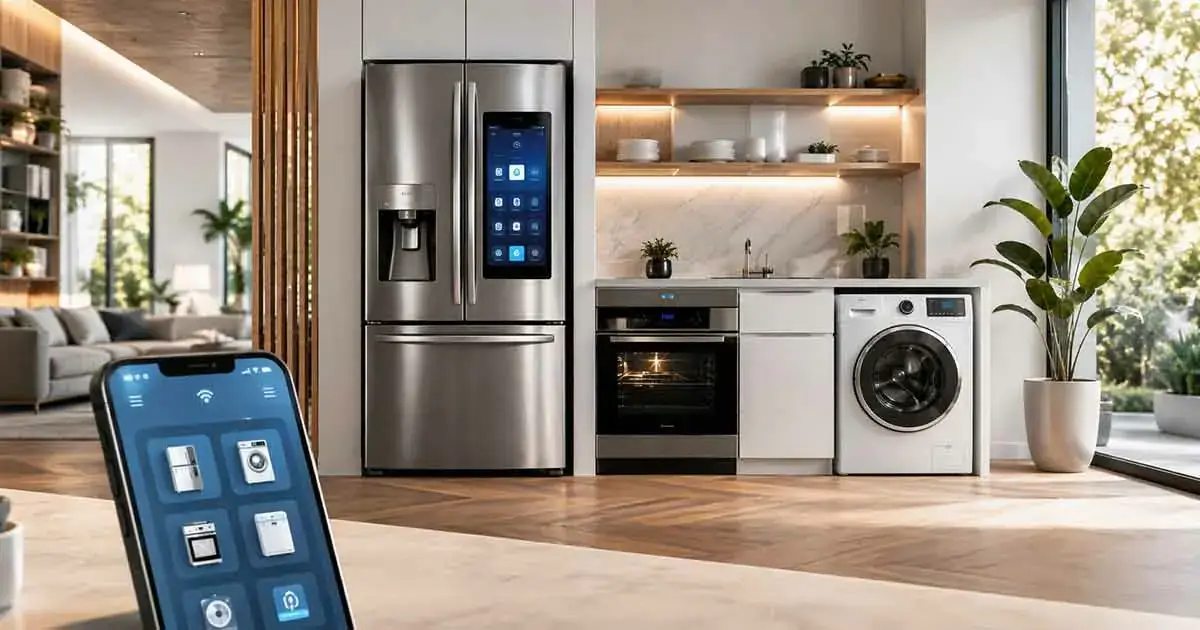
Smart appliances are transforming modern homes by combining traditional household functions with internet connectivity, automation, and intelligent controls. These connected devices help homeowners improve convenience, efficiency, and overall home management.
From refrigerators that track groceries to washing machines that can be controlled remotely, smart appliances are becoming an important part of modern smart home ecosystems.
For homeowners interested in creating a connected home, understanding how smart appliances work and what benefits they offer is essential before making a purchase.
This guide explains smart appliances, their advantages, common types, key features, and how to choose the best smart appliances for your home.
What Are Smart Appliances?
Smart appliances are household devices that connect to the internet or a smart home network and can be monitored, controlled, or automated remotely.
Unlike traditional appliances, smart appliances often include:
- Wi-Fi connectivity
- Mobile app control
- Automation features
- Energy monitoring
- Notifications and alerts
- Voice assistant compatibility
These features allow homeowners to manage appliances more efficiently.
How Smart Appliances Work
Smart appliances communicate through wireless networks and dedicated applications.
A typical setup includes:
- The appliance connects to Wi-Fi.
- A mobile application links to the device.
- The user manages settings remotely.
- Automation and notifications improve convenience.
Many smart appliances can also integrate with broader smart home systems.
Benefits of Smart Appliances
Improved Convenience
Smart appliances simplify many household tasks.
Examples include:
- Remote operation
- Automated schedules
- Maintenance alerts
- Smart notifications
Users can manage appliances from almost anywhere.
Better Energy Efficiency
Many smart appliances are designed to optimize energy usage.
Benefits may include:
- Reduced electricity consumption
- Better operating schedules
- Energy reports
- Performance monitoring
This can help lower utility costs over time.
Enhanced Home Automation
Smart appliances can participate in automation routines.
Examples include:
- Starting devices automatically
- Coordinating with smart lighting
- Responding to voice commands
Automation helps create a more connected living environment.
Improved Monitoring
Smart notifications help homeowners stay informed.
Examples:
- Cycle completion alerts
- Maintenance reminders
- Temperature warnings
- Device status updates
Types of Smart Appliances
Smart Refrigerators
Smart refrigerators may include:
- Inventory tracking
- Temperature monitoring
- Internal cameras
- Shopping assistance
These features help homeowners manage food storage more effectively.
Smart Washing Machines
Connected washing machines can offer:
- Remote monitoring
- Cycle notifications
- Energy management
- Maintenance alerts
Users can track laundry progress through mobile apps.
Smart Dryers
Smart dryers provide additional convenience through:
- Remote status updates
- Performance monitoring
- Maintenance notifications
Smart Ovens
Smart ovens allow users to:
- Monitor cooking remotely
- Adjust settings through apps
- Receive cooking alerts
These features improve kitchen convenience.
Smart Dishwashers
Connected dishwashers may provide:
- Cycle monitoring
- Energy-saving modes
- Maintenance reminders
Smart Air Conditioners
Smart air conditioning systems often include:
- Remote temperature control
- Scheduling features
- Energy monitoring
These systems can improve both comfort and efficiency.
Smart Robot Vacuums
Robot vacuums are among the most popular smart home appliances.
Features commonly include:
- Automated cleaning schedules
- Mapping technology
- Mobile control
- Smart home integration
Important Smart Appliance Features
Mobile App Control
Most smart appliances include dedicated applications for monitoring and management.
Useful functions include:
- Remote operation
- Status updates
- Notifications
- Scheduling
Voice Assistant Integration
Many appliances support:
- Google Assistant
- Amazon Alexa
- Apple HomeKit
Voice commands improve convenience and accessibility.
Energy Monitoring
Energy tracking features help users understand consumption patterns.
Benefits include:
- Efficiency improvements
- Cost awareness
- Better resource management
Automation Compatibility
The best smart appliances work well with other connected devices.
Integration supports:
- Automated routines
- Smart home scenes
- Coordinated device behavior
Notifications and Alerts
Real-time alerts can provide information about:
- Appliance status
- Maintenance requirements
- Performance issues
How to Choose Smart Appliances
Consider Your Needs
Identify which household tasks would benefit most from automation.
Examples:
- Cleaning
- Cooking
- Laundry
- Climate control
Evaluate Compatibility
Choose appliances that work with your preferred smart home platform.
Compatibility helps avoid future integration issues.
Focus on Practical Features
Select features that provide genuine value rather than unnecessary complexity.
Consider Long-Term Costs
Look beyond the purchase price.
Factors include:
- Energy consumption
- Maintenance
- Reliability
- Software support
Common Smart Appliance Mistakes
Buying Without a Plan
Purchasing devices without considering compatibility can create management challenges.
Ignoring Security Settings
Connected appliances should be protected through:
- Strong passwords
- Software updates
- Secure networks
Paying for Unused Features
Focus on features that will actually be used.
Overcomplicating Automation
The best smart homes prioritize simplicity and convenience.
Smart Appliances and Connected Homes
Smart appliances play a major role in connected home environments.
They can work alongside:
- Smart speakers
- Smart thermostats
- Smart lighting systems
- Smart plugs
- Home automation platforms
This creates a unified smart home experience.
Frequently Asked Questions
Are smart appliances worth it?
For many homeowners, smart appliances provide added convenience, automation, and efficiency.
Do smart appliances require Wi-Fi?
Most smart features depend on internet connectivity, although some basic functions work without Wi-Fi.
Can smart appliances save energy?
Many modern smart appliances include features designed to improve energy efficiency.
Are smart appliances secure?
Security depends on proper configuration, updates, and account protection.
What is the best smart appliance for beginners?
Robot vacuums, smart air conditioners, and connected washing machines are often popular starting points.
Final Thoughts
Smart appliances are helping homeowners create more efficient, convenient, and connected living environments. By combining automation, remote control, monitoring, and energy-saving features, these devices offer practical benefits that go beyond traditional appliances.
Choosing the right smart appliances requires careful consideration of compatibility, features, and long-term value. With the right approach, smart appliances can become an important part of a modern connected home.