
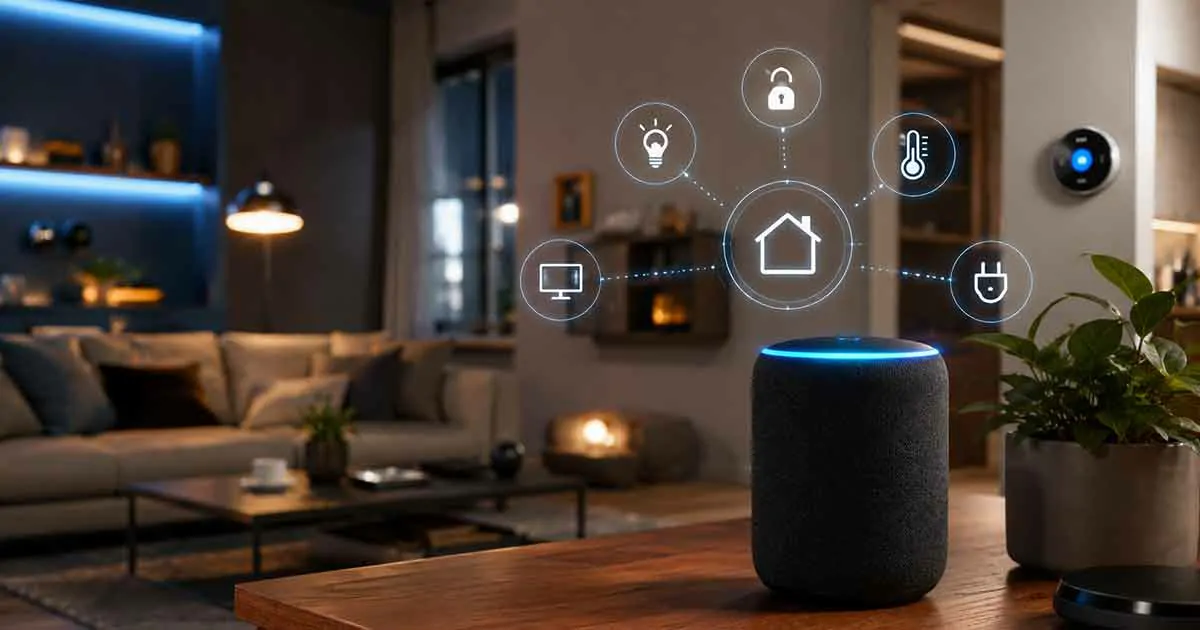
Smart speakers have become one of the most popular devices in modern smart homes. They serve as convenient control centers that allow homeowners to manage connected devices using voice commands, mobile apps, and automation routines.
Whether you want to control lighting, adjust temperature settings, manage security devices, or create automated routines, smart speakers can make home automation easier and more efficient.
For beginners, smart speakers are often the first step into the world of smart home technology because they are simple to set up and offer immediate benefits.
This guide explains how smart speakers work, their advantages, important features, and how to choose the best smart speaker for home automation.
What Are Smart Speakers?
Smart speakers are internet-connected devices that combine speakers, microphones, and voice assistants into a single product.
They allow users to:
- Control smart home devices
- Ask questions
- Play music
- Set reminders
- Manage routines
- Receive information
Most smart speakers respond to voice commands and can communicate with other connected devices throughout the home.
How Smart Speakers Work
Smart speakers use built-in voice assistants to process commands and perform actions.
A typical process works like this:
- The user gives a voice command.
- The device processes the request.
- The connected platform interprets the command.
- The requested action is performed.
For example:
Command: Turn off the living room lights.
Action: Connected smart lights automatically switch off.
Benefits of Smart Speakers
Convenient Voice Control
Voice control allows homeowners to operate devices without using smartphones or switches.
Common commands include:
- Turning lights on or off
- Adjusting temperature
- Locking doors
- Starting routines
This creates a more convenient user experience.
Centralized Device Management
Smart speakers help manage multiple devices from one location.
Homeowners can control:
- Smart lights
- Smart thermostats
- Smart locks
- Security cameras
- Smart plugs
This simplifies smart home management.
Home Automation Support
Smart speakers make automation easier by connecting different devices and routines.
Examples include:
- Morning routines
- Night routines
- Away mode settings
- Entertainment scenes
Hands-Free Convenience
Voice commands allow users to interact with devices while cooking, cleaning, or performing other tasks.
Entertainment Features
Many smart speakers also provide:
- Music streaming
- Podcasts
- Audiobooks
- News updates
Important Features to Consider
Voice Assistant Compatibility
Different smart speakers use different voice assistants.
Popular options include:
- Google Assistant
- Amazon Alexa
- Apple Siri
Choose a platform that matches your existing devices.
Smart Home Integration
The best smart speakers work with a wide range of smart home products.
Compatibility may include:
- Lighting systems
- Security devices
- Thermostats
- Smart appliances
Audio Quality
Sound quality may be important if the speaker will also be used for music and entertainment.
Consider:
- Speaker size
- Sound clarity
- Bass performance
Multi-Room Audio
Some smart speakers support synchronized audio throughout multiple rooms.
This feature is useful for:
- Whole-home music
- Entertainment systems
- Audio distribution
Routine and Automation Support
Advanced automation features allow users to create custom routines.
Examples include:
- Morning automation
- Bedtime routines
- Security automation
Smart Speaker Use Cases
Lighting Control
Smart speakers make it easy to control connected lighting systems.
Examples:
- Turn lights on or off
- Adjust brightness
- Activate scenes
Temperature Control
Voice commands can control compatible smart thermostats.
Examples:
- Increase temperature
- Lower temperature
- Activate schedules
Security Management
Smart speakers can interact with security devices.
Examples:
- Lock smart doors
- Check camera feeds
- Activate security modes
Entertainment Control
Users can control:
- Music playback
- Streaming devices
- Television systems
Communication Features
Many smart speakers support:
- Voice calls
- Intercom functions
- Announcements
How to Choose the Best Smart Speaker
Consider Your Existing Devices
Choose a speaker that works with your current smart home setup.
Compatibility reduces future problems.
Decide on Your Primary Use
Some users prioritize:
- Home automation
- Audio quality
- Entertainment
- Voice assistance
Choose a device that matches your goals.
Consider Room Size
Larger rooms may benefit from speakers with stronger audio performance.
Evaluate Future Expansion
Select a platform that supports future smart home growth.
Common Smart Speaker Mistakes
Choosing the Wrong Ecosystem
Switching platforms later can create compatibility issues.
Ignoring Privacy Settings
Review privacy options and security settings during setup.
Buying More Features Than Needed
Focus on features that provide practical value.
Poor Placement
Speaker location affects voice recognition and sound quality.
Smart Speakers and Home Automation
Smart speakers are often the central hub of a connected home.
They can coordinate:
- Lighting systems
- Smart thermostats
- Smart locks
- Security devices
- Entertainment systems
This allows homeowners to manage many devices through a single interface.
Frequently Asked Questions
Are smart speakers worth it?
Yes. They provide convenient voice control, automation support, and smart home management.
Can smart speakers control all smart devices?
Compatibility varies, so always check device support before purchasing.
Do smart speakers require Wi-Fi?
Yes. Most smart speakers rely on internet connectivity for full functionality.
Are smart speakers secure?
Security depends on proper account protection, software updates, and privacy settings.
What is the best smart speaker for beginners?
The best option depends on your preferred smart home ecosystem and desired features.
Final Thoughts
Smart speakers are among the most useful devices for home automation. They provide voice control, device management, entertainment features, and automation support within a single platform.
For homeowners starting their smart home journey, a smart speaker is often one of the simplest and most effective investments. By choosing a compatible device and building automation gradually, users can create a more convenient and connected living environment.