
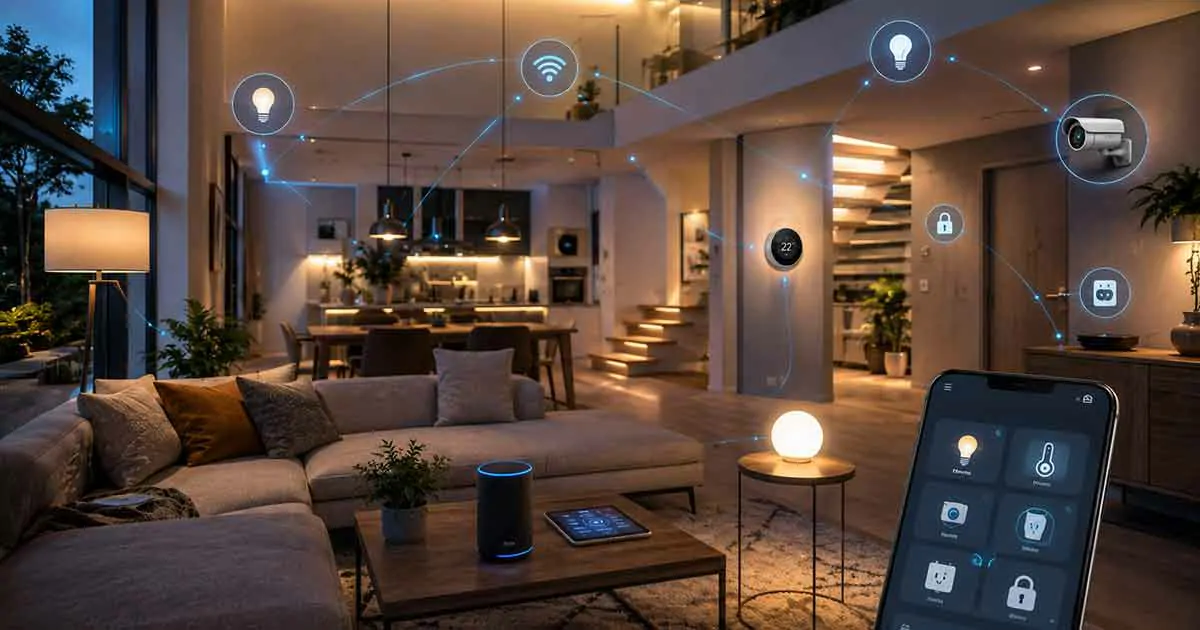
Smart home automation is changing the way people interact with their homes. Instead of manually controlling every device, homeowners can create intelligent routines that automatically adjust lighting, temperature, security, and daily tasks.
With the right combination of smart devices and automation settings, a home can become more comfortable, efficient, secure, and easier to manage.
For beginners, smart home automation may seem complicated, but modern technology makes it easier than ever to create useful automated routines without advanced technical knowledge.
This guide covers the best smart home automation ideas, how automation works, and practical ways to create a smarter home.
What Is Smart Home Automation?
Smart home automation is the process of using connected devices and software to automatically perform tasks based on schedules, sensors, commands, or user preferences.
Instead of controlling devices manually, automation allows systems to respond automatically.
Examples include:
- Lights turning on when someone enters a room
- Thermostats adjusting temperatures based on schedules
- Doors locking automatically at night
- Security cameras sending alerts when movement is detected
Automation helps create a home that adapts to the needs of its residents.
How Does Smart Home Automation Work?
Smart home automation works by connecting different devices through a central platform or network.
A typical automation setup includes:
- Smart devices
- Sensors
- A control app
- Voice assistants
- Automation routines
When a specific condition occurs, the system performs an action.
For example:
Trigger: Motion detected in hallway
Action: Lights turn on automatically
Trigger: Leaving home
Action: Doors lock and lights turn off
Benefits of Smart Home Automation
Increased Convenience
Automation reduces the number of daily tasks homeowners need to manage manually.
Examples:
- Automatic lighting schedules
- Smart temperature adjustments
- Scheduled appliance control
Small automations can save time and make everyday routines easier.
Energy Savings
Smart automation can help reduce unnecessary energy consumption.
Examples include:
- Turning off unused lights
- Adjusting temperatures automatically
- Monitoring energy usage
Better control can lead to more efficient home operation.
Improved Security
Automation can strengthen home security by creating automatic responses.
Examples:
- Lights activating when motion is detected
- Doors locking automatically
- Security alerts sent to smartphones
Better Comfort
Automated homes can adjust environments according to personal preferences.
Examples:
- Morning lighting routines
- Comfortable temperature settings
- Entertainment scenes
Best Smart Home Automation Ideas
1. Automated Lighting Routines
Smart lighting is one of the easiest automation projects.
Ideas include:
- Lights turning on at sunset
- Bedroom lights dimming at night
- Morning lights gradually increasing brightness
- Outdoor lights activating automatically
Automation makes lighting more convenient and efficient.
2. Smart Temperature Control
Smart thermostats can automate heating and cooling.
Useful routines include:
- Lowering temperature while away
- Preparing the home before arrival
- Adjusting temperatures during sleep
This improves comfort and energy management.
3. Automatic Door Locking
Smart locks can improve security through automation.
Examples:
- Lock doors automatically at night
- Lock doors when leaving home
- Create temporary access schedules
4. Smart Security Automation
Security devices can work together automatically.
Examples:
- Cameras activating when motion is detected
- Alerts sent when doors open
- Lights turning on during suspicious activity
5. Voice-Controlled Home Routines
Voice assistants allow homeowners to control multiple devices together.
Examples:
- “Good morning” routine
- “Good night” routine
- “Away mode”
A single command can trigger multiple actions.
6. Smart Appliance Automation
Connected appliances can simplify household tasks.
Examples:
- Coffee makers starting automatically
- Washing machines sending notifications
- Appliances turning off after use
7. Automated Window Coverings
Smart blinds and shades can improve comfort and efficiency.
They can:
- Open in the morning
- Close during hot periods
- Adjust based on schedules
8. Home Entertainment Automation
Automation can improve entertainment experiences.
Examples:
- Movie night lighting scenes
- Automatic speaker settings
- TV and device controls
9. Water Leak and Safety Automation
Smart sensors can detect potential problems.
Examples:
- Water leak alerts
- Smoke detector notifications
- Temperature warnings
Early alerts can help prevent damage.
10. Away Mode Automation
Away mode helps protect homes when residents are not present.
Actions may include:
- Locking doors
- Turning off lights
- Adjusting temperature
- Activating security devices
Smart Home Automation Ideas by Room
Living Room
Useful automation ideas:
- Smart lighting scenes
- Voice-controlled entertainment
- Automatic temperature adjustments
Bedroom
Automation options:
- Wake-up lighting
- Sleep routines
- Temperature control
Kitchen
Ideas include:
- Smart appliances
- Automated lighting
- Safety monitoring
Bathroom
Automation examples:
- Smart mirrors
- Lighting schedules
- Ventilation control
Outdoor Areas
Useful features:
- Automated security lighting
- Smart irrigation
- Outdoor monitoring
How to Create a Smart Home Automation System
Step 1: Identify Your Goals
Decide what you want automation to improve:
- Convenience
- Security
- Energy savings
- Comfort
Step 2: Start With Basic Devices
Good beginner devices include:
- Smart lights
- Smart plugs
- Smart speakers
- Smart thermostats
Step 3: Create Simple Routines
Start with practical automations before creating complex systems.
Step 4: Expand Gradually
Add new devices as your needs change.
Common Smart Home Automation Mistakes
Creating Too Much Complexity
Automation should simplify life, not make systems difficult to manage.
Regular smart home maintenance can also help keep automated routines, connected devices, and integrations working reliably over time..
Buying Incompatible Devices
Always check whether devices work together.
Ignoring Security
Connected systems require:
- Strong passwords
- Software updates
- Secure networks
Automating Without a Purpose
The best automation solves real problems.
Frequently Asked Questions
Is smart home automation worth it?
Yes. Automation can improve convenience, comfort, security, and energy efficiency.
Do I need expensive devices for automation?
No. Beginners can create useful routines with affordable smart devices.
Can I automate my existing home?
Yes. Many smart devices can be added without major changes.
Is smart home automation difficult?
Modern systems are designed to be easier to set up and manage.
What is the best first automation?
Lighting, smart plugs, and temperature control are common starting points.
Final Thoughts
Smart home automation allows homeowners to create a more intelligent and efficient living environment. By connecting devices and creating useful routines, everyday tasks become easier and more convenient.
The best approach is to start with simple automations that solve real needs, then expand gradually. A well-designed smart home automation system can improve comfort, security, and energy efficiency for years to come.