
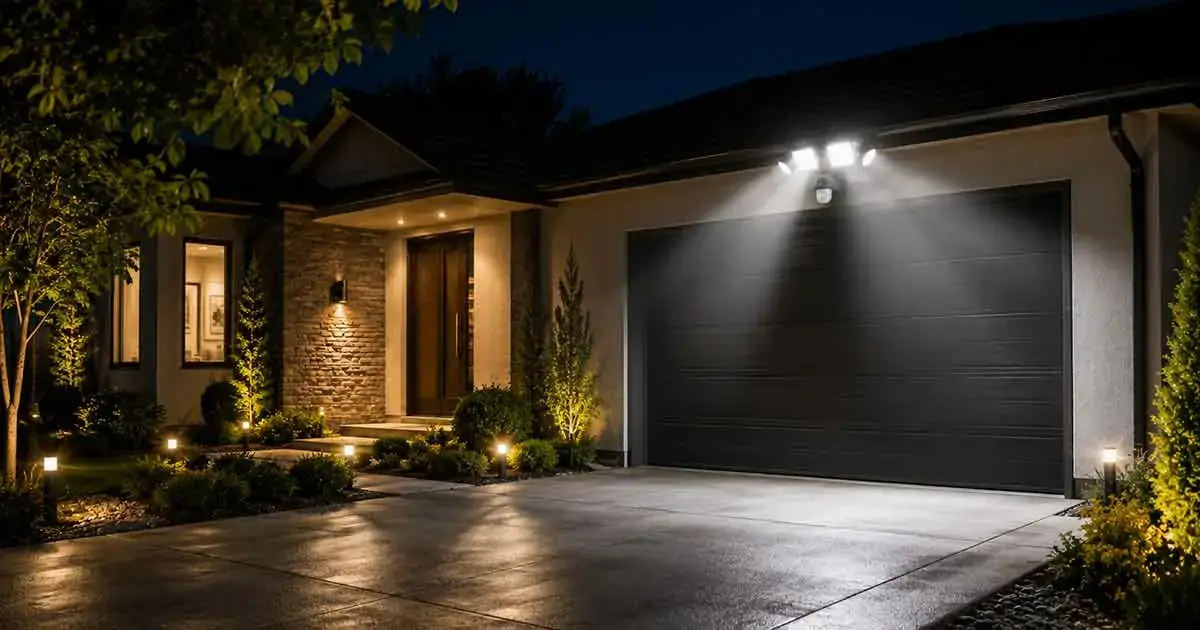
Motion sensor lights are one of the most effective and affordable ways to improve home security. They automatically illuminate areas when movement is detected, helping homeowners increase visibility, discourage unwanted activity, and improve overall safety around the property.
Unlike traditional outdoor lighting that remains on continuously, motion sensor lights activate only when needed. This approach helps reduce energy consumption while ensuring important areas remain visible when activity occurs.
This guide explains how motion sensor lights work, their benefits, important features to consider, and how to choose the best motion sensor lights for home security.
What Are Motion Sensor Lights?
Motion sensor lights are lighting fixtures equipped with sensors that detect movement within a specific range.
When motion is detected, the light automatically turns on for a predetermined period before switching off again.
These lights are commonly installed near:
- Front doors
- Driveways
- Garages
- Side entrances
- Backyards
- Walkways
Motion sensor lighting is often used as part of a broader home security strategy.
Benefits of Motion Sensor Lights
Improved Security
One of the biggest advantages of motion sensor lights is their ability to improve security around a property.
Sudden illumination can:
- Increase visibility
- Draw attention to activity
- Reduce hiding places
- Discourage suspicious behavior
Well-lit properties are generally less attractive targets.
Energy Efficiency
Because motion sensor lights activate only when needed, they consume less electricity compared with lights that remain on throughout the night.
Benefits include:
- Lower energy costs
- Reduced electricity usage
- Longer bulb lifespan
Increased Safety
Motion sensor lights help homeowners and visitors safely navigate outdoor areas after dark.
They can reduce the risk of:
- Trips
- Falls
- Accidents
- Poor visibility
Convenience
Automatic activation means homeowners do not need to manually switch lights on and off.
This feature is especially useful when arriving home at night.
How Motion Sensor Lights Work
Most motion sensor lights use passive infrared (PIR) technology.
These sensors detect changes in heat and movement within a designated area.
When motion is detected:
- The sensor activates.
- The light turns on.
- The area becomes illuminated.
- The light remains on for a preset period.
- The light switches off automatically.
Many modern systems allow users to customize sensitivity and activation duration.
Types of Motion Sensor Lights
LED Motion Sensor Lights
LED models are the most popular option for residential security.
Advantages include:
- High energy efficiency
- Bright illumination
- Long lifespan
- Low maintenance
Solar Motion Sensor Lights
Solar-powered lights use sunlight to recharge internal batteries.
Benefits include:
- Reduced energy costs
- Simple installation
- No electrical wiring required
Flood Lights
Motion sensor flood lights provide wide-area coverage.
They are commonly used for:
- Driveways
- Garages
- Backyards
Flood lights can illuminate large outdoor spaces effectively.
Wall-Mounted Security Lights
Wall-mounted fixtures are ideal for entrances and exterior walls.
They provide focused illumination where it is needed most.
Important Features to Consider
Brightness
Brightness is typically measured in lumens.
Higher lumen output generally provides:
- Better visibility
- Greater coverage
- Improved security
The ideal brightness depends on the size of the area being illuminated.
Detection Range
Detection range determines how far away motion can be detected.
Larger properties often benefit from longer detection distances.
Detection Angle
A wider detection angle can improve coverage and reduce blind spots.
Weather Resistance
Outdoor security lights should be designed to withstand:
- Rain
- Wind
- Dust
- Temperature changes
Weather-resistant construction helps ensure long-term reliability.
Adjustable Settings
Many motion sensor lights allow users to customize:
- Sensitivity
- Activation duration
- Detection range
Flexible settings help optimize performance.
Best Locations for Motion Sensor Lights
Front Entrance
The front door is one of the most important locations for security lighting.
Driveway
Driveways benefit from improved visibility for both security and convenience.
Garage
Garages often contain valuable property and should remain well illuminated.
Backyard
Backyards may contain dark areas that benefit from motion-activated lighting.
Side Entrances
Secondary access points should not be overlooked when planning security lighting.
Motion Sensor Lights and Security Cameras
Motion sensor lights work particularly well when combined with security cameras.
Benefits include:
- Improved video quality
- Better nighttime recordings
- Enhanced visibility
- Increased identification accuracy
Lighting can help cameras capture clearer footage after dark.
Common Motion Sensor Lighting Mistakes
Poor Placement
Incorrect placement may reduce coverage and effectiveness.
Excessive Sensitivity
Overly sensitive settings can trigger unnecessary activations.
Insufficient Brightness
Lights that are too dim may not provide meaningful security benefits.
Ignoring Maintenance
Dirty sensors and damaged fixtures can reduce performance over time.
How to Choose the Best Motion Sensor Lights
Consider the following factors:
- Property size
- Coverage requirements
- Power source
- Brightness levels
- Weather resistance
- Budget
The best motion sensor light is one that provides reliable performance while meeting your specific security needs.
Frequently Asked Questions
Do motion sensor lights improve home security?
Yes. Motion sensor lights increase visibility and can discourage suspicious activity around a property.
Are LED motion sensor lights worth it?
Yes. LED models provide excellent energy efficiency, brightness, and longevity.
Where should motion sensor lights be installed?
They are commonly installed near entrances, garages, driveways, walkways, and backyards.
Do motion sensor lights use a lot of electricity?
No. Because they activate only when needed, they are generally energy efficient.
Can motion sensor lights work with security cameras?
Yes. Combining lighting and cameras can significantly improve overall security coverage.
Final Thoughts
Motion sensor lights are a practical and cost-effective security upgrade for homeowners. By automatically illuminating areas when movement occurs, they improve visibility, support security cameras, and help create a safer environment.
Whether you choose LED, solar-powered, floodlight, or wall-mounted models, the right motion sensor lighting system can become an important part of a complete home security strategy.